International Trans Studies Conference Day 3: gaming, representation, and transnationalism

This is the fourth in a series of blog posts about the 2nd International Trans Studies Conference in Evanston (4-7 September 2024).

Read Part 1 here.
Read Part 2 here.
Read Part 3 here.

I started writing this posted back in bonnie Scotland! Back to work, back to endless emails, back to doing my absolute best that all the masters dissertations are marked in good time. I finished it on an aeroplane to Lisbon, for my second major international event of September: the 2024 World Professional Association for Transgender Health Scientific Symposium, and am posting it from a conference centre in Lisbon.

As such, and as you might have noticed, I have slowed down with my writeup from the International Trans Studies Conference. Still, I have plenty more notes and reflections, and hope to continue writing these up over the next week or two.

My conference account left off halfway through the morning of the third day. After the sheer emotional onslaught of the session on political economy (no, really) I decided to slow the heck down and not rush off to the next talk. I went to the front desk where I managed to catch two of the conference organisers, Avery Everhart and Erique Zhang. I’ve known Avery and Eri online for years and long admired their work from afar, but we’d never previously met in person. I have really, really missed making these deeper human connections at conferences. Much as the organisers were clearly exhausted from firefighting technical and access issues to keep the conference running, it was wonderful to meet them and take time for a chat.

I therefore missed the first two papers from the next session I attended. This was a bit of pity given how amazing the rest of the session was, but self-care is important, and I regret nothing!


B{ending} Trans Game Studies

I don’t really do any work in game studies, so chose this session mostly because it seemed fun, and interesting. An opportunity to expand my horizons. This was the right choice – I had an incredible time. 

I turned up partway through a presentation from Madison Schmalzer of Ringling College of Art and Design (USA), titled Circuit Bending, Trans Play, and the Death of Game(!) Schmalzer introduced circuit bending as a practice of “tinkering and seeing what happens”. Examples from her art, research, and teaching included rebuilding children’s keyboards, and messing with old Mario games to create something entirely new. Controls shifted, the sky changed colour, characters ran unexpectedly across the screen. Through the destruction and reconstruction of corporate entertainment products, students discovered entirely new modes of play.

Analysing this process, Schmalzer drew parallels between digital games and social constructs including gender and race. She argued that circuit bending raises important questions about digital products, such as: why does this game exist? whose interest does it serve? And finally: how might we “bend” other social systems in the same way that we might do with games?

Some possible responses to these questions were offered in the next paper: “We Can A̶l̶w̶a̶y̶s̶ Never Tell”: Giggling Faces, Gender Machines, And Un-Recognizing Play, by PS Berge of the University of Albert (Canada). Berge introduced the concept of “ludoarsony”, which variously refers to breaking, burning, or destroying a game (including technical or cultural rule sets), or to playing with fire, creating and playing through the act of destruction. Berge posited that ludoarsony, like play more generally, is a trans thing to do: “play and transness are of kin: both are transformational movements that weave in and out of rigid cultural and computational systems that they are ultimately ambivalent to”.

Berge’s paper drew on a number of case studies in which trans people play with the claim commonly made by transphobes that “we can always tell”: the notion that trans people are inherently clockable as such, that we are always reducible in behaviour and appearance to our sex assigned at birth. The first of these was Giggle for Girls, the now-defunct trans-exclusionary social networking app “for females” (recently central to the groundbreaking discrimination case Tickle vs Giggle…no, really).

Giggle’s verification system for female users relied on so-called gender-recognition technologies. Berge observed that on launch, Giggle was not simply criticised by trans people, but also played with. Examples included trans women testing the verification system (“I’m proud to announce that apparently I’m cis now. I’d like to thank Satan”), and revelling in negative reviews from cis women who were not recognised as such (e.g. “I can’t even access this app […] I was so looking forward to a female-only space, but now I just feel alienated. Thanks for that.”).

Further undermining the logic of “we can always tell”, Berge discussed the work of algorithmic artist Ada Ada Ada, showing us an example of a video in which the artist changes the response of facial recognition software in real time by pulling different expressions. Ada Ada Ada followed this up with “The Misgendering Machine”, an app available to anyone with a phone camera or webcam, which encourages people to play with how they are gendered by the machine.

Berge concluded by arguing that there is play in the unmaking, and to find play in the unplayable helps us find life in the unliveable: “we do not play in spite of the world being on fire – we play because the world is on fire”. Central to this is a project of mutual recognition: “we can never tell”, an acknowledgement of the ways in which we are all fundamentally unknowable, a promise not to rat each other out.

My horizons suitably expanded, I headed out to grab lunch.


Picturing Trans: Studies of Trans Visual Culture

In the afternoon I again wanted to attend a session that offered a different perspective to the material I normally encounter in my work on trans healthcare, both to expand my horizons and take something of a break from the slow creeping horror of my own area. So I want to a session on trans visual culture.

The first two talks offered radically different perspectives on trans people’s self-representation: one looked at self-portraits of trans bodies, and the other very intentionally looked at why we might avoid portraying our own bodies. The third talk then looked at how we might be represent and be represented by other trans people.

In Beyond Representation: Photographic Methods in Trans Myth-making, June Saunders of Washington State University (USA) offered a beautiful, poetic reflection on trans photography and representation that elides direct representations of our bodies. Saunders presented numerous images of landscapes, buildings, and everyday medical paraphernalia to accompany her talk. She encouraged us to be present in the moment without our devices, reflecting the themes of the presentation.

Sanders focused on how we might sit within and create photography that captures specific experiences and moments in time, without simply using this to produce commodifiable content. She examined the tension between the power of self-representation and exploration on the one hand, and the use of images in the service of surveillance and control on the other.

Ace Lehner of the University of Vermont (USA) looked instead at bodily self-portraiture in Transing Identity in Contemporary Photography: Zackary Drucker and Rhys Ernst’s Relationship. Noting that trans visual culture has played a crucial role in political representation and social change since the 1990s, Lehner looked at the “accidental” historic art project undertaken by Zackary Drucker and Rhys Ernst as they depicting their transition and relationship. Echoing Berge’s morning presentation on trans play, Lehner argued that trans visual culture can enable us to challenge dominant cultural logics that assume seeing is uncomplicated, and that we can easily read gender, sexuality, and race onto images.

Given the enormous number of contemporary visual transition diaries posted online by transmasculine people, it was interesting to hear Lehner argue for the importance of work by artists such as Drucker and Ernst in the 1990s, when transmasculine individuals were often ignored or erased in the media. Of course, as Lehner noted, transfeminine people have hardly benefited from historical media interest in bodies, which are sensationalised as objects of heightened sexualisation, and non-consensually aligned with dominant cultural ideologies.

The final presentation in this session was by AC Panella of Santa Rosa Junior College (USA), titled I Got 99 problems and Objects of Trans Memory Are Some of Them. Panella asked what we are teaching each other about what it means to be trans and “do” transness, especially given the limitations of existing trans archives. Said archives are typically derivative of lesbian and gay archives in their approach, and/or subsumed within wider LGBT collections, leading to misguided ideas about trans history. They can also contribute to US-dominated approaches to trans history, with celebrations of Pride (for instance) often marking Stonewall, rather than localised celebrations of trans uprising. These issues are compounded by the economic insecurities experienced by many trans people, with housing issues (for example) meaning individuals are less likely to hold on to items from their past. This spoke to a conversation I recently had with a fellow activist who lost much of her personal archive during a period of homelessness.

Panella outlined how these issues might be addressed through localised community projects, and the involvement of artists. The presentation included several examples of Latinx trans projects in Mexico and the west coast of the USA. They incorporated approaches including community storytelling through writing and arts workshops, intimate portraits of people in their homes, and memorial or celebratory pieces (e.g. fashion displays) based on the lives of community members that activists felt were important to remember. In this way, it is possible to create archival material which captures the complexity and nuance of local experiences, tying these both to cultural history and to contemporary struggles.

Transnationalizing Trans Studies: Building a Truly Global Field

The final session of the day was a plenary panel in the main conference hall. Titled “Transnationalizing Trans Studies”, it offered a refreshing alternative to the North American perspectives that dominated much of the conference, but also once again highlighted the limitations of the conference’s internationalism. We were meant to hear from a scholar-activist in Zambia – the only planned plenary speaker from Africa – but unfortunately she was unable to join us due to energy shortages. I truly hope future events can address this oversight: a matter addressed by the chair, Francisco Fernandez Romero (University of Buenos Aires, Argentina) in his introduction.

The panel therefore featured three speakers who responded to questions from Romero: Madi Day of Macquerie University (located in what they intentionally highlighted as the occupied territories named “Australia”), Alyosxa Tudor of the School of African and Oriental Studies, University of London (UK), and Michelle Ho of the National University of Singapore (Singapore).

The discussion opened with a question from Romero about what trans studies looks like across these contexts. Day began by explaining that, as an Indigenous scholar, they approach the field from an Indigenous studies perspective. They emphasised that Indigenous studies should not be understood as the study of Indigenous people, but rather as a critical examination of the colonised world. This approach understands settler colonialism as a global apparatus, with some Indigenous lands directly occupied (as with Australia), and others exporting their resources to the colonial centre (as Romero described earlier in the day with reference to Argentina). In this context, “colonialism is the condition of possibility”. Day therefore distinguished between white settler trans studies in Australia, and Indigenous trans studies. They spoke to the importance of drawing (appropriately and with due credit) on Indigenous approaches in trans studies, to better address the problem of material from the Global South being always used as data, and never as theory.

Tudor spoke to their context as an academic of Eastern European heritage living in the UK. They argued for a transnational approach to trans studies that goes beyond the “national” in understanding global-local connections, and embraces anti-nationalist principles, insisting that transnationalism is “not about all the small nations sitting down with the big ones for a nice chat!” This is important for interrogating discourses of Eastern European exclusion in trans studies: simply creating a series of national sub-fields is not an adequate solution. Relatedly, Tudor emphasised that a transnational trans studies cannot escape the current moment of genocide in Gaza, and must name the violence inflicted on the Palestinian people.

Ho discussed questions of multiple marginalisation. Citing the TSQ: Transgender Studies Quarterly special issue “Trans in Asia, Asia in Trans”, she observed that trans studies remains marginal in Asian studies, just as Asian experiences are marginal within in US-dominated trans studies. She also emphasised the difficulties of difficulty of translation in terms of both language and experience, with an enormous diversity of “trans” possibilities present across the Asian continent.

Romero followed these comments with questions that followed up on the topics of translation and transnationalism. Day argued that if trans studies is to be truly transnational, the goals and ambitions should be determined the global Southern majority. The problem in only calling on Indigenous knowledge when it’s directly relevant to Indigenous experiences is that you maintain a colonial viewpoint: if you are a white settler leading a research project, group, or institution and are not actively resisting settler colonialism, you are conducting a white settler project.

Day highlighted how shared experiences across Indigenous communities in different parts of the world have informed shared resistance and productive modes of thinking, and asked: “what would happen if we started thinking of transness as an identity rather than an identity?” But to be in a community, you need to act like a community. Community is non-extractive, and if you have more of something, you need to use it to help others.

Tudor returned to the question of nationalism. Contrasting with Day’s account of community, Tudor argued that nationalism rests on logics of opposition and competition, and resists complexity. In additional to critiquing white, Western nationalisms, they observed that decolonial, diasporic, and minoritised nationalisms also deserve scrutiny, as contemporary counter-hegemonies may become future hegemonies. That is to say: a people’s historic experiences of violence and oppression may not present future violence against others in the name of a new nation, as seen in the example of Israel. Tudor suggested that queer and trans studies might offer a vehicle to highlight the violence of nationalism, through challenging and deconstructing categories, from gender to nation. In this context is important that decolonialism is a mode of action, not a metaphor. Tudor noted they have used their platform as an academic speaker to highlight the growing death toll on Gaza, but this kind of speech act alone is insufficient: “it is clear none of my previous papers have saved a single life”

Ho focused especially on the topic of translation, exploring what might get lost through simply assuming that the language of one context might adequately explain another. She emphasised that to be adequately in conversation with a context, we need to learn their language and culture. This creates real problems for “international” publishing in the English language. Echoing Day’s comments earlier in the plenary, Ho noted the pressure to use Western theory to analyse Asian case studies, and described how a peer reviewer insisted that there were too many “non-English words” in her manuscript: the implication being, “can you do something to avoid alienating your largely US readership?”

Ho concluded by reflecting on the difficulties in attempting transnational approaches to trans studies in Singapore. What compromises are necessary in a very conservative society? She described the example of trying to get funding to bring in a trans studies scholar to speak at her institution, noting that the question is in part one of framing: “I could invite Jack Halberstam to come, and say ‘Jack Halberstam is an established scholar in cultural studies’”. However, given how Western-centric “transnational” scholarship is, this strategy is more effective with US academics than, for example, experts from India. Ho ended with two open questions for us to consider: if trans studies is effectively underground in a specific context, can it be considered trans studies? And how can Western scholars learn from people in these contexts?

The following Q&A session included some interesting reflections on the binary of Global North / Global South given the experiences of Indigenous people in settler-colonial nations. On this note, Day stated their appreciation for the Trans Studies Conference operating within established protocols for Indigenous engagement, for example through inviting Indigenous contributors to speak first: this could be seen both in Kai Pyle’s opening statementson the first day of the event, and in the structure of this very plenary.

Rainbow resources from Aotearoa: accessibility, takatāpui, and healthcare

This is the second in a short series of posts on my recent trip to Aotearoa. See also:
Part 1: Trans health and rainbow futures.


During my April/May visit to Aotearoa (New Zealand) I picked up a lot of amazing resources. In this blog post, I share some brief reflections on three great documents which contain an enormous amount of interesting and useful material produced by and for Rainbow communities (takatāpui, lesbian, gay, bi, trans, intersex and queer people), on topics that include disability, Māori experiences of gender and sexuality, and affirmative care.

These documents will be of interest to people who want to know more about rainbow activism, communities and healthcare in Aotearoa, but also clearly have a wider relevance and importance. In writing about them, my intention is to highlight the expert contribution of the authors. As a UK-based scholar and activist, I learned a great deal and it is my hope that readers will too.


All of Us

59b7fa1e4a1c5a438395612258da“Imagine how engaged our communities would be if we were curious about our strengths and values, rather than our limitations.”

This beautifully illustrated guide addresses topics such as structural stigma, intersectionality, accountability, minority stress and (de)colonialism from the perspective of a queer disabled politics. It promotes a mode of solidarity and understanding that recognises and works with difference.

All of Us was created by Stace Robertson, a queer trans man of Pākehā (European or non-Māori) descent who lives with Cerebral Palsy.

Robertson explains that the project came about after he noticed that people are often not fully included even in minority communities if they experience multiple forms of marginalisation.

He therefore decided to create a resource that shared the perspective of people with these experiences, drawing on that advise of mentors, and advisory group and 14 people from a range of backgrounds who offered to share their stories in the document.

This resource will be of interest to people who want to learn more about experiences of multiple marginalisation. It will be useful to those who are new to this topic, as well as those who want to understand more about factors such as ableism or migrant status impact LGBTIQ experience and vice-versa.

There is also an excellent easy-read version of the guide available in the second half of the document.


Takatāpui: Part of the Whānau

Screen+Shot+2017-02-26+at+4.12.09+PM“Takatāpui is a traditional term meaning ‘intimate companion of the same sex.’ It has been reclaimed to embrace all Māori who identify with diverse genders and sexualities such as whakawāhine, whakawāhine, lesbian, gay, bisexual, trans, intersex and queer.”

The document was created to provide information and support for takatāpui and their whanau (family), but it will also be of interest to people wanting to learn more about mātauranga Māori (Māori knowledge or wisdom) with regards to sexual and gender diversity. It was written by Dr Elizabeth Kerekere, a renowned takatāpui activist, scholar, and founder/chair of the Tīwhanawhana Trust.

Through colonialism, Aotearoa inherited the sexism and homophobia of the British legal system. Takatāpui narrative were erased through pathologisation, colonial records, and the imposition of the nuclear family model. In light of this, Kerekere highlights the importance of pre-colonial histories, and of contemporary resilience and the importance of pride, family and community support.

In the UK, we have begun to talk more in recent years about how binary gender norms were imposed on many societies by British invaders through colonialism. These conversations can only become deeper and more nuanced through respectful engagement with knowledge produced by Indigenous peoples on this topic, rather than relying on the flawed work of colonial anthropologists. As a white trans woman who experiences both gender marginalisation and unearned privileges afforded by the legacy of colonialism, I am grateful for the opportunity to learn directly from takatāpui perspectives.


Guidelines for Gender Affirming Healthcare for Gender Diverse and Transgender Children, Young People and Adults in Aotearoa New Zealand

Guidelines for Gender Affirming Health low res.pdf“These guidelines are based on the principle of Te Mana Whakahaere; trans people’s autonomy of their own bodies, represented by healthcare provision based on informed consent.”

These guidelines were produced by a coalition of healthcare practitioners, academics and community members, with the support of the Northern Region Clinical and Consumer Advisory Group. They are intended to supplement the World Professional Association for Transgender Health Standards of Care, providing guidance relevant to District Health Boards in providing gender affirming healthcare throughout Aotearoa.

An important feature of the guidelines is the use of Māori health expert Professor Mason Durie’s health framework. The document highlights two key principles for health promotion development: Te Mana Whakahaere (autonomy) and Ngā Manukura (community leadership). There is therefore is an emphasis on trans and gender diverse people having collective control over their own destiny and decisions around healthcare.

Furthermore, Te Whare Tapa Whā, as described by Durie, conceptualises health and wellbeing as the four cornerstones of the wharenui (meeting house). As noted in the guidelines, this model recognises the equal importance of Taha Wairua (spiritual health), Taha Whānau (family health), Taha Hinengaro (mental health) and Taha Tinana (physical health). These four cornerstones provide the structure for the document.

Consequently, the guidelines highlight topics such as Māori and Pasifika genders, minority stress, social transition, health in the family and in schools, and mental health, positioning these as equally important a consideration as physical transition (for those who desire/require medical interventions). This strikes me as a really important move, de-centring hormones and surgery to instead provide a more holistic view on trans health needs.

Like many similar documents, the guidelines are not perfect. I met a number of clinical practitioners in Aotearoa who considered this document to be a good starting point for conversations around improving care, but with some limitations outside of the relatively well-resourced Northern region in which they were primarily written. I have my own concerns around the citation of somewhat inaccurate information produced by cis clinical researchers (for example, Table 5, based on the Endocrine Society Guidelines, underestimates how long it might take for certain bodily changes to take place). I also feel that the definition of “informed consent” used in the document could perhaps benefit from tightening to specify what does and does not constitute appropriate oversight in determining whether or not patients are “adequately prepared” for medical interventions.

Regardless, I am deeply grateful for the work from so many people that goes into producing guidelines such as this, and I hope they can contribute usefully to the ongoing depathologisation of trans health.

A slow, painful grind: WPATH 2018 conference report

IWPATH_BuenoAr_Logo_reverse.jpgn the first week of November I attended the 2018 WPATH Symposium in Buenos Aires, Argentina. This biennial event is one of the largest trans studies conferences in the world, with around 800 academics, activists, healthcare practitioners and researchers coming together to exchange knowledge.
Most of the conference consisted of parallel sessions: approximately eight or nine speaker panels occurring simultaneously in different parts of the conference venue. So it is impossible for anyone to take part in the majority of conference events. Nevertheless, I attended as many sessions as possible, and livetweeted from most of these. Links to Twitter summaries of the sessions I attended can be found at the end of this post.

In this post, I comment primarily on my observations of the conference as a sociologist and trans professional.


Opportunities and inclusion

As I anticipated, WPATH 2018 was full of contradictions.

On the one hand, it was exciting to join and learn from so many academics, healthcare practitioners and human rights experts working in the field of trans health. As I report in the Twitter summaries below, the conference provided a great opportunity to participate in debates over new ideas and standards of care, and hear about cutting-edge research findings and advances in clinical practice. It was an especial privilege to learn first-hand about the implementation and impact of Argentina’s pioneering Gender Identity Law, a topic I expand upon later in this post, but hope to write about in more detail in the near future.

I was also glad to have the opportunity to present a paper on research ethics and a poster with initial findings from the Trans Pregnancy project to an international audience.

It was excellent to see that the conference organisers acknowledged and responded to some of the feedback from trans delegates in previous years. Gender-neutral toilet blocks were present on every floor of the conference venue, and pronoun stickers were provided to accompany name badges. The provision of a “trans hospitality suite” enabled trans attendees to relax in a more comfortable environment, and also arrange our own ad-hoc meetings and events. This was inevitably re-branded by its users as an “intersex and trans” room in recognition of the importance of this space also to intersex delegates; I hope conference organisers will learn from this for future events.

This year’s Symposium also benefited from a clear code of conduct and language guide, previously introduced for the 2017 USPATH and EPATH conferences.


Microaggressions and objectification

On the other hand, the cis-centric atmosphere of the event felt like a slow, painful, constant grind. As with previous WPATH conferences, the event was punctuated by constant microaggressions (and, on occasion, outright “macro”aggression); these were damaging to intersex people, people of colour and delegates from the Global South as well as trans attendees. Examples include individuals advocating for intersex genital mutilation, off-colour jokes about trans suicide, the use of outdated language, and misgendering of research participants.

Some research seemed entirely voyeuristic: for example, one poster from the Netherlands purported to report on differing levels of jealousy towards sexual competitors among “mtof and ftom transgenders”. It was often unclear how consent was obtained (if at all) for the use of personal information about research participants and/or patients. This was particularly concerning when numerous posters and powerpoint slides included unnecessary photographs of intersex and/or trans genitalia (a “WPATH conference bingo” grid circulated among intersex and trans attendees of the event included a square for “unexpected genitals”).

As a trans attendee, I felt deeply objectified by the tone and content of this material. It felt dehumanising, and I felt like a thing, subject to the harsh gaze of an abstract, dehumanising curiosity. Yet I was disturbed not only by those engaging in such work, but also in the response of many of their peers. Numerous practitioners and researchers who seemed broadly sympathetic to trans rights and affirmative in their own work often said nothing to counter transphobia, cisgenderism and endosexism in the work of others. It is difficult for intersex and trans people to explain how painful this situation is when most of our colleagues and the senior figures in the field are not intersex or trans; we know that our projects and careers alike may suffer if we speak out too openly or too harshly. I encourage fellow members of WPATH to reflect on their potential complicity in this situation, and consider how we might collectively work to change it.


Tokenism and colonialism

The choice to locate the conference in Buenos Aires felt deeply tokenistic, with numerous attendees from the Global South arguing that this represented a colonial attitude. The vast majority of conference attendees were from the United States or Western Europe. The price of the conference was a significant barrier to many attendees, amounting to the equivalent of the average monthly income in Buenos Aires. The choice to host the event in an expensive Hilton hotel felt like it was taken primarily for the benefit of (the more wealthy) attendees from the West to the detriment of local intersex and trans people, some of whom reported that they risked being profiled by the police if they tried to enter the wealthy area of the city in which the hotel was located.

The sessions on clinical practice in Argentina and human rights in Latin American were some of the most interesting I sat in on, but also least well-attended. I later heard that on one occasion a high-profile lawyer invited to speak on the topic of Argentina’s Gender Identity Law addressed a near-empty room, due to clashes with sessions that focused on Western bioethics, research and medical practice. This sense of tokenism was compounded through the choice to hold the conference in English (the official language of WPATH), with funded translation into Spanish available in a maximum of two rooms at any one time. Some of the conference organisers later stated that they had been worried about the finances of the event, but this felt like a strange claim in the wake of a lavish gala dinner with dancers, DJs, and multiple buffets serving food from various regions of Argentina. As human rights expert and executive director of GATE Mauro Cabral declared in the closing plenary of the conference, “When WPATH decided to come to Argentina, with the most progressive gender identity law in the world, I was excited. But we could only talk among ourselves. You came to this country because of the weather, steak and wine, but not to learn from us”.

While these issues are primarily structural ones that need to be formally addressed by WPATH, the onus is also upon individuals from Western and/or Anglophone countries to take action and reflect upon our relative power and privilege in attending these events. In addition to vocally supporting my colleagues from the Global South, one aspect of my own practice I feel I can address is my use of language in planning talks. For example, I could have undertaken a little extra work to ensure that my slides were bilingual, listing bullet points in Spanish as well as in English. I hope to draw on this lesson in preparing for future international events.


TPATH, human rights monitors, and lessons from Argentina

My experience of WPATH 2018 was improved enormously by the presence of other trans people working in the field of trans health, as well as the intersex activists and human rights experts who came to monitor WPATH’s historic antipathy towards intersex rights. Many of us are members of TPATH (the Transgender Professional Association for Transgender Health), a new and as-yet loosely affiliated group of trans people working in trans health that I helped to co-found during the 2016 WPATH Symposium in Amsterdam. Numerous others were part of a 50-strong delegation of intersex and trans human rights monitors from all parts of the world, who attended in order to conduct a collective human rights audit of the conference.

It was with these individuals that I found myself having the deepest conversations, these individuals with whom I heard the most fascinating research findings and the most rigorous analyses. We also shared a strong sense of solidarity in the face of the many problems apparent at WPATH 2018.

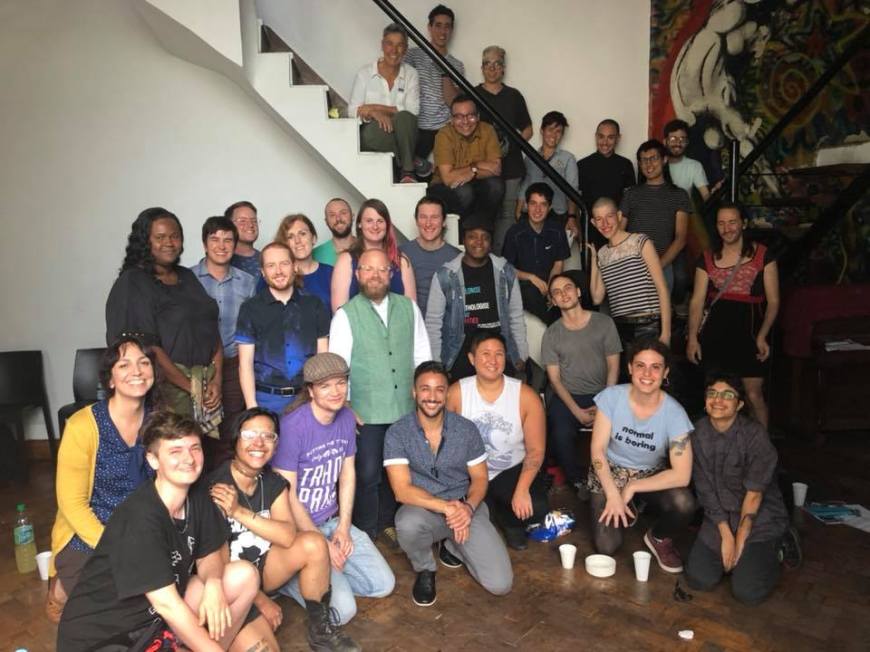
That said, the most important event I attended took place outside of the WPATH event: in Casa Jáuregui, a historic queer cultural centre many blocks away from the Hilton. Here, Frente de Trans Masculinidades (the Transmasculine Front) and other activists based in Buenos Aires hosted a meeting with TPATH members from the Bahamas, Aotearoa/New Zealand, Norway, South Africa, the UK and the USA. We shared information on our various areas of work, and the local activists talked at length about the history, implementation and practical impact of the Gender Recognition Law.

45312673_10156968672567287_3664316683624906752_n.jpg

Argentinian activists host TPATH members at Casa Jáuregui.

While it is important not to deny the significant challenges faced by trans people in Argentina, which include harassment by authorities, economic marginalisation and many forms of violence and discrimination, many of us were struck by how much has been achieved by activists in Argentina and (consequently) how advanced trans rights are in this country. The Gender Identity Law has been carefully written to enable flexibility; this has meant, for example, that it was interpreted to enable non-binary recognition by a judge as recently as last week. It also guarantees access to healthcare, which has meant that every possible medical intervention is available to trans people, either for free or through relatively inexpensive health insurance (in theory, that is: in practice, various legal battles have been necessary). This has been of benefit to cis women and queer people as well as trans people: for instance, through enabling easier access to hysterectomies or breast reductions.

During the meeting, the local activists described gender-affirming medical interventions that most of us had never even considered, such as beard hair implants for transmasculine individuals who cannot or would prefer not to use testosterone. Moreover, while long waiting lists exist for some procedures such as surgeries, those of us attending from European countries and (especially) Aotearoa/New Zealand were astonished by how much shorter they were than equivalent waiting times in our own countries, in part due to the absence of unnecessary gatekeeping procedures and treatment bottlenecks.

I was profoundly moved by the opportunity to attend this meeting, and regretted that so much of my time in Buenos Aires was spent in the sterile environment of the Hilton. However, I was also glad to have the opportunity to work with others to challenge the hierarchies and cisgenderist assumptions inherent in WPATH. We undertook many small interventions: asking questions about ethics, consent and power dynamics in the sessions we attended, raising concerns in private conversations, reporting blatant contraventions of the WPATH code of conduct. I was also pleased to hear many of my colleagues openly critiquing problematic issues identified during an update on the progress of the forthcoming Version 8 WPATH Standards of Care, and take part in attempts to hold our professional body to account during a member’s meeting on the final day.

Overall, I found WPATH 2018 to be a very tiring, draining and frequently unpleasant experience. However, I do not regret attending. I am grateful to have had the opportunity to learn so much from so many. I am also glad to have played a small role in supporting my intersex and trans colleagues and my colleagues from the Global South in attempting to help transform WPATH so it is more transparent, more accountable, and less colonial in attitude and in action.


Session summaries

The following links are to Twitter threads in which I summarise plenaries, talks and mini-symposia I attended at WPATH 2018.

Saturday 3rd November

Opening session and President’s Plenary

Keynote: Employment discrimination against trans people (Sam Winter)

Keynote: Trans legal history in Latin America (Tamara Adrian)


Sunday 4th November

Mini-Symposium: The Argentinian experience of public transgender health after the implantation of the Gender Identity Law

Oral presentations: Services in different parts of the world (Australia, Southern Africa, Scotland)

Mini-Symposium: Trans refugees: escape into invisibility

Mini-Symposium: Latin American perspectives on depathologization of trans and travesti identities

Plenary: Show hospitality to strangers: intersex issues in the time of gender identity laws (Mauro Cabral and respondents)
Note: this was listed as a plenary session in the programme, but actually took place alongside multiple parallel sessions. Consequently, this talk was under-attended by Western healthcare practitioners in much the same way as the Latin American sessions.


Monday 5th November

Oral presentations: Suicidal and non-suicidal behavior

Mini-Symposium: Ethical considerations in transgender health research

Oral presentations: Fertility

Oral presentations: Reproduction


Tuesday 6th November

Mini-Symposium: Child and adolescent medicine Mini-Symposium: Child and adolescent medicine

Plenary: SOC 8 update

Plenary: SOC 8 Q&A