Even if the worst-case scenario occurs and the interim guidance becomes law, Pearce emphasizes that laws “only make sense if people uphold them.” People and organizations must be willing to fight for trans rights, and make the laws essentially impossible to enforce.
As Pearce puts it, “We need intentional, aggressive, extremely homosexual non-compliance.”
Earlier this month I spoke with journalist Emma Bainbridge about lesbian community responses to the UK’s transphobic Supreme Court judgement. That piece is out now in the Canadian magazine Xtra. You can read it here:
On the evening of Tuesday 15th April 2025, I was widely perceived to be a British lesbian, both legally and socially. By 11am the following day, that was no longer the case, following a ruling by the UK’s Supreme Court.
I was not actually in the UK for this momentous occasion. I was instead in the Swiss city of Lausanne, for a workshop on standards of evidence in sex and gender policy. I was there to consider the very questions the UK’s highest court, in their supreme ignorance, had effectively dismissed. Their ruling determined that the term “sex” in the Equality Act referred to “biological sex”, which in turn should be understood as “the sex of a person at birth”. But what do we actually need to know about when we make policy around sex and gender, and what is the role of evidence in this?
The Tuesday evening found me hanging out in a second-rate Thai restaurant with Professor Sarah Lamble, an esteemed criminologist and fellow dyke. Lamble and I spent some time talking about how conspiracy theories around “disappearing lesbians” highlighted the strange ironies inherent in British anti-trans discourse. The anti-trans movement has been extremely successful in raising “reasonable concerns” around supposed problems that are completely ungrounded in reality, to the point where that reality itself begins to warp.
Mainstream political discourse in the UK increasingly reflects anti-trans claims that lesbians are somehow threatened by trans people, or are even being transed en-masse in gender clinics and youth groups. The true biological attraction between two adult human females is disrupted. Young people are tempted away from lesbianism with promises of luxurious facial hair and male privilege; meanwhile, horrifically manly and/or confusingly attractive trans dykes are introduced to the dating pool.
If these claims were true, we might expect to see some kind of reduction in the number of homosexual females. Instead, the evidence we have indicates quite the opposite. Surveys such as the Annual Population Study show a rising number of lesbians over recent years, part of a wider increase of 1.2 million in the recorded lesbian, gay, and bisexual (LGB) population of the UK. This is driven especially by young people coming out, with over 10% of people aged 16-24 identifying as LGB as of 2023.
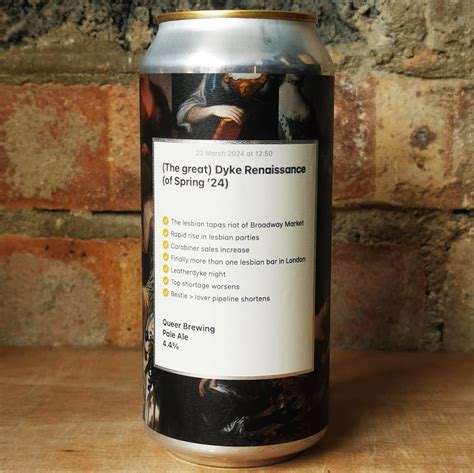
But what about the lived reality of queer womanhood? Well, there’s great news here too: we are living in a truly historic time for sapphic culture in the UK. Proudly out lesbian and bisexual women can be found across the pop charts, on TV, and across social media. Queer bookshops are on the rise. Pop-up butch bars and new queer cafes can be found in major cities and small towns. And, excitingly, even the much-maligned lesbian bar is making a comeback, with three permanent venues and numerous occasional nights now running in London alone. It’s all got so out of hand that in 2024 the Queer Brewing company sold a juicy pale ale named Dyke Renaissance, which conveniently listed an educational series of cultural milestones on the can.
If trans people are trying to disappear lesbians, we’re doing a really bad job of it.
Meanwhile, queer cis women tend to be pretty supportive of trans people. In fact they’re one of the single most supportive demographics in the UK – which is presumably why the Equality and Human Rights Commission is, right now, attempting to ban trans dykes such as myself from associating with any more than 25 biological lesbians at any one time.
On evidence
As lesbian conspiracy theories show, the very concept of evidence has had a bit of a hard time over the past decade.
In the UK, this was perhaps best encapsulated in 2016 by the Conservative politician Michael Gove. While campaigning for Brexit, he declared that the British people “have had enough of experts”. Gove’s claim is echoed in a growing anti-intellectualism across the globe. From the mass purge of universities in Türkiye, to the post-truth bizarro world of Donald Trump, to Israel’s scholasticide in Gaza, this trend manifests in blunt and brutal ways. Anti-expert authoritarianism doesn’t care about your facts or your feelings.
However, attacks on evidence can also be more subtle. Gove’s comments are widely quoted, but it’s less well-known that he singled out a particular kind of expert for criticism: “people from organisations with acronyms saying that they know what is best and getting it consistently wrong”. While this was gloriously vague in a way that allowed the listener to project all kinds of things onto Gove’s words, in context it was nevertheless evocative of the kind of group that tends to advocate for social justice. LGBTQQIAAP groups, perhaps.
From academic thinktanks, to charities, to campaigning organisations, the implicit problem was any kind of challenge to conservative common sense. The UK’s political mainstream has since doubled-down on this approach. In the run up to the 2024 general election, Tory home secretary Suella Braverman criticised “experts and elites”, while the secretary of state for science, innovation and technology, Michelle Donelan, promised to “kick woke ideology out of science”.
One of Donelan’s targets was the “denial of biology” in research by feminists, social scientists… and biologists. The problem here is that supposedly common sense notions of sex and gender, which assume clean and tidy biological divisions between male and female, collide violently with the beautiful messy reality of the material world. At this point in history, it is well-established that sexual diversity exists throughout nature, that men are not biologically superior to women, that social advantage is not conferred or denied by chromosomes, and that queer, trans, and intersex people exist in the world. The evidence for this is gloriously multifaceted. We find it in laboratories, in systematic reviews, in surveys and questionnaires, in the way that men shout abuse at us in the streets, in how our sexed bodies shift and change under hormonal influence, in the way we feel when we finally have a language that describes our experiences.
Michelle Donelan decided to tackle the thorny problems of feminist science, intersex bodies, and trans existence by commissioning a research project by Alice Sullivan, a supposed sociologist who doesn’t care one jot for any of the evidence outlined above. Published in March 2025, the Sullivan Review insisted that data collection relating to sex and gender should rely on a very narrow definition of biological sex: one that ignores trans and intersex women’s real lives, bodies, and experiences of misogyny, while promoting a sexist model of essentialised womanhood. Her findings were echoed in those of the Supreme Court judges a month later, whose pronouncements on biological sex were made without any reference to relevant social, scientific, or philosophical research on how this might actually be understood or defined in practice.
To position this as a wholly new trend would, of course, would be inaccurate. Western jurisdictions have long used and abused pseudoscience to oppress minoritised groups, especially in colonial contexts. This can be seen for example in the British state’s shameful embrace of “race science” and eugenics in the 19th and 20th centuries. What we are now witnessing is an example of the imperial boomerang, in which the logics of colonialism are turned inwards, resulting in increasingly fascist domestic politics.
But did you have a nice time in Switzerland, Ruth?
On that fateful week in April, I joined a group of feminist, trans, and lesbian researchers and activists for the workshop at the University of Lausanne. In the face of increasingly ill-informed policymaking across multiple contexts, it provided us a space to think together about the lessons we might learn collectively from our very different work on healthcare, sports, and prisons.
One overarching theme was the importance of evidence in understanding human experience, in terms of rigorous data collection, careful analysis – and accounting for the lived reality of actual people’s actual lives. A powerful account of the latter point was provided by Dinah Bons, a veteran campaigner for HIV prevention. She pointed out that if a sex worker repeatedly attends a community clinic for her STI tests, this provides evidence that the clinic feels safe enough for her to return regularly, which is far from a given. Such matters are often highly evident to service users and providers on the ground, without any need for a survey or interview.
Another key theme at the workshop was the extent to which various principles of evidence are increasingly abused by politicians, journalists, and institutions.
The concept of evidence has not been rejected wholescale by sexist, transphobic, and lesbophobic policymakers. Rather, “evidence” is increasingly a buzzword to justify particular approaches or points of view, rather than something grounded in a commitment to scholarly standards or an acknowledgement of lived experience. At the workshop, we explored how flawed notions of evidence have been used to support misleading statements or outright lies about human bodies or human experiences. We heard about the use and abuse of evidence in justifying invasive sex-testing for woman athletes, misrepresenting research on young people’s ability to engage in informed decision-making, and defending conversion practices. Notably, while most of these abuses arose from a specifically transphobic politics, they have far wider consequences: especially for women, intersex, and queer people, but also for scientific processes, community consultations, and informed advocacy more broadly.
You can see an example of this in the Cass Review. Through successfully performing the aesthetics of acceptable expertise and science to the satisfaction of the British public, the Review has become what one workshop participant described as a black box. By this they meant that it has become an abstracted justification for policy and practice, handily replacing any ongoing discussion of evidence regarding young trans people’s health and wellbeing. You don’t need to know what the Cass Review actually says or how rigorous it actually is, only that it exists. Well-documented criticisms of the review from healthcare practitioners, academic experts, trans community groups, and (most importantly) young trans people themselves are been rendered irrelevant. The Cass Review is the evidence, and no other systematic review, original research, or personal testimony can henceforth count against it. Not, at least, until 2031 at the earliest: the official end-date of a single £10 million study, based on the Cass recommendations and featuring precisely zero trans researchers.
The British establishment is now attempting to repeat this trick with the Sullivan Review – never mind that projects such as MESSAGE have conducted more extensive and nuanced work on the same topic with a far wider group of experts – and, of course, with the Supreme Court judgement.
Beyond doom
As with Cass, as with Sullivan, it is difficult to capture the sheer enormity of harm caused by the Supreme Court’s pronouncement on biological sex. The consequences are still playing out, and will no doubt continue to do so for many awful months and years.
At the time of writing, the Equality and Human Rights Commission have proposed a programme of mass segregation, designed to discriminate against trans people in the workplace, in public services, and in social groups. The guidance they have written is just that: guidance, not law. Nevertheless, major organisations such as the Football Association, the British Transport Police, and Barclays Bank, all of whom shamelessly paraded rainbows through their social media profiles last Pride season, are falling over themselves to comply. We are witnessing the attempted complete exclusion of trans people from public life, in the latest culmination of a transparent attempt to eliminate us altogether.
In such moments, it can be easy to despair. This is in part because it is easy to forget the strength, resources, power held within trans communities and by our allies. That includes the knowledge and evidence we have access to.
Don’t get me wrong. The people who want to eliminate us are better-funded, better-connected, and now have the Labour government on-side as well as the UK’s traditional right-wing parties. We are not going to win trans liberation overnight.
But then, again, we never were.
Everything I said about lesbian culture earlier is true of trans people too. There are more of us publicly creating art and culture, more of us creating events and running nightclubs and playing in bands and writing essays (hi). There are more community groups providing mutual aid and support when charities and state bodies fail us. And, importantly, we are not alone.
Trans women and non-binary people are a part of the dyke renaissance. We are at the butch bars, and bemoaning the top shortage. We are dancing to Le Tigre and to Chappelle Roan. We are reading Gideon the Ninth and watching We Are Lady Parts and having all the feelings. My partner of the last decade was probably the most surprised of all to learn from the Supreme Court that I am not, in fact, a lesbian, as every bit of evidence from our shared personal lives points to quite the contrary.
I will concede that some trans people are not in fact lesbians, or even queer. Nevertheless, there are somany other places to find us in community with others. Trans people are in trade unions. Trans people are in workplaces. Trans people are in schools and colleges and universities. Trans people are in the streets. Trans people are on the bus. Trans people are in families. Trans people are making families. Trans people are playing football (suck it, Football Association). Trans people are eating pizza. Trans people are restoring the countryside. Trans people are hanging out beside Lake Geneva in the glorious sunshine, enjoying a much-needed break.
There are more of us than ever, and it is too damn late to put us back in a box.
Resistance is fertile
I was honoured to present the keynote presentation at the Swiss workshop. I spoke about the findings of the Trans Pregnancy Project, a study that produced enormous amounts of evidence on the experiences, needs, and perspectives of men and non-binary people who conceive, carry, and give birth.
No matter how much our findings are slammed by the media and billionaire children’s authors and washed-up comedy writers, our peer-reviewed work has demonstrated the lived reality of male and non-binary pregnancy over and over again. Most importantly, it has helped people. We are part of a far wider movement of parent groups, midwives, and researchers who are collectively building knowledge. I am constantly hearing from people who describe how much this knowledge has resulted in better care for them and their child. This kind of story drives everything I do.
Towards the end of my talk, I discussed the anti-trans moral panic, and the Supreme Court judgement. I then showed the below table of findings from the National Maternity Survey. This annual survey involves those who have recently given birth every year in many (but not all!) English hospitals, over the course of a few weeks. Since 2021, they have started asking whether the person giving birth has a different gender to the sex they were assigned at birth – i.e. are they trans?
Two things leap out from this table for me. Firstly, the 2021 data shows a very similar proportion of people indicating they are trans when compared to the 2021 censuses in Scotland, England, and Wales. This suggests that, contrary to assumptions around trans infertility or undesirability, trans men and non-binary people may well be just as likely to give birth as cis women are to become birth mothers.
Secondly, the number of trans people giving birth has risen dramatically over four years. Even as the anti-trans moral panic has deepened. Even as attacks on even recognising the existence of trans people in perinatal services have increased. As Del La Grace Volcano once it put it: “resistance is fertile!”
In the face of growing oppression, trans people are simply refusing to disappear. In fact, we are doing the opposite.
This, then, is the power that the anti-trans movement, the Labour party, and the Supreme Court cannot possibly take away from us. The more trans people are out and visible to one another, the more trans people come out and become visible to one another. Sure, we will unfortunately need to think more carefully about where and when we are out, and where and when we are visible, if this is something we even have any power over in our specific lives. I am sure that more trans people will be going stealth in future years, if they can. But regardless – there are more of us in community, more of us organising protests, and more of us than ever in the lives of our friends, families, colleagues, and allies, showing that it possible to have a good life while being trans.
In this context, it is important to know that people from many parts of the world gathered in Lausanne this April to pool our knowledge and skills and experiences. It is important to know that we have each returned to our home countries to share what we gained. It is important for people to know that similar meetings are happening across the world, in community centres and on university campuses, in board rooms and in bedrooms, involving trans people, and feminists, and yes, lesbians. We are constantly building a movement for positive change, and you do not have to be an academic or veteran activist to be a part of it. Trans power is for everyone.
There is much to say what needs doing in the current moment. We need allies to continue fighting alongside trans people for our collective liberation. We need to be demonstrating in the streets, funding mutual aid and legal action, actively resisting complicity in Labour’s eliminationist agenda, and encouraging every public body under the sun to do the same.
Evidence will be helpful for this. Evidence from academic research, sure, but also – as Dinah Bons pointed out – testimony from the everyday reality of trans people’s lives. And oh boy, do we have that evidence.
More of us than ever are producing evidence of trans existence, and trans persistence.
There is something about seeing your experiences accurately represented in research. This can be very emotional if you are used to seeing people like you ignored, erased, or otherwise grossly mispresented. Much like media representation, research representation can be powerful in putting a mirror to our experiences and suddenly making them a lot more real.
I dislike the vast overuse of the term “valid” in trans discourse, but there is something very important about being actively validated, about being seen, when the entirely of society feels like it’s set up to deny or gaslight you. It’s a consciousness-raising moment, in which you become capable of truly acknowledging or naming what is happening to you. It is meaningful and authentic and it enables action. But it is also very painful.
As a trans health researcher, I think I’ve developed a pretty thick skin. I see a huge amount of bad trans health research, built on cis ignorance and a fundamental inability to engage with the reality of our lives. I also see growing amounts of painfully real research from researchers who are engaging with care. For better and for worse, I feel I’ve learned to carefully manage my emotions and let all of this wash over me, in order to engage consistently and “professionally”.
But on Thursday morning, a series of presentations made me cry.
Global Struggles, Local Solutions: Transgender Perspectives on Economics and Welfare
The morning began with doughnuts, piled high in the reception area of the conference, a very extravagant seeming American breakfast. From there I headed to the first session of the day, which explored trans political economy. This might seem like the dryest topic imaginable, but for me it gets right to the core of how systemic transphobia and cisgenderism operate, how we feel about that, and what we might do about it.
The study of political economy is concerned with how economic systems interface with social and political systems, and vice-versa. The first paper in this session, by Yukari Ishii of Sophia University (Japan), looked at homeless trans people’s access to welfare systems. In Reasons Underlying Gender-diverse Individuals’ Need for Public Social Welfare Support in Japan, Ishii reported on findings from the 2009-2020 consultation records of Moyai, a non-profit voluntary sector welfare provider, plus interviews with service users.
Ishii’s paper mapped in detail how trans people find themselves accessing welfare systems after being failed by heteronormative and cisnormative systems throughout their lives. She described trans people being rejected by their parents, dropping out from school due to the hostility of the heavily gendered environment, which limited their formal educational attainment. Participants in her research struggled to find work, or were otherwise fired for being trans. More tolerant work environments either required skills or an education background that trans people were less likely to have, or were deeply insecure, as in the case of sex work. Trans people who struggled to hold down a job also struggled to find places to live, with many sleeping at friend’s houses, in Internet cafes, or in the streets.
Ishii’s research showed up vulnerability is created through structurally embedded cisgenderism, impacting people from families to schools to workplaces and even to apparent sites of last resort; for example, she described how Internet cafes did not allow trans women to stay overnight if they were sex workers. She further noted that the consultation records at Moyai were limited where consultants didn’t have a lot of knowledge about queer people, or didn’t know what questions to ask about (for example) family violence. She concluded by recommending that welfare professionals gain knowledge of gender and queer issues, to ensure they are best placed to provide advice and support to service users, and keep better records for improving long-term understanding of the problems faced.
The next paper similarly traced the deep context of economic disadvantage, this time looking to history for a deeper context. In Trans-cending Barriers to QTPOC Labor in the South, Anthony Belotti of Virginia Commonwealth University (USA) focused on the US South’s historical legal landscape, linking this to the region’s racism, homophobia, and transphobia.
Belotti argued that “the history of the South has created an environment where QTPOC (queer and trans people of colour) do not have equal access to labour opportunities and class mobility”. Various legislation effectively criminalised queer, trans, and Black existence, including the Jim Crow laws, “decency” laws which banned wearing clothes not associated with sex assigned at birth, and anti-union “right to work” laws. Belotti argued that while there is relatively little archival material on QTPOC experiences in the South, these laws provide an important insight into people’s experiences, especially given the existence of legislation such as the decency laws implies a perceived need for them from authorities. The concrete impact of all this was that QTPOC had difficulties finding and keeping legal employment.
By the time Dan Irving presented, I will admit I was already feeling pretty vulnerable. In Ishii and Belotti’s excellent papers, I heard about contexts both very different to the UK, and remarkably similar. Beyond the broad importance of their findings, I recognised in their accounts the experiences of so many of my friends and colleagues – a meaningful and painful experience that underpins so much of my engagement with good work in trans studies.
Irving, of Carleton University (Canada) presented a paper titled Sensational Disruptions: Affective Economic Justice at Work. Building on his previous work on trans political economy, this presentation reported on findings from two large qualitative research projects on unemployment and underemployment among trans and non-binary people in Canada, conducted in 2012-16 and 2020-24.
Irving’s paper focused on exploring one anticipated finding from these projects in depth: the “I can’t put my finger on it” feeling. This theme involved participants encountering difficulties in the workplace or in attempting to land work, but finding it hard to articulate why they couldn’t get the job, or had hours reduced, or were laid off, even when appropriately skilled – or overqualified. There was something about getting through the door and finding the vibe was off. These experiences were especially likely to be detailed by trans people from racialised minorities, and/or trans women.
I immediately recognised what Irving was describing. How could I not? He had just described years of my experiences in the workplace as a trans woman. And of course, this isn’t really a new insight: the problems he named have been discussed in feminist literature for decades (especially Black feminist and womanist literature), and indeed within the consciousness-raising group I joined shortly after moving to Glasgow. These findings also related to the phenomenon reported by people from many marginalised groups, whereby we always have to be the very best to succeed in a basic manner in the workplace.
What was most useful about Irving’s paper, however, was his theorising of the phenomenon. In a manner that resonated with Nat Raha’s comments on the second day of the conference, Irving turned to affect theory (explanations that centre feeling and emotion) to explore what is happening to us in the workplace.
Irving described how trans people (especially racialised minorities, and women) often find ourselves constantly doing the additional work of ensuring that managers, co-workers, and customers feel comfortable with us. This causes a “sensate disruption” in our lives, shaped by the “corrosive impact of fear, repulsion, anger on the part of cisnormative employers, co-workers and customers and the violent impacts of rage, depression, exhaustion on trans jobseekers and workers”. Even worse, there are few outlets for these emotions: neoliberal discourses of personal responsibility mean that feelings are expected to be quarantined within the body of the (marginalised) worker, for example through us taking responsibility for our transitions and bodies and carefully managing our relations with others.
It was at this point that I started to cry.
I feel so, so tired and alienated in my work, all the time. I have some amazing colleagues and students, but I am still working in a system where I can feel myself being discriminated against while also finding it hard to always articulate the exact ways in which it happens. I am tired of being advised to refocus my energies in the workplace even as an eliminationist movement works against trans existence. I am tired of my research being erased or dismissed, I am tired of being asked to meetings where I am ignored, I am tired of being asked how the institution can best protect me, I am tired of being told that my failed grant applications are the “most impressive unfunded bid” that people have ever seen. I am tired of having little language for these experiences, and of pushing my feelings down every day.
I am tired of seeing as much, and far far worse, happen all the time to my trans colleagues and friends.
Responding to these findings, Irving asked: “how do we begin to grapple with the ‘affective byproducts’ of post-industrial demands for affective labour?” How do we reckon with the unsayable in our felt experiences? And quoting Deborah Gould, “what kind of political context do we need to build that actually listens to what many people are feeling and that cares about people’s disappointment, despair and furies?”
Drawing on the work of Hil Malatino, Irving proposed “infrapolitics” (low-profile, informal, undeclared forms of resistance) and community care as a basis from which to build solutions. Drawing from participant narratives, he argued that this can include political acts of resistance that are “not on the oppressor’s radar”: examples included zines and phone lines distributing information among workers and applicants, building community connections, and forms of entertainment and commentary such as comic strips. Like Ishii, Irving also highlighted the ways in which trans people effectively provide welfare services for one another, for example by providing beds or housing for homeless community members. What this all amounts to are forms of anti-capitalist resistance that amount to a collective recognition and addressing of the problem.
Sticker spotted at the conference. An example of infrapolitical resistance.
The session concluded with another extremely powerful and nuanced presentation, from Pato Laterra of the Interdisciplinary Centre for the Study of Public Policies, and Francisco Fernandez Romero of the University of Buenos Aires (both Argentina), titled A Trans Political Economy from Elsewhere: Reflections from Argentina. Like the other presenters, Laterra and Romero sought to use the concept of political economy to understand how trans lives are embedded in existing political structures, and propose alternatives for survival. They emphasised that in Latin American contexts, there is a strong tradition of research on travesti and trans people’s living conditions, with travesti-trans politics prioritising mutual support and resource distribution. It is within this context that they looked at implementation and impact the travesti-trans labour quota within Argentina’s public sector.
The travesti-trans labour quota is a form of reparative politics, in which 1% of federal jobs are reserved for trans people. This policy represents a response to the deep, systematic discrimination faced by travesti and trans people in Argentina, which reflects that reported from Japan, the USA, and Canada through the rest of the session. It was implemented in response to radical political demands from campaigners, with the presenters sharing a photo of a flag featuring a slogan they translated as “quota and reparation, we want redistribution”.
To understand how effective the travesti-trans labour quota is in practice, Lattera and Romero insisted on a rethinking of trans political economy, going beyond just thinking of trans people as workers or consumers. They wished to emphasise:
everyday reproductive and care relationships, in terms of that which sustains life beyond income or the market;
social policies that enable or do not enable certain lives, especially for people with an insecure relationship to the market;
situated perspectives, for example through acknowledging how labour (and theory!) from the Global South is extracted by the North.
Lattera and Romero argued that the labour quota partially subverts trend towards assimilation regarding trans people’s inclusion in labour markets. This is because the quota aims to achieve economic redistribution, and positions access to work as a human right. Moreover, it supports the employment of the “least employable”, i.e. trans people who are more likely to be without educational qualifications, or have a police record. In this way, it offers a response to many of the issues outlined by the previous presenters, and an alternative to typical liberal capitalist logics that involve capturing the economic benefits of trans labour.
However, as one intervention within a wider network of unequal systems, the labour quota has significant limitations. Lattera and Romero noted that the “right to work” reifies labour normativity: that is, it upholds the idea that our value as human beings is dependent on being able to have paid jobs, and that paid work is more important than unpaid care work, community work, or domestic labour. Moreover, in practice, the trans people actually hired under the labour quota are most often the most privileged, being predominantly young, white, and highly educated; and once in role, they face a significant pressure to assimilate.
Lattera and Romero urged against any simplistic reading of the labour quota’s benefits or drawbacks, in a manner that forced me to reflect on my aforementioned feelings that “other trans people have it worse”. The “more privileged” trans people hired under the labour quota still face significant disadvantage in their lives. For many, this is their first job, and it is not well-paid. Moreover, those who do tend to land these roles within the public sector tend to regard it as a job they are gaining not (just) for themselves, but for their wider community. The introduction of the quota has also resulted in increased trans labour organising and trade unionism, including increased collaboration between trans and cis colleagues in service of their shared interests. This has been especially important given the mass firings of public sector workers by President Javier Milei since his election in 2023.
The presenters concluded by arguing that trans people’s concerns should be understood within transnational political-economic processes. For example the recent firing of trans workers is a part of wider processes of extraction, in which the Argentinian government is “giving away our wealth to the Global North”. At the same time, there are always lessons to be learned from different parts of the world, so long as we properly acknowledge where these ideas come from and show care in doing so. The Argentinian labour movement invites us to imagine other ways of trans participation in the economy, beyond capitalist productivity.
Game studies, visual culture, and transnationalising trans studies
I’ve had a lot to say about trans political economy, and I have had a very specific story to tell about how my own experiences intersect with what I learned. At the same time, this was just the first session I attended on the third day of the Trans Studies Conference. I’ve therefore decided to split my notes on this day across more than one post. I have yet to write about playing games with Giggle, trans photography and archives, or resisting settler colonialism – and that’s before we get onto Day 4. Watch this space!
This year saw the city of Bath’s first ever Pride march. It felt long overdue, but also an unthinkable impossibility come to life.
I was born and grew up in Bath, before moving to Coventry for university. While some of my friends were eager to leave Bath for more exciting places, I loved the city deeply – and still do.
I was very ambivalent about moving. Growing up on the outskirts, I felt deeply connected to the landscape: the hills, the woods, the little hidden valleys and streams. Meanwhile, Bath’s deep human history felt ever-present as I dodged tourists in the Georgian streets, sauntered past the Roman Baths, and climbed past Iron Age fortifications on Solsbury Hill. As a teenager, I went to grunge gigs in listed buildings, and wandered down country lanes to parties in distant farm fields.
I have written a few times recently about some of my experiences as a young queer person in Bath. These were the last days of Section 28. My school was a hotbed of homophobia, and I lived in a void of information. In many ways, I felt so incredibly, utterly isolated. At the same time, I received invaluable support at a very vulnerable time in my life: from friends who had my back unconditionally as I came out as trans and bisexual, from teachers who found quiet ways to support me, and from Off The Record‘s free counselling service for young people,. Bath is home to small-town conservative values but also has a strong liberal streak, and this complexity really was reflected in my experiences.
I didn’t really know what Pride was, what Pride was for until years after I left my childhood home. It wasn’t until I was a young adult that I really gained an understanding of queer community, of the healing power of both protest and celebration, and of the sheer joy of mass togetherness. That wasn’t ever something that felt conceivable for me in Bath, let alone possible.
But of course, as I grew older and changed, so did Bath.
Just like every other part of the UK, more and more young people in Bath came out as lesbian, gay, bi, trans, queer, and/or asexual. Off The Record started up a dedicated LGBTQ+ youth group. In the mid-2010s, Bath had first a gay mayor and later a gay MP. From 2015, students at Bath Spa University organised their own Pride events, and in 2016, Bath Amnesty marked Pride month with a stall. In 2017, a Pride procession block joined the Bath Carnival.
I was nevertheless pretty surprised to see the first major, dedicated Bath Pride celebrations planned for this summer, on Sunday 18 August. For this to happen, you needed a critical mass of dedicated organisers, volunteers, and community members prepared to come together and make it happen. You needed enough people prepared to assemble and loudly celebrate and protest at a time of rising hatred and violence towards us. You needed to take all of this and put it on the streets of city known for its architecture, parks, and landscape, rather than any kind of political organising or protest culture.
So I returned home, to be a part of it.
Bath Pride was gentle, Bath Pride was beautiful, and Bath Pride was powerful. Bath Pride was a family picnic in the grounds of the Holburne Museum, a club night at Komedia, and a thousand people marching through the streets to demand our liberation.
Bath Pride was about community. I have so much respect for how much the organisers centred this in everything they did. There were no corporate floats, no major brands, no prioritising of some queer people over others. Most of the people in the march were just ordinary individuals, out solo or with their partners or friends. There was also a significant presence from groups including a local church, the city’s roller derby league, and the LGBTQ+ staff group from the Royal United Hospital. My mum volunteered as a steward.
Bath Pride was radical. It had never been done like this before, and it was done so well. While the overwhelming vibe was one of joy and celebration, this was very much a protest. Home-made placards abounded. NHS staff pointedly wore pro-trans t-shirts. A tall person with a stylish mustache wearing a cowboy hat, open pink cropped jacket and pink shorts waved a Palestinian flag in solidarity with the people of Gaza. This Pride was very Bath, but it was also about moving beyond tolerance, arguing for real liberation in a way that challenged the city’s cosy liberal consensus.
On some streets, people stood and waved or even joined in, with the march swelling as it went. On others, especially in busy shopping areas, I was reminded of the tension and threat inherent in Trans Pride, with confused or hostile looks directed our way. We were challenging people: with loud disco music, with political slogans, with our insistent presence. In the context of Bath’s politely commercial street culture, even thoroughly overbaked chants such as “trans rights are human rights” took on a new resonance. At a time when the NHS, schools, and new Labour government are actively attacking young trans people’s basic access to healthcare, education, and any level of personal autonomy, this kind of visibility couldn’t be more important.
After the march, my partner and I wandered the Holburne grounds. We admired stalls for local queer crafts, as well as community groups such as Bath Welcomes Refugees, The Diversity Trust, B&NES Fostering, and… Off The Record. I took the time to thank the people on this stall for the support I received from their organisation 20 years ago, and learned about what they are doing to support young people today.
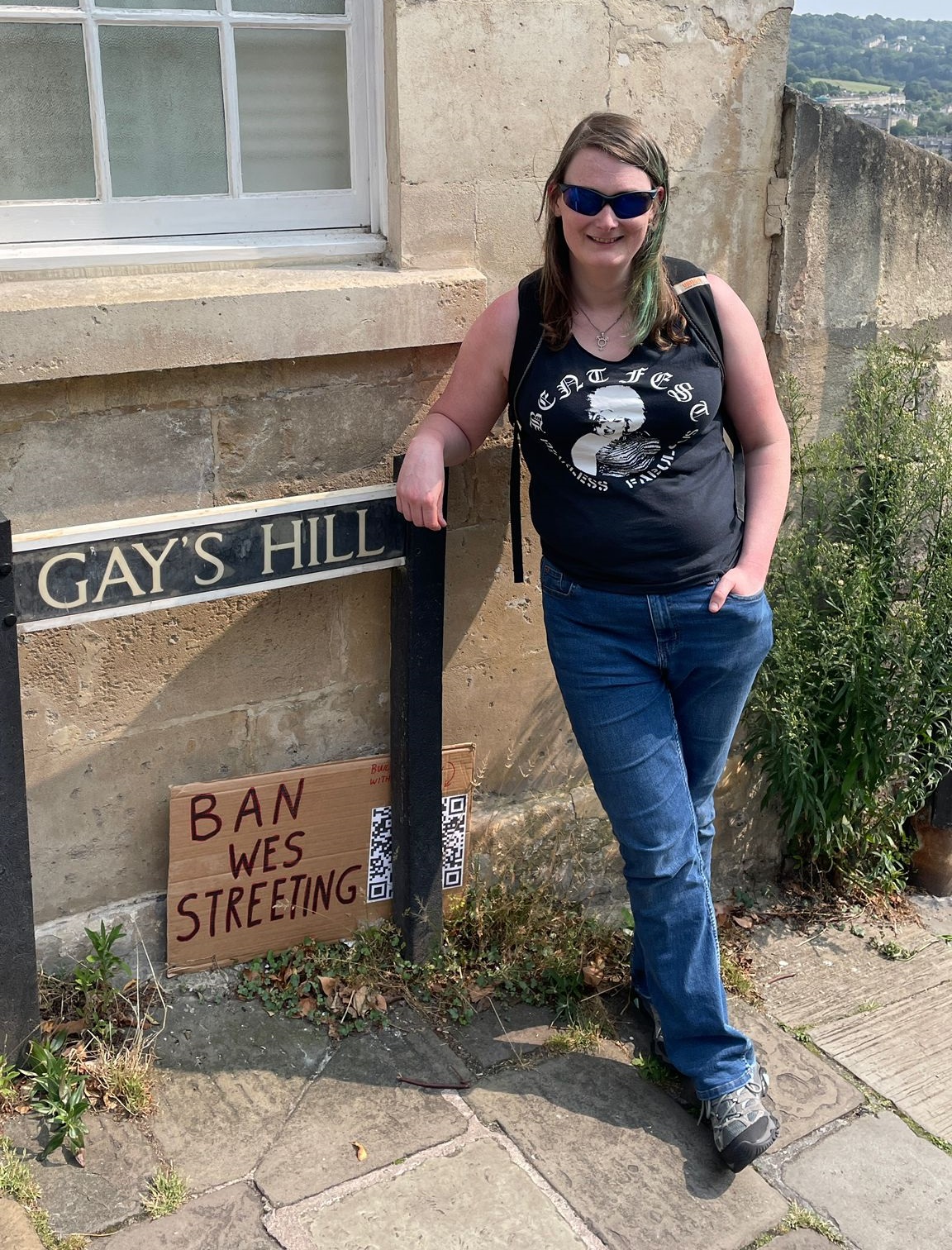
And then we left the city centre – walking up Gay’s Hill, before taking time for a drink and apple pie at the Fairfield Arms. The pub, which has been run by a gay couple for many years now, was full of local people enjoying a Sunday roast or just hanging out in the pub garden. We had a chat with one of the landlords, who said he was a bit sad to miss the Pride event, but the weekend was always a busy time for them.
Queer lives are weaved through the very fabric of the city of Bath. We are always and have always been everywhere, quietly getting on with our day to day. But we also deserve love, recognition, community, and visibility on our own terms. That’s why Pride is so important.
Information on supporting or donating to Bath Pride, to ensure independent, and community-centred future events, can be found here.
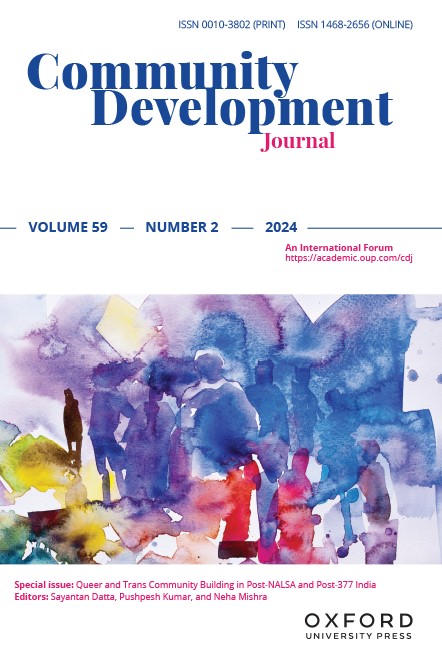
I am very excited to see the publication of the most recent issue of the Community Development Journal (CDJ), which focuses on queer and trans lives and collectivity in India.
The issue, titled Queer and Trans Community Building in Post-NALSA and Post-377 India, is edited by Pushpesh Kumar, Sayantan Datta, and Neha Mishra. Across the editorial and seven articles, it explores pathways and barriers to community organising across a range of settings, including in families, religious contexts, community health programmes, universities, and the media.
A one of the editors-in-chief of CDJ, it was an honour to support the hard work of the special issue editors and authors, who have put together a truly groundbreaking collection. LGBTIQ+ organisations, and others with a broader remit who seek to work with LGBTIQ+ people, are increasingly taking community development approaches and (where they can afford to do so) employing community development workers. However, community development research has been slow to catch up, with very little literature examining queer or trans community development theory and practice. This special issue therefore represents an important act of leadership in the field, which I hope will pave the way for more expansive discussions of LGBTIQ+ issues within community development globally.
The issue also representives methodological innovation, bringing literary and media studies methods to consider opportunities and issues for community building in India, alongside the social sciences approaches more typical of research in the field of community development.
I’m hugely honoured that my band’s song “mostly still” has been used in the trailer for Leeds Queer Film Festival this year!
Leeds Queer Film Festival is an amazing, affordable, non-profit community event, which every year shows feature-length films and shorts from around the world. I cannot recommend it enough!
This year’s event runs from 20-24 March, and you can find all the information you might need on their website.
In recent years I have co-authored numerous peer-reviewed essays for edited collections. I have just made three of these freely available, from books originally published in 2020 and 2021.
Why is this happening now? Well, it’s basically due to moves toward so-called “open access” within the bizarro world of academic publishing. I try and publish my work in places that will also let me share my work for free. For book chapters, publishers usually impose an embargo period of 2-3 years, after which authors are allowed to share the post-peer-review version on our own website. The essays I have recently uploaded have all had their embargo end, so I’m excited to now share them more widely.
You can download the essays by clicking on the links below.
Queering Community Development in DIY punk spaces Also published in the book: Arts, Cultureand Community Development (Policy Press) Written with my long-running collaborator Kirsty Lohman, this essay looks at grassroots community organising within queer, feminist, and anti-racist punk spaces. We argue that this organising is often prefigurative: that is, it actively models and enacts the changes that punks want to see in the world. Looking at events such as First Timers and Decolonise Fest, plus bands such as Big Joanie, we explore what happens when marginalised people create their own cultural spaces, and seek to facilitate access to these spaces for others who are often denied artistic and political expression.
Men transmasculine and non-binary people and midwifery care Also published in the book: Midwifery Essentials(Elsevier) I contributed to this essay as part of the Trans Pregnancy research project team. Our project spoke with over 50 men, transmasculine, and non-binary people who experienced pregnancy and childbirth in Australia, Bulgaria, Canada, Germany, the UK, and the USA, plus a handful of midwives who have supported people from this group. In this short essay, we briefly outline the positive and negative experiences that trans birth parents reported having with midwives, plus challenges reported by midwives themselves. On this basis we make 8 recommendations for developing best practice with trans people in midwifery services.
Depathologising Gender: Vulnerability in Trans Health Law Also published in the book: A Jurisprudence of the Body (Palgrave Macmillan) I co-wrote this essay with Chris Dietz, a scholar of Law at the University of Leeds. Drawing on feminist and trans critiques of human rights models, plus an analysis of gender recognition laws in countries including Argentina, Denmark, and the UK, we argue for a new approach to understanding the fight for depathologisation in law and medicine.
These three essays are just some of the many peer-reviewed academic publications I make freely accessible on this website. For more work on a range of topics relating to trans studies, feminism, and/or community development, see my publications page.
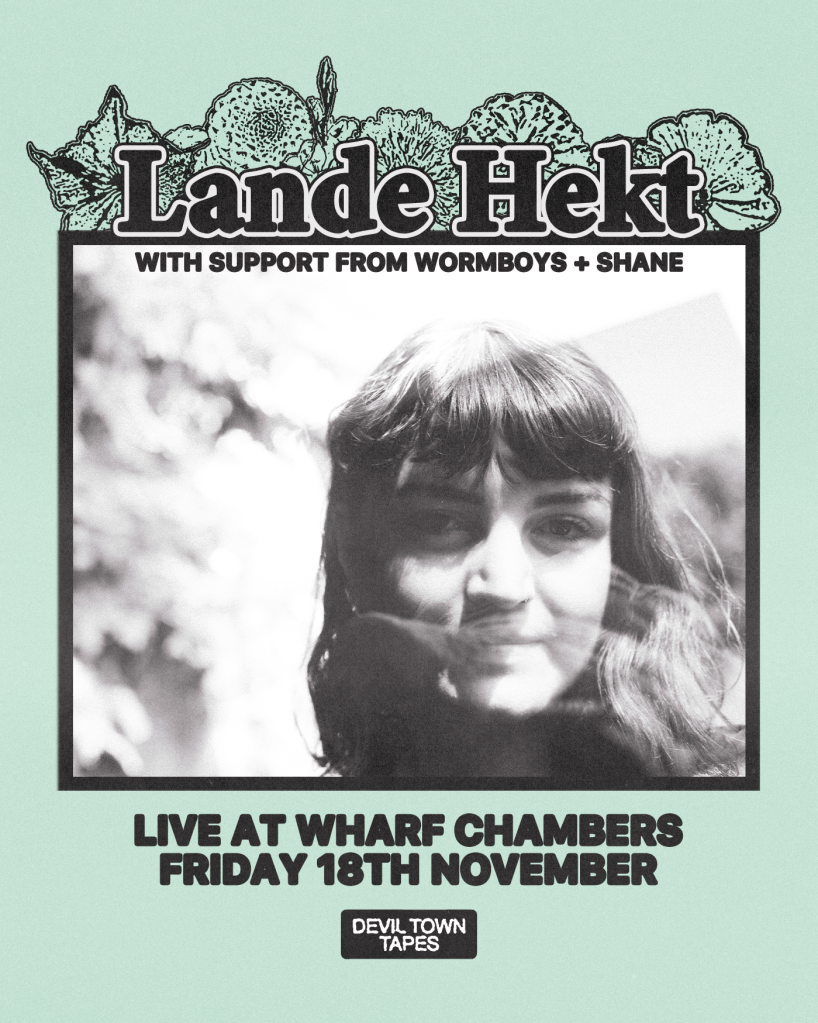
Yesterday we released the latest wormboys single, and the first song from our forthcoming EP (coming soon etc). It’s a stomping disco-punk tune which celebrates the healing power of queer hedonism!
I will, as ever, be bouncing around with a bass. If you live in or near Leeds, you should totally come and see us. If not, watch this space – we have a few other gigs coming up around around the UK, and some new music on the way…









 Dr Ruth Pearce