Review: Re-framing in Friction, On Trans-inclusive Enactment of Gender Equality

I entered the board room with some trepidation, amidst a gaggle of nervous colleagues. We were followed by the LGBT Equality Champion, and the Interim Head of Equality, Diversity, and Inclusion. The room itself was relatively mundane. Some chairs sat around a set of rectangular tables. A blank screen was linked to a computer in the corner. It could have been any room in the institution – if it were not for the view.

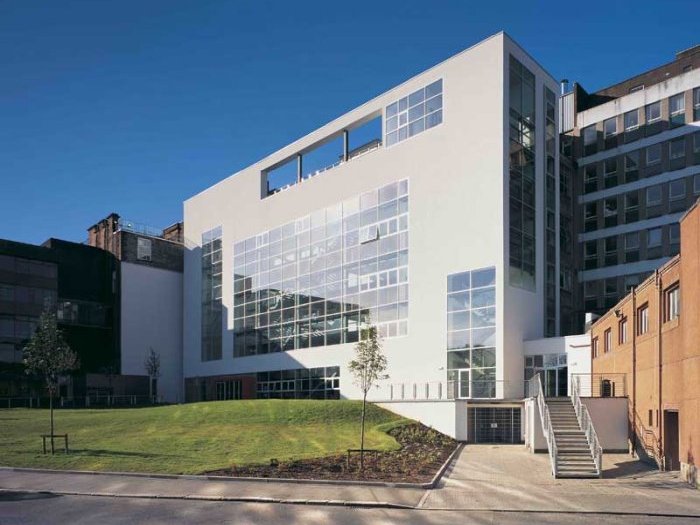
We were on the top floor of a shiny new building. Through floor-to-ceiling glass windows we could see a magnificent sweep of the city. I admired the soaring gothic tower of the university, the busy streets nearby, and the new blocks clustered around the river. A long march of tenement buildings to the south was ended by a wide semi-circle of high hills, with wind turbines working busily atop them.

We had gathered in this room to discuss national proposals for the mandatory segregation of trans staff and students. My colleagues had asked for the meeting to explore what – if anything – our employer might be prepared to do to counter these damaging proposals. We had taken time out of our busy schedules. There was no accounting for this in our workload. There was no guarantee we would achieve anything of use. We were concerned about the impact of the proposed segregation scheme on our work lives – but also about the impact of the meeting itself upon our wellbeing.

All of us, aside from the institutional equality leads, were trans ourselves. Many of us had previous experiences of equality schemes, having put countless hours into discussions intended to reshape policy to the benefit of minoritised staff and service users. We often felt isolated and bogged down in such conversations: finding it hard to explain the urgency of action, struggling to translate ideals into action, and fearing that we would be positioned as troublemakers.

As we sat down together, I found myself thinking about Toby Odland’s framing of the second law of thermodynamics:

Some input of energy is required to go between states of non-movement and movement. In large scale systems some of the energy put in to get an object to change state will be dispersed as heat into the environment. Not all of the energy put in is transferred to kinetic or static energy as may be the desire of the one providing the input. In other words, work wastes energy. (29)

In that room with the beautiful view, I was painfully aware of how inequalities can be reproduced in interventions designed to combat them. This phenomenon is a central concern of Toby Odland’s doctoral dissertation, Re-framing in friction: on Trans-inclusive enactment of gender equality aims. The dissertation offers a phenomenological interrogation of how gender inequalities persist for trans people in institutional environments, despite efforts to identify and tackle them.


The above is an extract from my review of Toby Odland’s PhD dissertation Re-framing in friction: on Trans-inclusive enactment of gender equality aims. You can read the full review, published in Tidskrift för genusvetenskap, through either of the links below:

[Re-framing in friction review: xml link]

[Re-framing in friction review: PDF link]


I was asked to write this review after acting as opponent in Toby Odland’s doctoral defence at Linköping University in Sweden, in June 2025. Unlike the UK’s PhD vivas – oral examinations which take place behind closed doors – Swedish doctoral defences are public events, usually taking place at a point where a committee of experts has already supported the provisional completion of the PhD. As such, the dissertation is distributed in print and in digital format ahead of the defence. You can download a free copy of Odland’s dissertation here.

The opponent’s role in a public defence at Linköping University is to present a short summary of the doctoral student’s work to the audience, before asking the student a series of scholarly questions about the work and its implications (you can download my presentation slides here). The student then takes questions from the audience, before an examination committee convenes to (hopefully!) confirm that the PhD should be awarded.

As you’ll see in the full review, I was extremely impressed with Odland’s account of gender equality work in Sweden, and I believe it will be highly relevant reading for people involved in equality work in other countries too.


Cover of Toby Odland's doctoral dissertation, Re-framing in Friction. It features an image of numerous people attempting to discuss, climb around, or repaint an abstract representation of an institution, with a trans flag in one corner.

Event: Participatory recovery and reconstruction: Lessons from Ukraine

Alongside colleagues from the Community Development Journal, I am organising this hybrid event which is taking place in Glasgow’s Advanced Research Centre from 6pm-8pm on Monday 26th February.

For a free ticket to attend either in-person or online, please book via Eventbrite.

As the conflict in Ukraine enters its third year, how are community development workers building participatory approaches to recovery and reconstruction?

This event will see Nataliya Drozd (Dobrochyn Centre) and Oleksandr Pidhorniy (Chernihiv Centre for Human Rights) in conversation with peacebuilding expert Professor Sinéad Gormally (School of Education, University of Glasgow).

We will hear first-hand about democratic activism, local self-governance, and integration of internally displaced peoples from civil society experts based on the ground in Ukraine. Attendees will also have space to reflect on how we can apply insights from their knowledge and experience within our own communities in Scotland.

This will be a hybrid event – when you book your (free) ticket, please state whether you will be joining online. We will circulate a link to join the event on the afternoon of 26th February.

Upcoming talks: April-May 2022

I am speaking at a series of exciting events over the next few weeks! All are free to attend, you will just need to register in advance if you’d like to come.

Tuesday 26th April – Manchester
Trans Healthcare: Past, Present and What Might Have Been

In-person roundtable discussion, with Ellis J Johnson, Stephen Whittle, Krishna Istha, and Laura Salisbury.

6pm-8pm BST, International Anthony Burgess Foundation
3 Cambridge Street, Manchester, M1 5BY

Wednesday 27th April – Online
Queer and Trans Mobilisations – Possibilities and Challenges

I am incredibly honoured to be giving a keynote talk for this two-day event hosted by the Department of Sociology, University of Hyderabad, and the Centre for Writing and Pedagogy, Krea University. I will be speaking about “Building Queer and Trans Communities in the UK” towards the end of the first day, and am enormously excited to be learning from colleagues in India during the event.

10am-6pm IST, 27-28 April
Register online to attend

Thursday 5 May – Online
UK Workshop in Trans Philosophy

I will be delivering a keynote on the first day of this groundbreaking event hosted by the University of Glasgow. My talk is provisionally titled “Let’s (not!) fight a TERF war: Trans feminism in a time of moral panic”.

9:30am-4:30pm BST, 5-6 May
Register online to attend

Wednesday 11 May – Online
Reproductive Justice Research Network seminar (link to come)

I will be joining colleagues from the Trans Pregnancy project to discuss findings from our international study of trans and non-binary people’s experience of conception, pregnancy, and childbirth. Our talk is provisionally titled “Reproductive Justice for Trans People”.

Full details TBA – watch this space!

New roles: University of Glasgow and CATS

I am very excited to announce that I will be starting a new job at the University of Glasgow this summer!

I have been appointed Lecturer in Community Development at the School of Education. I will be teaching and conducting research on a range of topics relating to social justice theory and movements, community action, and collective empowerment. This will build on my previous work on topics including trans health, queer music scenes, and gender inequalities in Higher Education.

St Andrew’s Building, University of Glasgow

I am also delighted to have been appointed Senior Fellow at the Center for Applied Transgender Studies (CATS) in Chicago. As a Fellow at the Center I intend to collaborate with international colleagues in conducting and disseminating impactful research by and for trans people and communities.

All of this does however mean that sadly I will be leaving my current role as Research Coordinator at the Trans Learning Partnership. We have achieved an enormous amount with this new partnership over the last year, including co-production of community research priorities, design and pilot of shared data collection, participation in public consultations and advisory groups, and support work around groundbreaking research with trans birth parents in England. I wish my former colleagues all the best with their future work, and fully intend to continuing collaborating with them as a university-based researcher.