RCGP host conversion therapy conference in London – protest 23 March

On Saturday 23 March the Clinical Advisory Network on Sex and Gender (CAN-SG) are hosting at conference at 30 Euston Square, the headquarters of the Royal College of General Practitioners. CAN-SG are described by Trans Safety Network as “an organisation composed mainly of activists involved in the pseudoscience network SEGM, and the anti-trans conversion therapy campaigning body Genspect“.

A noise demonstration will be held outside the conference venue from 10am on 23 March, hosted by Transgender Action Block, Lesbians and Gays Support The Migrants, and The Dyke Project.

Protest poster, which reads as follows. Noise demo against Royal College of GPs conversion therapy conference. 30 Euston Square, March 23rd, 10am, 2024. Get loud, get angry against institutionalised abuse. No parasan. Full youth autonomy now. No cops, no SWP, no Tories.


According to the Memorandum of Understanding on Conversion Therapy, an agreement signed by 40 leading professional bodies and healthcare providers, conversion therapy “is an umbrella term for a therapeutic approach, or any model or individual viewpoint that demonstrates an assumption that any sexual orientation or gender identity is inherently preferable to any other, and which attempts to bring about a change of sexual orientation or gender identity, or seeks to suppress an individual’s expression of sexual orientation or gender identity on that basis”. Conversion therapy has been described as a form of torture in academic work and by UN experts.

The CAN-SG event speaker lineup is a who’s who of conversion therapy proponents and anti-trans activists, including:

  • Stelley O’Malley, founder and director of Genspect, who has described seeking to suppress the gender identity of teenagers in her therapeutic work, adding: “I don’t think you should have empathy or sympathy” for young trans girls.
  • Michael Biggs, an anti-trans campaigner linked to a prolific troll account on Twitter.
  • Richard Byng, a member of anti-trans pseudoscience network SEGM.
  • Rachel Cashman, a campaigner against trans inclusion in schools, and supporter of Women’s Declaration International (WDI). Under their former name of Women’s Human Rights Campaign, WDI have openly called for the “elimination […] of the practice of transgenderism”.
  • Az Hakeem, a member of Genspect and an active opponent of a proposed legal ban on conversion therapy. Hakeem was reported for conversion therapy to the GMC by a former patient.
  • Anne Hutchinson, who has promoted materials by Genspect in training for South London and Maudsley NHS Mental Health Trust.
  • Riittakerttu Kaltiala, a Finnish clinician and opponent of affirmative care who contributed evidence for Florida’s ban on medical transition for young trans people. I have not found any evidence that Kaltiala opposed Finland’s policy of forced sterilisation as a condition of legal recognition for trans people, which was repealed only last year, but am willing to be corrected on this. According to a recent academic biography, Kaltiala sits on the advisor board of the Cass Review.

The Royal College of General Practitioners (RCGP) are signatories of the Memorandum of Understanding on Conversion Therapy. Signatories agree that conversion therapy is “unethical and potentially harmful”, and commit to ending this practice in the UK.

Following complaints from LGBTIQ+ groups and their own members, the Royal College of General Practitioners (RCGP) released a statement saying that the conversion therapy conference would go ahead. In the statement, they argue that their headquarters building, 30 Euston Square, is “an event space run by an independent events company”. However, the statement opens by saying that the RCGP has “reached the decision that the Clinical Advisory Network on Sex and Gender (CAN-SG) conference can go ahead”, and later adds that “the College would be at risk of being faced with a claim for breaching the Equality Act if we acted otherwise”. This implies that the RCGP do, in fact, have control over their own building, and have taken the active decision not to oppose the conference.

Legal threats are increasingly common from anti-trans campaigners, who argue that cancelling contracts or events constitutes an attack on their “gender critical” views as “protected beliefs”. The CAN-SG conference has been widely reported as a gender critical event, and indeed several of the speakers appear to describe themselves as “gender critical”. However, the issue with the event is not the beliefs of the speakers or organisers in and of themselves. It is that they are actively promoting disinformation and harmful practices.

The RCGP’s position is therefore one of gross cowardice, and demonstrates that they are not actually committed to preventing harm against trans people in healthcare settings. It costs the RCGP very little to sign a document claiming that they oppose conversion therapy, or condemn the UK government for failing to introduce a legal ban. However, now that the fight against conversion therapy has come to their door, they are not prepared to act.

It is within the power the RCGP to ensure that the CAN-SG conversion therapy is cancelled. They have chosen not to do this. It is within the power of the RCGP to oppose CAN-SG in court, if it came to that. They have chosen not to.

This reflects the same failures we have seen from bodies including NHS England and the Cass Review. I am often asked why trans people do not trust doctors. This is why. We are failed by medical professions over and over again.

Change happens not because powerful organisations allow it, but because ordinary people fight for it. A true commitment to ending conversion therapy can be seen not in the actions of RCGP, but in the work of groups like Transgender Action Block, Lesbians and Gays Support The Migrants, and The Dyke Project. I am also hugely grateful to grassroots organisations such as Trans Safety Network, Health Liberation Now, and Gender Analysis for gathering a lot of the information I collated in this post.

That power also potentially lies with you. Trans support groups and harm reduction networks for people self-medicating can be found across the UK, and will always benefit from your support. And you can complain to the RCGP here.

Free essays! Queer punk, trans-inclusive midwifery, and trans health law

In recent years I have co-authored numerous peer-reviewed essays for edited collections. I have just made three of these freely available, from books originally published in 2020 and 2021.

Why is this happening now? Well, it’s basically due to moves toward so-called “open access” within the bizarro world of academic publishing. I try and publish my work in places that will also let me share my work for free. For book chapters, publishers usually impose an embargo period of 2-3 years, after which authors are allowed to share the post-peer-review version on our own website. The essays I have recently uploaded have all had their embargo end, so I’m excited to now share them more widely.

You can download the essays by clicking on the links below.

Queering Community Development in DIY punk spaces
Also published in the book: Arts, Culture and Community Development (Policy Press)
Written with my long-running collaborator Kirsty Lohman, this essay looks at grassroots community organising within queer, feminist, and anti-racist punk spaces. We argue that this organising is often prefigurative: that is, it actively models and enacts the changes that punks want to see in the world. Looking at events such as First Timers and Decolonise Fest, plus bands such as Big Joanie, we explore what happens when marginalised people create their own cultural spaces, and seek to facilitate access to these spaces for others who are often denied artistic and political expression.

Men transmasculine and non-binary people and midwifery care
Also published in the book: Midwifery Essentials (Elsevier)
I contributed to this essay as part of the Trans Pregnancy research project team. Our project spoke with over 50 men, transmasculine, and non-binary people who experienced pregnancy and childbirth in Australia, Bulgaria, Canada, Germany, the UK, and the USA, plus a handful of midwives who have supported people from this group. In this short essay, we briefly outline the positive and negative experiences that trans birth parents reported having with midwives, plus challenges reported by midwives themselves. On this basis we make 8 recommendations for developing best practice with trans people in midwifery services.

Depathologising Gender: Vulnerability in Trans Health Law
Also published in the book: A Jurisprudence of the Body (Palgrave Macmillan)
I co-wrote this essay with Chris Dietz, a scholar of Law at the University of Leeds. Drawing on feminist and trans critiques of human rights models, plus an analysis of gender recognition laws in countries including Argentina, Denmark, and the UK, we argue for a new approach to understanding the fight for depathologisation in law and medicine.

These three essays are just some of the many peer-reviewed academic publications I make freely accessible on this website. For more work on a range of topics relating to trans studies, feminism, and/or community development, see my publications page.

Trans pregnancy: new book chapters and article

Over the last couple of years, members of the Trans Pregnancy project team have been quietly plugging away writing up more of our findings from our 2017-2020 research.

Recently, three new books have come out which include chapters based on our work, plus we have just had a new academic article published. I hope all of these will be useful for expanding knowledge about trans people’s experiences of pregnancy and childbirth, in ways that will be useful to community members, healthcare providers, and researchers.

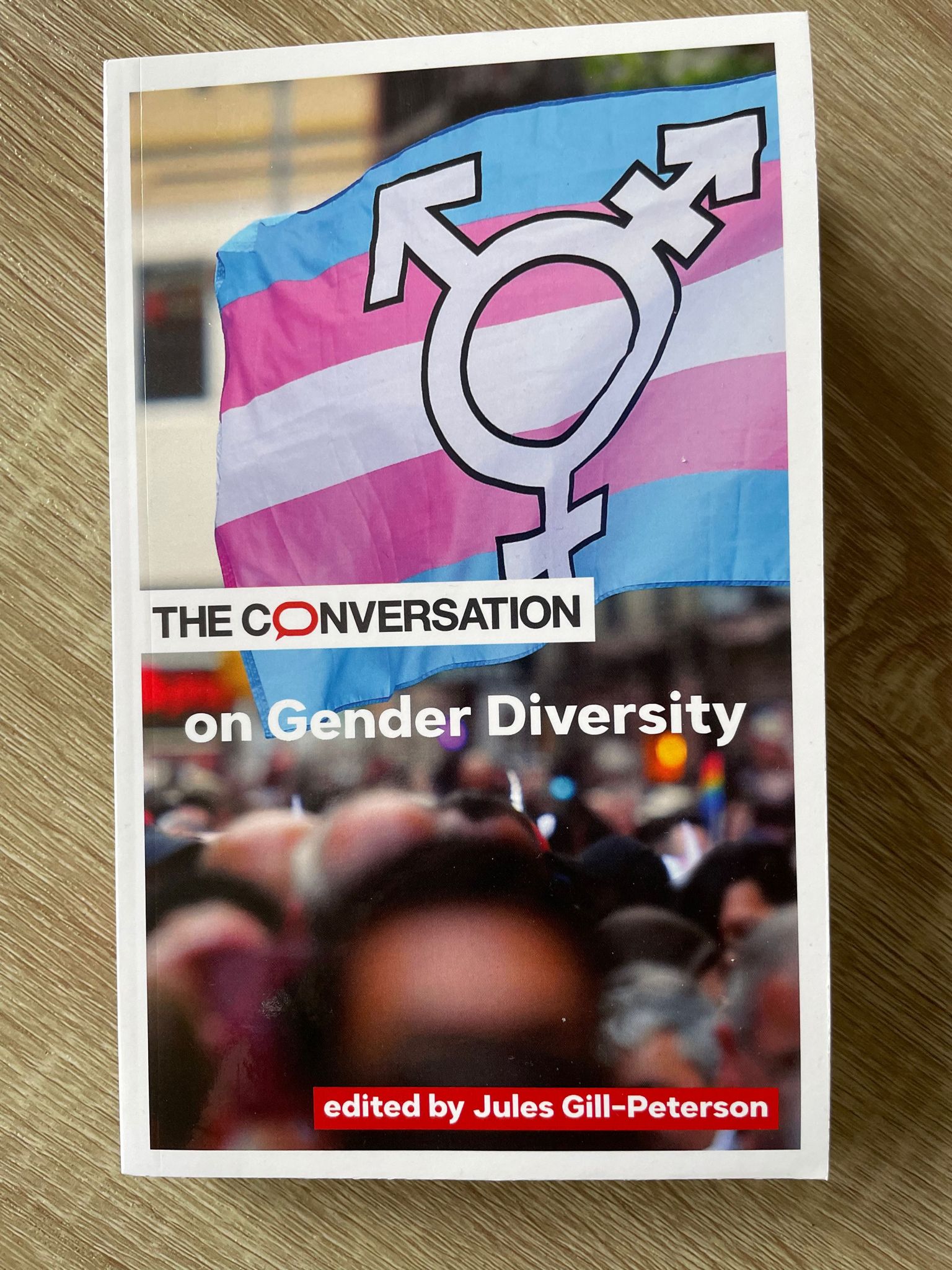
The Conversation on Gender Diversity (edited by Jules Gill-Peterson, published by Johns Hopkins University Press) is a collection of short trans studies essays originally published on The Conversation. It’s written in an accessible way and priced affordably. It includes our essay “Giving Birth as a Father – Experiences of Trans Birth Parents“, which provides a concise introduction to the topic and to our research.

Photograph of a book, The Conversation on Gender Diversity. The cover features a blurred crowd of people and a large trans flag with the trans symbol on top of blue, pink, and white stripes.


The Routledge International Handbook of New Critical Race and Whiteness Studies (edited by Rikke Andreassen, Catrin Lundström, Suvi Keskinen, and Shirley Anne Tate, published by Routledge) is a hefty academic volume with a series of articles which critically interrogate whiteness. The book includes our essay “Whiteness in research on men, trans/masculine and non-binary people and reproduction: Two parallel stories“, in which we reflect on both the racialisation of both trans pregnancy and childbirth, and on the whiteness of our research team. It’s currently only available in hardback at “academic” prices, so I encourage people to order it into your local library if it is of interest to you. I’m also very happy to email people a copy of the essay if you’d like to read it, and will be making a version freely available on this site as soon as the copyright agreement allows.

Cover image of a book, The Routledge International Hardbook of New Critical Race and Whiteness Studies. The cover features a colourful aerial photograph of a river bend.


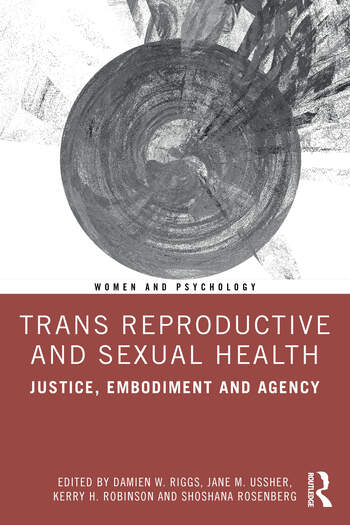
Trans Reproductive and Sexual Health (edited by Damien W. Riggs, Jane Ussher, Kerry H. Robinson, and Shoshana Rosenberg, also published by Routledge) is another academic book, this time focusing on topics including intimacy, sexual violence, sex education, and reproduction. It includes our essay on “Young men, trans/masculine and non-binary people’s views about pregnancy“, drawing on focus groups undertaken with young people to ask about how they see their reproductive futures. Again, this book has academic pricing, so we would greatly appreciate people asking their local library for a copy, and you’re welcome to contact me if you’d like to read the essay.

Cover image of a book, Trans Reproductive and Sexual Health. The cover image is an abstract grey circle with messy lines extruding from the top right.


Finally, we’ve just published an article in the journal SSM – Qualitative Research in Health. Titled “Medical Uncertainty and Reproduction of the “Normal”: Decision-Making Around Testosterone Therapy in Transgender Pregnancy“, this article looks at decision-making around cessation of testosterone during pregnancy, and critically explore some of the assumptions that get made in medical writing and practice.

Let’s respond to the NHS consultation together!

A couple of days ago I joined Katy Montgomerie’s livestream to work through the current NHS England consultation on child and adolescent gender services. We discussed the background to the consultation, what the questions mean, and what some of the major issues are.

You can take part in the consultation here. It is open until 4th December 2022. Filling it in is a bit of an intense experience, but if you fancy some friendly company and catty cameos, I hope our video will help.

Understanding Trans Health on Philosophy Tube

My book Understanding Trans Health is cited prominently in the new Philosophy Tube video on complaint, systematic inflexibility, and England’s NHS trans health crisis.

It’s a great video, which manages to capture the sheer horror of NHS failings while still delivering silly jokes, ridiculous costumes, and a strong analysis. In addition to drawing on my work, Philosophy Tube’s Abigail Thorne consulted me on the script for this episode, and I appreciated the opportunity to use my research in this way.

I am personally more optimistic than Abigail about the opportunities offered by the four NHS England ‘pilot’ clinics. These are beginning to slash waiting times, and several are now effectively run by trans people, for trans people. However, I do think it’s important to still critique the very logic that underpins many trans healthcare systems, especially the highly questionable ways in which the medical diagnosis of ‘gender dysphoria’ is constructed, and used to try and control us.

You can buy Understanding Trans Health directly from Policy Press here. It’s also available from all major booksellers, plus many independent queer book stores (e.g. Leeds’ brilliant The Bookish Type). I have also written to my publisher for permission to put a chapter of the book online for free – watch this space! In the meantime, free links to much of my other academic writing can be found here.

Video: Reproductive Justice for Trans People

Earlier this year I did a talk for the University of Cambridge Reproductive Justice Research Network alongside my excellent colleague Francis Ray White.

We talked about research findings from the Trans Pregnancy and Improving Trans Experiences of Maternity Services projects, plus reflected on the wider context of reproductive justice for trans people, including media coverage, medical racism, abortion rights, and attacks on young trans people’s bodily autonomy.

You can watch a video of the talk here:

(as a quick aside, I’d like to thank my good friend Harry Tunnicliffe for last use minute of his office so I could do this talk while away from home!)

Cass Review GRA study an appalling breach of research ethics

Logo of the Cass Review

I was dismayed to read that the UK Government are amending the Gender Recognition Act. Specifically, they are removing the offence under section 22(1) of the Gender Recognition Act 2004 for the disclosure of protected information, to enable this disclosure where it is “necessary for the purposes of facilitating, assisting or undertaking relevant research”.

This amendment enables NHS England to obtain trans people’s confidential information about their medical treatment for the purpose of research into child and adolescent gender services by the Cass Review. Specifically, it enables the acquisition of information (a) that could contain personal identifying details, (b) without that person’s consent, and (c) for individuals who obtained specific legal protections with the reasonable belief that these would remain in place. There has been no community consultation ahead of this move.

As a social researcher and expert in ethical methodologies, I believe that any research undertaken under these circumstances would represent an enormous breach of the basic principles of research ethics. Moreover, it will could significantly undermine the already extremely low existing low level of trust between trans community members, researchers, and medical practitioners.

Finally, the amendment also represents a significant weakening of the Gender Recognition Act’s legal protections for trans people (although for a full and measured analysis, see this post by What The Trans).

I have therefore written to the NHS England’s Gender Identity Programme Board to express my concerns about this development. I also hope that any university or NHS ethical panel overseeing the approval of such research will prevent it from taking place.

You can read some of my published work on ethical research with trans populations here.

You can write to the Cass Review to express your concerns here.

Posted updated 2 July to include new details.

Trans Pregnancy: new articles on conception and pregnancy loss

Cross-posted from the Trans Pregnancy project blog.

We are delighted to announce that the first two peer-reviewed articles on findings from our research interviews are now available. Both draw on an analysis of 51 interviews with people who had concieved. One looks at experiences of pregnancy loss among a subset of research participants, and the other explores routes to conception.

More information on each of these articles can be found below, along with links to open-access versions which are free to read.

~

Men, trans/masculine, and non-binary people’s experiences of pregnancy loss: an international qualitative study

Abstract text for the article. Follow the link to read it.

Published in BMC Pregnancy and Childbirth (BioMed Central). The article is fully open-access and free to read.

This article examines male, trans/masculine and non-binary gestational parents’ experiences of pregnancy loss, an experience that more broadly affects millions of people every year. We found that, like cisgender parents, our research participants often faced grief following a pregnancy loss, and like heterosexual cisgender men in particular, they often faced barriers to support.

However, the research participants also reported experiences specific to pregnancy loss among male, trans/masculine and non-binary gestational parents, including difficulties in accessing inclusive healthcare, and resistance to “failed” or “wrong” body narratives. We therefore make recommendations for healthcare providers regarding the importance of appropriate language, and the need to sensitively attend to emotions attached both to the loss itself and to the possible desire to attempt another pregnancy.

~

Men, trans/masculine, and non-binary people negotiating conception: Normative resistance and inventive pragmatism

Abstract text for the article. This can be read by following one of the links to the full article.

Published in the International Journal of Trangender Health (formerly the International Journal of Transgenderism). An open-access version of the article can be read for free here.

This article explores how men, trans/masculine and non-binary people navigated different social norms and/or practical obstacles to conception. It shows that individuals engage in diverse practices that normalise their experiences of conception, while also highlighting the unique needs and challenges they can face.

The article will also form part of a special issue of the International Journal of Transgender Health that we are editing which will be published in full in early 2021. This special issue will more broadly explore issues of fertility, reproduction, and sexual autonomy among trans and non-binary people. Two other great articles from the special issue have also already seen advance publication:

Administering gender: Trans men’s sexual and reproductive challenges in Argentina, by Andrés Mendieta & Salvador Vidal-Ortiz.

“Just because I don’t bleed, doesn’t mean I don’t go through it”: Expanding knowledge on trans and nonbinary menstruators, by A.J. Lowik.

There is of course a lot more to come – watch this space for more new research findings from both ourselves and our colleagues in the field.

Statement on Equality Minister’s comments

This statement, which I helped to draft, is cross-posted from Spectra.

~

As providers of health and wellbeing services for vulnerable people, we are dismayed by Women and Equality Minister Liz Truss’ poorly-informed comments on transgender issues.

Nobody’s fundamental rights should be subject to ‘checks and balances’, as the Minister suggests. Single-sex spaces are already protected under the Equality Act; trans and non-binary people deserve the same access to relevant services and provisions as everyone else.

Trans and non-binary people face discrimination and exclusion in all areas of life. They are disproportionately likely to experience sexual violence and domestic abuse, plus encounter severe difficulties in accessing healthcare, housing, education, jobs, and benefits. This is especially the case for trans women and girls, plus trans and non-binary people of colour.

Trans and non-binary people of all ages require support in accessing services, and making informed decisions about their own lives and bodies. The Minister’s statement that young people need to be ‘protected’ from making ‘irreversible’ decisions appears to contradict existing legal precedents.

These include the principle of Gillick competence, and the Fraser guidelines, which together protect the rights of minors to make their own decisions around medical treatment, if they can demonstrate appropriate capacity to consent.

Any move to undermine these principles will have deeply concerning implications for all minors. In particular, young people’s confidential access to contraception, sexual health services, abortion services, counselling and therapy will be at risk. Rather than positioning trans and non-binary people as a problem, the Minister, along with the Women and Equalities Committee, should focus on ensuring that the Government delivers on the recommendations of the 2015 Transgender Equality Inquiry.

These include the expansion of healthcare provision, and reform of the Gender Recognition Act 2004 to ensure full legal recognition for trans and non-binary people of all genders, on the basis of self-determination.

~

A brief personal addition. Our communities and activist networks are stronger, louder, and more visible than ever. We will stand resolute against any attempt to roll back the legal rights of trans people and/or young people. If the Minister follows through on her threats, she will find she has severely underestimated us. We will fight and we will win.


Trans health and rainbow futures: learning from Aotearoa New Zealand

This will be the first in a short series of posts on my recent trip to Aotearoa. See also: Part 2: Rainbow resources from Aotearoa.

20190510_171124

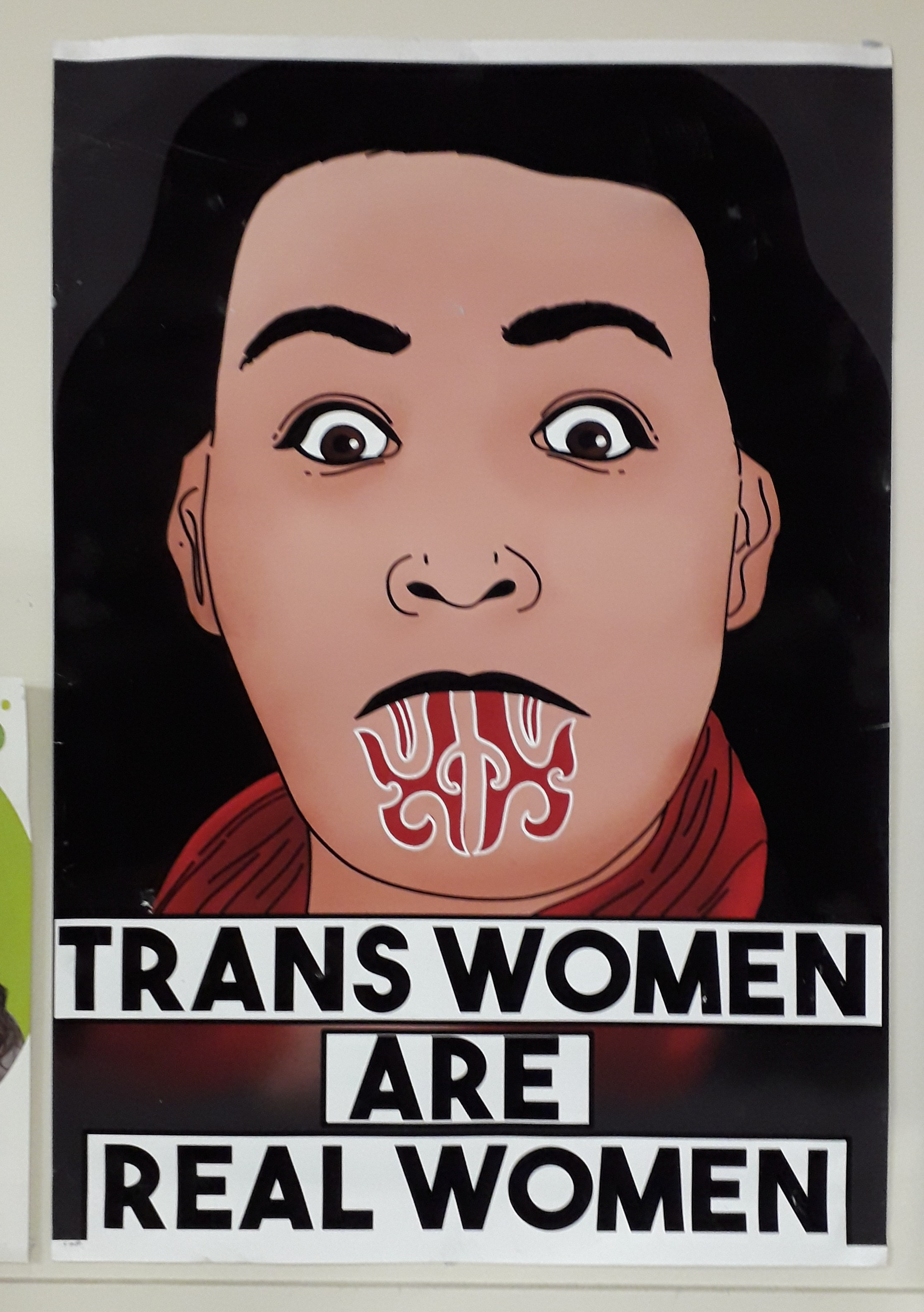
Poster in the RainbowYOUTH centre

I recently returned from a month-long journey to Aotearoa New Zealand. This trip was funded by a Rockefeller Foundation Fellowship with the School of Sociology and Social Policy at the University of Leeds.

My aim was to learn more about trans health services and community advocacy, while also sharing findings from my own research in a European context. I feel deeply privileged to have had the opportunity to meet many amazing people, who are doing a great deal of incredible work.

In this post, I share a number of resources and reflections from the trip. However, this is just the tip of the iceberg – I have no doubt that will no doubt that the experiences from the Fellowship will inform my research and thinking for many years to come.

Before I begin, I should quickly acknowledge that many readers of this blog will be unfamiliar with the word “Aotearoa”. This is a term from te reo Māori (the Māori language): it’s the current name for the islands known as “New Zealand” in English. Both are official names for the country that governs this land. For simplicity (and out of respect Māori history and culture, which long predates the arrival of Pākehā, or white European settlers) I use mostly use Aotearoa alone for the remainder of this post.


Whanganui-a-Tara / Wellington: the Gender Centre and Aunty Dana’s Op Shop

20190426_141647After a brief visit to Auckland (where I recovered from the long flight) I began my trip in earnest with a visit to the capital city of Aotearoa New Zealand, on the south-west tip of the North Island. I was told that you can’t beat Wellington on a good day – certainly, the bay of Whanganui-a-Tara is one of the mostly stunningly beautiful places I’ve ever had the fortune to visit.

My first priority was a visit to the Gender Centre. This amazing new community resource, which was founded only last year and is currently based the front room of the 128 Radical Social Centre. It is run by members of Gender Minorities Aotearoa, a group who campaign and provide information for transgender, takatāpui, and intersex people. Takatāpui is a term in te reo which “embraces all Māori with diverse gender identities and sexualities“.

Photos of 128 Radical Social Centre and the Gender Centre, taken with permission.

The Gender Centre includes a small office space, where people working for Gender Minorities Aotearoa can work on current campaigns and meet with visitors. Anyone can drop by to ask for advice or support, or pick up information. For example, the organisation has recently started running a free binder scheme. Materials on display included forms for name and gender changes, advice on accessing healthcare services, and information on the BDMRR bill.

BDMRR stands for Births, Deaths, Marriages, and Relationships Registration. Groups such as Gender Minorities Aotearoa are campaigning for non-binary recognition, and to make it possible for people to legally change the gender marker on their birth certificate without going through an expensive process involving medical oversight. Unfortunately, proposed changes have been delayed by the actions of anti-trans hate groups. UK readers will recognise the similarities with the campaign of misinformation waged against proposed changes to the Gender Recognition Act. This is not a coincidence. Anti-trans groups in Aotearoa are directly influenced by the language, aesthetics and (in some cases) the direct interventions of UK anti-trans campaigners, in what can be understood as a form of neo-colonialism.

While I was at the 128 Radical Social Centre I also visited Aunty Dana’s Op Shop. This is a second-hand clothing and accessories store run by trans and non-binary volunteers and open to people of all genders, with proceeds donated to Gender Minorities Aotearoa. It’s such a great way to raise money for campaigning, while providing an important resource and social space. It can also serve as a less scary space than the Gender Centre for people who are just coming out and looking for support. I had a great time browsing the shelves and chatting with the volunteer who was working there that afternoon.

Photos of Aunty Dana’s Op Shop. Taken with permission.

You can watch a fantastic video about the Op Shop here:


While I was in Whanganui-a-Tara I also took the opportunity to visit a trans and non-binary artists showcase at the NZ Games Festival and meet with some brilliant academics and students working on LGBTIQ research at Victoria University of Wellington. I will be sure to share their work as it is published!


Ōtautahi / Christchurch: queer art and affirmative care

I next travelled to Ōtautahi / Christchurch, taking a train down the east coast of the South Island. During this trip I began to understand the extent of the damage caused by 2010 and 2011 Canterbury earthquakes. There was evidence of huge landslides and roads were still being rebuilt. Several metres of new coastline were visible for many miles, clearly identifiable through rocks bleached white by dead organisms that once lived under the waves. The city itself is still being rebuilt. Huge building projects and areas of empty land can be found throughout the central business district, a reminder of the unforgiving power of the Earth.

Photos: day and night – urban art and public protest.

It was apparent that the people of Ōtautahi were still recovering from tragedy even before the horror of the recent neo-Nazi mosque shootings. Nevertheless, the city struck me as a great centre of culture. I am grateful to have had the opportunity to meet some amazing queer and feminist artists and heard about both radical public interventions and commissioned works. If you want to learn more about this, the websites of Jennifer Shields and Audrey Baldwin are great places to start.

During this visit, I learned about a fantastic initiative to build and publicise new public health pathways for gender-affirming care in the Canterbury region. Until recently, services such as specialist counselling, hormone therapy and surgical referrals were only available on an ad-hoc basis, and information was not easy to find. Relevant information on what services are available and how they can be accessed is now easily available, thanks to the work of the Ko Awatea gender-affirming care co-design group.

These services are still not perfect – several interventions are not publicly funded, and they still involve a certain level of medical gatekeeping. However, they represent an important step forward. Notably, I was informed that these achievements can be credited to the willingness of particularly motivated medical providers, who were prepared to put energy into working directly with trans community representatives to work for reform.


Tāmaki Makaurau / Auckland: RainbowYOUTH

20190511_140445

The next stage in my journey was a visit Kirikiriroa / Hamilton, back on the north island. I was here for the Aotearoa New Zealand Trans Health Symposium. This will be the subject of a future blog post, so I am going to finish this piece with a look at an organisation based in Aotearoa’s largest city.

In finish my journey with a return to Tāmaki Makaurau / Auckland, meeting a number of community workers, activists and academics living and working in the city. I was especially honoured to visit the RainbowYOUTH offices and drop-in centre: a spacious explosion of colour located in an otherwise unobtrusive side street on the edge of the queer distract around K Road.

RainbowYOUTH are an organisation run by and for queer and gender diverse youth, with a remarkably long and successful history. They are currently celebrating their 30th anniversary, having been founded in 1989. The organisation’s members and executive board are all aged 27 or under. Executive advisors aged over 27 are invited to attend and speak at board meetings, but do not have voting rights. I was really impressed by this commitment to centring youth perspectives in support work and activism, something which has been missing from the UK since the dissolation of Queer Youth Network.

I was also interested in how common the language of “rainbow” community was in Aotearoa, as an addition and alternative to acronyms such as LGBTIQ. I like the way this word avoids the “alphabet soup” and potential exclusions tone of the acronym. I can also see how – like the term “gender minorities” – it can work to be inclusive both of intersex people and of takatāpui in a way that is more expansive than just attempting to rework the Western/anglophone framework of “LGBT”.

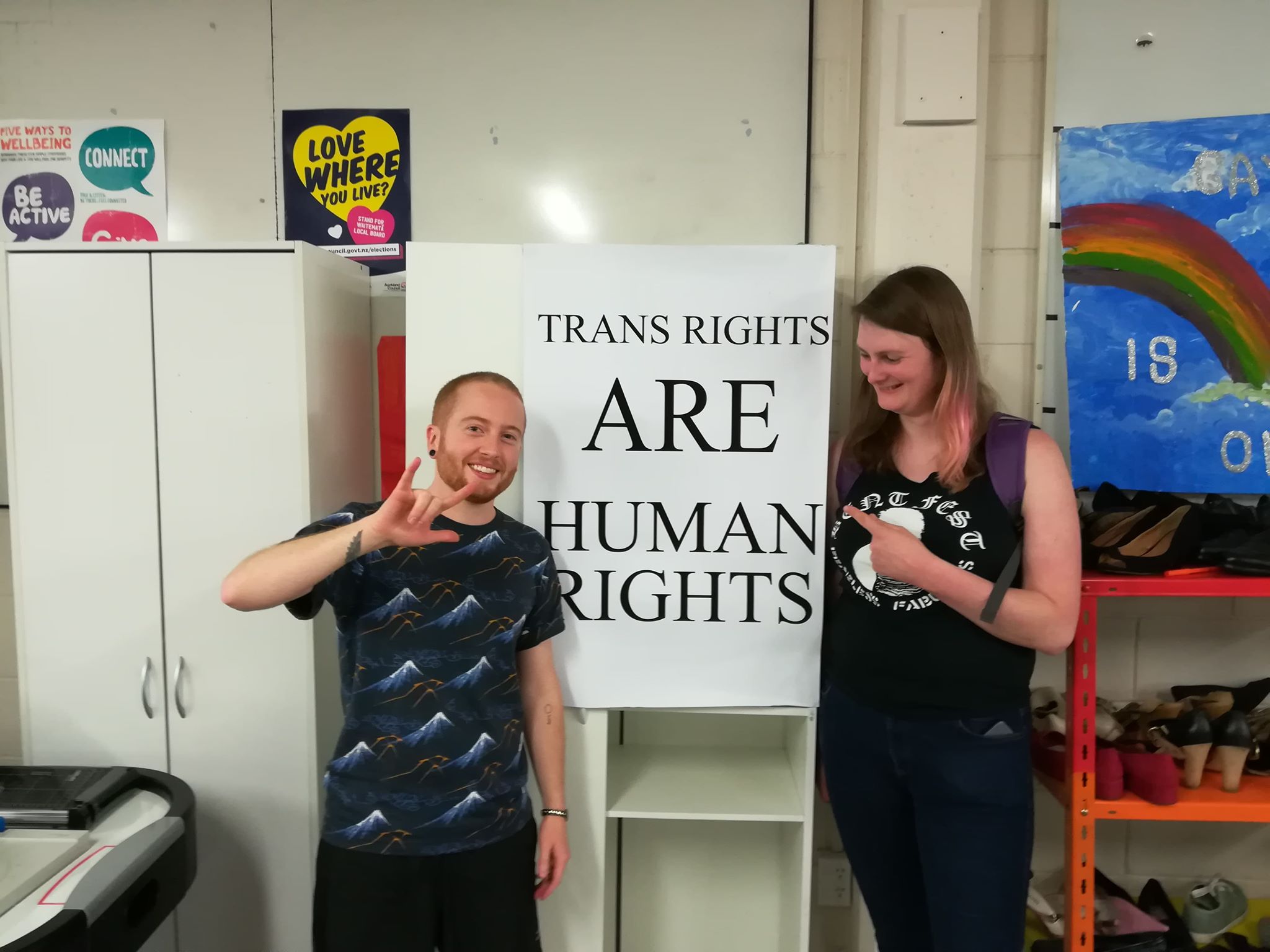
Photos of the RainbowYOUTH centre. Taken with permission.

The RainbowYOUTH centre was a wonderful building. For a long time, the organisation ran out of a very small office on Karangahape Road, but in recent years an increase in income and activity enabled a move to the new space. This features several offices, a therapy room, a large social space with a TV and gaming consoles, a library, a community wardrobe, free hygiene packs for people in difficult circumstances, and once again a whole range of resources and information. I can see how the very existence of this space is helping to create new possibilities for a generation of young people who I hope will achieve things that currently remain unthinkable.

I left Aotearoa incredibly inspired by the work and imagination of everyone I met, and am hugely grateful to everyone who helped with advice and organisation, made time to speak with me, and shared ideas and information. Ngā mihi nui!

59691782_1996458760649278_9127576502169239552_n