
An observation on the growing importance of social media

I’m currently working on a document that explores the methodological approach I am planning for my research into trans experiences of (primary) health provision.

In the paragraph I’m currently working on, I note the increased importance of social media to activism within trans communities. I cite Trans Media Watch as an example, noting the popularity of their Facebook page and Twitter feed. I compare the number of people they can reach directly through social media (approximately 1000 “like” on Facebook, approximately 3500 “followers” on Twitter, acquired since the group was established in 2009) to the number of people on the mailing list Press For Change spent around a decade building (approximately 2000 members as of 2007, according to Engendered Penalties).

The point isn’t to praise Trans Media Watch for reaching a lot of people very quickly (although their impact in this respect has been very impressive!) and nor do I intend to critique Press For Change. Instead I note these figures to highlight how social media has helped transform the nature (and level of participation in) trans activism.

But then pace of change appears to be accelerating still. The figures I cite above for participation in Trans Media Watch were accurate a couple of weeks ago or so, when I last worked on this particular document (what can I say, it’s been a busy fortnight!) However, they’re now inaccurate: the group has gained around 100 Facebook “likes” and around 300 Facebook followers during this time.

No doubt the exposure Trans Media Watch have gained as a result of their participation in the Leveson Enquiry has contributed to this situation, but my first set of figures was taken some time after the group provided evidence. For all kinds of reasons Trans Media Watch is of increasing interest to an increasing number of people, and it’s social media that’s facilitating this.

I don’t really have any kind of real analysis to offer right now. I’d love to take a good look at what’s happening, but it’s sadly tangential to the general thrust of my own work. But gosh, isn’t this interesting?

Trans Media Watch at the Leveson Enquiry

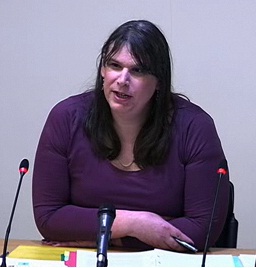
Helen Belcher of Trans Media Watch provided an impressive array of evidence in relation to transphobia in the media during the Leveson Enquiry yesterday. Video footage and full transcripts in .pdf and .txt formats can be found here. Trans Media Watch’s full submission to the enquiry can be found here.

Unfortunately – if unsurprisingly – Belcher’s strong performance warranted little comment from the mainstream and “pink” media alike. Notable exceptions included the headline story in Gay Star News (Trans people victims of ‘horrific’ press coverage) and a comment piece in Pink News (Does today mean change for the trans community?). There have been just brief summaries of Belcher’s evidence (with little or nothing in the way of analysis) within articles that tackle Wednesday’s events more widely in The Guardian, The Telegraph and on the BBC website. Even the #Leveson hashtag on Twitter went relatively quiet as the majority of cis commentators lost interest.

Still, this was to be expected, and we shouldn’t underestimate the importance of Trans Media Watch’s role in compiling and presenting evidence to such a major inquiry. Belcher powerfully outlined a number of very important issues:

  • The consequences of negative media coverage can be extremely serious for trans people: examples include loss of work, death threats, and the necessity of relocation in order to avoid prejudice.
  • Dehumanising and Othering language is routinely used within news stories: “The Sun is basically saying trans people elicit horror, trans people are frauds“.
  • Stories (and pictures) are often published without any consultation with the subject, let alone permission.
  • Newspapers often rely upon false information, such as inaccurate figures about the cost of medical transition on the National Health Service.
  • The Press Complaints Commission is considered useless and toothless as complaints are regularly ignored: “The Press Complaints Commission is regarded as a useless joke by trans people”.
  • Victims of negative media coverage tend to let the issue slide: “[…] we find that individuals rarely want to pursue the case because they then become afraid of future
    harassment“.
  • There tends to be no real justification for most articles about trans people on the grounds of “public interest”.
  • The Sun continues to run transphobic pieces (contrary to the claims of Dominic Mohan during his evidence to the Leveson Enquiry on Tuesday).
  • The Daily Mail publishes six times more stories on trans people than any other UK newspaper(!)

Trans Media Watch also identified a number of common themes in confidential complaints they’d received from trans correspondents who had suffered negative media coverage:

“In each case, the subject of the story had their right to privacy grossly breached, often at a very vulnerable time, with no public interest being served whatsoever.

Was put in danger of public abuse and/or violence.

Is left with candid details of their personal affairs, including previous names, pictures, home or work, available on the Internet.

Often these details, including photographs, were acquired without the subject’s permission. Had to fight the press to force them to exercise restraint — often with no effect.”

Finally, Belcher made a number of recommendations:

  • That it should be possible for organisations to issue complaints on the behalf of vulnerable individuals.
  • Anonymity should be granted to all who pursue complaints; we shouldn’t have to rely on the limited protections offered by the likes of the Gender Recognition Act.
  • The complaints process for media malpractice should be free:
    A lot of trans people lose jobs, find it difficult to get jobs. There is evidence that the earnings of a trans person is significantly lower than they could expect if they weren’t trans. That is a further deterrent for them to seek any recompense. It actually pretty much prevents any trans person from pursuing any action against a newspaper in the courts.

Transgender action plan: an initial analysis

Advancing transgender equality: a plan for action” was today published on the Home Office website. The document is the latest step in a historic programme of trans engagement undertaken by the current government. So, how does it shape up?

THE GOOD

Regular readers of this blog will be quite aware of how much I distrust and dislike the Conservative-led government. Their work on trans equality (in a purely liberal sense) has, however, been quite impressive on the whole.

Under the leadership of Equalities Minister Lynne Featherstone – who has long been a trans ally in Parliament – the Home Office has pursued a programme of engagement and genuine consultation that quite outstrips anything achieved by the previous Labour government (who generally passed trans equality legislation only when ordered to by the European courts).

The action plan promises a robust response to needs expressed by the trans community on a whole variety of fronts. Most of the government’s promises involve the production guidance for various individuals, organisations and/or sectors: this may not sound like much, but the value of this documentation should not be underestimated. Some of the biggest challenges we face arise simply from the fact that doctors, civil servants and others simply don’t know what they’re doing when confronted with trans issues, so it’s good to see this addressed. Of course, we’ll have to see how these promises actually pan out.

So, what do we have?

The Headlines

  • The big news is arguably the
    introduction of trans hate crime legislation
    . The government plans to amend existing laws in order to provide for:

“[…] sentences to be aggravated for any offencemotivated by hostility towards the victim onthe grounds of being transgender, and for a30 year starting point for murders motivated by hostility towards the victim on the groundsof being transgender.”

  • The government has also promised to “review” how gender identity is represented in passport application forms, and in passports. It’s not inconceivable that this may lead to the introduction of gender-neutral passports, particularly as the IPS admitted in September that they are “considering” this option. The explicit recognition of “non-gendered” individuals in the action plan itself is also an interesting move on this front.

The nitty-gritty

Various government departments are assigned responsibility for a whole host of actions, including:

  • the issuing of statuatory guidance to increase head teachers’ power to tackle bullying (inc. transphobic bullying)
  • further emphasis upon “prejudice-based bullying” (inc. transphobic bullying) in Ofsted inspections*
  • working to build trans equality into existing practices within primary, secondary and further education (e.g. in PSHE lessons, teacher skills programmes, FE equalities training)
  • updating “advice for employers on recruiting and employing transgender employees”
  • revising guidance for Job Centre staff
  • additional “pre-employment support” for marginalised groups (inc. trans people)
  • clear guidance on trans pension rights on the DWP website, and better handling of pension claims
  • guidance on holding public sector bodies to account through the Equality Duty (an aspect of the Equality Act 2010)
  • “clear and concise” guidance  on transition treatment pathways for GPs and PCTs
  • information on trans health (including sexual health) on the NHS Choices website
  • ensuring that health consultations are trans-inclusive
  • updating privacy guidance within government departments (inc. provide better guidance on the use of privacy markers to protect privacy for employers and benefit claimants)
  • a guide to equality legislation and policy for trans people
  • community outreach on the democratic system and relevant government programmes
  • working with housing providers to produce best practice guidance on trans accomodation (inc. advice on tackling transphobic anti-social behaviour)
  • “Work[ing] with the transgender community” during the marriage equality consultation
  • continuing to play an active role in condemning transphobic violence and discrimination through the Council of Europe and the United Nations
  • providing better guidance on gender identity and trans individuals within the asylum system

Moreover, there a number of actions the government has already taken:

  • police forces have been required to collect data on transphobic hate incidences since April 2011
  • trans people are included (just about) in the Charter against homophobia and transphobia in sport
  • a module on gender identity has been launched as part ofthe training course for asylum decision-makers
  • transphobic bullying was included in an anti-bullying guidance for headteachers
  • UK diplomats worked to promote a historic United Nations Human Rights Council resolution condemning homophobic and transphobic violence and discrimination

THE BAD

My general impression of the document – and planned actions within – is broadly positive. However, there were a few items of concern within the action plan:

As part of the Government’s wider work to
develop a new NHS Commissioning System,
ensure greater consistency in commissioning
gender identity services, increased patient choice
and more cost effective treatment plans for
gender dysphoria.

The term “more cost effective treatment plans” certainly rings alarm bells. How many ways can transition become less expensive to the NHS whilst retaining an appropriate level of care? Moreover, “increased patient choice” definitely sounds like it’s part of the government’s dodgy privatization agenda. On the other hand, this point may simply entail a removal of bureaucratic barriers, and the “greater consistency” should, hopefully, be a positive development overall. Time will tell.

Deliver a framework for evaluating the Equality
Act, including the implementation of the
exceptions on gender reassignment.

Will this work to prevent companies from exploiting loopholes in order to discriminate against trans people, or will it help organisations such as Rape Crisis deny access to vital services?

Run a workshop for the transgender community
to increase their understanding of the public
sector Equality Duty and how they can hold
public bodies to account

A single workshop for the “transgender community”? I hope we’re all invited!

Finally, there’s a lot of talk about “considering” and things that might be “possible”. I do wonder how many of these points will be translated into firm action.

THE UGLY

Fortunately, there’s not too much of this, but there’s the odd action point that stinks. There have clearly been Tory spin-doctors at work on this document, because at times it’s clearly attempting to push the government’s agenda in a number of areas rather than, y’know, trans equality. Whether or not you agree with this agenda is up to you (personally, I’m against for all sorts of reasons) but surely this kind of action plan shouldn’t really be about pushing the government’s pet projects?

Some choice quotes (emphasis mine):

“Transgender people, from transsexual to nongendered,
want to be able to participate in and make their contribution to society and the economy.

Wait, I thought this was about equality and fairness, rather than corporate drone culture?

Equality of opportunity in employment is
fundamental to building a strong economy and
a fair society. We know that workplaces that are
more inclusive are also more productive.

Glad to see the government has its priorities sorted.

Take active measures to ensure that the views of
transgender users shape the Government’s Care
and Support White Paper and create a care
market that is more responsive to diverse needs.

Because “care” should be bought and sold, and markets are necessarily efficient.

Promote, via government information portals,
relevant funding streams to the transgender
community to ensure they are aware of funding
available to participate in the localism agenda.

That totally makes up for all the national funding that’s been cut, right?

Ensure that National Citizen Service (NCS) for
16 year olds is an inclusive and safe environment
for all participants, including transgender people,
by encouraging NCS providers to build equality
issues into their information and training for staff.

Another pet project! To be fair, at least they’re putting some effort into ensuring its actually accessible and all.

AND FINALLY…

An absolute howler courtesy of the “headline findings” from the community surveys that fed into the action plan:

Nearly two-thirds of respondents (47%) thought that intervention, such as guidance or training, would be best focussed in secondary school

And if that’s not confirmation that the government needs to invest properly in education, I don’t know what is.

Remember Our Dead

Today is the thirteenth international Transgender Day of Remembrance.

Please set aside some time today for those whose who were killed this year because of ignorance, hatred, and prejudice.

We remember those who would otherwise not be remembered. We mark the passing of those who many would like to erase or forget. We respect those who have otherwise found no respect, even in death.

We hope for in future in which no-one is brutally murdered simply because of who they are.

Some thoughts on how to remember those we have never met, and can now never meet.

My Cissexist Summer

Channel 4’s latest trans documentary has certainly achieved an impressive amount of commentary from within trans communities. Like it or loathe it, we all have something to say about My Transsexual Summer. I suppose that’s because this particular programme – running unusually as a series rather than a one-off show – has been really pushed by the broadcaster. You can’t really miss that it’s happening, and as such many people are painfully aware of how likely it is to shape the general public’s perception of trans lives and trans issues.

That level of public consciousness has no doubt shaped the fury emerging from some quarters. I’ve seen outrage at the employment of numerous cissexist tropes (as Paris Lees noted in the Guardian, anyone playing the Trans Documentary Drinking Game whilst watching My Transsexual Summer is guaranteed to get utterly sozzled very quickly), the dodgy narration from a clueless cis woman, and the frequent use of the word “tranny” by documentary participants. The latter issue in particular has predictably reignited debates about whether or not (and how) offensive language can be reclaimed.

Others (including Lees) have welcomed the show as a positive step forward. I agree with those who point out that the show breaks new ground in enabling trans people to speak for themselves in a public/media setting. The best parts of episodes one and two do tend to involve group conversations in which the show’s participants have the rare opportunity to discuss their unique challenges within the safety and comfort of a trans space (other good bits included Dr Bellringer’s justification of genital surgery and the revelation that some trans men keep their clitoris post-phalloplasty…imagine, a functioning penis and a functioning clitoris! Dude!)

My own problem with the show is that these moments of brilliance are inevitably compromised by the ciscentric, cissexist editing process. I’ve already mentioned the narrator: the show would be a considerably stronger, warmer portrayal without the presence of her patronising, occasionally transphobic twaddle. Then there’s some of the things the participants are required to do. In the first episode, they’re expected to take pictures of one another (an activity some are clearly uncomfortable with), leading to this gem of a comment:

The photographs are ready. Now they’ll be able to judge themselves, and each other.

Congratulations Channel 4: you’ve managed to touch upon everything that’s wrong with internalised transphobia, judgemental “more stealth-than-thou” attitudes within trans communities and the cissexism within the wider world in one fell swoop!

The worst part of the editing process though is the identity erasure undertaken for the sake of telling a safe, easily digestible story to a cis audience. Maxwell – the jolly Jewish fellow from the show – has written about this process extensively on his blog:

What I see is the inevitable privileging of narratives that do not challenge dominant paradigms of normative gender. What I see is programming that will make you think “oh I feel so sorry for them, maybe I might think about how those people get a tough ride”. What I don’t see is anything that is going to make people think or feel any differently about what gender is or how it limits us all in one way or another.

What we see are lovely endearing transsexuals (who I still consider to be my good friends) struggling though ‘typical’ transitions and don’t get me wrong these stories are hugely important, I do not underestimate how important these stories are but where are all the queers!?

These narratives are totally valid but I believe they need to be seen in context and juxtaposed with a more diverse representation. A representation that was there in the house but somehow didn’t make it to our television screens.

Where is Fox talking about being mixed race, about his art and about how he sees himself as two spirit?

Where is the exploration of Donna’s male and female identities as she navigates the personal relationships that mean so much to her?

Where is the discussion about how I reject gender binary and sexuality and still live an observant Jewish life at the same time?

The film-makers’ approach also ensured that the word “tranny” was employed in a deeply problematic context:

The responsibility was not on us to act or behave in a certain way- our job was to turn up and be ourselves. TwentyTwenty and Channel Four bear the responsibility for broadcasting footage without providing any context whatsoever. Donna ‘I’m pretty manly for a Tranny’ is a superbly articulate young woman who’s reasons for using the T word were not broadcast, instead they used endless footage of her and the other women putting on make up.

Maxwell and the other participants have been attacked extensively for their use of the word, with detractors arguing that they should have been more careful. Maxwell is now wondering if he did the “wrong thing”. Yet I’m inclined to agree with his initial assessment: if the editors had any sense, if they listened to the numerous community members they corresponded with, if they gave a shit, then they would have thought quite seriously about how they used the small amount of footage in which the word is uttered.

I can understand why some feel that My Transsexual Summer represents a step forward, a positive move in spite of its failings. I see hope in the brave, strong participants, and in the few moments when their voices are heard loud and clear. If we’re to have a truly decent, representative mainstream trans documentary though, those voices have to be centred rather than sidelined. We’ll continue to see poor programmes produced as long as cis filmmakers have the power to re-contextualise our stories whilst erasing our gender(s), sexual orientation, and race/ethnicity.

Insensitivity from the Department for Work and Pensions

Boosting the signal for a campaign currently being undertaken by Kelly Tonks. If you’ve had in trouble with the “sensitivity” marker when trying to access benefits, please get in contact with her! (kellytonks[at]gmail.com)

I have become aware of a number of instances, including my own, where the safeguards that are being placed to protect Trans folks identities, by the Dept For Work and Pensions, are actually creating major difficulties for Trans individuals.
On applying for pensions or benefits, due to the ‘Sensitivity’ marker that is placed to conceal the individuals Trans history, regular advisors are not able to access claims and individuals records.
Previously, there was at least one individual at each DWP site, including Job Centres, that had the authority to access these ‘Sensitive’ cases. This allowed a relatively seamless service, with maybe a minor delay of a few minutes, to a day or so, while said person was located or an interview slot was found.
Due to, in my view, over-stringent new adherence to Data protection sensibilities, resulting from DWP data security breaches in recent years, this ‘Authority to access’ has been removed from the front line centres/public touch points and has been withdrawn to locations such as Hackney and Newcastle, to name two that I know of. In some cases, such as Hackney, it is impossible to contact them directly and unfortunately their system of ‘Call Backs’ is woefully inadequate.
There is also a difficulty in even recognising this matter at public touch-point level, with staff realising that they are unable to access the individuals details, but having no clue as to why.
These factors are leading to around a 4-6 week delay in benefits such as pensions, jobseekers allowance, income support and so on being paid. There is also an alarming lack of communication from the DWP to local councils with regard to Housing Benefit and Council Tax.
One of our members, upon informing DWP of her name and details change, found that she could no longer access her Jobseekers allowance details through her own Job Centre. This then led to confusion and a cancellation of her JSA payments, cancellation of her Housing benefit and claims for payment of Council Tax. All of these matters had been settled a long time previously and should have continued, unaffected. There was even a stage at which her home was at risk, due to an inability to pay.
This situation is entirely unacceptable. I intend to start to address this problem by making a case, through various agencies and would ask if there is anyone aware of any other such investigation, in order that I am not about to attempt to re-invent the wheel.
I would also ask if you have heard of anyone suffering difficulties of this nature, that you ask if they are able to contact me. All of my contact details are on my facebook page, but the most convenient to me would be by e-mail to: kellytonks[at]gmail.com.
Please can I ask that as much detail is provided, so that I am able to build up a clear picture of the situation and how serious this matter is.
If you are a member of an organisation that has had any of these matters reported to you, could you please let me know what action you took, if any.

Julie Bindel apologises for 2004 article

An interesting little titbit of information has emerged from a controversy over the suitability of nominees and sponsors at Square Peg Media’s sparkly and expensive “European Diversity Awards”. Many of those picketing the award ceremony in London’s Savoy Hotel on Thursday night objected to the nomination of notorious writer Julie Bindel for the Journalist of the Year Award. So far, so 2008…those of us who remember the largest trans protest the UK has seen, which took place outside of a Stonewall Awards ceremony, will no doubt experience a profound sense of deja-vu.

It looked like the usual round of accusations and counter-accusations would soon be in full swing as Julie Bindel vs The Trans Community (whatever that is!) bout 362 kicked off…but then something unprecedented happened. Julie Bindel apologised.

“I apologise unreservedly for both the tone and content of my 2004 article.”

This statement was provided to Square Peg Media, who passed it on to Natacha Kennedy during her correspondence with the company prior to the awards ceremony. It refers to the Guardian article “Gender Benders Beware“, arguably Bindel’s most infamous and direct attack upon trans people.

The fact that I picked this up through Kennedy’s Facebook wall initially suggested that the statement was merely intended to appease the award organisers. However, a nearly identical statement from Bindel could also be found in a news article published yesterday. This was clearly intended as a public apology.

When DIVA contacted Bindel for a statement she said: “I apologise unreservedly for both the tone and content of my 2004 articles.”

The apology is significant because it’s a genuinely new development. Bindel previously apologised for the “tone” of “Gender Benders Beware” on a number of occasions following outrage from trans advocates. These seemed like weasel words: after all, the mocking tone of the article was undeniably offensive, but it was the content – which suggested that trans people should not be taken seriously and that trans women should be denied access to rape crisis services – that was truly dangerous. In contrast, Bindel clearly and explicitly puts a distance between herself and the article in her new statement(s).

Many will argue that this apology was made in bad faith, or say that it comes far too late, but I believe that we should take it quite seriously. I felt some disquiet when the European Diversity Awards protest was initially announced, as it felt like yet another round of Julie Bindel Does Something And We Protest. Yes, she undoubtedly started it, but the whole circus was getting quite tiresomely predictable. Bindel does something offensive (or is invited to speak somewhere, or is nominated for an award). We protest, because we’re sick of being told that we don’t count/don’t deserve liberation/don’t exist. Bindel then makes a fuss in the media and accuses us of bullying her. Some of us refute her arguments, whilst others make quite horrible personal attacks. And then before long, the whole cycle begins anew. Except, on this occasion, Bindel has not immediately lashed back at us. She has said sorry.

I’ve always taken part in this process, but I’d like to take this opportunity to step back and reassess our priorities. At the end of the day, I, like many other trans women, have a lot in common with Julie Bindel. We both object to the sexism found in every part of our society, and the imposition of binary gender norms. We’re both loud, proud and unashamed feminists, and have both slept with other women. That’s quite a lot to work with. I’d far rather concentrate upon marching alongside Bindel at Reclaim the Night than protesting against her latest escapade. Julie, if you’re reading this: please, let’s smash patriarchy together!

However, if this apology is to really mean something, Bindel must go that one step further and demonstrate a genuine commitment to her words. I notice that the Diva apology extends only to “2004 articles”, yet arguably more damaging pieces have since been used to argue against the provision of medical resources for transsexed people and gender-neutral facilities for genderqueer people. Facts have been warped and trans liberation has been ridiculed in articles such as “My Trans Mission” and “The Operation That Can Ruin Your Life“. Bindel has time and time again demonstrated a refusal to listen to our calls for gender liberation and our explanations of trans diversity. This matters a great deal, as such articles influence the perspective of both policymakers and feminist activists. They feed into feeling of self-loathing experienced by vulnerable trans people who come to realise that others hate them because of who they are. This has to stop.

I’m sure there will be some sad, cynical responses to this piece, but Julie: I’d like to have faith in you, and faith in your apology. I genuinely believe you have some level of understanding as to how your hurt us in 2004, otherwise you wouldn’t have bothered to say sorry (after all, why now? This is hardly the first such nomination or controversy). I’d like to believe that although we have at least few more rounds of mutual mistrust and anger to go, at some point in the future we can look back on this intervention and see it as something we productively built on together.

Edit – February 2015
Nice to give someone the benefit of the doubt, isn’t it? Pity this never turned out well in the long term.

In praise of trans culture

This post was originally written on Friday 2nd September.

It’s 10:20am. I’m sitting on a train in Marylebone station, marvelling at my memories of the previous evening.

I attended (and contributed a DJ set to) Political: A Gender last night at London’s legendary Royal Vauxhall Tavern. The event was organised by trans/queer promoters The Cutlery Drawer as a one-off fundraiser for trans charity Gendered Intelligence. It featured music, poetry, comedy and cabaret performances from a staggering eleven acts – or thirteen, if you count myself and sound/lighting technician Jo – over seven hours.

One of the most inspiring aspects of this night was the fact that it was, essentially, a celebration of trans art. I choose the word “celebration” quite deliberately: there was a recognition of the pain we experience and the challenges we face, but the overall event was built around an ethos of joy. The whole atmosphere was immensely positive, with the audience receptive to a wide variety of styles and stories, and each performer giving their all. The night seemed something of an arty twin to the Trans* Education and Determination teach-in earlier this year, as many of us came together in a grand articulation of (trans)gendered embodiment.

This was no separatist event though. Our cis friends were very much invited to the party, and could be found both on-stage (in a minority of the acts) and throughout the audience. This celebration of trans culture was open to all, as our music and our comedy and our poems and our stories are relevant to all. Political: A Gender was predominantly about trans lives and trans experiences, but this meant that it was also about hope, love, loss, friendship, feminism, disability, race, resistance, menstruation, velociraptors and moles. I don’t think I met a single person who wasn’t enjoying themselves immensely.

It’s not often that we come together as a community on this scale. There are an increasing number of wonderful conferences, club nights and mini-festivals organised by hard-working and caring people, but they are still few and far between. There are even less events centred around our culture, our art, and this is a real pity. In art, we recognise the reality, the validity and the importance of our experiences. In art, trans lives are not merely worth surviving, but are worth enjoying. In art, trans people do not merely earn tolerance, but instead deserve celebration.

I don’t think I’ve ever experienced such joy as a member of the trans community as I did last night. I certainly hope it won’t be the last time I attend such an event. We must continue to create and to celebrate, and must never forget that we all have so much to offer to one another and to the world.

Reclaim the Night London to become explicitly trans-inclusive

A rather good article explaining why cis women need to actively oppose transphobia within feminism was published on The F-Word a couple of days ago.

This piece was written by Ray Filar, a member of the steering committee for Reclaim the Night London. The organisers of this annual demonstration against sexist harassment and violence have long maintained a studied ambivalence on the subject of trans inclusion. To my pleasant surprise, the article announced a welcome change in policy:

Every year, the women-only march Reclaim the Night London is questioned on its attitude towards trans women. As one of the members of this year’s steering committee, I’m pleased to say that it will now be made clear on our website that Reclaim the Night welcomes all kinds of women, whether trans, cis, disabled, of colour, lesbian, able-bodied, white, bisexual, Muslim, Jewish, straight or otherwise.

This new approach is echoed by the Reclaim the Night London Facebook page, which includes a picture of last year’s trans inclusion bloc amongst the small number of images used to promote this year’s event. On a more personal note, I’ve also been asked to DJ at the demonstration after-party for the second year running, and I’m not exactly silent about my own trans identity!

So, we’ve “won”, right? Well, not quite. Filar’s post continues:

But the discussion is far from over, and it is a small and rather pathetic step for a group which officially acknowledges that trans women are just as welcome as cis women, but doesn’t really want to say so openly. We still have to appease the transphobes. Their voice is small, but by god it is vocal. The committee that finally agreed to welcome trans women on our website, (but not our flyer, oddly) was split down the middle; a small minority expressed opinions that would make even David Starkey blush.

We still have a long way to go before we eradicate transphobia within the women’s movement. Nevertheless, I feel more progress has been made than Filar perhaps realises.

From a trans perspective, one of the biggest problems with Reclaim the Night has always been that organisers and volunteers who said that they were trans-positive never seemed prepared to actively oppose the transphobic attitudes propagated by their peers. This situation finally seems to have changed, with the shift in policy indicating that a critical mass of cis feminists have decided to act like true allies and stand up for trans inclusion. There’s a lot still to be done, but we’re getting there.

Cis and trans feminists alike need to keep up the pressure in a sisterly fashion. To that end, I hope to see more trans and genderqueer women at this year’s Reclaim the Night march: let us never forget that we fight for trans inclusion within feminism because we ultimately seek to smash patriarchy!

I wrote about why individuals who identify at any intersection of “trans” and “woman” should consider participating in Reclaim the Night last year. This post included a brief discussion of gender policing and genderqueer inclusion.

Natacha Kennedy at TRED 2011

Natacha’s talk at TRED 2011. The bulk of this presentation is a witty response to Az Hakeem’s 2010 paper Deconstructing Gender in Trans-Gender Identities. Natacha herself deconstructs three central arguments present within the paper:

1) Trans people can be prevented from having genital reassignment surgery through group therapy.

2) Gender is becoming less rigid for cis people but more rigid for trans people.

3) Sex is “real” and scientifically verifiable, whereas gender is not.

The talk concludes with a brief reflection upon the work of Kenneth Zucker and the “normality” of trans and intersex phenomena.