I recently received an email from a colleague informing me of a very concerning case regarding censorship of feminist research by the academic publisher Routledge. I have signed an open letter to Routledge and encourage other academics to do so too.
My colleague kindly granted me permission to reproduce the contents of her email on my blog, which are as follows:
Some of you will be aware of an ongoing case involving the book Sexual Misconduct in Academia: Informing an Ethics of Care in the University (2023).
The book was published by Routledge in March 2023 and contained several chapters by different authors, analysing the topic from a range of perspectives. One chapter, written by Lieselotte Viaene, Catarina Laranjeiro, and Miye Nadya Tom, analyses misconduct within an unnamed research centre, describing the culture and social norms that enabled the harassment to occur. Although no institutions or individuals were identified in the chapter, speculation about their identity led one professor to confirm that he was the “star professor” discussed in the book; he then threatened the authors in the press with legal action. Shortly after that, the book was temporarily withdrawn from circulation while Routledge – Taylor & Francis Group looked into “complaints” and a cease-and-desist letter it had received about the chapter. On 31 August 2023 the authors of Chapter 12 were informed that Routledge would no longer be making that chapter available. It is not yet clear what will happen to the rest of the book, but its page on the Routledge website has disappeared.
Colleagues across the world are deeply concerned with Routledge’s decision to remove from circulation a peer-reviewed feminist study of workplace harassment and sexual misconduct and have written, and signed, an open letter on the issue. The letter asks Routledge to:
publicly state why they have removed the chapter and the book itself from their website
We put out a wormboyssingle last week! “mostly still” has been released in digital form by Come Play With Me Records. It’s the first new song we worked on together after I joined the band in 2019, so I’m very excited we’re sharing this recording with the world.
Here are some nice things people have said:
“A light-hearted, endearing grunge-pop tune … the Leeds four piece deliver their self described ‘queer moody creepy noise-pop’ with joyful flair on this new offering” – Get In Her Ears
“The track finds Wormboys at perhaps their most melodic, recalling the likes of Lomelda or Boy Scouts as wiry guitars meet crashing drums and clipped, lilting vocals. Lyrically, this song isn’t one of sweeping melodramas, more the tiny moments that make our skin crawl or our hearts leap, as they sing “you dance next to me, and I’ll stand mostly still”, before being engulfed in a swell of guitars. Noisy and sweet, dreamy and driving, Wormboys are a contradiction in all the best ways and a band more than ready to make their mark.” – For The Rabbits
You can listen to the song for free on our Bandcamp page, and it’s also available on streaming platforms such as Spotify.
Saturday 15th July Tap Social Movement, Oxford mini festival fundraiser for Young Women’s Music Project, with lots of bands!
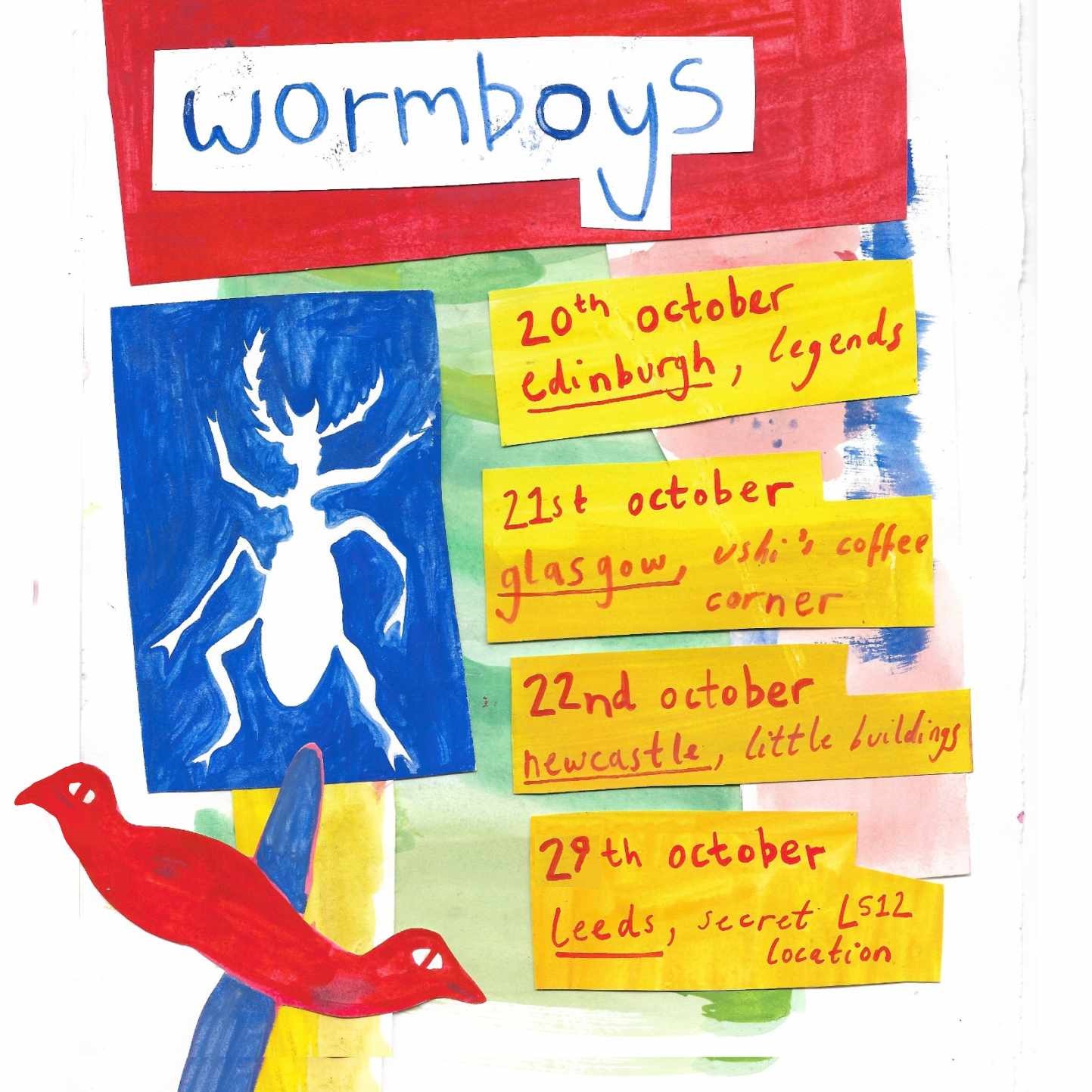
We also have upcoming dates confirmed at the Shacklewell Arms, London(8th September) and a secret location in Leeds (29th October, keep an eye on our socials for more…) Plus! We’ll also be returning to Scotland for more dates in the autumn – watch this space.
Over the last couple of years, members of the Trans Pregnancy projectteam have been quietly plugging away writing up more of our findings from our 2017-2020 research.
Recently, three new books have come out which include chapters based on our work, plus we have just had a new academic article published. I hope all of these will be useful for expanding knowledge about trans people’s experiences of pregnancy and childbirth, in ways that will be useful to community members, healthcare providers, and researchers.
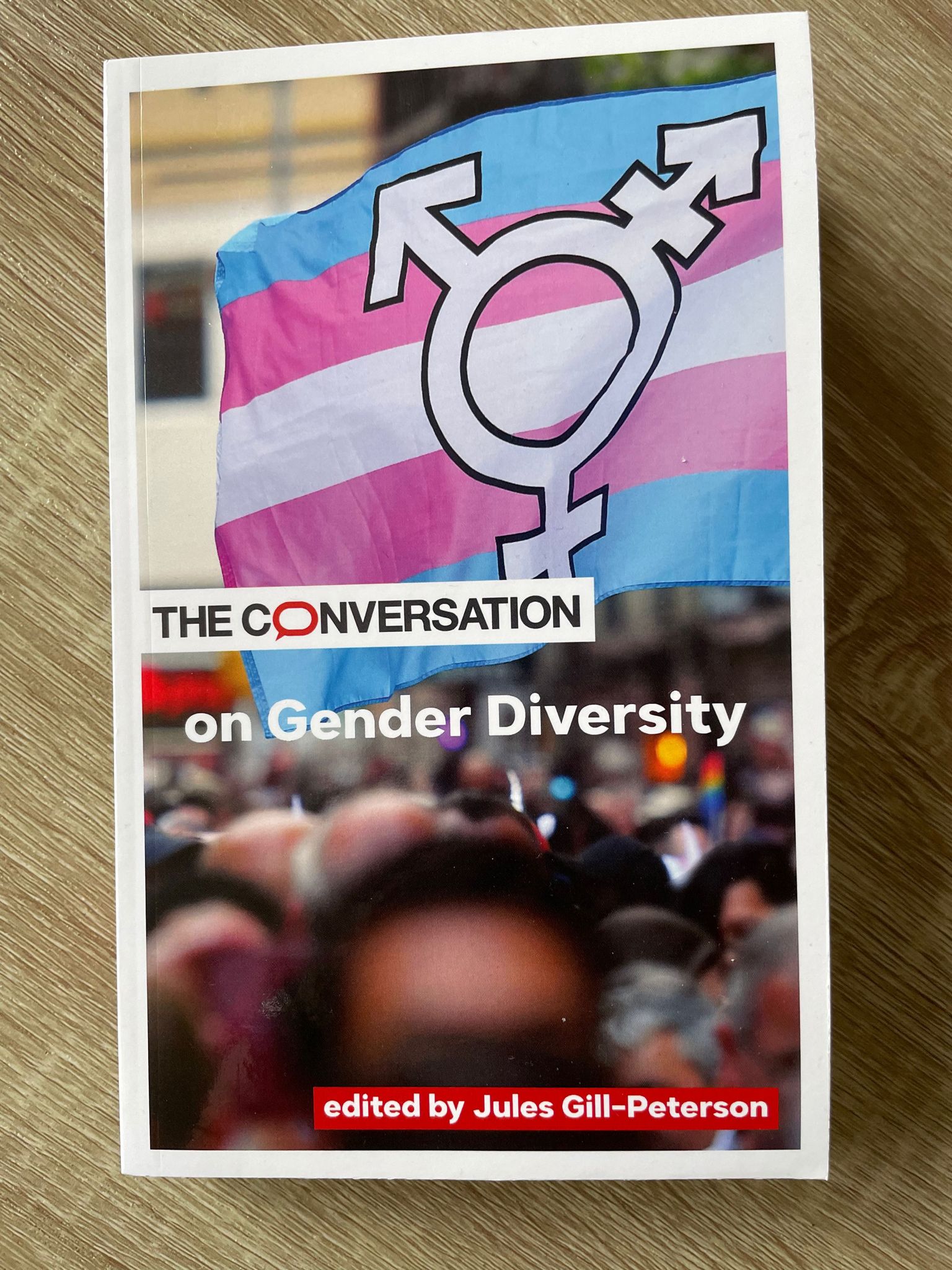
The Conversation on Gender Diversity (edited by Jules Gill-Peterson, published by Johns Hopkins University Press) is a collection of short trans studies essays originally published on The Conversation. It’s written in an accessible way and priced affordably. It includes our essay “Giving Birth as a Father – Experiences of Trans Birth Parents“, which provides a concise introduction to the topic and to our research.
The Routledge International Handbook of New Critical Race and Whiteness Studies (edited by Rikke Andreassen, Catrin Lundström, Suvi Keskinen, and Shirley Anne Tate, published by Routledge) is a hefty academic volume with a series of articles which critically interrogate whiteness. The book includes our essay “Whiteness in research on men, trans/masculine and non-binary people and reproduction: Two parallel stories“, in which we reflect on both the racialisation of both trans pregnancy and childbirth, and on the whiteness of our research team. It’s currently only available in hardback at “academic” prices, so I encourage people to order it into your local library if it is of interest to you. I’m also very happy to email people a copy of the essay if you’d like to read it, and will be making a version freely available on this site as soon as the copyright agreement allows.
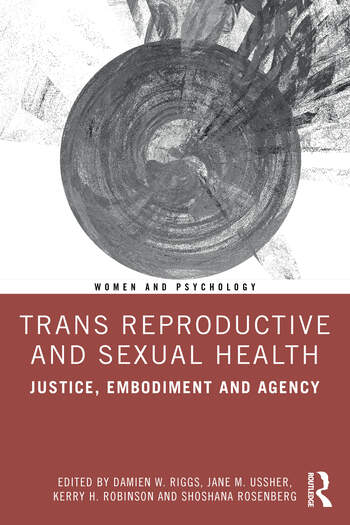
Trans Reproductive and Sexual Health (edited by Damien W. Riggs, Jane Ussher, Kerry H. Robinson, and Shoshana Rosenberg, also published by Routledge) is another academic book, this time focusing on topics including intimacy, sexual violence, sex education, and reproduction. It includes our essay on “Young men, trans/masculine and non-binary people’s views about pregnancy“, drawing on focus groups undertaken with young people to ask about how they see their reproductive futures. Again, this book has academic pricing, so we would greatly appreciate people asking their local library for a copy, and you’re welcome to contact me if you’d like to read the essay.
I’m delighted (and slightly baffled) to announce I will be speaking at Greenbelt Festival at the end of August. I’ll be talking trans liberation and feminist futures, thinking through how solidarity and collaboration can help us build a better future for all.
If you’ve ever wanted to see me on the same lineup as Ezra Furman, Laura Mvula, Grace Petrie, Sorority Grrrls, Brian Eno, and *checks notes* Tim Farron, this is likely your one (1) chance.
On 4th April 2023 the Equality and Human Rights Commission (EHRC) provided advice to the UK Government on “clarifying” the definition of sex in law. Specifically, they recommended the protected characteristic of sex in the Equality Act 2010 be re-defined as “biological sex”. The proposals have been welcomed by the Labourparty as well as the Conservatives.
If adopted, the EHRC’s proposals would strip trans people of numerous legal protections currently afforded by the Equality Act as well as the Gender Recognition Act.
This is made extremely clear by the EHRC. Their own examples include the argument that it is a problem that trans women may be protected from sexism under current law, and (as “legal lesbians”) from homophobia if we have female partners. Most worryingly of all, they have doubled down on previous attacks on our right to access gendered spaces. If implemented, the proposals may result in the trans women being barred by law from women’s toilets, changing rooms, hospital wards, domestic violence shelters, rape crisis centres, and book clubs (the latter is a genuine example provided by the EHRC).
I am not going to get into the weeds with these proposals. Others will no doubt provide deep legal analyses. I have already seen “gender critical” commentators claiming that this will have no real effect on our lives in practice. To which I say: fuck you.
I am done with being polite, and reasonable, and rational. These proposals represent a blatant attack not just on our civil rights but also on our rights to exist as human beings in public. In practice, banning trans women from women’s toilets means that many if not most of us simply cannot use public toilets.
Trans women use women’s facilities because we are women. And when I say “trans women are women” I am not merely making some kind of abstract metaphysical claim. I am saying that we are structurally disadvantaged under patriarchy, and experience sexist violence every day from men. That is the material reality. Insisting that trans men use women’s toilets is equally stupid, especially if your supposed aim as a “gender critical” campaigner is to produce a space free of beards and penises.
But here I am disappearing once again into details. None of this is about details. It’s about terrorising trans people, and we are terrified.
It’s about making our lives impossible. Ideally, we will disappear; our oppressors don’t really care if we suffer or we die. And we know, trans people know, that people around us are suffering and dying because we are actually a part of that community. I’ve spent the past 13 years producing research that formally documents the oppression we face, because when we simply say what we know is true because we are living that truth every day, nobody in power gives a shit.
In the meantime, people in suits believe there are votes and clicks and money to be won through fighting culture wars, through distracting people from rising poverty and slow-burning climate collapse.
If you are cis, it is up to you, the reader, to do something about this. Over the past five years trans people have been systematically harassed and silenced by a hostile media. We have been pushed out of political parties and campaign groups. Supposed human rights protectors such as the EHRC have been institutionally captured by the far right. Academics happily write abstract theory about what a terrible danger we pose. Fascistgroups are rallying against us in the streets, trans healthcare is under attack, and trans children are being told they must be outed to their parents, all with the support of Labour and Tory politicians as well as popular children’s authors.
Obviously we will fight for our own liberation. We have always fought. We are so beautiful and so powerful, especially here and especially now.
But we need you to fight with us.
Here are some things you can do. Write to your MP, and then do it again. Make sure they are sick of hearing from you and then keep going. Go to a protest. Engage in direct action. Maybe sign a petitionif you’re into that kind of thing. If you are in a political party, fight like hell to ensure that party is actually on our side. Join a union and fight for us there. Join a human rights group. Join a small trans organisation and offer whatever you can, whether that’s volunteer time, small donations, or signal-boosting.
Think about how you or your organisation might productively break the law to help people. If the EHRC’s proposals actually make it through Parliament, we must make them unworkable. Section 28was only successful because teachers, administrators, and local authorities collaborated with an openly homophobic government. That doesn’t have to be the case again.
If you need evidence to back you up, it is all over this website.Don’t ask me for advice – I am tired and burned out and have already done the work. Read TERF Wars, read my evidence to Parliament, read the report I wrote with Katharine Jenkins with a feminist perspective on sex, gender, and the Gender Recognition Act.
Finally, it’s important to note this is just the tip of the iceberg. Attacking trans people and defining women by “biological sex” are a part of a wider attempt to remove women’s reproductive rights. Our government is shredding the refugee convention and putting asylum seekers in camps. Our legal rights to protest and strike have been massively curtailed.
If you’ve ever wondered “what would I have done in the face of rising fascism?” then wonder no longer.
Last month my band wormboys released a new three-track EP, titled “smalltime”. It’s the second wormboys release I play bass on, after our 2022 single “weird“. I’m so impressed by the breadth of my bandmates’ songwriting: by turns sexy, beautiful, haunting, moody, and oppressive. As a self-taught, DIY musician, I was also excited how learning and refining these songs helped push the boundaries of what I can do.
We collectively created a zine as a physical artifact to accompany the digital EP. It contains artwork, lyrics, and advice on building a guitar effects pedal. I also wrote an exclusive new essay, titled “START A BAND”.
The zine comes with a download code, stickers, and a badge (which doubles as a circuit board for anyone who fancies following the advice on building a pedal!) You can buy a copy for £5from our bandcamp page.
Here are some nice things people have said about “smalltime”:
Beat In My Bones “Everything about this EP is worthy of your time and attention- the songs are just effortlessly slick, and that lo-fi sound, and that DIY ethic attached to it really comes across.”
Gina Maya “The three songs that form Smalltime (2023), the new EP by Wormboys, reverberate with the darkened sweat-soaked cellar sound that made their pre-release of the song Tree so attention-grabbing back in 2022.”
Get In Her Ears “The EP shows off a huge range of skill in just three short tracks, showing off both a mastery of popular styles as well as an undeniable talent for creating altogether new sounds.”
Rockambula “Questa nuova uscita è una conferma di quanto il il quartetto inglese possieda un ventaglio sonoro piuttosto ampio da cui attingere”
I bounced up to an old friend to share this important insight. All around, queer bodies danced and swayed to furiously enthusiastic music. We have always sought refuge in one another, in our in our art, in utopic dancefloors and community care. But something felt different.
The collective energy of the crowd was wild, strong, cohesive. The entire room was dancing – and among us, so so many out, happy trans women and transfeminine people. On stage, a non-binary person sang explicitly about their experiences of gender to an assertive ska beat. It was a joyful moment – but the true wonder of it for me was that it was far from unique.
This was the last in a string of winter tour dates for my band wormboys, at the brilliant Queer As Punk event in Edinburgh. But I’d experienced similar in Dundee, in Glasgow, in Newcastle, in Hull, in Leeds. At every gig, trans women and non-binary people were scattered throughout the audience; at most, there were also several of us on stage through the night. It’s a world of difference from when I encountered just the occasional trans man playing gigs in the mid-2010s; let alone from when wrote a blog post titled Trans/queer rock musicback in 2010, in which I desperately sought validation in questionable gender-bending tunes written by (largely) cis musicians.
While trans women (and trans people more broadly) have always been involved in DIY music, there’s a clear change taking place. We have taken our inheritance and run with it. There are more of us making our own art, telling our own stories, and celebrating one another more than ever before. We are more visible, we are more assertive, we are more respected within our scenes, and – collectively – we are having more fun.
wormboys play Queer As Punk. Photo by Blanka Bandi.
—
The very night we enacted a better future on that dancefloor in Edinburgh, 16 year-old trans girl Brianna Ghey was stabbed to death in Warrington. Two other teenagers, a girl and a boy, have been charged with her murder.
For trans people across the UK – especially trans women and girls – this lethal attack was not unexpected. It feels like the culmination of a vicious hate campaign that permeates our media and politics. It’s also the tip of a vast iceberg of intentional violence and untimely death.
Suicide is endemic among trans youth driven to despair by the socially-sanctioned antagonism directed at them every hour of every day. I am tired of citing statistics. I have lost so many of my friends and peers. Words and numbers are insufficient for the raw anguish of my grief.
This is only compounded by the failures of bystanders who refuse to intervene, schools and employers who try to make us disappear, a National Health Service that inflicts harm upon us. England’s only child and adolescent gender clinic is due to close in a matter of weeks, with nothing ready to replace it. In an extraordinary open letter, the majority of clinical, research, and administrative staff at the clinic note an “increase in deaths related to the service” since the suspension of endocrine treatments in 2020.
Many of my friends have been threated or assaulted in broad daylight. One, for instance, had rocks thrown at her. Another was assaulted in front of the school gates. Another was raped by boys in the school playground. I frequently struggle with feelings of survivor’s guilt, having merely been publicly assaulted, stalked, harassed, and subject to threats of legal action and murder. Relatively minor matters, in the scheme of things.
Vigil for Brianna Ghey outside the Department of Education, London. Photo by David Griffiths.
—
How to understand joy in the face of so much hate and despair?
This is a question I struggled with throughout our tour. The night before Brianna’s murder, 400 people rioted in Knowsley outside a hotel that houses asylum seekers, spurred on by the fascist group Patriotic Alternative. This horrific event, too, did not occur in a vacuum. Racist and anti-migrant sentiment has similarly been stirred up by cynical politicians and journalists, as asylum seekers, economic migrants, British Black and Asian people, Gypsies and Travellers are repeatedly failed or directly targeted by our authorities and institutions. Patriotic Alternative have also repeatedly targeted LGBTIQ+ communities, through their campaign against Drag Queen Story Hour.
I could say so much more: about assaults on disabled people’s rights and livelihoods, about the demonisation of the poor, about attacks on pay, pensions, and the unions that attempt to defend them (I am writing this post while on strike). About how fascist violence is excused by sexist men in the name of “defending women and girls”. About how oppressed groups are played off against one another, while the effects of all this hateful discourse and action are felt most keenly at the intersection of multiple forms of persecution, such as by migrant trans women of colour.
Ultimately though, my point is this: what we are seeing is both a consequence of historic prejudices in our society, and of rising fascism.
Minority groups, women, migrants, and working class people in the UK have always faced a shared struggle against systemic discrimination and violence. Following a period of mild reform in the 1990s and 2000s, we are now experiencing a significant upswing in bold, blatant hate speech and violence, effectively condoned by every major political party and the majority of mainstream media publications.
This is the context of trans joy in the 2020s – and the reason why that joy is so necessary and vital.
—
Our tour reminded me that art is resistance, and resistance is collective. In recent days I have felt myself marinading in my own fear, a recipe for passive inaction. If we cannot experience joy, we cannot dream; if we cannot dream, we cannot hope; if we cannot hope, we cannot fight back. In the face of a world that wants so many of us dead, it is vital that we create reasons to live, and to thrive.
In Leeds, wormboys played to a rammed room in Wharf Chambers, a triumphant hometown crowd. We invited the brilliant Punjabi-Celtic-indie fusion trio Kinaara and gorgeous queer folk duo Serinto support us, building new friendships and cementing old ones. In Hull we debuted at the New Adelphi, where now-legendary acts such as Lizzo, Manic Street Preachers, Pulp, Skunk Anansie, and PJ Harvey played before they were famous. We shared the stage with Sandbox Mode – a solo hip-hop artist making deeply honest and funny songs about mundanity and despair – and Baby Flowers, an exciting young grunge group playing their second ever gig. This was the least well-attended, most male-dominated, and least obviously queer gig on our tour. And yet: the mood was vibrant, I noted at least one other trans woman in the audience, and Baby Flowers’ bassist was showing off a well-placed trans rights sticker.
In Newcastle, we found ourselves in the Little Buildings, a venue which has miraculously survived Covid-19 despite being founded just the pandemic began. The event was hosted by new dance party Queer Love. We played alongside the incredible hardcore group Disciplinary with their two bass guitars, and also the feminist dance-punk phenomenon of Fashion Tips. The whole night was amazing, but Fashion Tips were particularly exciting for me. Frontwoman (and Queer Love organiser) Esmé Louise Newman has a long history of involvement in groundbreaking queer feminist punk, metal and no-wave groups, including Penance Stareand Etai Keshiki. The new band were just as brilliant, with aggressive guitars and vocals underpinned by a powerful rhythm section, heralding a new era of revolutionary dancefloor divination.
Next to Glasgow, where I organised a well-attended gig at The 13th Note in less than a week, after our original promoter pulled out at the last minute. We booked the astoundingly powerful riot grrrl group Brat Covento play with us, along with HAVR, purveyors of gorgeous post-punk soundscapes. The latter band are fronted by Carrie Marshall, author of Carrie Kills A Man, who noted to cheers that she was a different gender the last time she played the venue. This was an event with plenty of trans women present, beaten only by brilliant gig in the same venue the very next night, which I went to see my soulful dyke folk pal Pictureskew play inbetween our own shows. That event might well be the first of its kind I’ve been to where there were at least as many trans women in attendance as anyone else. It was beautiful.
Then to Dundee, where Rad Apples and Make That A Takeput anarchist theory into practice by actively working to provide a safer punk venue and events for women, queer people, and migrants, through simultaneously building a welcoming space and promoting a zero-tolerance attitude towards discrimination and abuse. There I had two totally new life experiences. First, I witnessed somebody crowdsurfing in a shopping trolley during a storming set from banjo punks Alldeepends. Then, we were subject to the well-organised chaos of the “crowd surfing machine” by jubilant anarcho-folk headliners Boom Boom Racoon (a variant on the sat-on-the-floor rowing boat dance associated with songs such as “Oops Upside Your Head” and “Rock The Boat”, but with audience members encouraged to take turns in crowdsurfing along the boat).
Through the tour, I’d been carrying a trans flag to drape over my bass amp, and have often said something about trans liberation from stage inbetween songs. wormboys are a political band, but not in the same way as more in-your-face punk groups I’ve previouslyfronted. I’ve reveled in the ability to just be a musician and make that – rather than my status as a trans woman – the focal point of my involvement, leaving most of the talking to dual vocalists duo Sop and Harry. In the current political environment, that has increasingly felt untenable. It seems important to speak out, make myself visible, be obviously a trans woman making music.
But at Rad Apples I didn’t need to. There was already a trans flag up. There were plenty of other trans people there. There were placards in the bar opposing Section 35. I could just be.
—
And so to Edinburgh, where I found myself living in the future during a joyous set from opening act Bufandas. A future in which we experience the true paradox of trans visibility, in that we are both uniquely vulnerable, and uniquely strong. No longer hiding in the shadows, we are easier targets for those who hate us, but also have so much more potential to build power together.
Brianna Ghey’s killers may be convicted and jailed, but that will do nothing to stop the violence we face across these islands, and across the wider world. We have learned that we cannot trust the police to save us, or the courts, or politicians, or journalists, or managers, or human resources departments. But we don’t need any of these people or organisations. We owe it to Brianna to continue the grassroots work she did to improve other people’s lives, because another world is possible.
The headliners at Queer as Punk in Edinburgh were the fiercely feminist disco punk group The Red Stains. Their set included several explicit statements of support for trans people and especially trans women and girls, reflecting the attitude of most women active within actual feminist movements. This was an important reminder that anti-trans movements do not speak for all women, and never will.
My experience of sharing a stage with so many amazing musicians, from so many backgrounds, featured many such reminders. I was reminded of the sheer depth and range of human creativity. I was reminded of how much we can be inspired by our differences as well as shared experience. I was reminded of how far we have come, as well as how far we have to go.
There are so many of us. Today, we mourn. Tomorrow, we fight. Soon, we will win.