
When I received an invitation to speak about my research at the University of California in Davis, my initial, instinctive response was “heck no”.
It was December 2025, and the United States was looking an increasingly dangerous place to be both trans, and to be a critical scholar. The last year has seen anti-trans legislation introduced at every level across the country, while the influential Oversight Project at the Heritage Foundation and some in the FBI sought to brand trans activism as “violent extremism“. Meanwhile, attacks on academic freedom have resulted in massive funding cuts, the mass censorship of race and gender studies, and the kidnapping and detainment of students who protest the genocide in Gaza. One scholar seeking to flee the country with his family following death threats arrived at the airport gate to find their flights had been mysteriously cancelled.
Then there’s the international situation. Back in December, the US administration was beginning to escalate its rhetoric around Greenland. By January, I was genuinely concerned that a visit to California might coincide with a previously inconceivable outbreak of war between the US and its former European allies. It seemed that no possibility was off the table.
Don’t get me wrong, for all that Brits like to dump on Trump, I fear the UK is rapidly heading in a similar direction. While the dangers posted by the US administration are more blatant, thanks to its volatile and emotional rhetoric, the UK’s Labour government is pursuing a similarly authoritarian agenda. We can see this for example in deeply racist policies on migration and asylum, a crackdown on protest groups, attacks on equality and diversity policies, and the embrace of disinformation and pseudoscience in pursuit of an anti-trans agenda. And of course, our country too is entirely complicit in various conflicts and forms of state violence, including the ongoing genocide in Gaza.
Nevertheless, I have the considerable privilege of being a white UK citizen. I own a passport that enables me to freely leave and enter the country. I do not fear being detained on the UK border. I live in a diverse community where I feel safe and held by my neighbours. I am still – for now – able to maintain a university profile that openly states my commitment to feminism and equality work. And while I am increasingly afraid of facing violence at work, at least there aren’t many guns in this country.
So while I felt morally torn about potentially travelling to the USA, I was also aware that my home country is not exactly a great place. Thinking through the idea of complicity, Mijke van der Drift and Nat Raha encourage us to find “the right relation to what your position is in the world”. This “entails attending to where one is, and what one can do from that place”.
The question, then, was one of getting to California safely, and then ensuring that the trip would be worth it. What could my in-person presence offer that was not possible in my writing, or over the internet? What could I offer, and what would be worth the risk?
The Trans Freedom School
It turned out that my colleagues at UC Davis really knew what they were doing. The event I spoke at, Vital Relations, was part of the Trans Freedom School. This is a series led by Ava Kim and Christoph Hanssmann, which brings together scholars to share knowledge and ideas on a range of extremely pressing topics.
Our event specifically addressed the past, present, and future of trans health and medicine. This included how trans healthcare might be defined, whose interests have shaped the development of the field, how to address threats to trans people’s health and wellbeing, and how all of this connects to wider struggles around the pursuit of truth and defense of free inquiry. The event format was a facilitated conversation, meaning that the speakers were in conversation with one another as well as the audience. This felt extremely generative given the range of knowledge and experience in the room.
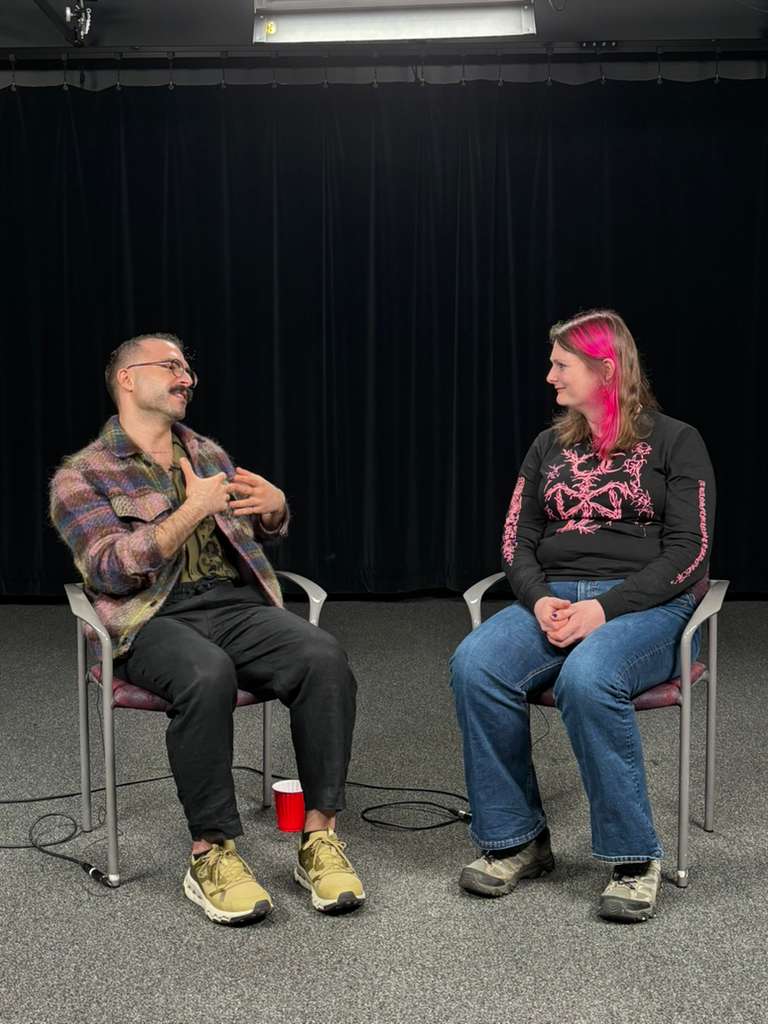
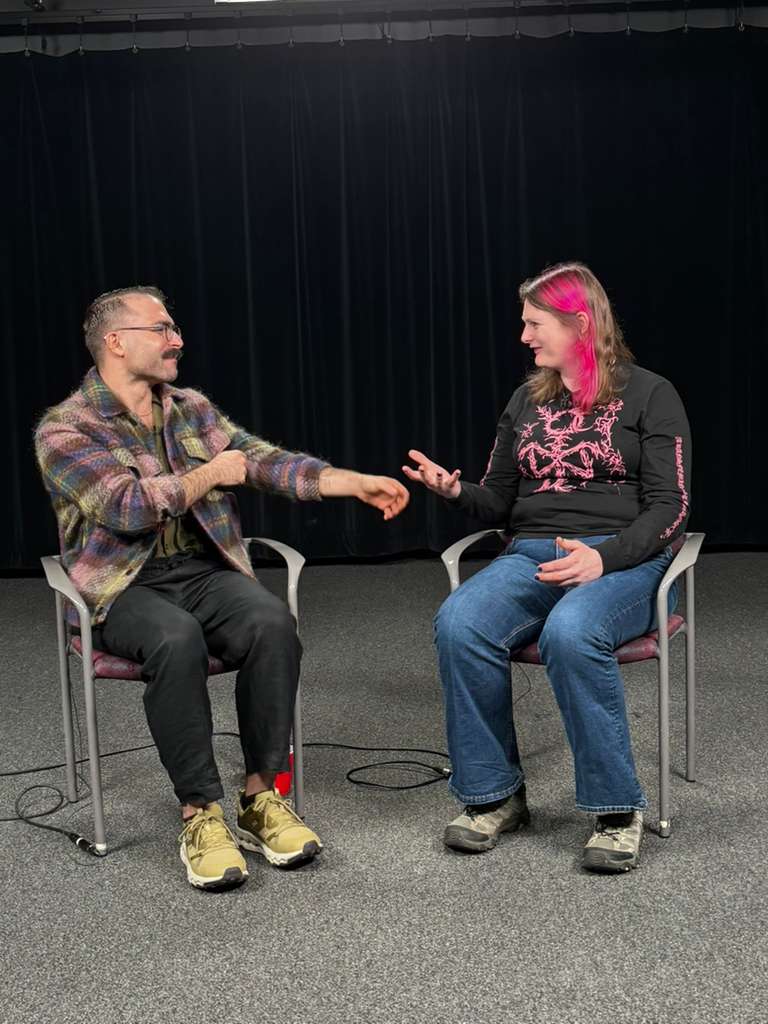
I sat on a panel with Tankut Atuk, who is doing amazing work on pathogenicity: specifically, the social contexts and power relations which make minoritised people more vulnerable to illness and disease. Understanding these things can help us learn not only how and why people are disadvantaged, but also how we can organise against such disadvantage. We explored examples from Tankut’s research with trans sex workers in Turkey, my work on trans people’s experiences of perinatal care, and Glasgow’s strong community networks. A second panel saw Kadji Amin and Jacob Moses explore histories of trans healthcare, plus debates around identity and regret.
Importantly, these conversations are not limited to academic events. The panel discussions are bring professionally filmed, as are separate studio conversations with the speakers. The idea is to produce information and teaching resources for the long term. Other events associated with the Trans Freedom School take a wider look at current debates around gender and race, at a time when discussion on these topics is increasingly censored within media and scholarship, in the US and beyond.
In short, this was indeed vital.
Continuing to foster international dialogue and the free exchange of ideas is incredibly important, especially when these things are under threat. Teaching materials that challenge norms while tackling disinformation are desperately needed. I am grateful and honoured that I was invited to be part of this work.
I will of course be sharing materials produced by the Trans Freedom School when these are ready to go online. In the meantime, I was left with a great deal to think about, which will no doubt shape my own ideas and work going forward.
The right relation
As it turned out, the US did not invade Greenland while I was in California. Instead, as I flew home, the US and Israel launched a series of airstrikes on Iran. They killed the Supreme Leader Ali Hosseini Khamenei, along with members of his family, plus hundreds of civilians. This including over 170 people at a girls’ primary school, most of whom were children. This was an immediate reminder of how the world’s greatest superpower is also a rogue state, prepared to inflict death and suffering for seemingly little reason other than flattering the macho egos of its unchecked leadership.
Seeing sickening scenes of violence unfold across the Middle East in the following days made me feel extremely powerless. It is hard to know what to do, how to respond, in the face of such evil. I’ve had enough Iranian friends that I have no sympathy with the awful regime there. But the Iranian people will not be freed from tyranny by a racist foreign power murdering schoolgirls. I remember the slow, pointless horrors of the Afghanistan and Iraq wars, with hundreds of thousands of people killed across the long years. I remember joining a million people on the streets of London to oppose this violence in 2003, only to be entirely ignored by the Labour government of the day.
In countries such as the UK and the US, what we do with our complicity in state violence depends on what tools we have, and options are in front of us. Here in Glasgow I will be supporting protests against war and arms dealers. I will be sharing information with my friends and neighbours. I will be teaching about power and its abuses in my day job. I will be voting to keep Labour as well as Reform out of Scotland in the forthcoming Holyrood election. It probably won’t feel like enough, but it does matter to do what we can.
The same goes for confronting other forms of state and corporate violence. I focus much of my research, activism, and writing on addressing discrimination and violence against trans people, because this happens to be where I have developed my skills and knowledge. The Trans Freedom School reminded me that the benefits of such skills and knowledge can cross entire oceans. It mattered for people in California to learn not only about my research, but also about the work of UK and Irish groups I spoke about, such as Trans Kids Deserve Better and Trans Harm Reduction. These groups are not working in universities or speaking to government. They are meeting with others in their community and building connections and resources, step by step, conversation by conversation.
Here in the UK, anti-trans policies are killing children. As with the West’s imperial wars, it is easy to feel powerless. But as I argued last year in my essay about the UK’s anti-trans Supreme Court judgement and the Lesbian Renaissance, there is so much we have achieved – and can achieve – through activism, community work, and mutual aid:
“There are more of us publicly creating art and culture, more of us creating events and running nightclubs and playing in bands and writing essays (hi). There are more community groups providing mutual aid and support when charities and state bodies fail us. And, importantly, we are not alone.”
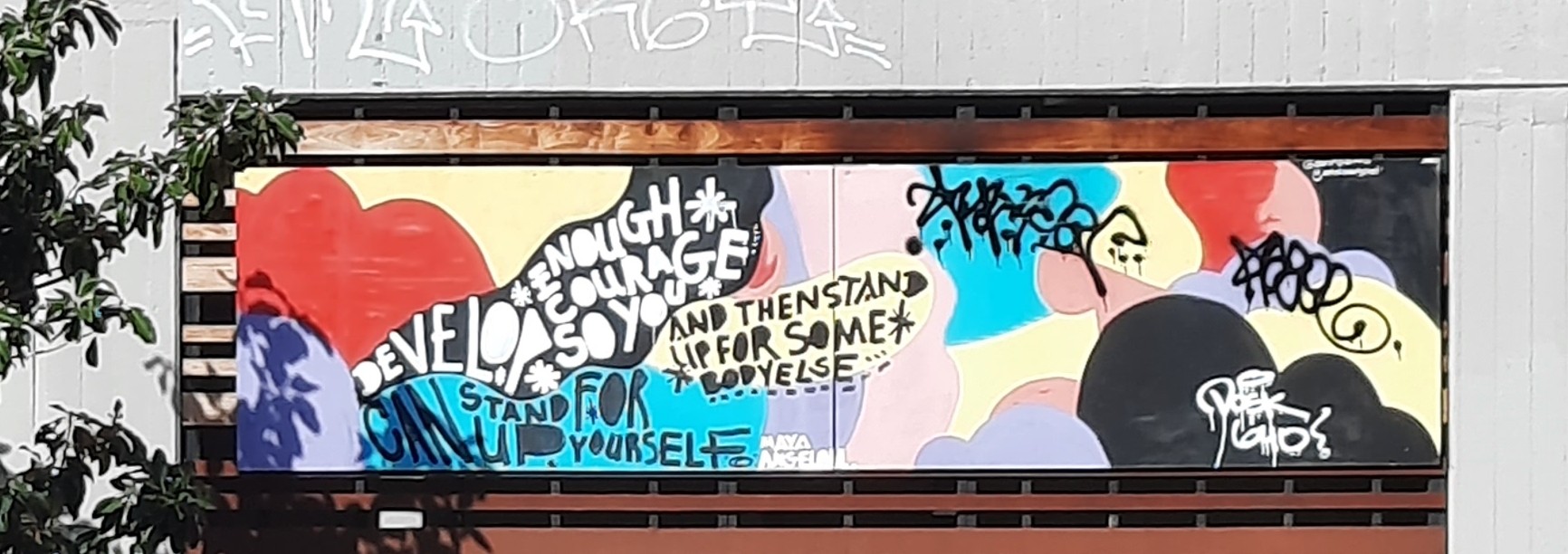
There are always things we can do. It is simply a matter of attending to where we are, and doing what we can from that place.
Like this post? Want to read more?
Don’t rely on corporate social media – subscribe now to receive new posts whenever I write them.
 Dr Ruth Pearce