New article: Embodied Experiences of Trans Pregnancy

I recently had a new co-authored research article published in the journal Body & Society, titled Embodied Experiences of Trans Pregnancy. It is part of a special issue on Pregnant Bodies and Embodied Pregnancy.

For this piece of writing, we were particularly interested in how embodiment is gendered and vice-versa. In the article, we draw on interviews with trans men and non-binary people to explore the lived, bodily complexities of trans pregnancy. We consider the strategies trans men and non-binary people engage in to manage their gender presentation during pregnancy, and the degree to which pregnancy might disrupt their ability to control the presentation of gender.

The published article is currently behind a paywall, but you can download a free version here from the University of Glasgow’s Enlighten repository, or from the publications page of this website.

This is likely to be the last published article from the Trans Pregnancy Project, an international study which ran 2017-2021. Together we have written around 15(!) other articles and book chapters, and edited a special issue of the International Journal of Transgender Health. You can learn more on the Trans Pregnancy Project website.

Cover of the journal Body & Society.

Free resources: Perinatal care for trans people

On 8 February 2021, Brighton and Sussex University Hospitals NHS Trust published a series of groundbreaking resources on perinatal care for trans people, written by their Gender Inclusion Midwife team. As of March 2025, the Trust no longer exists, the midwives in question work elsewhere, and the resources page was sadly taken down – a sadly all-too common experience with NHS guidance for working with marginalised peoples.

Given the importance of these materials, for which I was part of a large team of expert reviewers, I am reproducing them on my website today for Trans Day of Visibility 2025, alongside some related resources.

I hope these will be of interest and use to anyone interested in improving perinatal care for trans people, including midwives, nurses, doctors, policymakers, commissioners, advocacy groups, and of course also families and prospective parents.

Professional guidance and protocols by the Gender Inclusion Midwives

Perinatal Care for Trans and Non-Binary People

Gender Inclusive Language in Perinatal Services


Information, forms, and materials for birth parents by the Gender Inclusion Midwives

Support for trans and non-binary people during pregnancy, birth and the postnatal period

Referral to Gender Inclusion Midwives

My language preferences

Pronoun stickers

Poster: Gender Inclusive Perinatal Care


Additional materials

It’s been a long four years since the Gender Inclusion Midwives resources were published. Here, therefore, are a few additional materials that may be of help to people working in this area.

National Maternity Survey data on trans birth parents
Since 2021 the Care Quality Commission has collected data on gender modality as part of its annual National Maternity Survey. The most recent findings indicate a significant rise in the number of men and non-binary people giving birth since 2021, with 1.58% of 2024 respondents indicating a gender that differs from the sex they were assigned at birth. This shows that hundreds of trans people are giving birth in England every year. See: Open data > 2024 Maternity survey National tables > page g9.

Inclusive language statement from the Royal College of Midwives
2022 statement affirming both that a majority of RCM members and service users are women, and that diverse gender identities should be recognised in midwifery.

Improving Trans and Non-Binary Experiences of Maternity Services (ITEMS)
2022 report published by the LGBT Foundation, looking at the findings of an English study on the experiences of 121 trans people who conceived and gave birth. It found that many trans birth parents do not feel safe sharing their identity in perinatal services, with a large proportion not feeling comfortable to access any support at all from an NHS or private midwife.

Trans Pregnancy Project website
I reviewed the Gender Inclusion Midwives resources as part of my work on the Trans Pregnancy Project, which was an international study of trans people’s experiences of pregnancy and childbirth. This year we launched a new website. This includes links to all our peer-reviewed publications, on topics including conception, pregnancy loss, midwifery, gender and embodiment, domestic violence, racialisation, and media representation.

Caring for Everyone: Effective and Inclusive Communication in Perinatal Care
One of the key recommendations of the Gender Inclusion Midwives’ guidance on Gender Inclusive Language in Perinatal Service is the adoption of “additive” language. This approach acknowledges male and non-binary birth parents alongside mothers, rather than simply replacing woman-centred language with a gender-neutral approach. This 2025 academic article by Matthew Cull, Jules Holroyd, and Fiona Woollard provides advice on a “pluralist” approach to language, which builds upon the additive model by offering a more contextual approach. It includes clear examples of what best practice can look like.

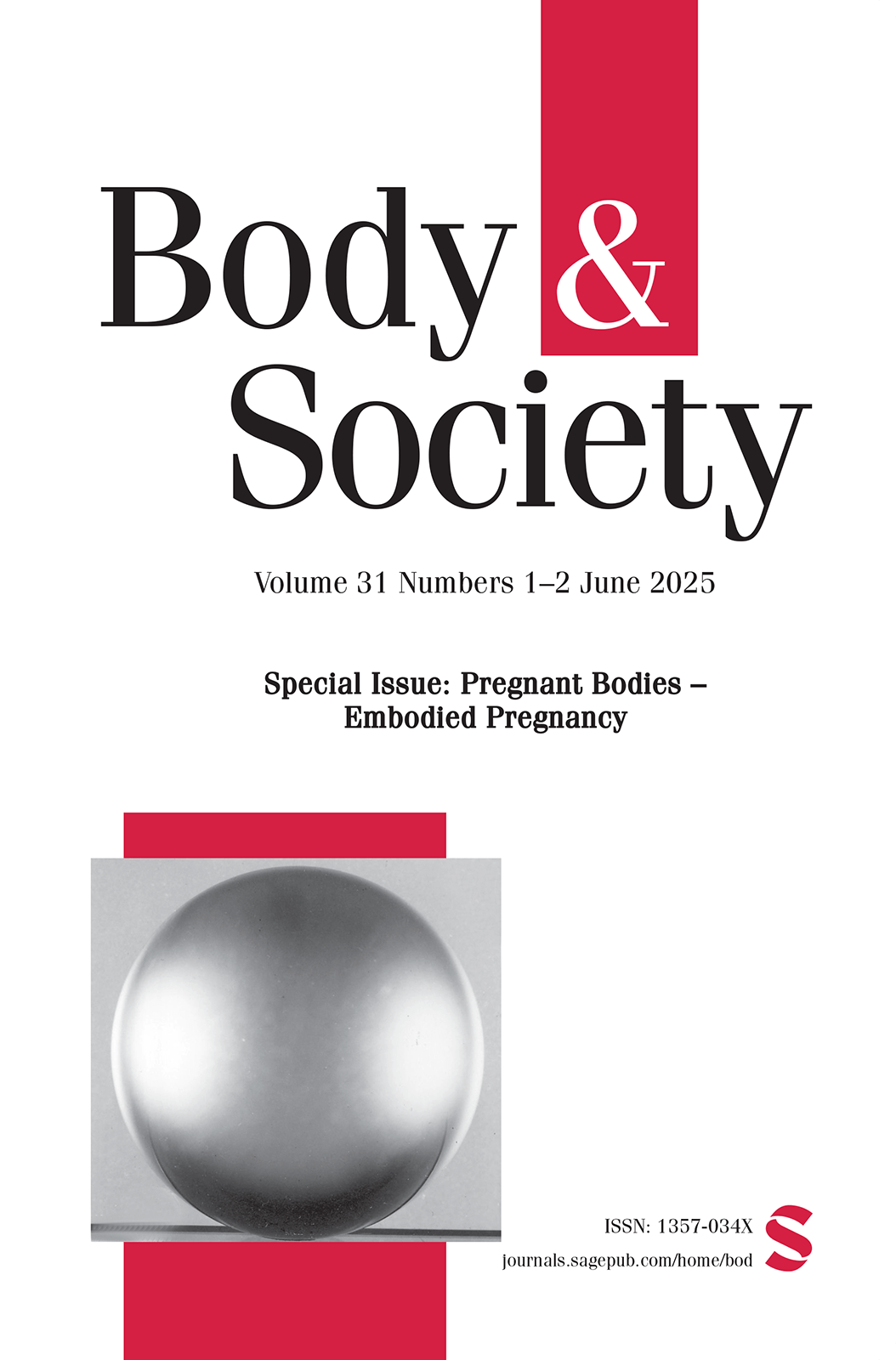
Image of poster on gender inclusive perinatal care. For version accessible to text reader, see download link above titled Poster: Gender Inclusive Perinatal Care.

New article: ‘Why Is the Chubby Guy Running?’

2024 has been a good year for the publication of articles I’ve been working on with colleagues for a long time. Hot on the heels of recent pieces on microaggressions and domestic violence comes the latest peer-reviewed work from the Trans Pregnancy Project, published in the Journal of Applied Philosophy. It’s open access, which means you can read it for free or download a copy to share here:

‘Why Is the Chubby Guy Running?’: Trans Pregnancy, Fatness, and Cultural Intelligibility
by Francis Ray White, Ruth Pearce, Damien W. Riggs, Carla A. Pfeffer, Sally Hines

The article opens with the titular question, “why is the chubby guy running?” – drawn from a story shared by a research participant who ran a 5k race while thirty-nine weeks pregnant. We use this as the starting point for exploring the topic of fatness in respect to trans men and non-binary people who experience pregnancy, addressing the gendering of both pregnancy and fatness, stereotypes associated with fat men, and how certain bodies become legible or intelligible.

Cover of the Journal of Applied Philosophy.

A lot of research participants in the project described complex relationships to fatness during their pregnancy, especially where their bump was inaccurately read as a “beer belly”. The writing of this article was led by fat studies expert Francis Ray White; I really appreciated the opportunity to work with them on making sense of these stories, and thinking through what they might mean both for trans birth parents and for our understanding of gender and pregnancy more widely.

This is likely to be one of the last published works from the Trans Pregnancy Project (although we do have at least one more article on the way!)

The project originally wrapped in 2020, but we had such an enormous amount of data that we’ve been writing it up ever since since, addressing topics including media representation, midwifery, conception, pregnancy loss, sperm donors, testosterone use and cessation, racialisation and whiteness, partner abuse, and young people’s views about possible pregnancy. I’m grateful as ever for the trust offered to us by the research participants, and hope we can continue to expand and evidence society’s understanding of their experiences.

New article: Trans Birth Parents’ Experiences of Domestic Violence

Through 2018 and 2019, I travelled across the UK and Germany to speak with trans men and non-binary people about their experiences of pregnancy and childbirth.

These research interviews for the Trans Pregnancy Project took place in kitchens, living rooms, and cafes, next to canals and rivers. We covered topics ranging from conception to pregnancy loss, taking in questions of masculinity and the body, relationships with family, friends, workplaces and social groups, interactions with medical practitioners, and people’s journeys through perinatal services.

I remain deeply honoured to have been trusted by participants to share and analyse their stories. The questions planned by our project team touched on deeply intimate and sometimes traumatic experiences, as well as joyful accounts of kinship and bringing new life into the world. These were by design long, deep discussions, covering a great range of issues that have been rarely discussed in academic literature to date.

And sometimes, an unexpected conversation would happen.

We – the research team – did not plan to study domestic violence. Instead, this topic was introduced by research participants. I will never forget the first time this happened, silently putting aside my planned questions as the man in front of me quietly, carefully disclosed what had happened to him, and how it intimately shaped his experience of pregnancy.

As others shared their stories in turn, I began to realise just how important these narratives are, and the need for peer-reviewed work that explored them in detail. The resulting article is now available following a long gestation period (pun intentional). I hope it will useful to a range of practitioners – educators, crisis workers, midwives, obstetricians, doulas, family doctors – as well as to academics and, most importantly, community members.

Read now for free:
Trans Birth Parents’ Experiences of Domestic Violence
Conditional Affirmation, Cisgenderist Coercion, and the Transformative Potential of Perinatal Care

by Ruth Pearce, Carla Pfeffer, Damien W Riggs, Francis Ray White, and Sally Hines


I am also really pleased that we have published in the “platinum open access” journal Bulletin of Applied Transgender Studies. Launched in 2022 and hosted by Northwestern University Libraries, the journal is free to publish in and free to read, with articles shared under a creative commons license. We found this publication route offered an extremely rigorous double-anonymous peer review that really challenged us, and ultimately strengthened our arguments and use of evidence. Given the exploitation and profiteering that is rife in the academic publishing industry, supporting new journals such as the Bulletin feels like an important political move as well as the right scholarly decision.

Journal logo

Please do share this article in any context you feel it will be helpful to others. Remember, under the license anyone can distribute it as-is for non-commercial reasons: so download, print, and pass it around to your heart’s content.

Talk at the University of Strathclyde: Wed 17 Jan

I will be speaking about my research at an event hosted by the Strathclyde University Feminist Research Network at 3pm on Wednesday.

The talk is titled “Reproductive Justice for Trans People”. It will focus on findings from the Trans Pregnancy and Improving Trans Experiences of Maternity Services projects, but will also touch on wider questions of social reproduction for trans people of all ages and genders.

The event is free to attend, and you can register to attend here.


There are also a lot of other great talks on feminist topics hosted by the Feminist Research Network as part of their seminar series, so definitely check them out!

Trans pregnancy: new book chapters and article

Over the last couple of years, members of the Trans Pregnancy project team have been quietly plugging away writing up more of our findings from our 2017-2020 research.

Recently, three new books have come out which include chapters based on our work, plus we have just had a new academic article published. I hope all of these will be useful for expanding knowledge about trans people’s experiences of pregnancy and childbirth, in ways that will be useful to community members, healthcare providers, and researchers.

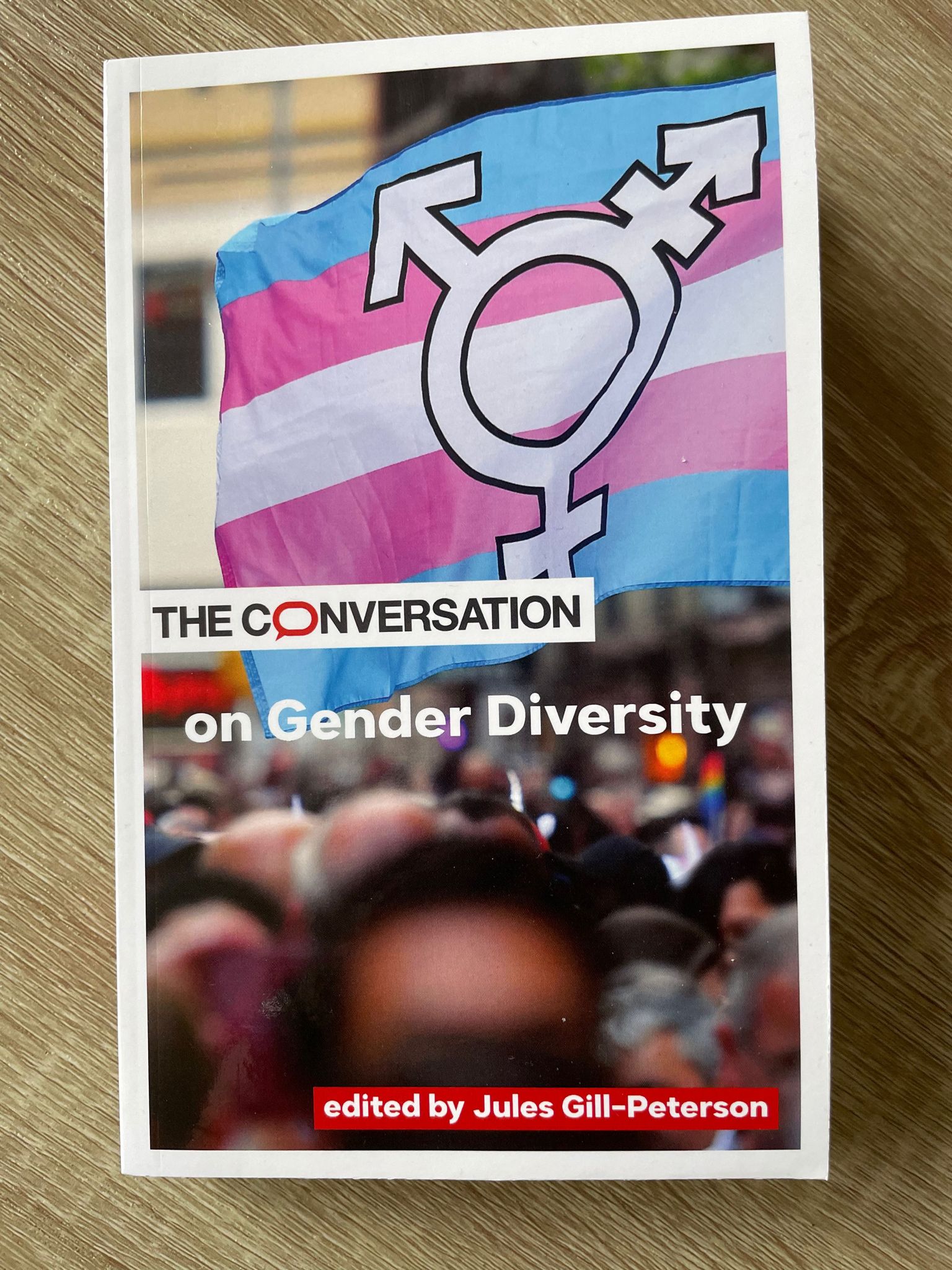
The Conversation on Gender Diversity (edited by Jules Gill-Peterson, published by Johns Hopkins University Press) is a collection of short trans studies essays originally published on The Conversation. It’s written in an accessible way and priced affordably. It includes our essay “Giving Birth as a Father – Experiences of Trans Birth Parents“, which provides a concise introduction to the topic and to our research.

Photograph of a book, The Conversation on Gender Diversity. The cover features a blurred crowd of people and a large trans flag with the trans symbol on top of blue, pink, and white stripes.


The Routledge International Handbook of New Critical Race and Whiteness Studies (edited by Rikke Andreassen, Catrin Lundström, Suvi Keskinen, and Shirley Anne Tate, published by Routledge) is a hefty academic volume with a series of articles which critically interrogate whiteness. The book includes our essay “Whiteness in research on men, trans/masculine and non-binary people and reproduction: Two parallel stories“, in which we reflect on both the racialisation of both trans pregnancy and childbirth, and on the whiteness of our research team. It’s currently only available in hardback at “academic” prices, so I encourage people to order it into your local library if it is of interest to you. I’m also very happy to email people a copy of the essay if you’d like to read it, and will be making a version freely available on this site as soon as the copyright agreement allows.

Cover image of a book, The Routledge International Hardbook of New Critical Race and Whiteness Studies. The cover features a colourful aerial photograph of a river bend.


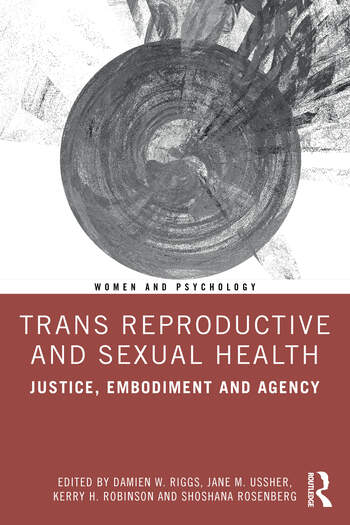
Trans Reproductive and Sexual Health (edited by Damien W. Riggs, Jane Ussher, Kerry H. Robinson, and Shoshana Rosenberg, also published by Routledge) is another academic book, this time focusing on topics including intimacy, sexual violence, sex education, and reproduction. It includes our essay on “Young men, trans/masculine and non-binary people’s views about pregnancy“, drawing on focus groups undertaken with young people to ask about how they see their reproductive futures. Again, this book has academic pricing, so we would greatly appreciate people asking their local library for a copy, and you’re welcome to contact me if you’d like to read the essay.

Cover image of a book, Trans Reproductive and Sexual Health. The cover image is an abstract grey circle with messy lines extruding from the top right.


Finally, we’ve just published an article in the journal SSM – Qualitative Research in Health. Titled “Medical Uncertainty and Reproduction of the “Normal”: Decision-Making Around Testosterone Therapy in Transgender Pregnancy“, this article looks at decision-making around cessation of testosterone during pregnancy, and critically explore some of the assumptions that get made in medical writing and practice.

Video: Reproductive Justice for Trans People

Earlier this year I did a talk for the University of Cambridge Reproductive Justice Research Network alongside my excellent colleague Francis Ray White.

We talked about research findings from the Trans Pregnancy and Improving Trans Experiences of Maternity Services projects, plus reflected on the wider context of reproductive justice for trans people, including media coverage, medical racism, abortion rights, and attacks on young trans people’s bodily autonomy.

You can watch a video of the talk here:

(as a quick aside, I’d like to thank my good friend Harry Tunnicliffe for last use minute of his office so I could do this talk while away from home!)

Upcoming talks: April-May 2022

I am speaking at a series of exciting events over the next few weeks! All are free to attend, you will just need to register in advance if you’d like to come.

Tuesday 26th April – Manchester
Trans Healthcare: Past, Present and What Might Have Been

In-person roundtable discussion, with Ellis J Johnson, Stephen Whittle, Krishna Istha, and Laura Salisbury.

6pm-8pm BST, International Anthony Burgess Foundation
3 Cambridge Street, Manchester, M1 5BY

Wednesday 27th April – Online
Queer and Trans Mobilisations – Possibilities and Challenges

I am incredibly honoured to be giving a keynote talk for this two-day event hosted by the Department of Sociology, University of Hyderabad, and the Centre for Writing and Pedagogy, Krea University. I will be speaking about “Building Queer and Trans Communities in the UK” towards the end of the first day, and am enormously excited to be learning from colleagues in India during the event.

10am-6pm IST, 27-28 April
Register online to attend

Thursday 5 May – Online
UK Workshop in Trans Philosophy

I will be delivering a keynote on the first day of this groundbreaking event hosted by the University of Glasgow. My talk is provisionally titled “Let’s (not!) fight a TERF war: Trans feminism in a time of moral panic”.

9:30am-4:30pm BST, 5-6 May
Register online to attend

Wednesday 11 May – Online
Reproductive Justice Research Network seminar (link to come)

I will be joining colleagues from the Trans Pregnancy project to discuss findings from our international study of trans and non-binary people’s experience of conception, pregnancy, and childbirth. Our talk is provisionally titled “Reproductive Justice for Trans People”.

Full details TBA – watch this space!

Trans inequalities in English perinatal care

About a month ago I participated in the TPATH conference. This groundbreaking online event centred trans healthcare practice, research, and activism by and for trans people.

I was very impressed with the measures taken by TPATH organisers to ensure the conference was accessible to as many people as possible from around the world. They organised live translation to and from English, French, and Spanish, provided live captioning, encouraged presenters to speak slowly and clearly to enable lipreading, and ensured that generous scholarships were available for those who would not otherwise afford to attend. Most of the event was recorded, and videos are gradually being uploaded to the TPATH Youtube channel.

At the conference I joined Tash Oakes-Monger from NHS England to present initial findings from the ITEMS project (Improving Trans Experiences of Maternity Services). The ITEMS team, led by Michael Petch from the LGBT Foundation, ran a survey in early 2021 to explore the experiences of trans people (including non-binary people) who give birth in England. I supported the design and dissemination of the survey through my former role with the Trans Learning Partnership.

Bar chart indicating that increasing numbers of trans and non-binary people are giving birth in England every year.
Bar chart indicating growth in number of trans people giving birth in England each year.


There is some really exciting information emerging from the ITEMS data. For example, it appears that more trans people are giving birth than ever before (see above). However, it was also apparent that trans people face substantial inequalities.

Many of the questions in the ITEMS survey used comparable wording to the CQC Maternity Survey – from this we can see that trans people appear more likely to have negative experiences in NHS maternity services than cis women across the board. Even more disturbing is that 30% of trans respondents gave birth without the support of an NHS or private midwife (rising to 46% among trans people of colour). This indicates a lack of trust in midwifery services among prospective trans birth parents, with potentially lethal consequences for both parent and baby.

To learn more, you can watch our presentation on the TPATH Youtube channel.

A formal report of ITEMS findings should be published in the coming months.

Trans Pregnancy: new articles on conception and pregnancy loss

Cross-posted from the Trans Pregnancy project blog.

We are delighted to announce that the first two peer-reviewed articles on findings from our research interviews are now available. Both draw on an analysis of 51 interviews with people who had concieved. One looks at experiences of pregnancy loss among a subset of research participants, and the other explores routes to conception.

More information on each of these articles can be found below, along with links to open-access versions which are free to read.

~

Men, trans/masculine, and non-binary people’s experiences of pregnancy loss: an international qualitative study

Abstract text for the article. Follow the link to read it.

Published in BMC Pregnancy and Childbirth (BioMed Central). The article is fully open-access and free to read.

This article examines male, trans/masculine and non-binary gestational parents’ experiences of pregnancy loss, an experience that more broadly affects millions of people every year. We found that, like cisgender parents, our research participants often faced grief following a pregnancy loss, and like heterosexual cisgender men in particular, they often faced barriers to support.

However, the research participants also reported experiences specific to pregnancy loss among male, trans/masculine and non-binary gestational parents, including difficulties in accessing inclusive healthcare, and resistance to “failed” or “wrong” body narratives. We therefore make recommendations for healthcare providers regarding the importance of appropriate language, and the need to sensitively attend to emotions attached both to the loss itself and to the possible desire to attempt another pregnancy.

~

Men, trans/masculine, and non-binary people negotiating conception: Normative resistance and inventive pragmatism

Abstract text for the article. This can be read by following one of the links to the full article.

Published in the International Journal of Trangender Health (formerly the International Journal of Transgenderism). An open-access version of the article can be read for free here.

This article explores how men, trans/masculine and non-binary people navigated different social norms and/or practical obstacles to conception. It shows that individuals engage in diverse practices that normalise their experiences of conception, while also highlighting the unique needs and challenges they can face.

The article will also form part of a special issue of the International Journal of Transgender Health that we are editing which will be published in full in early 2021. This special issue will more broadly explore issues of fertility, reproduction, and sexual autonomy among trans and non-binary people. Two other great articles from the special issue have also already seen advance publication:

Administering gender: Trans men’s sexual and reproductive challenges in Argentina, by Andrés Mendieta & Salvador Vidal-Ortiz.

“Just because I don’t bleed, doesn’t mean I don’t go through it”: Expanding knowledge on trans and nonbinary menstruators, by A.J. Lowik.

There is of course a lot more to come – watch this space for more new research findings from both ourselves and our colleagues in the field.