Boosting the signal: support CeCe

For various reasons I can’t make it down to the Free Cece solidarity demo in London today. So here’s a post to let you know what you can do if you, like me, won’t be there.

CeCe was recently jailed for manslaughter following the death of a man involved in an attack upon herself and her friends. If you haven’t yet come across the case, background information can be found on on the Support CeCe McDonald site (trigger warning: description of racist and transphobic violence), and in this video.

Needless to say, the situation is a sad reflection upon the impact of multiple inequalities faced by individuals who experience intersecting oppression, particularly black trans women.

If you want to support CeCe through writing to her, sending books or anything else, there is plenty of information on how to get involved on her support site.

It’s likely that further UK actions (e.g. a letter-writing campaign) may follow the London demo, so I’ll endeavour to post about that if it happens. A Leeds-based working group can be found on Facebook here.

All change at Press For Change

The long-serving trans campaigning group Press For Change has released a request for new board members and volunteers alongside the announcement of a two-day “organisational development conference” in Manchester at the end of the month.

I’ve been amongst those who have criticised the organisation at one time or another, but it’s undeniable that Press For Change has been a powerful advocate for political change. It played a key role in pushing for the Gender Recognition Act 2004 and trans inclusion in the Equality Act 2010. It has produced huge amounts of guidance and advice for public bodies, private companies and countless individuals (most notably in the groundbreaking Engendered Penalties). At the forefront of much of this has been Professor Stephen Whittle, who is about to step down from his role in managing the organisation.

I’m therefore cross-posting the below message, and urge you to do so also.

Urgently Needed – Board Members and Volunteers

Please re post this request as far and wide as possible

The Future of Press for Change (PFC) has been in the balance for some time, with a lot of uncertainty due to various issues with individual’s health and others been able to commit to the development of the organisation for various reasons.

Press for change are having an organisational development conference in Manchester on the 25th and 26th May to look at how the organisation can be re structured and developed for the benefit of the transgender community.

This is an opportunity for activists to become involved in a well-established organisation with 20 years standing, by helping to develop and run the organisation and get involved with national & local organisations promoting Trans equality.

PFC had intended to look for more board members and volunteers at a conference that will be held at a major health equality & empowerment conference that is in the process of been planned for Feb next year to mark its 21st birthday, once the organisation had been brought up to date and had got some more structure to it, however due to recent circumstances there is a need to get more people involved at an earlier stage if Press for Change is going to continue at all.

Press for Change are looking for individuals to undertake the following:

Management Board
Website development officer
People to attend National and Local meetings and promote trans equality and feedback information/ inelegance to the network on what is going on.
Deliver Trans awareness training
Supporting survivors of Hate Crime and Domestic violence and abuse.
Press and social media officer
Telephone support
Legal case workers

This list is not limited, all ideas welcome and appreciated

If you are interested in getting involved in developing Press for Change and re shaping this organisation to enable it to become fit for purpose and an effective organisation which can advance trans equality, then please e-mail a short statement of how you think you could fit in and what experience and qualifications you have to office@pfc.org.uk and we will get back to you.

Press for change will be able to fund a limited number of individuals to attend the development conference on the 25th and 26th of May.

If you are not invited to the conference it is only due to the lack of funds available to the organisation and should the organisation continue it will be looking for more people to be involved as it moves forward as soon as it is practical as we value any input individuals can give the organisation.

Please re post this request as far and wide as possible

Trans Media Watch at the Leveson Enquiry

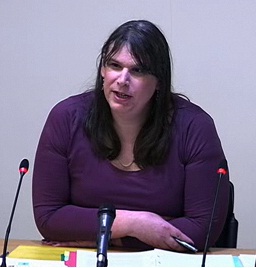
Helen Belcher of Trans Media Watch provided an impressive array of evidence in relation to transphobia in the media during the Leveson Enquiry yesterday. Video footage and full transcripts in .pdf and .txt formats can be found here. Trans Media Watch’s full submission to the enquiry can be found here.

Unfortunately – if unsurprisingly – Belcher’s strong performance warranted little comment from the mainstream and “pink” media alike. Notable exceptions included the headline story in Gay Star News (Trans people victims of ‘horrific’ press coverage) and a comment piece in Pink News (Does today mean change for the trans community?). There have been just brief summaries of Belcher’s evidence (with little or nothing in the way of analysis) within articles that tackle Wednesday’s events more widely in The Guardian, The Telegraph and on the BBC website. Even the #Leveson hashtag on Twitter went relatively quiet as the majority of cis commentators lost interest.

Still, this was to be expected, and we shouldn’t underestimate the importance of Trans Media Watch’s role in compiling and presenting evidence to such a major inquiry. Belcher powerfully outlined a number of very important issues:

  • The consequences of negative media coverage can be extremely serious for trans people: examples include loss of work, death threats, and the necessity of relocation in order to avoid prejudice.
  • Dehumanising and Othering language is routinely used within news stories: “The Sun is basically saying trans people elicit horror, trans people are frauds“.
  • Stories (and pictures) are often published without any consultation with the subject, let alone permission.
  • Newspapers often rely upon false information, such as inaccurate figures about the cost of medical transition on the National Health Service.
  • The Press Complaints Commission is considered useless and toothless as complaints are regularly ignored: “The Press Complaints Commission is regarded as a useless joke by trans people”.
  • Victims of negative media coverage tend to let the issue slide: “[…] we find that individuals rarely want to pursue the case because they then become afraid of future
    harassment“.
  • There tends to be no real justification for most articles about trans people on the grounds of “public interest”.
  • The Sun continues to run transphobic pieces (contrary to the claims of Dominic Mohan during his evidence to the Leveson Enquiry on Tuesday).
  • The Daily Mail publishes six times more stories on trans people than any other UK newspaper(!)

Trans Media Watch also identified a number of common themes in confidential complaints they’d received from trans correspondents who had suffered negative media coverage:

“In each case, the subject of the story had their right to privacy grossly breached, often at a very vulnerable time, with no public interest being served whatsoever.

Was put in danger of public abuse and/or violence.

Is left with candid details of their personal affairs, including previous names, pictures, home or work, available on the Internet.

Often these details, including photographs, were acquired without the subject’s permission. Had to fight the press to force them to exercise restraint — often with no effect.”

Finally, Belcher made a number of recommendations:

  • That it should be possible for organisations to issue complaints on the behalf of vulnerable individuals.
  • Anonymity should be granted to all who pursue complaints; we shouldn’t have to rely on the limited protections offered by the likes of the Gender Recognition Act.
  • The complaints process for media malpractice should be free:
    A lot of trans people lose jobs, find it difficult to get jobs. There is evidence that the earnings of a trans person is significantly lower than they could expect if they weren’t trans. That is a further deterrent for them to seek any recompense. It actually pretty much prevents any trans person from pursuing any action against a newspaper in the courts.

10-year-old trans girl launches petition as Leveson Enquiry tackles transphobia

Jane Fae wrote a powerful post
today
highlighting the connection between two important events this week for trans people in the media.

The first of these events is the launch of a petition that calls upon the press to stop using dehumanising and othering language to describe trans people. The petition was started by the family of Livvy, a 10-year-old girl who became one of the most recent examples of trans children hounded by the news media.

They argue that transphobic language can ultimately kill:

People with gender identity issues are being murdered, beaten, threatened with their lives, bullied, teased, intimidated, disowned and are prone to suicide both attempted and successful and self harm. The Press being an extremely powerful medium has the responsibility to ensure they are not aiding peoples ignorance and hatred and increased lack of self esteem.

Meanwhile, the Leveson Enquiry is due to receive evidence  from Trans Media Watch this afternoon (a live video stream will be available here, as well as an archived video and transcript following the hearing). Josephine Shaw posted the following announcement on the group’s Facebook page:

“[…] Helen Belcher will be representing us at the Inquiry, next Wednesday – February 8th. She’ll be doing so following a detailed written submission made by TMW a few weeks ago, a public version of which is available via the downloads page of the TMW website.

There have been a very large number of written submissions to the Inquiry – only a small number have resulted in Lord Leveson calling witnesses in person. We’re absolutely delighted to be counted in that number […]

TMW’s aim next week is simple. To give voice to the pain and anger of all those trans and intersex people whose lives have been invaded, even ruined, without any cause or warning by the British press. Who deserved accuracy, dignity and respect. Or who simply deserved privacy. And to try and represent our community in calling for a profound change in the attitude of the press and an end to the incessant outrageous and unwarranted intrusion into the lives of innocent trans and intersex people.”

This week therefore sees two significant responses to the ongoing media assault upon trans lives. The two met this morning on the BBC’s Breakfast show, when Livvy and Trans Media Watch’s Paris Lees spoke about transphobia in the media.

It’s really heartening to see all of this happening. I agree with Jane that we have good reason to remain cynical, but equally we have plenty to celebrate at this juncture. For too long, journalists have been getting away with inflaming public opposition to trans liberation, and people in power are finally beginning to listen to our howls of outrage. This is an early step towards a more fair and friendly world, but an important one.

I was fortunate enough to meet Livvy a few months back and was inspired by the sheer determination of both her and her family; we have a lot to learn from them! I was also struck by my own surprise role in Livvy’s story via a sensationalist piece published by the Sun back in September:

But yesterday a row broke out after a parent claimed that kids as young as EIGHT at Livvy’s school were shown a film about sex-change surgery.

In the footage, made for the NHS website, Ruth’s Story describes how she was born a boy — but knew from the age of 16 she wanted to be a woman.

One parent said: “We are not against the child. It’s that the children are being asked to treat her differently and watch a transgender video without parents knowing.

The video in question was made for the NHS a few years back, and at the time I had no idea it could ever be shown to a primary school assembly! I would probably phrase a few things differently now but ultimately I’m still pleased with how it turned out. I became involved in the project by responding to an email from a mass trans mailing list: someone else could just have easily done it.

Ultimately I suppose my point is that every bit of effort counts. Every signature on Livvy’s petition, every angry letter to an editor, every trans awareness workshop and every intervention within public conversations. Let’s keep up the pressure, because it’s the only way we stand a chance of winning!

Update on the HESA gender statistics affair

Some clarification, new information and new developments have emerged since I posted about HESA’s gender statistic fail yesterday.

Background

The Higher Education Statistics Agency (HESA) is currently revising a number of data collection fields. The changes are not yet set in stone. 

Two new fields (student.SEX and student.GENDERID) will effectively replace the one existing field (student.GENDER) which is currently used to collect data on gender within higher education institutes (usually universities) in the United Kingdom.

The existing student.GENDER field has the following categories*:

1 Male
2 Female
9 Indeterminate

In regards to “Indeterminate”, HESA note that:

“Code 9 ‘Indeterminate’ means unable to be classified as either male or female. It should not be used as a substitute or proxy for ‘Not known’. The term ‘indeterminate gender’ is intended to identify those who are ‘intersex’ and is not related in any way to trans-gender.”

However, in practice a number of institutions have effectively mapped answers such as “other” and “prefer not to say” onto this third category within enrolment/re-enrolment forms in order to provide non-binary, genderqueer, intersex and other students to effectively “opt out” of the gender binary.

The new, compulsory student.SEX field has the following categories:

1 Male
2 Female

The new, optional (for institutions) student.GENDERID field has the following categories:

01 Yes
02 No
98 Information refused

A brief analysis of the harm in these changes can be found in my previous post.

Developments

It appears that HESA have received a number of queries and complaints from trans people: it’s uplifting to see so impressive and rapid a response!

The agency initially responded by noting that the changes were the result of “consultation with [the] HE sector and ECU“. Commentators noted that this consultation seemed to at no point involved actual trans students.

However, in the last hour HESA have provided the following statement from their Twitter account:

“Thanks for queries re. sex and gender in next year’s HESA record. Your input will help us get this right.”

The tweet links to correspondence conducted between HESA and trans activist Emma Brownbill – if you have the time, it’s worth a read!

Some key points include the following:

“The phrase ‘legal’ sex is only currently used in the Staff Record. The intention in the Staff Record is to match the data requirements of HMRC, which for tax and pension purposes only accept Female or Male.

The final coding manual and guidance for the Student Record in 2012/13 has not been published. From your own and other queries about the provisional guidance and consultation documents it is clear that the terminology of ‘legal’ sex may not be appropriate for the Student Record.

Similarly the binary choice of Female or Male, originally intended to match the Staff Record, is now the subject of further discussion with regard to the Student Record.”

So let’s keep at this – we’re really getting somewhere!

Also, thanks to everyone who commented on the previous post, your contributions were greatly appreciated.

Edit: the story has now hit Pink News.


*The numbers (e.g. 1, 2, 9, 98) are used within statistical analyses.


Trans* Education and Determination: teach-in details confirmed

From the Facebook event page:

FRIDAY 20th MAY
A trans teach-in to discuss issues of psychiatry, community and care, originally conceived in response to the presence of transphobic speakers at the (now cancelled) Royal College of Psychiatrists’ event “Transgender: Time to Change.

There will be a number of talks and workshops throughout the day, alongside open discussions and debates. All are welcome!

Times: 11am-6pm

Location:

Ground Floor Room 2, Strand Building, King’s College London

Strand, WC2R 2LS
London, United Kingdom
Entry: FREE

Provisional timetable:

11am: event opens
11:30am: Dr Lyndsey Moon: a discussion of counselling practices
12:30pm: Lunch
1:30pm: Natacha Kennedy: a critique of “talking therapies”
2:30pm: Kai Weston: workshop
3:30pm: Ruth Pearce: identity and fluidity within trans communities
4:30pm: Jane Fae: a critique of psychiatry
5:30pm: community workshop/discussion

For further details, visit our blog: http://transfringe.wordpress.com/about/

This event is kindly hosted by KCL Women’s Officer and GenderMatters@Kings.

Trans community teach-in confirmed for 20 May

With the Royal College of Psychiatrists’ transphobic event cancelled, activists are going ahead with a proposed “teach-in”, originally due to take place alongside the RCPsych conference one part of a day of protest. Student feminists and academics at King’s College London are working to book a room in an accessible location.

The community event will therefore take place on Friday 20th May 2011 from 11am-6pm (provisional times).

It will be held in Kings College London, Strand Caucus, in central London with the room TBC. All are welcome.

I’ll post further details as I get them.

Regular updates will be made on the event blog: Trans* Education and Determination.

Transphobic conference CANCELLED

The Royal College of Psychiatrists have cancelled “Transgender: Time to Change“. This isn’t just a victory for the trans movement: it’s also a victory for angry blogging, community organising and the threat of peaceful protest.

Pink News have a really positive piece on the cancellation.

RCPsych claim that the cancellation was down to low ticket sales. However, it’s pretty telling that the event was cancelled right after Charing Cross Gender Identity Clinic put out this statement:

The team at the WLMHT Gender Identity Clinic (GIC) at Charing Cross Hospital notes the apparent shift of emphasis in the Royal College of Psychiatrists Gay & Lesbian Special Interest Group conference, ‘Transgender: Time To Change’ on May 20th and feels compelled to withdraw on this basis.

When we were originally asked to take part, GIC clinicians understood that our role was to outline the work we do within our own service and explain the very considerable evidence base which underpins it. We are very happy to do this and our more than 55 years of experience as the country’s leading NHS provider gives us a rich and robust data set from which to draw observations.

It now appears that the conference comes at trans issues from a very specific agenda, namely, to explore the validity or otherwise of gender diagnoses as medical and psychiatric phenomena. So long as this is the case, we feel we can’t support it.

Although we were somewhat wary of engaging in what is essentially a clinical discussion with a predominantly non-trans panel, which, moreover, features a non-clinician whose personal opinion is already well known, we agreed to do so in order that discussion might focus on evidence rather than anecdote.

The Royal College should be aware that there is a great deal of disquiet around this event within the trans community and interested parties should note that the discussion as it now stands will be one-sided at best..”

On the subject of “numbers”, it’s also worth pointing out that registration was meant to be open until 9th May. That suggests that the number of people signing up for the event was really low: an encouraging turn of events! Commentators elsewhere have suggested that many psychs will have been put off by the outdated views held by many of the speakers. I only hope this is the case.

This is well worth celebrating, but the good news shouldn’t be the end of the matter. There’s a few really important lessons we can learn from the whole affair, and some things we need to think about regarding future action.

Trans people are still treated awfully by the medical establishment in general, and the psychiatric establishment in particular. We need to explore how to bring about change: through research and its dissemination, through lobbying, and through protests. The simple threat of a colourful, vibrant protest on the PCPsych doorstep clearly had a massive impact, as did the actions of those who talked to psychs and to Charing Cross.

The gender clinics and gatekeepers of this country have a troubled relationship with the trans community, but it benefits us to work with them. Currently, they’re not particularly accountable: Charing Cross has a patient feedback group, but how many trans people even know of this group? How many know how to contribute to its feedback? How many know the vast majority of groups invited to attend the meetings are London-based? This situation needs to change, but the clinic’s actions on this occasion suggest that it can.

Julie Bindel will probably kick up a fuss. Personally, I feel we should let her get on with it. Any opportunity for us to promote our arguments against the approach taken by the cancelled conference is a good one.

Finally, I’ve been informed that activists are planning to go ahead with the community “teach-in” that was originally planned to coincide with the transphobic conference. After all, there are speakers and facilitators booked, so why not? People are talking about focusing on the continuing problems within trans health in general and psychiatry in particular, and exploring where we might go from here. The venue and timetable are still being arranged, so I’ll post again once there’s news on that front.

Government considers scrapping the Equality Act

I really, really wish that title was hyperbole. But it ain’t. It’s here, in plain and simple language, as part of the government’s consultation on “red tape“.

Equality regulations are designed to help ensure fairness in the workplace and in wider society. They include regulations and laws on discrimination and harassment.

You can find the Equality Act 2010 here

Tell us what you think should happen to this Act and why, being specific where possible:

  • Should they be scrapped altogether?
  • Can they be merged with existing regulations?
  • Can we simplify them – or reduce the bureaucracy associated with them?
  • Have you got any ideas to make these regulations better?
  • Do you think they should be left as they are?

It’s worth bearing in mind that the Tories weren’t particularly keen on the Equality Act during its passage, and now in power they’re doing their best to water down provisions such as the Public Sector Duties (which require public bodies such as schools and councils to ensure that they’re actively working towards equality bearing minority needs and issues in mind when making decisions). Many businesses and managers will be keen to see the Equality Act gone (or at least weakened), and are likely to say as much in this consultation.

Now, I hardly think the Equality Act is perfect. However, we’re definitely better with it than without: it has replaced numerous items of previous legislation and therefore contains a vast number of important protections on the grounds of disability, race, religion, sexual orientation, gender, “gender reassignment” (that’s us!…sort of), sexual orientation, age and pregnancy.

On a trans-specific front, the Equality Act makes it illegal to discriminate against (most) trans people in education, the workplace and in goods and services (that’s stuff you buy and do, like going to a shop, staying in a hotel, or asking the police for help).

These gains, for trans people and everyone else, have been hard won. They could do with improvement (and why not suggest that “gender reassignment” is extended to “gender identity”, for instance?) but that hardly seems to be what this consultation is about.

Still, we can do our bit. Join with those who have left shocked comments on the page, take part in the consultation and tell the government how you feel about, y’know, having rights. Pass the link on to others, and help make sure that our voices are overwhelming. We need to tell the government that people come before profit!

Mission Statement

In the light of certain accusations that have been levelled at trans activists in the wake of the Royal College of Psychiatrists’ upcoming conference (“Transgender: Time To Change“), I feel it’s important to clarify my position on trans activism. This post relates directly to the aforementioned conference, but also more generally to the kind of activism I promote on this blog.

I believe that trans activism is for everyone. Trans activism is about promoting gender liberation for all. I feel that Leslie Feinberg sums this up particularly well in hir introduction to “Trans Liberation: beyond pink or blue”:

The sight of pink-blue gender-coded infant outfits may grate on your nerves. Or you may be a woman or a man who feels at home in these categories. Trans liberation defends you both.

Each person should have the right to choose between pink or blue tinted gender categories, as well as the other hues of the palette. At this moment in time, that right is denied to us. But together, we could make it a reality.

Trans activism therefore incorporates and complements transsexual activism, but is noteably distinct. The goals of trans activism also complement those of feminism: we fight not for gender equality, but for gender liberation.

We fight to free individuals from the constraints of necessary gender categories and gender roles with the proviso that an individual be free to define their own gendered experience. If someone wants to wear dresses, or trousers, or make-up, or grow a moustache, or armpit hair, then cool. Be free, and liberated. Express yourself.

As a trans activist, I believe that individuals have a right to transition. A transition may be social or physical. It may involve new clothes, hormones, surgery…one of these things, or none of these things. It has to be contextual and right for the individual, and move at a speed that is right for them. Transsexed people often have deep-seated reasons for feeling extremely uncomfortable with their sex characteristics, and a transition can alleviate this. A a trans woman, I have benefitted a great deal from my transition. I am fortunate enough to live a more fulfilling life.

I do not feel that my experiences in any way put me at odds with feminism. I oppose outdates stereotypes of the woman as passive and ornamental. I support my sisters’ fight for equal rights and gender liberation: for equal pay, for body sovereignty, and against sexist, patriarchial institutions. I do not dress in a particularly feminine fashion: this is what works for me. I know some trans women who are very butch, and others who are high femme. As a trans activist, I believe in their right to express themselves.

However, I feel it is important for trans activism to also recognise the right not to transition. Transition is not right for all gender variant people. The important thing is that we are all free to express ourselves, regardless. No-one deserves to be pushed onto a particular gender path by overzealous medical institutions, feminists or trans communities with a point to prove.

I oppose the ethos of “Transgender: Time To Change” because I feel that the attitude of individuals such as Az Hakeem and Julie Bindel fly in the face of trans liberation. Transition should be available to all who need it, when they need it, be this in the form of medical intervention or appropriate counselling (not pathologising “talking therapies”: the same kind of interventions that have enabled the “ex-gay” movement). It is also disappointing when such organisations fail to listen to those expressing disappointment at their actions.

I also feel that gender variant individuals – particularly children – should be free to celebrate and explore their gender variance without being treated as mentally ill “fantasists” (Hakeem’s word). Currently, gender variant individuals are either told that to buckle up and be a Real Girl or Real Boy, or otherwise pushed towards transition. This is not real choice, nor is it gender liberation.

In a gender liberated world, we would all get to decide what it means for us to be female, male, androgyne, genderqueer, polygender, genderfluid etc, without the patriarchy telling us how to control and moderate our gendered behaviour. In a gender liberated world, there would be free access to transition, but no-one would be forced into transition as the only medically sanctioned option for gender dissent.

This, to me, is what trans activism is about. The Royal College of Psychiatrists and the few radical feminists who (bewilderingly) support them are denying gender liberation and upholding outdated oppositional binaries without understanding the freedom, fluidity and thoughtfulness of the contemporary queer movement. Trans activism stands in opposition to this, and dares to imagine a world of gender freedom.