Trans pregnancy: new book chapters and article

Over the last couple of years, members of the Trans Pregnancy project team have been quietly plugging away writing up more of our findings from our 2017-2020 research.

Recently, three new books have come out which include chapters based on our work, plus we have just had a new academic article published. I hope all of these will be useful for expanding knowledge about trans people’s experiences of pregnancy and childbirth, in ways that will be useful to community members, healthcare providers, and researchers.

The Conversation on Gender Diversity (edited by Jules Gill-Peterson, published by Johns Hopkins University Press) is a collection of short trans studies essays originally published on The Conversation. It’s written in an accessible way and priced affordably. It includes our essay “Giving Birth as a Father – Experiences of Trans Birth Parents“, which provides a concise introduction to the topic and to our research.
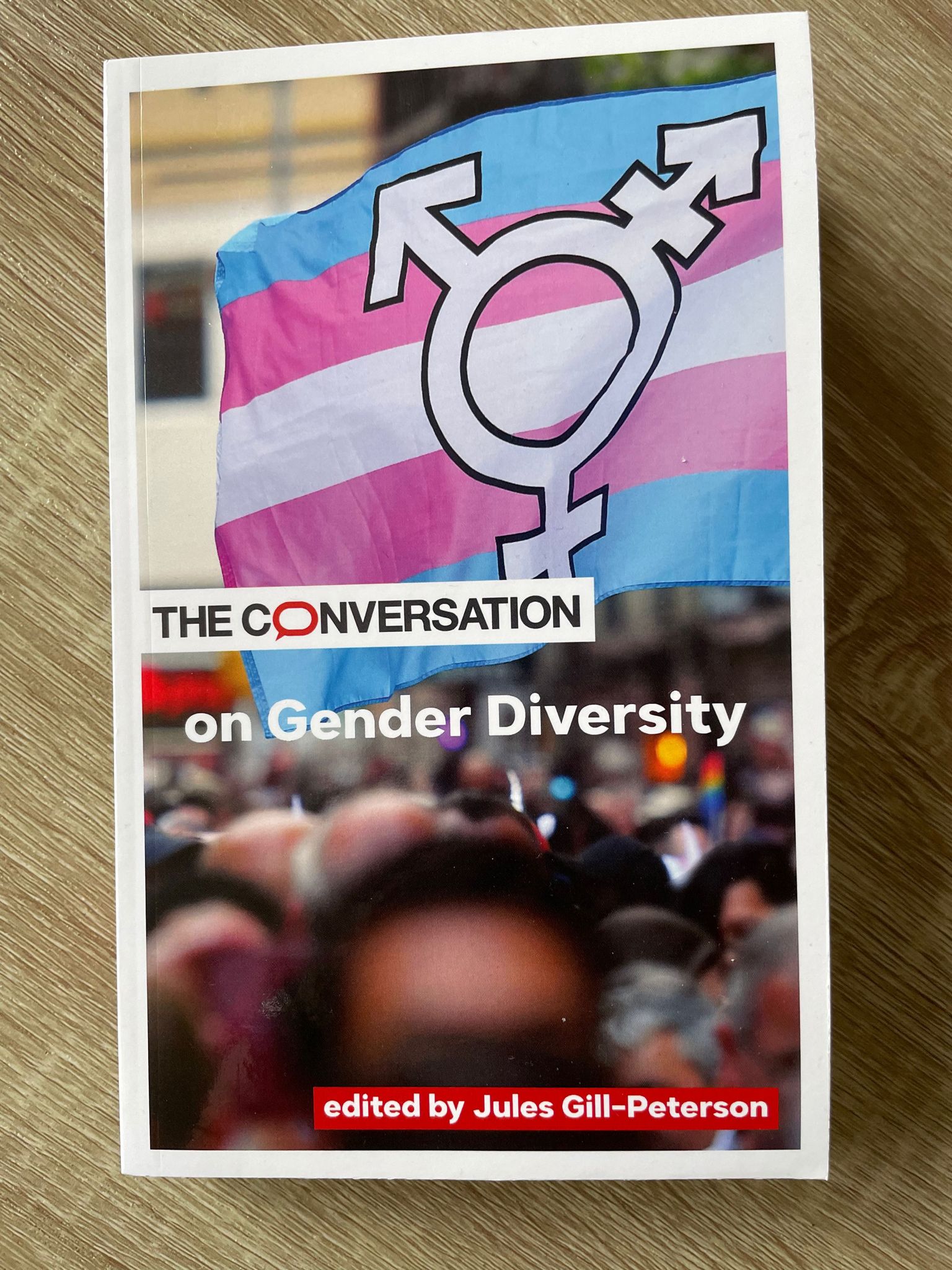
Photograph of a book, The Conversation on Gender Diversity. The cover features a blurred crowd of people and a large trans flag with the trans symbol on top of blue, pink, and white stripes.


The Routledge International Handbook of New Critical Race and Whiteness Studies (edited by Rikke Andreassen, Catrin Lundström, Suvi Keskinen, and Shirley Anne Tate, published by Routledge) is a hefty academic volume with a series of articles which critically interrogate whiteness. The book includes our essay “Whiteness in research on men, trans/masculine and non-binary people and reproduction: Two parallel stories“, in which we reflect on both the racialisation of both trans pregnancy and childbirth, and on the whiteness of our research team. It’s currently only available in hardback at “academic” prices, so I encourage people to order it into your local library if it is of interest to you. I’m also very happy to email people a copy of the essay if you’d like to read it, and will be making a version freely available on this site as soon as the copyright agreement allows.

Cover image of a book, The Routledge International Hardbook of New Critical Race and Whiteness Studies. The cover features a colourful aerial photograph of a river bend.


Trans Reproductive and Sexual Health (edited by Damien W. Riggs, Jane Ussher, Kerry H. Robinson, and Shoshana Rosenberg, also published by Routledge) is another academic book, this time focusing on topics including intimacy, sexual violence, sex education, and reproduction. It includes our essay on “Young men, trans/masculine and non-binary people’s views about pregnancy“, drawing on focus groups undertaken with young people to ask about how they see their reproductive futures. Again, this book has academic pricing, so we would greatly appreciate people asking their local library for a copy, and you’re welcome to contact me if you’d like to read the essay.
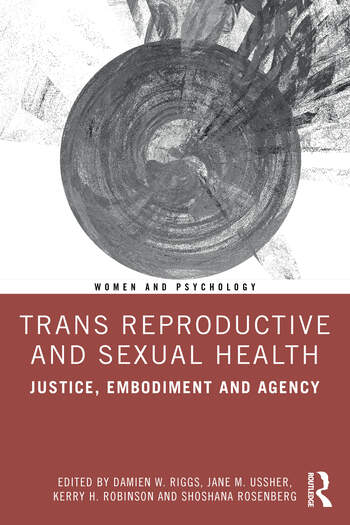
Cover image of a book, Trans Reproductive and Sexual Health. The cover image is an abstract grey circle with messy lines extruding from the top right.


Finally, we’ve just published an article in the journal SSM – Qualitative Research in Health. Titled “Medical Uncertainty and Reproduction of the “Normal”: Decision-Making Around Testosterone Therapy in Transgender Pregnancy“, this article looks at decision-making around cessation of testosterone during pregnancy, and critically explore some of the assumptions that get made in medical writing and practice.

Black Lives Matter

I want to express my unconditional solidarity with Black Lives Matter protesters in the US, UK, and beyond.

Over the last week I have watched the unfolding events in the United States with growing horror. I have been dismayed by the murder of George Floyd by police, the brutal, violent, but all-too predictable response to protesters from US authorities, and subsequent murders of further Black men including Tony McDade, James Scurlock and David McAttee.

I have so much respect for those who have taken to the streets again and again to call for a change to the corrupt, racist systems that made this violence possible. In this post, I want to take advantage of my platform to share pre-existing information and resources.

As a white woman living in the UK, I am aware that such deep systemic racism is hardly limited to the US. We know that Black and Asian people are more likely to die of coronavirus. This is due to pre-existing social and economic inequalities that result from racism, which mean that many racial minorities are more likely to have pre-existing health conditions, and work in low-income jobs which put them at risk. We know that 1,741 people in the UK have died in police custody or following contact with the police since 1990, and no police officers have been convicted; we know that Black people and other people of colour are disproportionately represented among these deaths. We also know that Black people are even more likely to be imprisoned in the UK than the US, and this disproportionate prison population is a consequence of overt discrimination in both the criminal justice system and wider society.

These problems do not result from the actions of “bad apples”. They are systemic, the consequence of a system of white supremacy on which the wealth of the UK was built, and from which those of us who are white continue to benefit, regardless of what other challenges we face in our lives. To bring about change, we – those of us who are racialised as white in a system of white supremacy – need to think seriously about what we can do in our everyday lives to address our own complicitly, support our Black neighbours, and bring this system down.

I am writing this post because I know this blog has a readership; however, I hope to primarily direct your attention elsewhere. I am not the person whose work you should be reading to learn more about this, nor to think through the actions you might take. I recommend turning to the existing work of Black writers to understand what is going on, and to support Black activists in the US, UK, and beyond. The remainder of this post includes a (non-exhaustive!) series of links that might help fellow non-Black readers especially with this, especially if you are not currently able to take to the streets. But please also do your own research.

Educate yourself. A list of readings, videos, and podcasts on a range of topics including racism, protest, allyship, and prison abolition.

Donate to bail funds. In the US, suspects who can afford bail may be released from custody prior to a trial. In practice, this disproportionately impacts low-income communities, and hence disproportionately impacts Black people. Protesters and innocent bystanders alike have been subject to mass arrests in the last week alone.

Donate to other causes in the US. These include funds for victims, Black-owned businesses impacted by the protests, and related organisations and initiatives.

Donate to Black Lives Matter UK.

Support QTIPOC and BAME LGBTIQ+ groups in the UK. Follow, listen, learn, and donate.

Support people subject to harassment on the streets. Take action when you witness racist acts.

Challenge racist systems in your workplace. Think about how you might work through a union and/or work collectively with your colleagues to address racist hierarchies, taking into account factors such as management structures, hiring practices, insecure contracts, and the operation of class.

Challenge everyday racism among your friends and family. Make time and space for difficult conversations. Create space for others to question and challenge your pre-existing prejudices in turn.

Finally, I encourage fellow white people to think critically about where they are putting their support. Is your local UK “Black Lives Matter” protest actually being organised by white people and centring white voices? Is it associated with a group like the SWP front Stand Up To Racism, who have been criticised by Black feminists for their deep complicity in rape culture? Are you putting more energy into discussing what does and does not constitute “violence”, or condemning people for taking the streets during a pandemic, than you are into condemning and acting against the racist sickness that is the cause of the protests? Are you spending more time thinking about your own white guilt than how you might make productive changes in your life and in the lives of people around you?

Again, I urge you to educate yourself, and read what Black writers and activists have to say about these issues. I will be striving to do the same.