Going to California (with an aching in my heart)

When I received an invitation to speak about my research at the University of California in Davis, my initial, instinctive response was “heck no”.

It was December 2025, and the United States was looking an increasingly dangerous place to be both trans, and to be a critical scholar. The last year has seen anti-trans legislation introduced at every level across the country, while the influential Oversight Project at the Heritage Foundation and some in the FBI sought to brand trans activism as “violent extremism“. Meanwhile, attacks on academic freedom have resulted in massive funding cuts, the mass censorship of race and gender studies, and the kidnapping and detainment of students who protest the genocide in Gaza. One scholar seeking to flee the country with his family following death threats arrived at the airport gate to find their flights had been mysteriously cancelled.

Then there’s the international situation. Back in December, the US administration was beginning to escalate its rhetoric around Greenland. By January, I was genuinely concerned that a visit to California might coincide with a previously inconceivable outbreak of war between the US and its former European allies. It seemed that no possibility was off the table.

Don’t get me wrong, for all that Brits like to dump on Trump, I fear the UK is rapidly heading in a similar direction. While the dangers posted by the US administration are more blatant, thanks to its volatile and emotional rhetoric, the UK’s Labour government is pursuing a similarly authoritarian agenda. We can see this for example in deeply racist policies on migration and asylum, a crackdown on protest groups, attacks on equality and diversity policies, and the embrace of disinformation and pseudoscience in pursuit of an anti-trans agenda. And of course, our country too is entirely complicit in various conflicts and forms of state violence, including the ongoing genocide in Gaza.

Nevertheless, I have the considerable privilege of being a white UK citizen. I own a passport that enables me to freely leave and enter the country. I do not fear being detained on the UK border. I live in a diverse community where I feel safe and held by my neighbours. I am still – for now – able to maintain a university profile that openly states my commitment to feminism and equality work. And while I am increasingly afraid of facing violence at work, at least there aren’t many guns in this country.

So while I felt morally torn about potentially travelling to the USA, I was also aware that my home country is not exactly a great place. Thinking through the idea of complicity, Mijke van der Drift and Nat Raha encourage us to find “the right relation to what your position is in the world”. This “entails attending to where one is, and what one can do from that place”.

The question, then, was one of getting to California safely, and then ensuring that the trip would be worth it. What could my in-person presence offer that was not possible in my writing, or over the internet? What could I offer, and what would be worth the risk?
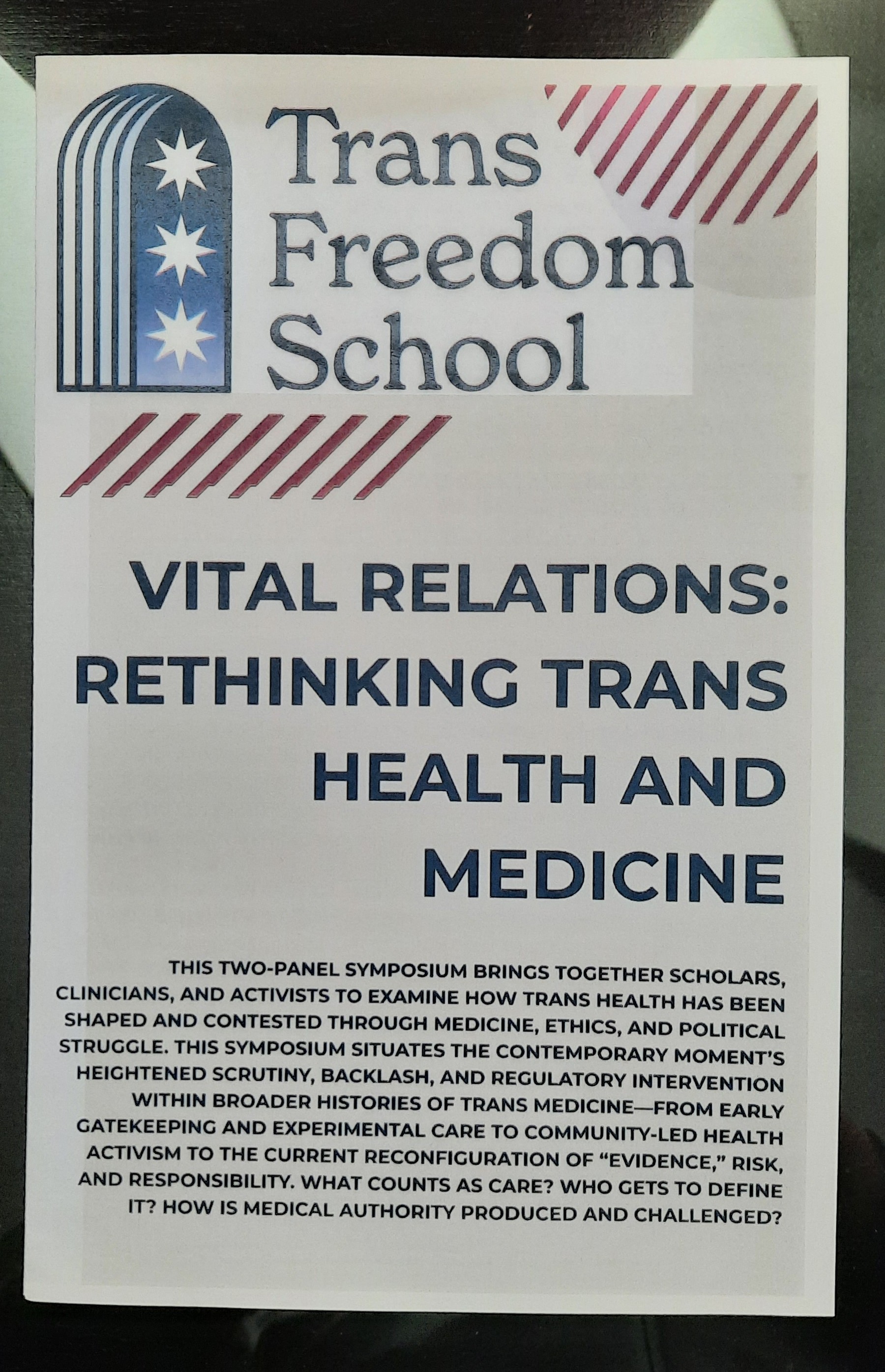
Photo of a flyer. Text reads as follows. Trans Freedom School. Vital relations: rethinking trans health and medicine. This two panel symposium brings together scholars, clinicians, and activists to examine how trans health has been shaped and contested through medicine, ethics, and political struggle. This symposium situates the contemporary moment's heightened scrutiny, backlash, and regulatory intervention within broader histories of trans medicine - from early gatekeeping and experimental care to community-led health activism to the current reconfiguration of "evidence," risk, and responsibility. What counts as care? Who gets to define it? How is medical authority produced and challenged?


The Trans Freedom School

It turned out that my colleagues at UC Davis really knew what they were doing. The event I spoke at, Vital Relations, was part of the Trans Freedom School. This is a series led by Ava Kim and Christoph Hanssmann, which brings together scholars to share knowledge and ideas on a range of extremely pressing topics.

Our event specifically addressed the past, present, and future of trans health and medicine. This included how trans healthcare might be defined, whose interests have shaped the development of the field, how to address threats to trans people’s health and wellbeing, and how all of this connects to wider struggles around the pursuit of truth and defense of free inquiry. The event format was a facilitated conversation, meaning that the speakers were in conversation with one another as well as the audience. This felt extremely generative given the range of knowledge and experience in the room.

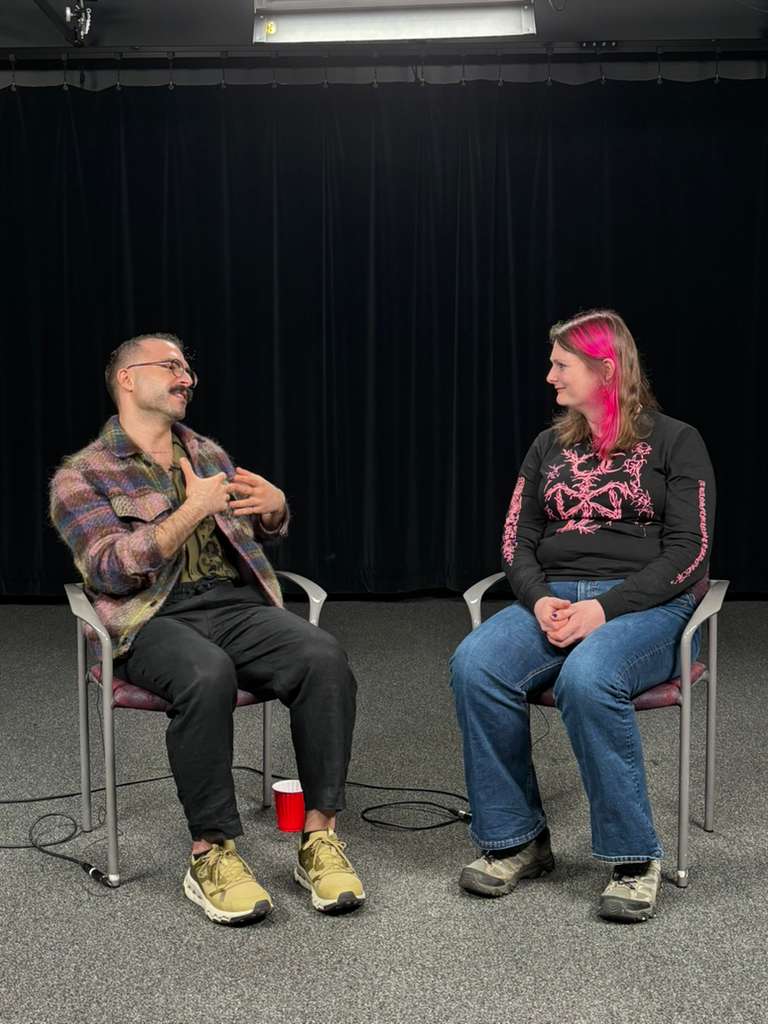
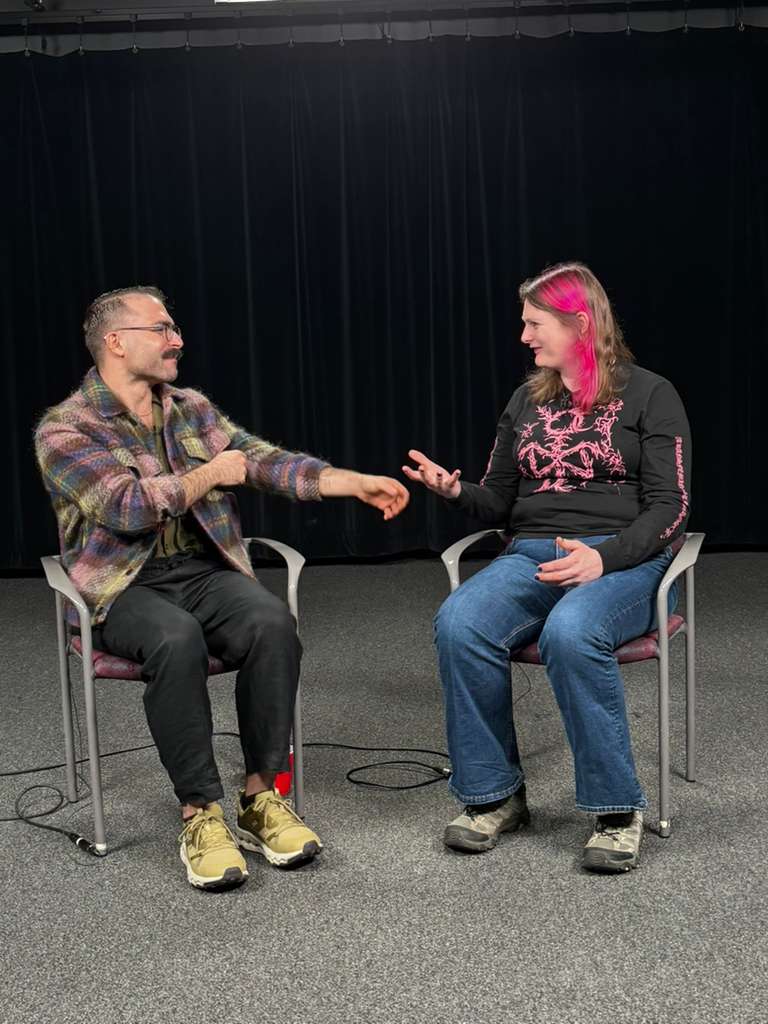
I sat on a panel with Tankut Atuk, who is doing amazing work on pathogenicity: specifically, the social contexts and power relations which make minoritised people more vulnerable to illness and disease. Understanding these things can help us learn not only how and why people are disadvantaged, but also how we can organise against such disadvantage. We explored examples from Tankut’s research with trans sex workers in Turkey, my work on trans people’s experiences of perinatal care, and Glasgow’s strong community networks. A second panel saw Kadji Amin and Jacob Moses explore histories of trans healthcare, plus debates around identity and regret.

Importantly, these conversations are not limited to academic events. The panel discussions are bring professionally filmed, as are separate studio conversations with the speakers. The idea is to produce information and teaching resources for the long term. Other events associated with the Trans Freedom School take a wider look at current debates around gender and race, at a time when discussion on these topics is increasingly censored within media and scholarship, in the US and beyond.

In short, this was indeed vital.

Continuing to foster international dialogue and the free exchange of ideas is incredibly important, especially when these things are under threat. Teaching materials that challenge norms while tackling disinformation are desperately needed. I am grateful and honoured that I was invited to be part of this work.

I will of course be sharing materials produced by the Trans Freedom School when these are ready to go online. In the meantime, I was left with a great deal to think about, which will no doubt shape my own ideas and work going forward.

The right relation

As it turned out, the US did not invade Greenland while I was in California. Instead, as I flew home, the US and Israel launched a series of airstrikes on Iran. They killed the Supreme Leader Ali Hosseini Khamenei, along with members of his family, plus hundreds of civilians. This including over 170 people at a girls’ primary school, most of whom were children. This was an immediate reminder of how the world’s greatest superpower is also a rogue state, prepared to inflict death and suffering for seemingly little reason other than flattering the macho egos of its unchecked leadership.

Seeing sickening scenes of violence unfold across the Middle East in the following days made me feel extremely powerless. It is hard to know what to do, how to respond, in the face of such evil. I’ve had enough Iranian friends that I have no sympathy with the awful regime there. But the Iranian people will not be freed from tyranny by a racist foreign power murdering schoolgirls. I remember the slow, pointless horrors of the Afghanistan and Iraq wars, with hundreds of thousands of people killed across the long years. I remember joining a million people on the streets of London to oppose this violence in 2003, only to be entirely ignored by the Labour government of the day.

In countries such as the UK and the US, what we do with our complicity in state violence depends on what tools we have, and options are in front of us. Here in Glasgow I will be supporting protests against war and arms dealers. I will be sharing information with my friends and neighbours. I will be teaching about power and its abuses in my day job. I will be voting to keep Labour as well as Reform out of Scotland in the forthcoming Holyrood election. It probably won’t feel like enough, but it does matter to do what we can.

The same goes for confronting other forms of state and corporate violence. I focus much of my research, activism, and writing on addressing discrimination and violence against trans people, because this happens to be where I have developed my skills and knowledge. The Trans Freedom School reminded me that the benefits of such skills and knowledge can cross entire oceans. It mattered for people in California to learn not only about my research, but also about the work of UK and Irish groups I spoke about, such as Trans Kids Deserve Better and Trans Harm Reduction. These groups are not working in universities or speaking to government. They are meeting with others in their community and building connections and resources, step by step, conversation by conversation.

Here in the UK, anti-trans policies are killing children. As with the West’s imperial wars, it is easy to feel powerless. But as I argued last year in my essay about the UK’s anti-trans Supreme Court judgement and the Lesbian Renaissance, there is so much we have achieved – and can achieve – through activism, community work, and mutual aid:

“There are more of us publicly creating art and culture, more of us creating events and running nightclubs and playing in bands and writing essays (hi). There are more community groups providing mutual aid and support when charities and state bodies fail us. And, importantly, we are not alone.”

There are always things we can do. It is simply a matter of attending to where we are, and doing what we can from that place.

Photo of graffiti against a colourful background. It reads as follows. Develop enough courage so you can stand up for urself and then stand up for somebody else.


Like this post? Want to read more?

Don’t rely on corporate social media – subscribe now to receive new posts whenever I write them.
Some thoughts on the Levy Review

On 18 December, NHS England quietly published the report of Dr David Levy’s review of adult gender clinics. The report’s official title is the massively dry Operational and delivery review of NHS adult gender dysphoria clinics in England, but it’s commonly referred to the “Levy Review” within community spaces.

Prior to its publication, there were some concerns about the Levy Review being a sort of Cass Review for adults, leading to further massive restrictions in trans people’s access to healthcare. I witnessed active catastrophising in some quarters, with social media posts calling medication stockpiling. I don’t think this kind of rollback was ever on the cards with Levy, but I do understand why people were concerned. Trans people’s trust in the NHS and political processes is – justifiably – at rock bottom.

There were also a minority who hoped that the Levy Review might result in significant improvements to how trans people are treated by the NHS in England. I don’t think that was ever realistic either.

In reality, Levy does acknowledge some of the problems with English gender clinics, focusing especially on capacity issues, inefficiencies, and long waiting times. It offers a series of recommendations relating largely to the practical operation and delivery of gender services (the hint is in the title!) QueerAF asked me what I thought about it for their coverage of the Levy Review, and I told them this:

“Faced with the sinking Titanic of trans healthcare in England, the Levy Review suggests we rearrange the deckchairs,” Dr Ruth Pearce, a transgender health expert and Senior Lecturer in Community Development at the University of Glasgow, tells QueerAF. Levy's report offers a limited, technocratic response to the ongoing crisis, recommending a range of bureaucratic measures to improve the efficiency of the current system.


These measures may still result in a few improvements. NHS England hope Levy’s recommendations will contribute to “clinical effectiveness, safety, and experience”. I am not entirely convinced. But perhaps the waiting lists can be a bit shorter and fairer, especially with the opening of new clinics and introduction of a national waiting list.

Why is the Levy Review like this?

Levy did not truly seek to understand, let alone confront, the real scope of the problem in trans healthcare services, sticking instead to the very narrow scope of the brief provided by NHS England. Deeper issues he ignored include open discrimination from healthcare practitioners, as well as gatekeeping, pathologisation, and dehumanisation baked into the design of the gender clinics. These all harm patients, while also wasting clinical time and resources.

When I started my PhD on trans healthcare in 2010, such issues were not widely understood outside of certain trans community settings. That is no longer the case.

There have been multiple reviews and consultations undertaken by NHS England over the past 15 years, including in 2012, 2014-2015, and 2017-2019. There was also a review undertaken by the House of Commons Women and Equalities Committee in 2015.

Then there’s the research I undertook for that PhD, later published in my book Understanding Trans Health. Here, I argued that long waiting lists for gender clinics are not simply a result of underfunding or bureaucratic inefficiencies, but also an inevitable outcome of the gatekeeping system. By positioning trans healthcare as a specialist matter, and forcing patients to prove over and over again in psychiatric evaluations that they are “really” trans, you create unnecessary roadblocks and bottlenecks for care.

There have been a lot of other studies undertaken since. The most notable might be the massive, rigorous, and extremely detailed final report of the Integrating Care for Trans Adults (ICTA) project, published in 2024. This was funded by the UK government through the National Institute for Health Research, and has been roundly ignored by NHS England.

There are also a growing number of popular analyses: blog posts, news stories, podcasts, and video essays. One prominent example is I Emailed My Doctor 133 Times: The Crisis In the British Healthcare System, by Philosophy Tube, which has been seen by over 2.5 million people to date.


All this research and commentary highlights those same problems ignored by Levy: discrimination, gatekeeping, pathologisation, and dehumanisation.

My feeling is that neither NHS England nor Levy were interested in these issues. In fact, they are not really interested in understanding trans people at all.

It is therefore no surprise that Levy not only ignores widely-documented problems, but also repeats factually inaccurate claims, such as that the growth in patient demand for gender clinics is “not well understood”. Quite aside from what we have learned from all of the research and commentary noted above, this growth was forecast back in the 2000s by the education and advocacy organisation GIRES, in a study funded by none other than the Home Office.


The really bad stuff (and how to protect your data)

For all the limits of the Levy Review, I feel most of the recommendations are somewhat positive and may help people a bit. On balance, it’s mostly okay.

However, there are a few real points for concern.

Firstly, Levy argues that a first assessment for medical interventions should always be undertake by a psychiatrist or clinical psychologist. As all the research on trans healthcare services has shown time and time again, this is both unnecessary and unhelpful. It compounds the pathologisation of trans people, wrongly positions trans healthcare as a “specialist” matter, and creates expensive bottlenecks for treatment.

Secondly, Levy insists that gender clinic patients should be referred by GPs, and should not be able to self-refer. This is intended to help with the problem of patients ending up on a waiting list with no information for clinical staff on who they are, what they are looking for, and what their healthcare needs might be. However, the recommendation ignores the widespread issue of transphobic GPs refusing to provide referrals, as well as the fact that not everyone will have a GP (see, for example, the fact that trans people disproportionately experience homelessness, or that we are more likely to avoid healthcare providers due to justified fears of abuse). The problem Levy is trying to address could have been tackled in a more sensitive way, for example through NHS England providing a short referral form that prospective patients can fill in when seeking an appointment at a gender clinic.

Finally, there is the issue of future research. Citing Alice Sullivan’s transphobic report on sex and gender, Levy calls for more data collection on patient outcomes. Here Levy fails to acknowledge the urgent need to build trust before trans patients can be confident the NHS will not misuse our data. Moreover, as Trans Safety Network have noted, NHS England have committed to addressing this through expanding the role of the National Research Oversight Board for Children and Young People’s Gender Services. Trans Safety Network report that the board includes members associated with anti-trans medical groups, including the Society for Evidence-Based Medicine (SEGM), who are listed as a hate group by the Southern Poverty Law Center, and CAN-SG. It’s little surprise therefore that the National Research Oversight Board has recommended that clinicians working with young trans people attend SEGM and CAN-SG conferences, ensuring the further spread of transphobic disinformation, pseudoscience, and hate.

Trans Safety Network therefore recommend that trans patients in England opt out of their healthcare data being used for research. They provide the following advice on opting out:

This can be done via the following links, the first to stop GP records being shared and the second to stop secondary care records being shared.

We also suggest you email your GIC the following to ensure your opt-out is clear and ask to have a note of this added to your care record. I do not give my permission for any aspect of my patient data to be submitted to, or collected for, the purpose of any research or non local audit without my express permission in writing being obtained in advance.

Emails should include your name, DOB and NHS Number to assist your GIC admin in finding your record. If you have been referred but not been seen by a GIC, you can still contact the GIC you were referred to.


Could it be better?

The failings of the Levy Review are not inevitable. There are numerous international models of better practice. For a strong example, see the Professional Association for Transgender Health Aotearoa’s 2025 Guidelines for Gender Affirming Care in Aotearoa New Zealand. This recommends treatment under an “informed consent” model. Here is some of their guidance on this for adult patients:

Being transgender is not a mental illness, and it does not impair capacity to consent to treatment. If a doctor or nurse practitioner has sufficient knowledge, skill and professional scope to initiate GAHT [gender-affirming hormone therapy] in an adult patient:

– There is no requirement for all people to be assessed by a mental health professional prior to starting GAHT

– For many transgender adults, GAHT can be initiated in primary care, without the involvement of secondary or tertiary care.

But we need not even look overseas for better. The Welsh Gender Service has seen a growing shift towards the provision of hormone therapy for trans people in primary care settings, supported through close collaboration with community organisations and GP practices. This has proven to provide a better experience for trans patients and has improved the efficiency of the service from an NHS perspective. The ICTA reportdescribes what this looks like in practice.

Case Study 4 in Chapter 4 reports on the establishment and initial development of regional primary care clinics, spread across Wales, which take responsibility for prescribing and monitoring HRT for trans adults following assessment at the specialist gender clinic. This is the most significant initiative we studied to address lack of integration between an assessing gender service and arrangements for prescribing and monitoring HRT. The key features are as follows. Their effectiveness and efficiency would appear to be of wider relevance to other gender services and NHS primary care commissioners.

The regional clinics were largely staffed by GPs, located within established GP practices and funded by the local NHS. They took responsibility for prescribing hormones, monitoring blood tests and titrating doses immediately following assessment, aiming to pass service users on to their usual practice after around 12 months, on the basis that their doses and prescriptions would by then be stable. This arrangement avoids the costly and damaging difficulties in communication between GICs and primary care practices over blood tests and dosage changes, experienced by many people attending other GICs. It also frees up gender specialists to devote more time to assessments, rather than review appointments for people already on hormones. Local clinicians, however, worked in an integrated way with their specialist colleagues, attending joint training on trans health care, and holding regular joint clinical consultations.

Further advantages emerging from this arrangement include the regional clinics rapidly becoming established as having GPs confident in prescribing under shared care with a GIC, whether based on a full GIC assessment or on the basis of a ‘harm reduction’ bridging prescription. These more knowledgeable GPs can then advise and educate colleagues in their own and neighbouring practices. Above all, both service users and GPs involved in these regional clinics were enthusiastic about how they brought HRT for trans people into the mainstream of primary care. Doctors in the regional clinics helped service users deal with a range of health issues, and hormone therapy came to be experienced as part of primary care, rather than something specialised, difficult, or in any way stigmatised.

The Welsh model is still far from perfect. However, it proves that there is no need for NHS England to keep asking the same tired questions and presenting the same tired answers. Yes, we deserve better than the Levy Review: but more importantly, positive change is both realistic and possible.

Regarding the Charity Commission and Cass Review

I was relieved to see today that the Charity Commission’s investigation into Mermaids has finally concluded. The Commission’s published decision found that Mermaids was mismanaged in several respects, but did not find evidence of misconduct, especially in terms of safeguarding young people or providing medical advice.

This is great news in that Mermaids can now continue to operate as a charity and seek funding from relevant agencies to do so. The organisation clearly faced an enormous squeeze during this time, that significantly affected service provision.

However, I am concerned by the language used around the Cass Review in the Commission’s report and accompanying press release. I feel much of this language is deeply misleading and demonstrates considerable ignorance regarding the Review. At the same time, I feel there are some good, practical recommendations in there for charities which face potential harassment from media reporting and on social media.

Logo for the Charity Commission for England and Wales


Binders

The most concerning statement can be found in the Charity Commission’s press release, concerning Mermaids’ former provision of binders to young people as a harm reduction measure:

The Commission has issued statutory advice to the charity requiring that, should it ever resume this service, its future policy and controls should reflect the recent Cass Review, or any future NHS guidelines on parental involvement.

The Cass Review does not, of course, actually make any formal recommendations for non-medical service providers – moreover, its commentary on social transition is not well-evidenced.

However, the Charity Commission decision quotes the final report of the Cass Review, which states that “parents should be actively involved in decision making unless there are strong grounds to believe that this may put the child or young person at risk“. This would appear to align with Mermaids’ actual policy, which was to work with parents, families, or carers unless a young person was not directly supported. The issue, of course, is that the Charity Commission (and, indeed, the Cass Review team) do not fully interrogate or understand the considerable risks posed to young trans people by unsupportive parents.

I am increasingly of the impression that policymakers are taking all kinds of decisions without having read the Cass Report in any detail, let alone with a critical eye. This would appear to be another example of this.


Having “regard” to the Cass Review

Similarly, in a sub-section of the decision report titled “Implementing the findings of the Cass Review”, the Charity Commission recommends that trustees working with “children and young people who are questioning their gender identity or experiencing gender dysphoria” need to “ensure that they have regard to the findings, conclusions and recommendations of the Cass Review and ensure that they have reviewed their charity’s literature, website and guidance in light of them“.

This statement is, I believe, being wilfully misinterpreted on social media and in media commentary. For example, the Standard’s report on the decision leads with the headline “Charities should follow Cass Review recommendations, say watchdog”. However, that is not what the decision actually says.

In the UK, “have regard” means that organisations should take account of guidance and carefully consider it. An example of this can be found in the Charity Commission’s rules for charities on public benefit:

As a charity trustee, ‘having regard’ to the commission’s public benefit guidance means being able to show that:

  • you are aware of the guidance
  • you have taken it into account when making a decision to which the guidance is relevant
  • if you have decided to depart from the guidance, you have a good reason for doing so

In the current political climate, this strikes me as an eminently sensible approach to the Cass Review. I would expect all service providers and researchers to be aware of the Review’s final report, to take it into account, and (for the purpose of defending against bad faith actors) be able to provide good evidence for acting otherwise.

Going by a statement from Mermaids Chair Kathryn Downs for Third Sector, this appears to the charity’s planned approach to having regard:

The Cass Review final report is the highest-profile review of youth healthcare in the world and has influenced NHS England’s policies. However, it is not legislation or guidance.

She then goes on to emphasise that Mermaids’ advocacy and policy work will continue to be “driven by and give a platform to the voices of young trans people“.


We deserve better from the Charity Commission

Overall, I feel this is good news for Mermaids, and for trans organisations more generally. However, the language used by the Charity Commission, especially in their press release, really muddies the water by providing considerable grounds for bad faith interpretation.

It’s also deeply frustrating to see the Cass Review continually upheld as a paragon of policy advice. Trans people know that the Review was conducted by non-experts and involved individuals hugely hostile to our very existence. As a researcher, when I open the final report I see a methodological and ethical nightmare. The Cass Review is an example of runaway bad science, treated as an article of faith by mainstream decision-makers, many of whom haven’t actually read it.

I don’t think it’s unreasonable to speculate that the Charity Commission’s final decision reflects the influence of transphobic actors. Two years is an extraordinarily long time for an investigation to take place, and surely does not serve the interests of the young people Mermaids work with. Earlier this year the Commission’s Twitter account “accidentally” shared a transphobic post claiming (without evidence) that the charity had caused “so much harm”, calling into question the independence of the investigation.

I’ve been critical of Mermaids myself in the past, especially given I did not feel appropriately supported by them when I came out as a teenager. I am sure I will continue to be critical in the future. However, I hope this criticism can always be both constructive and grounded in reality, recognising our shared interest and care in building a better future for young people.

I’ll end this post, then, by amplifying Mermaids’ demand for better:

…the time taken to publish this report has been frustrating, significantly affecting Mermaids’ fundraising and ability to deliver on our charitable objectives. We call on the Charity Commission to ensure that organisations serving groups facing rising hostility are supported and protected, whilst being held to account where this is necessary.
