Podcast: Who Who Is Wes Streeting and Why Is He Like That?

Last month I returned to the fabulous Red Medicine podcast to talk all things Wes Streeting. I joined the socialist writer Jonas Marvin and host Sam Kelly to discuss the UK Secretary of State for Health and Social Care’s political background, possible motivations, and current challenges.

Red Medicine always offers a great deep dive into health-related topics of the day. Streeting’s alignment with transphobic pseudoscience and conversion proponents means that obviously I had a lot to say about his impact on trans healthcare. However, our conversation was offered a great opportunity to grapple with the wider context of Streeting’s ideology and actions, discussing wider matters such as class, party politics, and trade unionism: highly relevant given current discourse around the proposed strike by resident doctors! I also talk a little about my encounters with Streeting in the 2000s, back when I was a campaigner with the National Union of Students’ LGBT and Women’s Campaigns.

You can listen to Red Medicine through all the major podcast platforms – or through the link below.


You can also hear me talking about the Cass Review on a previous episode of the podcast in June 2024.

Free resources: Perinatal care for trans people

On 8 February 2021, Brighton and Sussex University Hospitals NHS Trust published a series of groundbreaking resources on perinatal care for trans people, written by their Gender Inclusion Midwife team. As of March 2025, the Trust no longer exists, the midwives in question work elsewhere, and the resources page was sadly taken down – a sadly all-too common experience with NHS guidance for working with marginalised peoples.

Given the importance of these materials, for which I was part of a large team of expert reviewers, I am reproducing them on my website today for Trans Day of Visibility 2025, alongside some related resources.

I hope these will be of interest and use to anyone interested in improving perinatal care for trans people, including midwives, nurses, doctors, policymakers, commissioners, advocacy groups, and of course also families and prospective parents.

Professional guidance and protocols by the Gender Inclusion Midwives

Perinatal Care for Trans and Non-Binary People

Gender Inclusive Language in Perinatal Services


Information, forms, and materials for birth parents by the Gender Inclusion Midwives

Support for trans and non-binary people during pregnancy, birth and the postnatal period

Referral to Gender Inclusion Midwives

My language preferences

Pronoun stickers

Poster: Gender Inclusive Perinatal Care


Additional materials

It’s been a long four years since the Gender Inclusion Midwives resources were published. Here, therefore, are a few additional materials that may be of help to people working in this area.

National Maternity Survey data on trans birth parents
Since 2021 the Care Quality Commission has collected data on gender modality as part of its annual National Maternity Survey. The most recent findings indicate a significant rise in the number of men and non-binary people giving birth since 2021, with 1.58% of 2024 respondents indicating a gender that differs from the sex they were assigned at birth. This shows that hundreds of trans people are giving birth in England every year. See: Open data > 2024 Maternity survey National tables > page g9.

Inclusive language statement from the Royal College of Midwives
2022 statement affirming both that a majority of RCM members and service users are women, and that diverse gender identities should be recognised in midwifery.

Improving Trans and Non-Binary Experiences of Maternity Services (ITEMS)
2022 report published by the LGBT Foundation, looking at the findings of an English study on the experiences of 121 trans people who conceived and gave birth. It found that many trans birth parents do not feel safe sharing their identity in perinatal services, with a large proportion not feeling comfortable to access any support at all from an NHS or private midwife.

Trans Pregnancy Project website
I reviewed the Gender Inclusion Midwives resources as part of my work on the Trans Pregnancy Project, which was an international study of trans people’s experiences of pregnancy and childbirth. This year we launched a new website. This includes links to all our peer-reviewed publications, on topics including conception, pregnancy loss, midwifery, gender and embodiment, domestic violence, racialisation, and media representation.

Caring for Everyone: Effective and Inclusive Communication in Perinatal Care
One of the key recommendations of the Gender Inclusion Midwives’ guidance on Gender Inclusive Language in Perinatal Service is the adoption of “additive” language. This approach acknowledges male and non-binary birth parents alongside mothers, rather than simply replacing woman-centred language with a gender-neutral approach. This 2025 academic article by Matthew Cull, Jules Holroyd, and Fiona Woollard provides advice on a “pluralist” approach to language, which builds upon the additive model by offering a more contextual approach. It includes clear examples of what best practice can look like.

Image of poster on gender inclusive perinatal care. For version accessible to text reader, see download link above titled Poster: Gender Inclusive Perinatal Care.

Amplify trans youth

This morning I logged into instagram and watched, transfixed in amazement and worry, as a young person scaled the walls of the Department for Education.

The aspiring spiderman is part of the activist group Trans Kids Deserve Better. At the time of writing they are staging a multi-day protest at the Department for Education building in London, for the right to a safe and inclusive education.

Watching the video, I fear for Squirrel, the anonymous activist who is genuinely risking their life to stop government employees from taking the group’s banner. It’s very apparent that Squirrel is a skilled climber who knows what they are doing – equally, one wrong move could result in a deadly drop to the concrete pavement. This is not safe.

But of course, the entire reason this protest is happening is because young trans people are not safe.

Trans Kids Deserve Better launched their campaign for youth autonomy, safety, respect, and inclusion in July, from a dramatically high ledge of an NHS England building. In an interview with Jess O’Thompson for Trans Writes, the emergency doctor and children’s TV presenter Dr Ronx Ikharia argued that “our young people deserve better than suffering, and shouldn’t be scaling walls”. But they added that for this to happen, trans kids must be “believed, supported, affirmed, and loved”.

And this is the crux of the issue. Under the Conservative and Labour governments, we have seen a policy environment in which teachers, doctors, therapists and parents are actively discouraged or prevented from believing, supporting, affirming, or loving young trans people. Instead, families face prison sentences for supporting young people’s continued access to medication, NHS England is expanding the provision of state-funded conversion clinics, and a growing number of schools are refusing to allow even the discussion of trans experiences.

Trans kids are not safe because they have been entirely failed by the adult world. They have been failed by politicians, failed by civil servants, failed by the NHS, failed by the voluntary sector, failed by researchers, and in many cases also failed by their doctors, teachers, and parents or carers. This is why the activists from Trans Kids Deserve Better are literally scaling walls in their fight for an actual future.

Looking at the challenges facing young trans people, it can be easy to lose hope. But the actions of Trans Kids Deserve Better show that there is a better way. Doomerism helps nobody. The successes of successive liberation struggles have come about because people have continually dared to believe that a better world is possible, and fight for it. The young people currently sat outside the Department of Education are not bemoaning what they have lost: they are insistently demanding change.

Image from Trans Kids Deserve Better

What can we do? In their conversation with O’Thompson, activists from Trans Kids Deserve Better explained that while trans adults often want to “protect” trans youth, they would rather we “amplify” them: “we don’t need sympathy, we need support”. This is a call to action, with a focus on solidarity, rather than trying to speak for young people or bemoan their situation.

Many adult trans people and allies have complained about the lack of mainstream media coverage for the actions of Trans Kids Deserve Better. But we should not simply wait for the papers or news programmes to start caring. It’s up to us to talk about what’s happening. Today’s queer and trans communities only exist at scale because we made our own media, told our own stories, and forced the mainstream to catch up.

So I encourage everyone who reads this to share the story of what is happening. Share it on social media, share it with friends and family, share it in conversations at work and in bars and in cafes and in parks and at gigs and festivals. A few days ago I was at a pub in Bath, fresh from Pride, still holding a placard that read “Ban Wes Streeting” (copied shamelessly from someone else in Glasgow a couple of weeks prior). Someone asked what Wes Streeting had done, so I told her. She was appalled, but grateful to have learned what is happening, and better informed to act. Information spreads when we spread information.

Trans Kids Deserve Better are also hoping that more people will contribute to their actions. You can sign up as a supporter, stay updated from their Instagram account, or contribute to their fundraiser.

If you, like me, would rather not see young people risking life and limb by climbing public buildings, it is time to fight with them, not “for” them. Together we can build a safer world.

Out now in Scientific American: “The U.K.’s Cass Review Badly Fails Trans Children”

I have co-authored an article with Cal Horton for the science magazine Scientific American. We take a concise look at what the Cass Review is, what it found, why the methods used were troubling, and how it is being used to harm young people.

You can read the article here. I hope it will be helpful as a basic explainer for why trans community groups, academic experts, and clinical specialists are so concerned about the Cass Review.

Screenshot of Scientific American website.

Writing for Scientific American was a really interesting experience. It was of course radically different to publishing in a peer-reviewed journal: we put the piece together in a matter of weeks, and it was not scrutinised by academic experts from our specific field of study. At the same time, there was an extremely rigorous editorial, fact-checking, and copyediting process that also made it very different to publishing in most magazines or newspapers.

I was deeply impressed with the sheer amount of time and care the Sci Am editors put into this piece. On one hand, their contributions ensured the piece is written in accessible language, with an international (and especially US-based) readership in mind. On the other hand, we had extensive discussions to ensure that all points made in the article could be rigorously evidenced, including some very detailed exchanges about the specifics of UK law, and what exactly the Cass Review document does and does not have to say about exponential growth over different periods of time. We had to be able to strongly back up any even slightly contentious point.

It was a challenging experience, but one I felt very held by as an author committed to consciencious research practice. Publishing this piece in Sci Am definitely ensured that it was as good as it could possibly be.

Understanding Trans Health on Philosophy Tube

My book Understanding Trans Health is cited prominently in the new Philosophy Tube video on complaint, systematic inflexibility, and England’s NHS trans health crisis.

It’s a great video, which manages to capture the sheer horror of NHS failings while still delivering silly jokes, ridiculous costumes, and a strong analysis. In addition to drawing on my work, Philosophy Tube’s Abigail Thorne consulted me on the script for this episode, and I appreciated the opportunity to use my research in this way.

I am personally more optimistic than Abigail about the opportunities offered by the four NHS England ‘pilot’ clinics. These are beginning to slash waiting times, and several are now effectively run by trans people, for trans people. However, I do think it’s important to still critique the very logic that underpins many trans healthcare systems, especially the highly questionable ways in which the medical diagnosis of ‘gender dysphoria’ is constructed, and used to try and control us.

You can buy Understanding Trans Health directly from Policy Press here. It’s also available from all major booksellers, plus many independent queer book stores (e.g. Leeds’ brilliant The Bookish Type). I have also written to my publisher for permission to put a chapter of the book online for free – watch this space! In the meantime, free links to much of my other academic writing can be found here.

“Living as a woman” – MPs take on the Real Life Test

I’m currently writing up a section of my thesis that describes trans people’s experiences of navigating the public health system in the UK. A large part of this is related to the “real life test”, a stage of treatment which patients are required to live for a period of time in their “acquired gender” in order to demonstrate that they are suitable candidates for hormone therapy and/or surgery.

This requirement (which, incidentally was absent from the latest version of the international World Professional Association for Transgender Health Standards of Care) has a lot of issues. These include the prioritisation of cisnormative standards, little-to-no recognition of non-binary identities, white-centric cultural insensitivity, and the frequent demand that patients hold down “an occupation” as part of the test (particularly pernicious in a time of high unemployment).

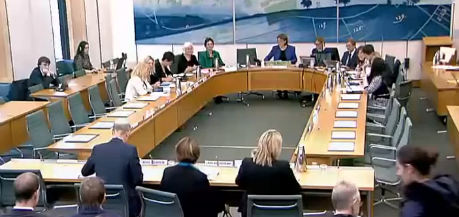
It was therefore very interesting to see MPs questioning the idea of the real life test during the fourth and final session of the UK Parliament Women & Equalities Committee’s inquiry into transgender equality earlier this week. The conversation, in which MPs quizzed Ministers and NHS England representative Will Huxter, went as follows:

Jess Phillips MP:
“I think I’d like to go back again to this idea of living in one gender identity: I wonder if you can tell me – clinically – what ‘living like a woman’ – or alternatively, man – actually means?”

Will Huxter:
“I’m not a clinician I can’t tell you what that’s – ”

Jess Phillips MP:
“Do you think that there is a clinical way to live as a woman? Or a man?”

Will Huxter:
“The point I am making is that we are guided by specialists who work in this area, the clinical consensus among gender identity specialists about how services should operate. We are absolutely open to looking at how that might change, but I’m not in a position to make a change to the way in which those services are commissioned without having gone through a clinical process”.

Maria Miller MP:
“Mr Huxter, sorry, I think we’re going to have to press you on that. Is – this is just factual, we have read that people have to ‘live like a woman’ or ‘live like a man’, we as a committee have struggled to know what that looks like in a day and age where men and women live in very similar ways. What do you – factually – what does that mean?”

Will Huxter:
“Well in terms of what is required by the clinic I’d be very happy to provide some details from clinical colleagues after this because it’s not – I don’t deliver the services nor am I a clinician. I feel I could give a better representation to the committee if I provided that outside.”

Maria Miller MP:
“Is the Minister comfortable with the fact that the government requires this information to be available, or that individuals have to live ‘like a man’ or ‘live like a woman’ in order to be able to change their identity?”

Jane Ellison MP:
“Well, I mean, put as you put it to us, I mean obviously you know it gives cause for concern in a sense that, you know, who wouldn’t have sympathy for someone put in that situation etc , clearly the committee has heard I know some really difficult evidence and I quite understand why you wish to reflect that. I mean I think that as Will has said you know there is actually currently a review going on anyway about this very issue, which is essentially about looking at the current guidelines, about understanding that represents current better practice, about giving some challenge to that. There are a number of – compared to even five years ago – there wasn’t a mechanism for the NHS to receive that sort of, you know, feedback from critical friends or otherwise. Those now exist, the transgender network has been set up, the various stakeholder groups that are, you know, really locked into the process. So I think what I’m saying is I don’t think there is ever, you know, clinical understanding of situations is rarely completely frozen in time, I mean this one particularly isn’t, because for a lot of people this is a very new speciality, and therefore I would imagine over the next ten years for example, the next few years, you will see an evolution. And that process is underway, which is exactly why the NHS is consulting and is looking at, particularly at its clinical, you know, specification. That process is actually going on at the moment and, as Will has said, very open to the committee’s recommendations being fed into that. But I know I’m not a clinician too, and I know from other areas of my portfolio perhaps better than this one because I’ve been doing it longer, I do know that you do need to test. Because once you commission to a standard, once you’ve got that, you know you do, you need to make sure you’ve tested your views, and that you actually capture a clinical consensus, because that’s the only way you can move forward. But that consensus will evolve.”

Jess Phillips MP:
“Okay, I just – from the Minister – just, I suppose, what I’m looking to hear, is that you recognise that there is not a single list of attributes that represents what it is to be a woman and/or a man; and therefore, there cannot be a clinical list of things that a person can be told to do by a doctor in order to tick those boxes. Do you recognise that fact?”

Jane Ellison MP:
“Well I understand what you’re saying and I think that it would be very helpful if we – subsequent to this hearing – write to the committee with some – with an example from a clinician operating in the field as to what they would mean by that, because obviously you know people are sitting down with individual people and saying, you know, requiring them to do that and they must have an idea of what that requirement is, what that looks like. So I think we should ask the question of clinicians and supply the committee with some, perhaps some examples, obviously anonymised, of where that’s already happening in clinical practice, and what that looks like.”

You can watch the footage here.

women and equalities

All of this is relevant to the law – in addition to clinical practice – because of the current functioning of the Gender Recognition Act. In order to gain “full” legal recognition as female or male (non-binary options aren’t available) people who have transitioned are required to apply for a Gender Recognition Certificate (GRC). In addition to £140, a whole load of paperwork and scrutiny from the national Gender Recognition Panel (no, really), individuals wishing to acquire a GRC need clinical approval. It’s no wonder that many trans people simply refuse to play along, leading to consequences such as the Tara Hudson case.

As it turns out, there is an answer to be found in the clinical literature. Charing Cross GIC clinical lead James Barrett has the following to say on the subject of the real life test in his book, Transsexual and Other Disorders of Gender Identity: A Practical Guide to Management:

“The question immediately arises of what constitutes ‘success’ in a chosen gender role. In essence, ‘success’ amounts to occupation, sexual, relationship and psychological stability. Of these, the first can be measured by whether or not the patient can manage to hold down a full-time (or equivalent part-time occupation in the chosen role for a year, in the course of the real life experience […] ‘Success’ in an occupation is achieved if the patient is treated by most others as if they are of the assumed sex. It is not necessarily that those around the patient believe that they are that sex […] Rather than being believed to be the assumed sex, the goal should be taken as an treated as that sex.”

[…]

“Some patients fiercely maintain that they do not care what others think of them, and that their own conviction of their gender is what matters. This position is at odds with the philosophy of a real life experience and if followed seems not to be predictive of a good longer-term outcome.”

Barrett further qualifies that “success cannot occur within a “purely transvestite or transsexual environment”, because “others may be supranormally accepting”.

So there you have it: “living as a woman” or “living as a man” means being taken as such within a cis environment. A very postmodern basis for clinical excellence!

No, I will not help Sundog make a documentary on trans “regret”

This afternoon I received an unsolicited email in my work account from an employee of Sundog Pictures. An excerpt follows:

I’m currently working on an idea alongside Channel 4 following transgender individuals who have come to regret their sex changes and are keen to undergo further treatment / operations to reverse the change. The doc will be insightful and sensitive and will look at the way in which transgender individuals are treated in society and whether the process before someone is permitted an operation is robust enough.

I’m currently looking for real life cases to include in my pitch document and was wondering whether you might be able to recommend people I could speak to, or places I could contact to find individuals who are currently thinking about a reverse sex change. Any help would be really appreciated.

Given the email account used, I feel that I can safely assume that I was contacted because of my academic work, which looks at discourses of trans healthcare provision. Sundog seem to hope that I will (without compensation) draw upon my community contacts and research findings to recommend participants for their television programme.

I couldn’t think of anything more inappropriate.

There’s a lot to be said about research ethics and a duty of care towards participants, but plenty has been written about that elsewhere (the BSA Statement of Ethical Practice offers a decent broad overview). So in this post I focus on the huge problems that come with the proposed topic of the documentary: that of trans “regret”.


The numbers

The mainstream media take an undue interest in trans “regret”. It’s very easy to come across such stories on daytime television and in both tabloid and broadsheet newspapers. The popularity and frequency of such stories suggests that it’s not too unusual for people who have undertaken a physical transition from male to female, or from female to male, to consider or undertake a “reverse sex change”.

In reality, research has shown time and time again that the actual rate of regret is extremely low. For instance, only 2% of respondents in the Trans Mental Health Study (the second-largest trans study undertaken in the UK) reported “major regrets” about the physical changes experienced during transition. Reported regrets from participants included:

“…not having the body that they wanted from birth, not transitioning sooner/earlier, surgery complications (especially loss of sensitivity), choice of surgeon (if surgery required revisions and repairs), losing friends and family, and the impact of transition on others.”

It’s clear therefore that “regret”, when it occurs, is likely to stem from societal and surgical issues rather than the process of physical transition in and of itself. The Trans Mental Health Study also demonstrates a clear link between physical transition and wellbeing in terms of mental health, body confidence and general life satisfaction.

With so few trans people regretting physical transition – and even less considering some kind of “de-transition” – it’s no surprise that sometimes the same individuals are trotted out time and time again to re-affirm a discourse of regret.


What’s missing from this story?

It’s pretty clear from the email I received that that the author has not done their research. Given the existence of organisations such as Trans Media Watch and All About Trans who are entirely keen to offer advice, this does not exactly inspire confidence.

For a start, transition is conflated with “sex change”, a term that is not only most frequently associated with transphobic tabloid headlines, but is also broadly meaningless. At what point can we talk about a “sex change”? When an individual undertakes hormone therapy? Chest surgery? Genital surgery? What about individuals who transition socially, but only undergo some (or even none!) of these processes? It’s not the kind of language that suggest an “insightful and sensitive” documentary can be made.

There’s a couple of more fundamental mistakes in the proposal, however. The first is the question of “whether the process before someone is permitted an operation is robust enough”. My own initial research findings suggest that if anything, the process in question is too robust – in that patients requiring surgery are typically required to wait many years before treatment is available.

The World Professional Association for Transgender Health Standards of Care require patients to undergo at least 12 months of hormone therapy prior to genital surgery. In reality, patients in England and Wales face a substantial waiting list (sometimes lasting years) before they are able to attend an NHS Gender Clinic, where two separate clinicians are required to approve a regime of hormone therapy before it can be undertaken. An additional two opinions are needed at a later date before a referral for genital surgery can take place. There are many, many opportunities and a great deal of time for patients to consider and re-consider their option – and that’s even before we take into account the horrific scale of the current crisis in surgery provision for trans women.

The current system is not constructed to facilitate transition so much as prevent the very possibility of regret. The result is increased suffering – in terms of the mental and physical health impact upon individuals who are forced to wait many years for hormones and surgery, whilst fearing (sometimes with good reason) that they will be denied treatment on spurious grounds. It’s no surprise that the Trans Mental Health Study found that “not transitioning sooner/earlier” is a major cause of “regret”, as individuals who have waited until breaking point to transition soon discover that there is still a long, long road ahead of them.

The second fundamental problem with Sundog’s proposal is their idea that trans people who aren’t too happy with their transition might be “keen to undergo further treatment / operations to reverse the change”. This is a very binaristic notion that both stems from and reinforces the notion that transition is a one-way process, from one (binary) gender to the other. In reality, there are many people for whom transition is a complex, ongoing process. For instance,  an individual who initially transitions from male to female might later feel that their identity is better understood as genderqueer, and may allow or pursue further physical changes to reflect this.


The wider political context

Given the tiny proportion of trans people who “regret” transition and the realities of service provision, the choice of a documentary about the subject appears at best to be somewhat misguided. However, the impact of insensitive coverage on this topic is such that I believe that I believe this documentary could be actively harmful, particularly as Sundog’s email asks “whether the process before someone is permitted an operation is robust enough”.

This is in part because the way in which discourses of regret are handled makes it harder for trans people to get treatment. Gender clinics in the UK require urgent intervention to make life easier for individuals who transition, not harder. Media hysteria over the possibility of regret reinforces the current system’s approach, which is to require people to demonstrate over and over again that they are trans before there is any hope of treatment.

But it’s also because discourses of regret are employed by those who campaign against trans liberation, including conservative commentators and anti-trans radical feminists who would deny funding for transition on the NHS altogether. Writers such as Julie Bindel are all too keen to use any example of individual regret to argue that transition is unnecessary mutilation, undertaken by sad, sick individuals who might have done otherwise if only they’d been given the option of, say, some form of reparative therapy.

The focus on the medical process is therefore politically loaded. Yes, some people do de-transition, and their stories are important and of worth. But these stories have yet to be told by the mainstream media in a non-sensationalised manner, in a way that doesn’t reinforce (intentionally or otherwise) a pernicious anti-trans agenda. Sundog’s proposal appears to feed right into this agenda.

This proposed documentary should not be regarded as a curiosity piece taking place in a cultural vacuum. It draws upon and will contribute to damaging and inaccurate tropes about transition. Ill-informed media accounts ultimately play a part in creating and maintaining a situation where “regret” frequently stems from the responses of friends and family, delays to transition and other negative experiences that come with transitioning in a transphobic society.

I hope therefore that any future attempts to examine trans health issues in this way will involve better research into the topic at the initial stages, and a greater sensitivity to both the personal and political consequences of exposing trans lives to media scrutiny.

Putting the “T” into Stonewall? An important opportunity

LGB rights charity Stonewall has a difficult history of engagement with trans issues. For 25 years the charity has been a powerful voice in the struggle for LGB equality, but ‘trans’ is not included in its remit within England and Wales. Stonewall has been criticised on one hand for this omission at a time when a majority of ‘LGB’ organisations have become ‘LGBT’, and accused on the other of undue interference in trans matters.

After years of misunderstandings and disagreement, Stonewall announced in June that it would be addressing these problems:

“At Stonewall we’re determined to do more to support trans communities (including those who identify as LGB) to help eradicate prejudice and achieve equality. There are lots of different views about the role Stonewall should play in achieving that. We’re holding roundtable meetings and having lots of conversations. Throughout this process we will be guided by trans people.”

I have been invited to a closed meeting that will take place as part of this process at the end of August.

I really welcome the proposal from Stonewall. In this post I’m going to explore why this dialogue is important, outline some of the proposed approaches to working with Stonewall (or not), and outline my priorities in discussing this issue with both Stonewall and other trans activists.

I also encourage readers to leave their own thoughts and feedback in the comments.


The current situation for trans people in England and Wales

I don’t feel it is an exaggeration to describe the current social and political climate as an emergency. Whilst it is true that trans people in the UK currently benefit from unprecedented civil rights, and there is talk of a “transgender tipping point” in terms of public discourse in the English-speaking world, many trans people still face very serious challenges in everyday life.

For instance, trans people are still likely to face discrimination, harassment and abuse in accessing medical services, as demonstrated in horrific detail by #transdocfail. Trans people are particularly likely to suffer from mental health problems, and this is often made worse by members of the medical profession.

For many years now there has been an exponential rise in the number of trans people accessing transition-related services; with cuts and freezes to healthcare spending from 2010, this has meant that many individuals now have to wait years for an initial appointment at at gender clinic. This problem has been compounded for trans women seeking genital surgery by the additional backlogs accompanying the recent resignation of surgeon James Bellringer.

Meanwhile, the impact of the Coalition government’s austerity agenda is being felt particularly keenly by less privileged trans people. With many continuing to face aforementioned mental health problem and discrimination from employers, benefit cuts and the increasing precariousness of employment and public demonisation of the unemployed are hitting hard amongst my contacts (some discussion of this in a wider LGBT context can be found here). Cuts to public services are also felt strongly by groups such as the disproportionate number of trans people who face domestic abuse.

Then there’s what we don’t know. For instance, research in the United States shows that young trans people are particularly likely to be homeless, and that trans women are considerably more liable to contract HIV than the general population. Both anecdotal evidence and extrapolation from international statistics and small local studies pointing to similar problems existing in the UK, but this is not enough evidence to properly address these serious issues.


Activism

I believe that trans people need a campaigning organisation that is up to the task of tackling the above problems. A campaigning organisation with the funding, resources and knowledge to lobby government, conduct research and push for social change.

Currently we rely on the energies of unpaid activists and ad-hoc organisations that are lucky to attract any kind of funding. The importance and achievements of organisations such as Press For Change and Trans Media Watch should not be underestimated, but this is not enough. Whilst Stonewall attracts millions of pounds in funding and wields an impressive range of resources, trans groups staffed largely by enthusiastic volunteers are lucky to land a few hundred pounds in donations, or a temporary project grant. You can probably count the number of trans activists employed to push for change in this country on your fingers.

Under such circumstances, stress and burnout are common amongst trans activists, even expected. Personality clashes are capable of sinking an organisation. The individuals most able to work long hours for free are typically the most privileged, meaning that there is poor representation in terms of race, disability and class.

We have to do better. We need to do better.


Solution 1: a new trans organisation

There will be those who wish to pursue the creation of a new trans organisation entirely separate from Stonewall. From this perspective, a dialogue with Stonewall offers the opportunity to discuss instances where the charity might have overstepped the mark in speaking out in relation to trans issues without this being within their remit. Beyond that, there will probably be a desire to ‘go it alone’.

For some, this will be because of Stonewall’s non-democratic structure (it is not intended to be a membership organisation), corporate links, and past disappointments such as the organisation’s initial refusal to campaign for same-sex marriage.

For others, this will be because of the view that the ‘T’ should remain independent of ‘LGB’. This position can be based upon the argument that the interests and needs of trans people differ to those of lesbian, gay and bisexual people, and/or a recognition that the trans liberation project is significantly less advanced than the LGB equivalent. From this also comes the idea that cis gay activists might not be able to properly campaign on trans issues.

There have been numerous attempts to create such an organisation over the last decade (one of which I was involved in, through Gender Spectrum UK) but none have been successful. I propose that one of the most serious barriers here is that of funding: there is so much work to be done and so many problems that individual activists are likely to face in their personal lives, that it has been extremely difficult for unpaid activists to put in the work necessary to launch such a body.


Solution 2: adding the ‘T’ to Stonewall

It has long been suggested that Stonewall should follow other LGBT organisations in becoming trans-inclusive. The arguments frequently centre upon an appeal to history, and the similarities of LGBT experiences.

The Pride movement emerged out of alliances forged between sexual minorities and gender variant people; this happened in part because homophobic and transphobic attitudes tend to stem from the same bigotry. Trans people have always been present in the struggle for gay and bisexual rights. Pretty much all LGBT people can talk about ‘coming out’, usually to family as well as friends, peers and/or colleagues. LGBT people often have to tackle internalised shame at some point in their lives, an inevitable outcome of growing up in a homophobic/transphobic world.

Moreover, with a great deal of organisations turning to Stonewall for LGBT equality advice and training, it has been argued that it only makes sense to explicitly incorporate trans issues, lest trans people get left behind. For instance, Stonewall does a lot of work on homophobic bullying in schools – surely it would make sense to also address transphobic bullying, particularly as the two tend to have a similar root cause?


Solution 3: a hybrid organisation

An idea I’ve heard bounced around a little ahead of August’s meeting is a kind of compromise between the two above positions. A trans charity that is linked to Stonewall in terms of sharing resources, information and funding, but remains semi-autonomous with its own leadership and trustees.

This is currently my favoured option. I feel that trans people would benefit greatly from effectively sharing some of Stonewall’s power. We’d certainly benefit from working more consistently together, instead of occasionally against one another. But we have different needs, different priorities. We might want to run our own organisation in a different way, and make somewhat different political decisions.


My priorities
in the dialogue with Stonewall

1) Representation

I was actually a little bit uncomfortable to be invited to the meeting in August. Sure, I’ve been involved in plenty of both high-profile, national campaigns, as well bits of activism in my local area and place of work. Plus, a lot of people read this blog. But ultimately, I received an invitation because I have the right connections. So many didn’t get that chance. I also strongly suspect that the majority of people present at the meeting will be white and middle-class, and that there will not be many genderqueer people present (I’m less sure about disability, because there are a lot of disabled trans people).

I’m hoping that any future meetings will be more open. If it turns out that my suspicions are correct regarding the overrepresentation of privileged groups, I hope that we can take steps to ensure that any future meetings are more representative. It’s the only way we’re going to find a way to create consensus and work on the behalf of all trans people in the long term.

If you’re not going to be at the meeting, I strongly encourage you to respond to Stonewall’s survey so your voice is heard. Also, since I’ll be there in person, I’d really like to know what you think.

2) The creation of a new trans organisation

I’ve pretty much made the argument for this already. We need national representation that can genuinely address the many problems faced by trans people today. A democratically accountable body that reflects diversity of trans lives and experiences.

I hope this is something we can work towards by working with Stonewall. Yes, there will be political differences – certainly I have ideological objections to some of the approaches taken by Stonewall – but I feel the situation is too severe and the opportunity too important to reject an offer of help.

That isn’t to say that a new organisation should overrule the work of existing organisations. I would hope that any new body works alongside existing campaign groups such as Trans Media Watch, Gendered Intelligence and Action For Trans Health without seeking to duplicate their work.

3) Starting with the essentials

I believe that the initial basis for any new trans organisation – or trans campaigns within Stonewall – should be addressing the absolute, basic needs that are not currently being met for many trans people. Housing. Health. Employment. We should be looking out for the most vulnerable, as well as addressing universal needs. This is pretty much a moral duty.


What do you think? Please share your thoughts and ideas in the comments!


Scottish protocol for Gender Services (largely) adopted in England

It appears that much of the widely-lauded NHS Scotland Gender Reassignment Protocol will be adopted in England from 1st June 2013.

This will be a temporary measure, taken as the result of “inconclusive feedback through the consultation exercise on specifications and policies” for the English Protocol. Last year, the draft English Protocol was criticised by many trans people for failing to live up to the progressive standard set by the Scottish Protocol. I wrote about this here.

This information comes from a letter written to stakeholders in the Gender Identity Services Clinical Reference Group.


What will this mean for English patients in the short term?

As the Scottish Transgender Alliance noted in July 2012, the Scottish Protocol “is not perfect but it is an important step forward for trans people in Scotland“. It incorporates a number of clauses that ensure relatively swift access to services (including hormone therapy and surgeries) for those already “in the system” and on the books of a Gender Identity Clinic (GIC).

Key features of the temporary Protocol for England would therefore include:

  • that psychotherapy/counselling, support and information should be made available to people seeking gender reassignment and their families where needed.
  • that two gender specialist assessments and 12-months experience living in accordance with desired gender role are needed for referral for NHS funded genital surgeries
  • only one gender specialist assessment is needed for referral for speech therapy, hormone treatment and FtM chest reconstruction surgery and that these can take place in an individualised patient-centred order either prior to starting the 12-month experience or concurrently to the 12-month experience.

(Bullet points from the Scottish Transgender Alliance. Emphasis mine.)

All of these provisions should (in theory!) entail a more rapid, efficient access to services for patients at many English GICs.


Exceptions

Unfortunately, several particularly progressive aspects of the Scottish Protocol will not be adopted in England. According to the letter sent out to stakeholders, these include:

  • Referral to Gender Identity Clinics (access)
  • Facial hair removal
  • Breast augmentation

Discussion on these areas” is being “deferred” because “it is recognised these need further discussion and also because England’s health service is structured differently and therefore a slightly different approach will be necessary

The first point (“referral to Gender Identity Clinics”) is somewhat ambiguous, but appears to mean that provisions made in Scotland for self-referral and referral by GP to GICs will not be implemented in England, at least in the short term. Most English GICs currently only accept referrals from mental health specialist such as psychiatrists, so this looks set to continue.

The letter further states that:

“[…] decisions relating to direct access, facial hair removal and breast augmentation being deferred by all NHS England Area Teams until after the June meeting when further work can be undertaken to reach the interim NHS England Policy and Specification for adoption. Where an individual has already had agreement for any of these procedures then these would go ahead, the deferment relates to decisions not yet made.”

This would appear to imply that no new referrals will be provided for facial hair removal and breast augmentation on the NHS in England, at least for the time being. In most parts of the country this is the norm, but in some areas this will effectively be a step backward.


What about young people?

A final significant aspect of the Scottish Protocol is that it provided for the provision of better services young trans people:

  • that young people aged 16 are entitled to be assessed and treated in the same manner as adults in terms of access to hormones and surgeries.
  • that children and young people under age 16 are entitled to child and adolescent specialist assessment and treatment as per the relevant section of the WPATH Standards of Care.

(Bullet points from the Scottish Transgender Alliance. Emphasis mine.)

It’s not clear whether or not this part of the Protocol will come into play in England, but I suspect that this counts as “access to Gender Identity Clinics”, meaning that nothing will change – in the short term at least.


Analysis

I would suggest that this development is, on the whole, a positive one for the majority of trans patients in England. It will hopefully ensure a number of improvements in access to treatment, particularly for individuals seeking hormone therapy and individuals on the transmasculine spectrum seeking chest surgery (including for individuals seeking chest surgery prior to hormone therapy, or chest surgery without any accompanying hormone therapy). It should encourage GICs to acknowledge trans diversity and provide treatment more adequately tailored to individual circumstance.

Moreover, the implementation of this Protocol means that some of the more regressive elements of the draft English Protocol (such as the requirement for GPs to undertake a “physical examination” ) will hopefully not see the light of day.

Of course, there will continue to be resistance from some of the more conservative GICs. However, the existence of the temporary protocol should empower patients who wish to make the case for better services from these bodies.

It is important to note once again that this is a temporary measure, and that the new English Protocol that is eventually implemented may not necessarily reflect the Scottish Protocol to such a great extent. A meeting will be held in June for members of the Clinical Reference Group to discuss what might happen next. We can only hope that the outcome will be a positive one for trans patients.

However, this move sets an important precedent. A set of relatively progressive new rules are being put in place, meaning that it should be harder for GICs to justify inadequate service provision. This is a new benchmark which health campaigners can use as a starting point for future campaigns.

Finally, the “inconclusive feedback” from “consultation” suggests that pressure from trans health advocates is actually having an effect, particularly as many GICs will no doubt have been pushing for a continuation of the status quo. Credit is due to all those individuals and organisations that responded to the consultation on the draft English protocol a year ago, and members of the Clinical Reference Group who are pushing for positive change.

Have your say on England’s “gender dysphoria services”

Following hot on the heels of the new Scottish protocol for transition-related services, the Department of Health has published a draft guide for England.

They’re not holding a formal consultation on the document (meaning that it’s not available on the Department of Health website), but are “seeking the views of stakeholders […] to find out if the ‘journey’ outlined in the document reflects the experience transgender people actually have and, where there are differences, what they are.”

This is a really important opportunity for you to offer feedback on the proposed guide to English services.

A copy of the document is available below:

Gender Dysphoria Services – An English Protocol

When you’ve read the document, you can share your views through the following link:

Survey

I’m planning to post my own analysis of the draft protocol when I’ve had time to read through it properly.