New article: Embodied Experiences of Trans Pregnancy

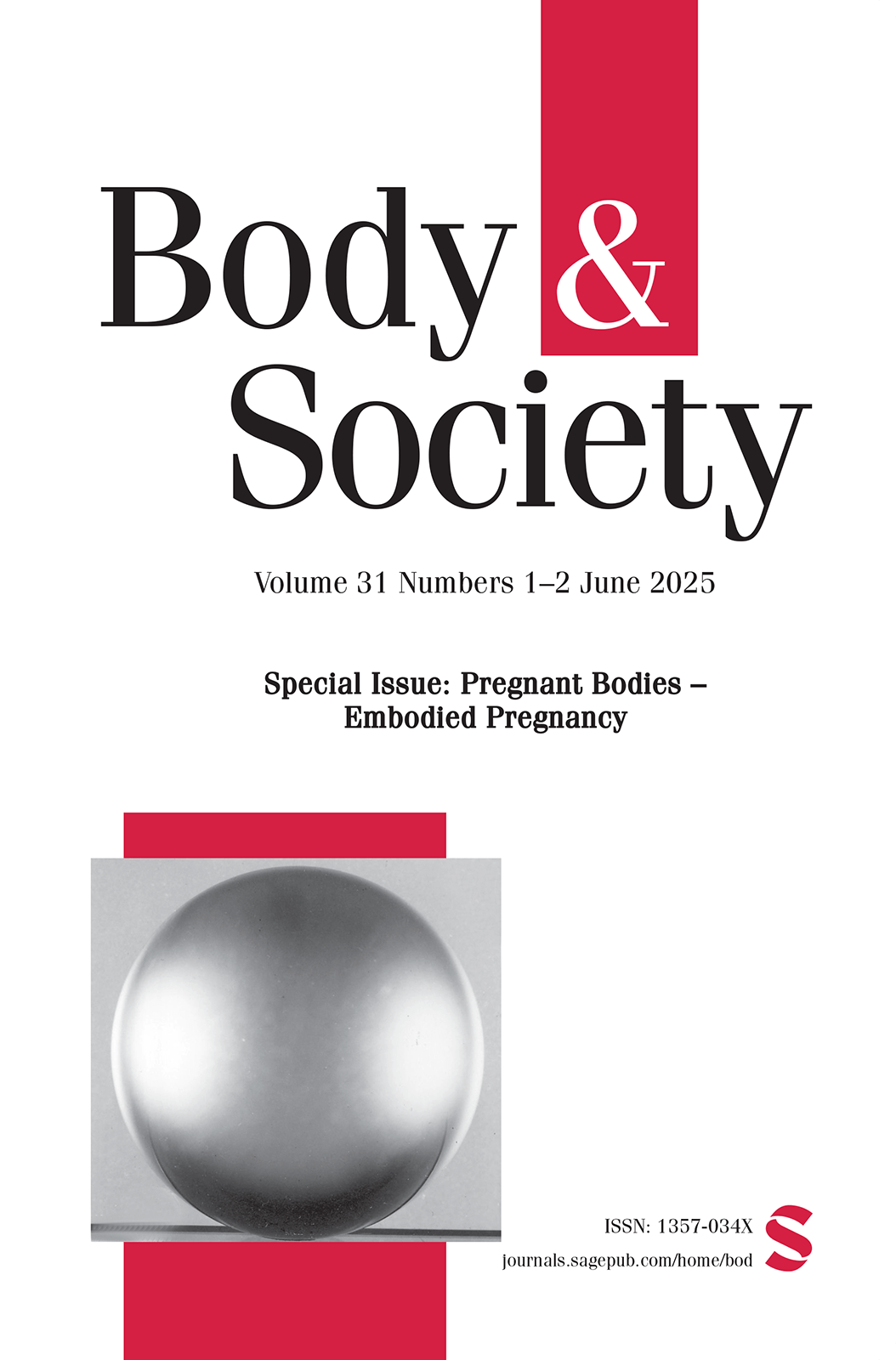
I recently had a new co-authored research article published in the journal Body & Society, titled Embodied Experiences of Trans Pregnancy. It is part of a special issue on Pregnant Bodies and Embodied Pregnancy.

For this piece of writing, we were particularly interested in how embodiment is gendered and vice-versa. In the article, we draw on interviews with trans men and non-binary people to explore the lived, bodily complexities of trans pregnancy. We consider the strategies trans men and non-binary people engage in to manage their gender presentation during pregnancy, and the degree to which pregnancy might disrupt their ability to control the presentation of gender.

The published article is currently behind a paywall, but you can download a free version here from the University of Glasgow’s Enlighten repository, or from the publications page of this website.

This is likely to be the last published article from the Trans Pregnancy Project, an international study which ran 2017-2021. Together we have written around 15(!) other articles and book chapters, and edited a special issue of the International Journal of Transgender Health. You can learn more on the Trans Pregnancy Project website.

Cover of the journal Body & Society.

New book chapter: By Us and For Us: Bringing Ethics into Transgender Health Research

I’ve co-authored a short chapter for a new book that’s due out in February. The book, titled A History of Transgender Medicine in the United States: From Margins to Mainstream, traces the development of trans medicine across three centuries, with writing from more than 40 contributors.

The book is currently on offer from the publisher, SUNY Press. If you order by 6th December you can buy the book for 50% off with the code HOLIDAY24. That means the paperback edition will come to $22.47 for those in the USA, or £24.12 with postage for buyers in the UK.

I should clarify also that, as usual with academic books, I won’t personally be seeing a penny from its sale. So if you’d like to read this publication, please do get it at a bargain price if you can!

Book cover for A History of Transgender Medicine in the United States: From Margins to Mainstream, by Carolyn Wolf-Gould, Dallas Denny, Jamison Green, and Kyan Lynch. The cover features an anatomical drawing of a heart in the trans flag colours of white, pink, and blue, against a white background.


Our chapter is titled “By Us and For Us: Bringing Ethics into Transgender Health Research“, and I wrote it collaboratively with Noah Adams, Jaimie Veale, Asa Radix, Amrita Sarkar, and Danielle Castro.

In this chapter we explore the context and subsequent impact of an earlier work, our co-authored journal article (with additional author Kai Cheng Thom) Guidance and Ethical Considerations for Undertaking Transgender Health Research and Institutional Review Boards Adjudicating this Research. That article is now one of the most highly-cited works I’ve contributed to. Since its publication in 2017, it’s been used to inform the design and implementation of hundreds of studies, becoming more influential than I ever could have imagined.

I’m really grateful especially to Noah Adams for leading on the process of both our 2017 article and new book chapter. I first met Noah, along with Jaimie and Asa , at the 2016 WPATH Symposium in Amsterdam, which saw the presentation of numerous extremely unethical studies on trans and intersex people. I learned a great deal very fast at that symposium, and through the subsequent writing process with Amrita, Danielle, and Kai.

Most importantly, I learned that it is possible to change research and practice for the better through interventions that centre community perspectives, mutual learning, and our collective responsibilities to one another. This is an important thing to bear in mind in our current age of disinformation and the abuse of scientific discourse: while abusive practices have a long history in trans medicine and medical research, another world is possible.

New article: ‘Why Is the Chubby Guy Running?’

2024 has been a good year for the publication of articles I’ve been working on with colleagues for a long time. Hot on the heels of recent pieces on microaggressions and domestic violence comes the latest peer-reviewed work from the Trans Pregnancy Project, published in the Journal of Applied Philosophy. It’s open access, which means you can read it for free or download a copy to share here:

‘Why Is the Chubby Guy Running?’: Trans Pregnancy, Fatness, and Cultural Intelligibility
by Francis Ray White, Ruth Pearce, Damien W. Riggs, Carla A. Pfeffer, Sally Hines

The article opens with the titular question, “why is the chubby guy running?” – drawn from a story shared by a research participant who ran a 5k race while thirty-nine weeks pregnant. We use this as the starting point for exploring the topic of fatness in respect to trans men and non-binary people who experience pregnancy, addressing the gendering of both pregnancy and fatness, stereotypes associated with fat men, and how certain bodies become legible or intelligible.

Cover of the Journal of Applied Philosophy.

A lot of research participants in the project described complex relationships to fatness during their pregnancy, especially where their bump was inaccurately read as a “beer belly”. The writing of this article was led by fat studies expert Francis Ray White; I really appreciated the opportunity to work with them on making sense of these stories, and thinking through what they might mean both for trans birth parents and for our understanding of gender and pregnancy more widely.

This is likely to be one of the last published works from the Trans Pregnancy Project (although we do have at least one more article on the way!)

The project originally wrapped in 2020, but we had such an enormous amount of data that we’ve been writing it up ever since since, addressing topics including media representation, midwifery, conception, pregnancy loss, sperm donors, testosterone use and cessation, racialisation and whiteness, partner abuse, and young people’s views about possible pregnancy. I’m grateful as ever for the trust offered to us by the research participants, and hope we can continue to expand and evidence society’s understanding of their experiences.

New article: The association between microaggressions and mental health among UK trans people

I have a new article out in the journal Social Psychiatry and Psychiatric Epidemiology, co-authored with colleagues at University College London. It reports on the findings of a study led by Talen Wright, looking at the mental health impacts of microaggressions on trans people.

You can download and read the full study for free here:

The association between microaggressions and mental health among UK trans people:
a cross-sectional study
by Talen Wright, Gemma Lewis, Talya Greene, Ruth Pearce, and Alexandra Pitman


What did we find out about microaggressions, mental health, and trans people?

Wright designed a survey of 787 trans adults in the UK, asking questions both about participants’ mental health and their experiences of microaggressions. When analysing the findings, we found that experiencing more microaggressions was associated with worse mental health, including increased severity of depressive and anxiety symptoms, and increased odds of lifetime self-harm, suicidal thoughts, and suicide attempts.

We also found evidence indicating an association between specific microaggressions and specific mental health outcomes:

  • Participants who reported more misuse of their pronouns by others were more likely to report increased thoughts of self-harm and suicide.
  • Participants who reported more experiences of their gender being denied by others were more likely to attempt suicide.
  • Participants who reported more experiences of people around them acting uncomfortably around them because of being trans were more likely to report increased symptoms of depression.
  • Participants who reported more experiences of people around them denying the existence of transphobia were more likely to report increased symptoms of anxiety.


Why is this study important?

With apologies to my co-authors, I consider this a form of “cat detector” research. I base this term on an image shared a few years ago by the Facebook page High Impact PhD Memes, purporting to show someone successfully wielding a cat detector:

The meme is labelled as follows: Interviewer: "How would you define your previous works?" Me: "Groundbreaking". Underneath this is an image depicting the researchers' previous works: a person holding a machine in a cat's face. The machine is labelled "cat detector", and has one face lit up green, labelled "Yes", indicating that it has successfully detected a cat.


The meme is funny because, well, it’s obviously a cat. The research is stating the obvious.

And so this research might quite reasonably seem to many trans people. We know that microaggressions are harmful: that when people deny who we are, it hurts. When researchers or journalists or politicians talk about high rates of poor mental health among trans communities, we know that it is because people are harming us, that entire systems are set up in ways that harm us.

At the same time, we live in a political and policy context where trans people’s voices are rarely heard, and disinformation runs rampant. A lot of cis people are getting inaccurate information about our lives and needs, including healthcare commissioners, doctors, nurses, therapists, educators, and civil servants, as well as our families, friends, and colleagues. Trans people are often portrayed as overly sensitive to other people’s transphobic behaviour, or living in denial of reality.

Given this context, I feel it is beneficial to demonstrate empirically – with statistical analyses! – that small actions add up, and “microaggressions” cause real harm.

I hope this research will be useful for countering non-evidenced transphobic policy approaches. For example, the UK government’s current guidance on “Gender Questioning Children” in schools directly encourages educators to undertake actions that are associated with harmful outcomes in our study. As more research is conducted and published in this area, we will have more information available to clearly demonstrate the risks of transphobic policy, and empower advocates fighting for change.

Out now in Scientific American: “The U.K.’s Cass Review Badly Fails Trans Children”

I have co-authored an article with Cal Horton for the science magazine Scientific American. We take a concise look at what the Cass Review is, what it found, why the methods used were troubling, and how it is being used to harm young people.

You can read the article here. I hope it will be helpful as a basic explainer for why trans community groups, academic experts, and clinical specialists are so concerned about the Cass Review.

Screenshot of Scientific American website.

Writing for Scientific American was a really interesting experience. It was of course radically different to publishing in a peer-reviewed journal: we put the piece together in a matter of weeks, and it was not scrutinised by academic experts from our specific field of study. At the same time, there was an extremely rigorous editorial, fact-checking, and copyediting process that also made it very different to publishing in most magazines or newspapers.

I was deeply impressed with the sheer amount of time and care the Sci Am editors put into this piece. On one hand, their contributions ensured the piece is written in accessible language, with an international (and especially US-based) readership in mind. On the other hand, we had extensive discussions to ensure that all points made in the article could be rigorously evidenced, including some very detailed exchanges about the specifics of UK law, and what exactly the Cass Review document does and does not have to say about exponential growth over different periods of time. We had to be able to strongly back up any even slightly contentious point.

It was a challenging experience, but one I felt very held by as an author committed to consciencious research practice. Publishing this piece in Sci Am definitely ensured that it was as good as it could possibly be.

Community Development Journal: Issue 59(3) out now

One element of my work I don’t talk about as much on this blog is my role as co-editor of the Community Development Journal. We put out four issues every year featuring amazing research from across the world, so I’m hoping to highlight this a bit more in future posts.

Volume 59, Issue 3 is out now and features articles on a range of topics from violent protest, to public art, to academic/voluntary partnerships – with contributions from South Africa, the Philippines, the UK, India, Canada, Vietnam, Mexico, Portugal, and Italy. As ever, it’s been hugely exciting to work with and learn from such a broad range of insight and expertise.

In addition to overseeing the peer review process, myself and co-editor Kirsty Lohman write an editorial for every issue. This editorial – one of five freely available articles in the latest issue – celebrates the launch of the new CDJ Plus website and reflects on the privileges and limitations of academic publishing. In particular, we discuss the importance and limitations of using our platform to speak out about the ongoing colonial violence in contexts such as Gaza and Ukraine.

You can read that editorial here:

Academic publishing and the privilege of a platform
by Ruth Pearce and Kirsty Lohman

New article: “Child rights in trans healthcare”

Image of the cover for the International Journal of Transgender Health

I’m pleased to announce that Child rights in trans healthcare – a call to action has just been published as an advance article in the International Journal of Transgender Health. I helped to co-author it alongside an international team of expert researchers and clinicians, including Cal Horton, Jaimie Veale, TC Oakes-Monger, Ken Pang, Annie Pullen Sansfaçon, and Sophie Quinney.

This article is an editorial, reflecting on the current landscape of policy and practice regarding children’s rights within trans healthcare:

In this editorial we first call attention to the importance of child-rights informed policy and practice in trans healthcare. We outline critical pillars of rights-respecting healthcare for trans, gender-diverse, and gender non-conforming children. We highlight the importance of embedding rights within service delivery, discussing the need for child participation in healthcare design, evaluation and accountability. In the second section of this editorial we articulate and call attention to a sector-wide ethical duty of care to children, building a sector where child rights violations are no longer tolerated. We highlight the responsibilities of all trans healthcare stakeholders and professionals, including those in adult trans healthcare, in ensuring a sector-wide shift to ethical and rights-respecting practice.

The article can be read for free here.

Free essays! Queer punk, trans-inclusive midwifery, and trans health law

In recent years I have co-authored numerous peer-reviewed essays for edited collections. I have just made three of these freely available, from books originally published in 2020 and 2021.

Why is this happening now? Well, it’s basically due to moves toward so-called “open access” within the bizarro world of academic publishing. I try and publish my work in places that will also let me share my work for free. For book chapters, publishers usually impose an embargo period of 2-3 years, after which authors are allowed to share the post-peer-review version on our own website. The essays I have recently uploaded have all had their embargo end, so I’m excited to now share them more widely.

You can download the essays by clicking on the links below.

Queering Community Development in DIY punk spaces
Also published in the book: Arts, Culture and Community Development (Policy Press)
Written with my long-running collaborator Kirsty Lohman, this essay looks at grassroots community organising within queer, feminist, and anti-racist punk spaces. We argue that this organising is often prefigurative: that is, it actively models and enacts the changes that punks want to see in the world. Looking at events such as First Timers and Decolonise Fest, plus bands such as Big Joanie, we explore what happens when marginalised people create their own cultural spaces, and seek to facilitate access to these spaces for others who are often denied artistic and political expression.

Men transmasculine and non-binary people and midwifery care
Also published in the book: Midwifery Essentials (Elsevier)
I contributed to this essay as part of the Trans Pregnancy research project team. Our project spoke with over 50 men, transmasculine, and non-binary people who experienced pregnancy and childbirth in Australia, Bulgaria, Canada, Germany, the UK, and the USA, plus a handful of midwives who have supported people from this group. In this short essay, we briefly outline the positive and negative experiences that trans birth parents reported having with midwives, plus challenges reported by midwives themselves. On this basis we make 8 recommendations for developing best practice with trans people in midwifery services.

Depathologising Gender: Vulnerability in Trans Health Law
Also published in the book: A Jurisprudence of the Body (Palgrave Macmillan)
I co-wrote this essay with Chris Dietz, a scholar of Law at the University of Leeds. Drawing on feminist and trans critiques of human rights models, plus an analysis of gender recognition laws in countries including Argentina, Denmark, and the UK, we argue for a new approach to understanding the fight for depathologisation in law and medicine.

These three essays are just some of the many peer-reviewed academic publications I make freely accessible on this website. For more work on a range of topics relating to trans studies, feminism, and/or community development, see my publications page.

“Transnormativity in the Psy Disciplines” reprinted in feminist reader


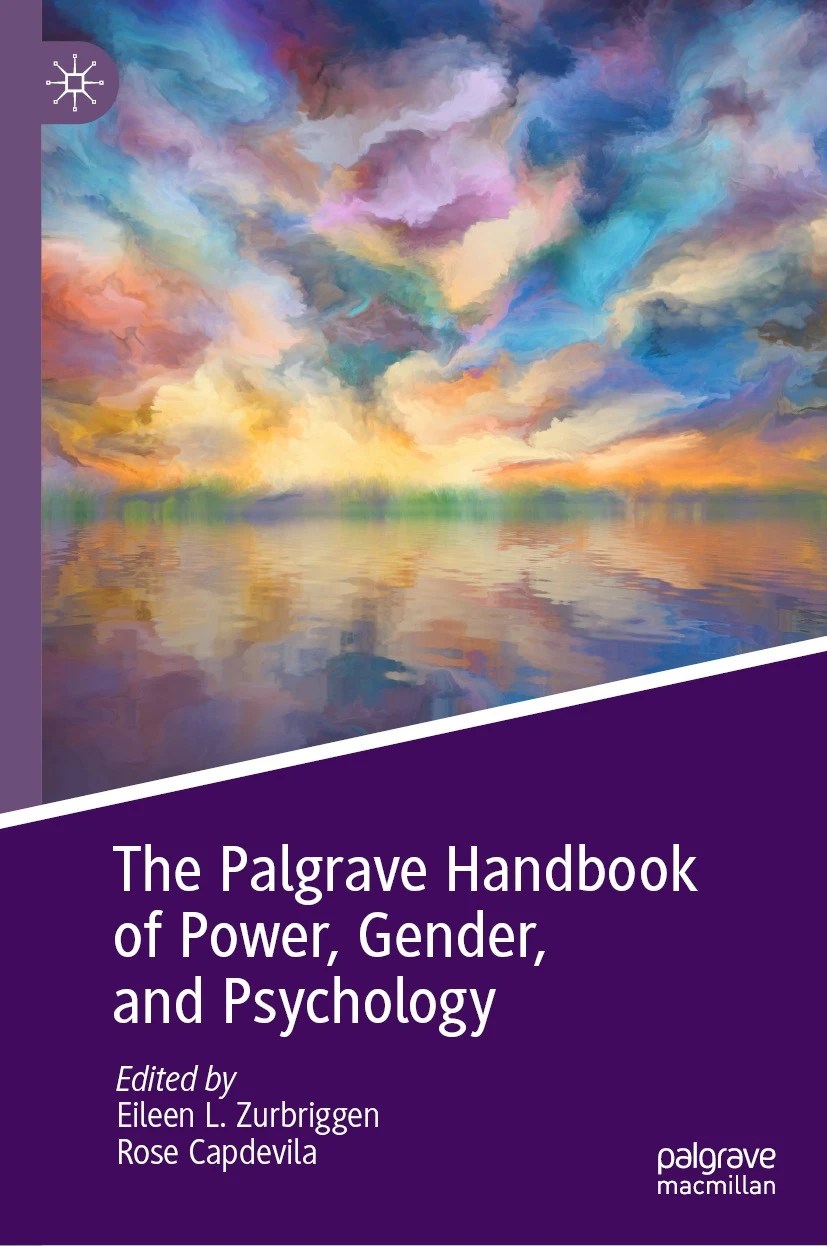
I’m really happy to announce that an article I co-authored, “Transnormativity in the Psy Disciplines: Constructing Pathology in the Diagnostic and Statistical Manual and Standards of Care”, has been reprinted in the Palgrave Handbook of Power, Gender, and Psychology.

Originally published in American Psychologist in 2019, this was among the first of many articles written collaboratively with my colleagues in the Trans Pregnancy Project team: Damien W Riggs, Carla Pfeffer, Sally Hines, Francis Ray White, and Elisabetta Ruspini. I hope that through its inclusion in this new handbook on theories of gender and power in feminist psychology, this slightly updated essay will reach new readers and provide helpful context on the construction of sex/gender norms through classification and diagnosis.

As I explained on its original publication, in this piece “we examine how the interests of cisgender clinicians and trans patients have variously been opposed and entwined, and contextualise this in relation to wider structures of racism, sexism, colonialism, and binary thinking around sex and gender. We focus especially on how guidance for diagnosing trans people and managing trans healthcare has been contested across various versions of the American Psychiatric Association’s Diagnostic and Statistical Manual of Mental Disorders (the DSM) and the International Harry Benjamin Gender Dysphoria Association (HBIGDA, later WPATH) Standards of Care.”

A free open access version of the original article remains available here: [Transnormativity in the Psy Disciplines: Constructing Pathology in the Diagnostic and Statistical Manual and Standards of Care].

Trans pregnancy: new book chapters and article

Over the last couple of years, members of the Trans Pregnancy project team have been quietly plugging away writing up more of our findings from our 2017-2020 research.

Recently, three new books have come out which include chapters based on our work, plus we have just had a new academic article published. I hope all of these will be useful for expanding knowledge about trans people’s experiences of pregnancy and childbirth, in ways that will be useful to community members, healthcare providers, and researchers.

The Conversation on Gender Diversity (edited by Jules Gill-Peterson, published by Johns Hopkins University Press) is a collection of short trans studies essays originally published on The Conversation. It’s written in an accessible way and priced affordably. It includes our essay “Giving Birth as a Father – Experiences of Trans Birth Parents“, which provides a concise introduction to the topic and to our research.

Photograph of a book, The Conversation on Gender Diversity. The cover features a blurred crowd of people and a large trans flag with the trans symbol on top of blue, pink, and white stripes.


The Routledge International Handbook of New Critical Race and Whiteness Studies (edited by Rikke Andreassen, Catrin Lundström, Suvi Keskinen, and Shirley Anne Tate, published by Routledge) is a hefty academic volume with a series of articles which critically interrogate whiteness. The book includes our essay “Whiteness in research on men, trans/masculine and non-binary people and reproduction: Two parallel stories“, in which we reflect on both the racialisation of both trans pregnancy and childbirth, and on the whiteness of our research team. It’s currently only available in hardback at “academic” prices, so I encourage people to order it into your local library if it is of interest to you. I’m also very happy to email people a copy of the essay if you’d like to read it, and will be making a version freely available on this site as soon as the copyright agreement allows.

Cover image of a book, The Routledge International Hardbook of New Critical Race and Whiteness Studies. The cover features a colourful aerial photograph of a river bend.


Trans Reproductive and Sexual Health (edited by Damien W. Riggs, Jane Ussher, Kerry H. Robinson, and Shoshana Rosenberg, also published by Routledge) is another academic book, this time focusing on topics including intimacy, sexual violence, sex education, and reproduction. It includes our essay on “Young men, trans/masculine and non-binary people’s views about pregnancy“, drawing on focus groups undertaken with young people to ask about how they see their reproductive futures. Again, this book has academic pricing, so we would greatly appreciate people asking their local library for a copy, and you’re welcome to contact me if you’d like to read the essay.

Cover image of a book, Trans Reproductive and Sexual Health. The cover image is an abstract grey circle with messy lines extruding from the top right.


Finally, we’ve just published an article in the journal SSM – Qualitative Research in Health. Titled “Medical Uncertainty and Reproduction of the “Normal”: Decision-Making Around Testosterone Therapy in Transgender Pregnancy“, this article looks at decision-making around cessation of testosterone during pregnancy, and critically explore some of the assumptions that get made in medical writing and practice.