International Trans Studies Conference, Day 3: getting emotional with political economy

This is the third in a series of blog posts about the 2nd International Trans Studies Conference in Evanston (4-7 September 2024).


Read Part 1 here.
Read Part 2 here.

There is something about seeing your experiences accurately represented in research. This can be very emotional if you are used to seeing people like you ignored, erased, or otherwise grossly mispresented. Much like media representation, research representation can be powerful in putting a mirror to our experiences and suddenly making them a lot more real.

I dislike the vast overuse of the term “valid” in trans discourse, but there is something very important about being actively validated, about being seen, when the entirely of society feels like it’s set up to deny or gaslight you. It’s a consciousness-raising moment, in which you become capable of truly acknowledging or naming what is happening to you. It is meaningful and authentic and it enables action. But it is also very painful.

As a trans health researcher, I think I’ve developed a pretty thick skin. I see a huge amount of bad trans health research, built on cis ignorance and a fundamental inability to engage with the reality of our lives. I also see growing amounts of painfully real research from researchers who are engaging with care. For better and for worse, I feel I’ve learned to carefully manage my emotions and let all of this wash over me, in order to engage consistently and “professionally”.

But on Thursday morning, a series of presentations made me cry.


Global Struggles, Local Solutions: Transgender Perspectives on Economics and Welfare

The morning began with doughnuts, piled high in the reception area of the conference, a very extravagant seeming American breakfast. From there I headed to the first session of the day, which explored trans political economy. This might seem like the dryest topic imaginable, but for me it gets right to the core of how systemic transphobia and cisgenderism operate, how we feel about that, and what we might do about it.

The study of political economy is concerned with how economic systems interface with social and political systems, and vice-versa. The first paper in this session, by Yukari Ishii of Sophia University (Japan), looked at homeless trans people’s access to welfare systems. In Reasons Underlying Gender-diverse Individuals’ Need for Public Social Welfare Support in Japan, Ishii reported on findings from the 2009-2020 consultation records of Moyai, a non-profit voluntary sector welfare provider, plus interviews with service users.

Ishii’s paper mapped in detail how trans people find themselves accessing welfare systems after being failed by heteronormative and cisnormative systems throughout their lives. She described trans people being rejected by their parents, dropping out from school due to the hostility of the heavily gendered environment, which limited their formal educational attainment. Participants in her research struggled to find work, or were otherwise fired for being trans. More tolerant work environments either required skills or an education background that trans people were less likely to have, or were deeply insecure, as in the case of sex work. Trans people who struggled to hold down a job also struggled to find places to live, with many sleeping at friend’s houses, in Internet cafes, or in the streets.

Ishii’s research showed up vulnerability is created through structurally embedded cisgenderism, impacting people from families to schools to workplaces and even to apparent sites of last resort; for example, she described how Internet cafes did not allow trans women to stay overnight if they were sex workers. She further noted that the consultation records at Moyai were limited where consultants didn’t have a lot of knowledge about queer people, or didn’t know what questions to ask about (for example) family violence. She concluded by recommending that welfare professionals gain knowledge of gender and queer issues, to ensure they are best placed to provide advice and support to service users, and keep better records for improving long-term understanding of the problems faced.

The next paper similarly traced the deep context of economic disadvantage, this time looking to history for a deeper context. In Trans-cending Barriers to QTPOC Labor in the South, Anthony Belotti of Virginia Commonwealth University (USA) focused on the US South’s historical legal landscape, linking this to the region’s racism, homophobia, and transphobia.

Belotti argued that “the history of the South has created an environment where QTPOC (queer and trans people of colour) do not have equal access to labour opportunities and class mobility”. Various legislation effectively criminalised queer, trans, and Black existence, including the Jim Crow laws, “decency” laws which banned wearing clothes not associated with sex assigned at birth, and anti-union “right to work” laws. Belotti argued that while there is relatively little archival material on QTPOC experiences in the South, these laws provide an important insight into people’s experiences, especially given the existence of legislation such as the decency laws implies a perceived need for them from authorities. The concrete impact of all this was that QTPOC had difficulties finding and keeping legal employment.

By the time Dan Irving presented, I will admit I was already feeling pretty vulnerable. In Ishii and Belotti’s excellent papers, I heard about contexts both very different to the UK, and remarkably similar. Beyond the broad importance of their findings, I recognised in their accounts the experiences of so many of my friends and colleagues – a meaningful and painful experience that underpins so much of my engagement with good work in trans studies.

Irving, of Carleton University (Canada) presented a paper titled Sensational Disruptions: Affective Economic Justice at Work. Building on his previous work on trans political economy, this presentation reported on findings from two large qualitative research projects on unemployment and underemployment among trans and non-binary people in Canada, conducted in 2012-16 and 2020-24.

Irving’s paper focused on exploring one anticipated finding from these projects in depth: the “I can’t put my finger on it” feeling. This theme involved participants encountering difficulties in the workplace or in attempting to land work, but finding it hard to articulate why they couldn’t get the job, or had hours reduced, or were laid off, even when appropriately skilled – or overqualified. There was something about getting through the door and finding the vibe was off. These experiences were especially likely to be detailed by trans people from racialised minorities, and/or trans women.

I immediately recognised what Irving was describing. How could I not? He had just described years of my experiences in the workplace as a trans woman. And of course, this isn’t really a new insight: the problems he named have been discussed in feminist literature for decades (especially Black feminist and womanist literature), and indeed within the consciousness-raising group I joined shortly after moving to Glasgow. These findings also related to the phenomenon reported by people from many marginalised groups, whereby we always have to be the very best to succeed in a basic manner in the workplace.

What was most useful about Irving’s paper, however, was his theorising of the phenomenon. In a manner that resonated with Nat Raha’s comments on the second day of the conference, Irving turned to affect theory (explanations that centre feeling and emotion) to explore what is happening to us in the workplace.

Irving described how trans people (especially racialised minorities, and women) often find ourselves constantly doing the additional work of ensuring that managers, co-workers, and customers feel comfortable with us. This causes a “sensate disruption” in our lives, shaped by the “corrosive impact of fear, repulsion, anger on the part of cisnormative employers, co-workers and customers and the violent impacts of rage, depression, exhaustion on trans jobseekers and workers”. Even worse, there are few outlets for these emotions: neoliberal discourses of personal responsibility mean that feelings are expected to be quarantined within the body of the (marginalised) worker, for example through us taking responsibility for our transitions and bodies and carefully managing our relations with others.

It was at this point that I started to cry.

I feel so, so tired and alienated in my work, all the time. I have some amazing colleagues and students, but I am still working in a system where I can feel myself being discriminated against while also finding it hard to always articulate the exact ways in which it happens. I am tired of being advised to refocus my energies in the workplace even as an eliminationist movement works against trans existence. I am tired of my research being erased or dismissed, I am tired of being asked to meetings where I am ignored, I am tired of being asked how the institution can best protect me, I am tired of being told that my failed grant applications are the “most impressive unfunded bid” that people have ever seen. I am tired of having little language for these experiences, and of pushing my feelings down every day.

I am tired of seeing as much, and far far worse, happen all the time to my trans colleagues and friends.

Responding to these findings, Irving asked: “how do we begin to grapple with the ‘affective byproducts’ of post-industrial demands for affective labour?” How do we reckon with the unsayable in our felt experiences? And quoting Deborah Gould, “what kind of political context do we need to build that actually listens to what many people are feeling and that cares about people’s disappointment, despair and furies?”

Drawing on the work of Hil Malatino, Irving proposed “infrapolitics” (low-profile, informal, undeclared forms of resistance) and community care as a basis from which to build solutions. Drawing from participant narratives, he argued that this can include political acts of resistance that are “not on the oppressor’s radar”: examples included zines and phone lines distributing information among workers and applicants, building community connections, and forms of entertainment and commentary such as comic strips. Like Ishii, Irving also highlighted the ways in which trans people effectively provide welfare services for one another, for example by providing beds or housing for homeless community members. What this all amounts to are forms of anti-capitalist resistance that amount to a collective recognition and addressing of the problem.

Sticker with trans flag and text that says: read and submit your favourite texts for free. Visit www.transreads.org.
Sticker spotted at the conference. An example of infrapolitical resistance.

The session concluded with another extremely powerful and nuanced presentation, from Pato Laterra of the Interdisciplinary Centre for the Study of Public Policies, and Francisco Fernandez Romero of the University of Buenos Aires (both Argentina), titled A Trans Political Economy from Elsewhere: Reflections from Argentina. Like the other presenters, Laterra and Romero sought to use the concept of political economy to understand how trans lives are embedded in existing political structures, and propose alternatives for survival. They emphasised that in Latin American contexts, there is a strong tradition of research on travesti and trans people’s living conditions, with travesti-trans politics prioritising mutual support and resource distribution. It is within this context that they looked at implementation and impact the travesti-trans labour quota within Argentina’s public sector.

The travesti-trans labour quota is a form of reparative politics, in which 1% of federal jobs are reserved for trans people. This policy represents a response to the deep, systematic discrimination faced by travesti and trans people in Argentina, which reflects that reported from Japan, the USA, and Canada through the rest of the session. It was implemented in response to radical political demands from campaigners, with the presenters sharing a photo of a flag featuring a slogan they translated as “quota and reparation, we want redistribution”.

To understand how effective the travesti-trans labour quota is in practice, Lattera and Romero insisted on a rethinking of trans political economy, going beyond just thinking of trans people as workers or consumers. They wished to emphasise:

  • everyday reproductive and care relationships, in terms of that which sustains life beyond income or the market;
  • social policies that enable or do not enable certain lives, especially for people with an insecure relationship to the market;
  • situated perspectives, for example through acknowledging how labour (and theory!) from the Global South is extracted by the North.

Lattera and Romero argued that the labour quota partially subverts trend towards assimilation regarding trans people’s inclusion in labour markets. This is because the quota aims to achieve economic redistribution, and positions access to work as a human right. Moreover, it supports the employment of the “least employable”, i.e. trans people who are more likely to be without educational qualifications, or have a police record. In this way, it offers a response to many of the issues outlined by the previous presenters, and an alternative to typical liberal capitalist logics that involve capturing the economic benefits of trans labour.

However, as one intervention within a wider network of unequal systems, the labour quota has significant limitations. Lattera and Romero noted that the “right to work” reifies labour normativity: that is, it upholds the idea that our value as human beings is dependent on being able to have paid jobs, and that paid work is more important than unpaid care work, community work, or domestic labour. Moreover, in practice, the trans people actually hired under the labour quota are most often the most privileged, being predominantly young, white, and highly educated; and once in role, they face a significant pressure to assimilate.

Lattera and Romero urged against any simplistic reading of the labour quota’s benefits or drawbacks, in a manner that forced me to reflect on my aforementioned feelings that “other trans people have it worse”. The “more privileged” trans people hired under the labour quota still face significant disadvantage in their lives. For many, this is their first job, and it is not well-paid. Moreover, those who do tend to land these roles within the public sector tend to regard it as a job they are gaining not (just) for themselves, but for their wider community. The introduction of the quota has also resulted in increased trans labour organising and trade unionism, including increased collaboration between trans and cis colleagues in service of their shared interests. This has been especially important given the mass firings of public sector workers by President Javier Milei since his election in 2023.

The presenters concluded by arguing that trans people’s concerns should be understood within transnational political-economic processes. For example the recent firing of trans workers is a part of wider processes of extraction, in which the Argentinian government is “giving away our wealth to the Global North”. At the same time, there are always lessons to be learned from different parts of the world, so long as we properly acknowledge where these ideas come from and show care in doing so. The Argentinian labour movement invites us to imagine other ways of trans participation in the economy, beyond capitalist productivity.


Game studies, visual culture, and transnationalising trans studies

I’ve had a lot to say about trans political economy, and I have had a very specific story to tell about how my own experiences intersect with what I learned. At the same time, this was just the first session I attended on the third day of the Trans Studies Conference. I’ve therefore decided to split my notes on this day across more than one post. I have yet to write about playing games with Giggle, trans photography and archives, or resisting settler colonialism – and that’s before we get onto Day 4. Watch this space!
Trans pregnancy: new book chapters and article

Over the last couple of years, members of the Trans Pregnancy project team have been quietly plugging away writing up more of our findings from our 2017-2020 research.

Recently, three new books have come out which include chapters based on our work, plus we have just had a new academic article published. I hope all of these will be useful for expanding knowledge about trans people’s experiences of pregnancy and childbirth, in ways that will be useful to community members, healthcare providers, and researchers.

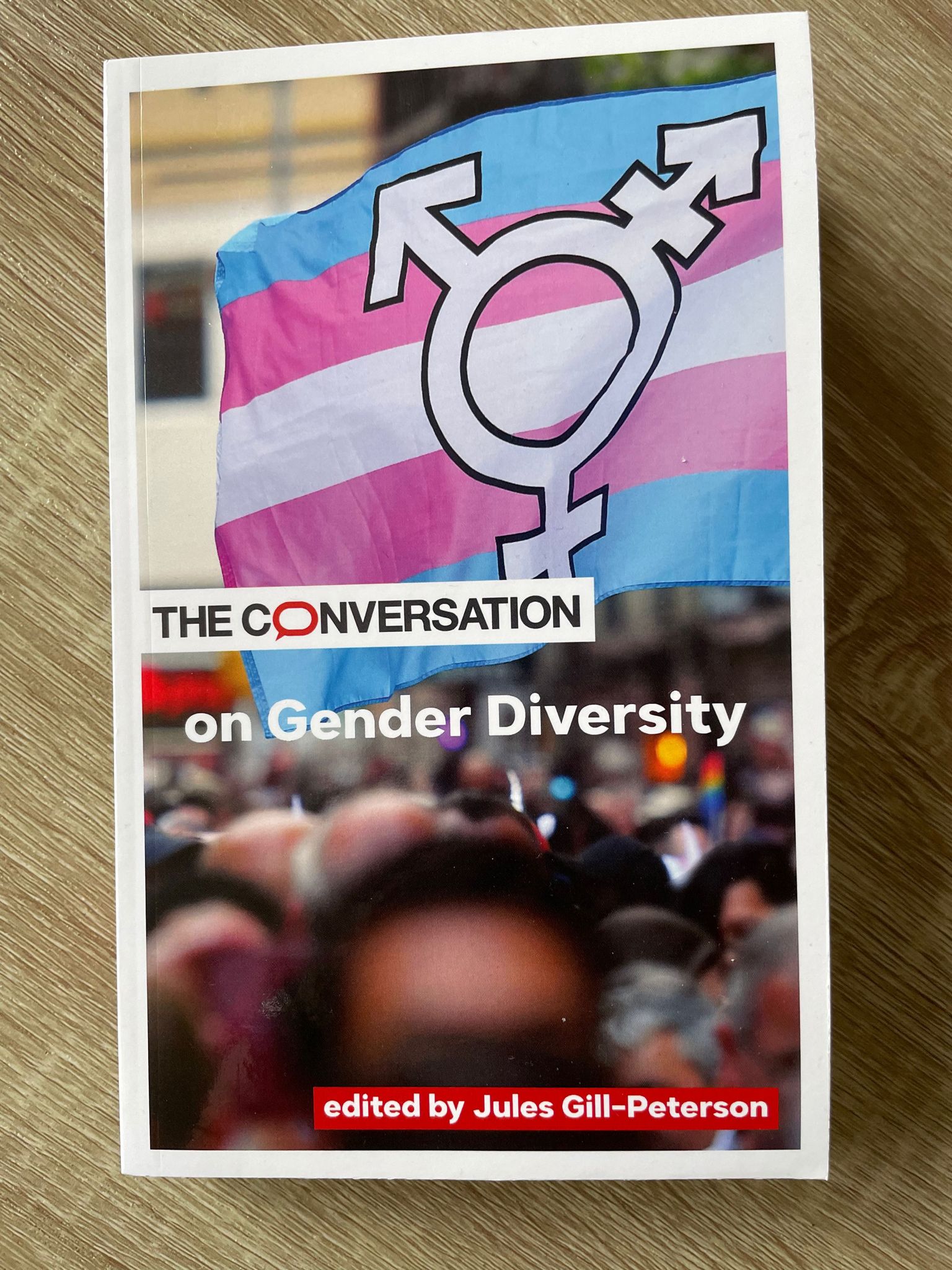
The Conversation on Gender Diversity (edited by Jules Gill-Peterson, published by Johns Hopkins University Press) is a collection of short trans studies essays originally published on The Conversation. It’s written in an accessible way and priced affordably. It includes our essay “Giving Birth as a Father – Experiences of Trans Birth Parents“, which provides a concise introduction to the topic and to our research.

Photograph of a book, The Conversation on Gender Diversity. The cover features a blurred crowd of people and a large trans flag with the trans symbol on top of blue, pink, and white stripes.


The Routledge International Handbook of New Critical Race and Whiteness Studies (edited by Rikke Andreassen, Catrin Lundström, Suvi Keskinen, and Shirley Anne Tate, published by Routledge) is a hefty academic volume with a series of articles which critically interrogate whiteness. The book includes our essay “Whiteness in research on men, trans/masculine and non-binary people and reproduction: Two parallel stories“, in which we reflect on both the racialisation of both trans pregnancy and childbirth, and on the whiteness of our research team. It’s currently only available in hardback at “academic” prices, so I encourage people to order it into your local library if it is of interest to you. I’m also very happy to email people a copy of the essay if you’d like to read it, and will be making a version freely available on this site as soon as the copyright agreement allows.

Cover image of a book, The Routledge International Hardbook of New Critical Race and Whiteness Studies. The cover features a colourful aerial photograph of a river bend.


Trans Reproductive and Sexual Health (edited by Damien W. Riggs, Jane Ussher, Kerry H. Robinson, and Shoshana Rosenberg, also published by Routledge) is another academic book, this time focusing on topics including intimacy, sexual violence, sex education, and reproduction. It includes our essay on “Young men, trans/masculine and non-binary people’s views about pregnancy“, drawing on focus groups undertaken with young people to ask about how they see their reproductive futures. Again, this book has academic pricing, so we would greatly appreciate people asking their local library for a copy, and you’re welcome to contact me if you’d like to read the essay.

Cover image of a book, Trans Reproductive and Sexual Health. The cover image is an abstract grey circle with messy lines extruding from the top right.


Finally, we’ve just published an article in the journal SSM – Qualitative Research in Health. Titled “Medical Uncertainty and Reproduction of the “Normal”: Decision-Making Around Testosterone Therapy in Transgender Pregnancy“, this article looks at decision-making around cessation of testosterone during pregnancy, and critically explore some of the assumptions that get made in medical writing and practice.

Trans joy in hateful times

“We’re living in the future!”

I bounced up to an old friend to share this important insight. All around, queer bodies danced and swayed to furiously enthusiastic music. We have always sought refuge in one another, in our in our art, in utopic dancefloors and community care. But something felt different.

The collective energy of the crowd was wild, strong, cohesive. The entire room was dancing – and among us, so so many out, happy trans women and transfeminine people. On stage, a non-binary person sang explicitly about their experiences of gender to an assertive ska beat. It was a joyful moment – but the true wonder of it for me was that it was far from unique.

This was the last in a string of winter tour dates for my band wormboys, at the brilliant Queer As Punk event in Edinburgh. But I’d experienced similar in Dundee, in Glasgow, in Newcastle, in Hull, in Leeds. At every gig, trans women and non-binary people were scattered throughout the audience; at most, there were also several of us on stage through the night. It’s a world of difference from when I encountered just the occasional trans man playing gigs in the mid-2010s; let alone from when wrote a blog post titled Trans/queer rock music back in 2010, in which I desperately sought validation in questionable gender-bending tunes written by (largely) cis musicians.

While trans women (and trans people more broadly) have always been involved in DIY music, there’s a clear change taking place. We have taken our inheritance and run with it. There are more of us making our own art, telling our own stories, and celebrating one another more than ever before. We are more visible, we are more assertive, we are more respected within our scenes, and – collectively – we are having more fun.

Photo of three people from a band, rocking out in front of an audience in a darkened room
wormboys play Queer As Punk. Photo by Blanka Bandi.

The very night we enacted a better future on that dancefloor in Edinburgh, 16 year-old trans girl Brianna Ghey was stabbed to death in Warrington. Two other teenagers, a girl and a boy, have been charged with her murder.

For trans people across the UK – especially trans women and girls – this lethal attack was not unexpected. It feels like the culmination of a vicious hate campaign that permeates our media and politics. It’s also the tip of a vast iceberg of intentional violence and untimely death.

Suicide is endemic among trans youth driven to despair by the socially-sanctioned antagonism directed at them every hour of every day. I am tired of citing statistics. I have lost so many of my friends and peers. Words and numbers are insufficient for the raw anguish of my grief.

This is only compounded by the failures of bystanders who refuse to intervene, schools and employers who try to make us disappear, a National Health Service that inflicts harm upon us. England’s only child and adolescent gender clinic is due to close in a matter of weeks, with nothing ready to replace it. In an extraordinary open letter, the majority of clinical, research, and administrative staff at the clinic note an “increase in deaths related to the service” since the suspension of endocrine treatments in 2020.

Many of my friends have been threated or assaulted in broad daylight. One, for instance, had rocks thrown at her. Another was assaulted in front of the school gates. Another was raped by boys in the school playground. I frequently struggle with feelings of survivor’s guilt, having merely been publicly assaulted, stalked, harassed, and subject to threats of legal action and murder. Relatively minor matters, in the scheme of things.

Photograph of a large crowd in a narrow street in London, with occasional placards and a trans flag.
Vigil for Brianna Ghey outside the Department of Education, London. Photo by David Griffiths.

How to understand joy in the face of so much hate and despair?

This is a question I struggled with throughout our tour. The night before Brianna’s murder, 400 people rioted in Knowsley outside a hotel that houses asylum seekers, spurred on by the fascist group Patriotic Alternative. This horrific event, too, did not occur in a vacuum. Racist and anti-migrant sentiment has similarly been stirred up by cynical politicians and journalists, as asylum seekers, economic migrants, British Black and Asian people, Gypsies and Travellers are repeatedly failed or directly targeted by our authorities and institutions. Patriotic Alternative have also repeatedly targeted LGBTIQ+ communities, through their campaign against Drag Queen Story Hour.

The Sunday prior, a large rally was held in Glasgow by anti-trans group “Let Women Speak”, who have a long history of collaboration with white supremacists and antisemites. This event, supposedly organised in support of “women’s rights”, featured numerous flags in the suffragette colours of green, white, and purple, alongside massive black banners emblazoned with the slogan: “Woman (noun): Adult Human Female”. It was attended by Holocaust deniers, anti-migrant, and anti-abortion campaigners, and was described by supporters as an “undisputed Aryan victory”.

I could say so much more: about assaults on disabled people’s rights and livelihoods, about the demonisation of the poor, about attacks on pay, pensions, and the unions that attempt to defend them (I am writing this post while on strike). About how fascist violence is excused by sexist men in the name of “defending women and girls”. About how oppressed groups are played off against one another, while the effects of all this hateful discourse and action are felt most keenly at the intersection of multiple forms of persecution, such as by migrant trans women of colour.

Ultimately though, my point is this: what we are seeing is both a consequence of historic prejudices in our society, and of rising fascism.

Minority groups, women, migrants, and working class people in the UK have always faced a shared struggle against systemic discrimination and violence. Following a period of mild reform in the 1990s and 2000s, we are now experiencing a significant upswing in bold, blatant hate speech and violence,  effectively condoned by every major political party and the majority of mainstream media publications.

This is the context of trans joy in the 2020s – and the reason why that joy is so necessary and vital.

Our tour reminded me that art is resistance, and resistance is collective. In recent days I have felt myself marinading in my own fear, a recipe for passive inaction. If we cannot experience joy, we cannot dream; if we cannot dream, we cannot hope; if we cannot hope, we cannot fight back. In the face of a world that wants so many of us dead, it is vital that we create reasons to live, and to thrive.

In Leeds, wormboys played to a rammed room in Wharf Chambers, a triumphant hometown crowd. We invited the brilliant Punjabi-Celtic-indie fusion trio Kinaara and gorgeous queer folk duo Serin to support us, building new friendships and cementing old ones. In Hull we debuted at the New Adelphi, where now-legendary acts such as Lizzo, Manic Street Preachers, Pulp, Skunk Anansie, and PJ Harvey played before they were famous. We shared the stage with Sandbox Mode – a solo hip-hop artist making deeply honest and funny songs about mundanity and despair – and Baby Flowers, an exciting young grunge group playing their second ever gig. This was the least well-attended, most male-dominated, and least obviously queer gig on our tour. And yet: the mood was vibrant, I noted at least one other trans woman in the audience, and Baby Flowers’ bassist was showing off a well-placed trans rights sticker.

In Newcastle, we found ourselves in the Little Buildings, a venue which has miraculously survived Covid-19 despite being founded just the pandemic began. The event was hosted by new dance party Queer Love. We played alongside the incredible hardcore group Disciplinary with their two bass guitars, and also the feminist dance-punk phenomenon of Fashion Tips. The whole night was amazing, but Fashion Tips were particularly exciting for me. Frontwoman (and Queer Love organiser) Esmé Louise Newman has a long history of involvement in groundbreaking queer feminist punk, metal and no-wave groups, including Penance Stare and Etai Keshiki. The new band were just as brilliant, with aggressive guitars and vocals underpinned by a powerful rhythm section, heralding a new era of revolutionary dancefloor divination.

Next to Glasgow, where I organised a well-attended gig at The 13th Note in less than a week, after our original promoter pulled out at the last minute. We booked the astoundingly powerful riot grrrl group Brat Coven to play with us, along with HAVR, purveyors of gorgeous post-punk soundscapes. The latter band are fronted by Carrie Marshall, author of Carrie Kills A Man, who noted to cheers that she was a different gender the last time she played the venue. This was an event with plenty of trans women present, beaten only by brilliant gig in the same venue the very next night, which I went to see my soulful dyke folk pal Pictureskew play inbetween our own shows. That event might well be the first of its kind I’ve been to where there were at least as many trans women in attendance as anyone else. It was beautiful.

Then to Dundee, where Rad Apples and Make That A Take put anarchist theory into practice by actively working to provide a safer punk venue and events for women, queer people, and migrants, through simultaneously building a welcoming space and promoting a zero-tolerance attitude towards discrimination and abuse. There I had two totally new life experiences. First, I witnessed somebody crowdsurfing in a shopping trolley during a storming set from banjo punks Alldeepends. Then, we were subject to the well-organised chaos of the “crowd surfing machine” by jubilant anarcho-folk headliners Boom Boom Racoon (a variant on the sat-on-the-floor rowing boat dance associated with songs such as “Oops Upside Your Head” and “Rock The Boat”, but with audience members encouraged to take turns in crowdsurfing along the boat).

Through the tour, I’d been carrying a trans flag to drape over my bass amp, and have often said something about trans liberation from stage inbetween songs. wormboys are a political band, but not in the same way as more in-your-face punk groups I’ve previously fronted. I’ve reveled in the ability to just be a musician and make that – rather than my status as a trans woman – the focal point of my involvement, leaving most of the talking to dual vocalists duo Sop and Harry. In the current political environment, that has increasingly felt untenable. It seems important to speak out, make myself visible, be obviously a trans woman making music.

But at Rad Apples I didn’t need to. There was already a trans flag up. There were plenty of other trans people there. There were placards in the bar opposing Section 35. I could just be.

And so to Edinburgh, where I found myself living in the future during a joyous set from opening act Bufandas. A future in which we experience the true paradox of trans visibility, in that we are both uniquely vulnerable, and uniquely strong. No longer hiding in the shadows, we are easier targets for those who hate us, but also have so much more potential to build power together.

Brianna Ghey’s killers may be convicted and jailed, but that will do nothing to stop the violence we face across these islands, and across the wider world. We have learned that we cannot trust the police to save us, or the courts, or politicians, or journalists, or managers, or human resources departments. But we don’t need any of these people or organisations. We owe it to Brianna to continue the grassroots work she did to improve other people’s lives, because another world is possible.

The headliners at Queer as Punk in Edinburgh were the fiercely feminist disco punk group The Red Stains. Their set included several explicit statements of support for trans people and especially trans women and girls, reflecting the attitude of most women active within actual feminist movements. This was an important reminder that anti-trans movements do not speak for all women, and never will.

My experience of sharing a stage with so many amazing musicians, from so many backgrounds, featured many such reminders. I was reminded of the sheer depth and range of human creativity. I was reminded of how much we can be inspired by our differences as well as shared experience. I was reminded of how far we have come, as well as how far we have to go. 

There are so many of us. Today, we mourn. Tomorrow, we fight. Soon, we will win.

The Soul of Sexism

What The Commitments taught me about playing music

Like most women musicians, I’ve experienced a fair amount of sexism while playing in a band.

It can be insidious. Bands with women in often find they are more likely to put on stage earlier in the night, and paid less than other bands, regardless of skill, experience or size of following.

Other times, it’s entirely explicit. Like when men have shouted GET YOUR TITS OUT while I’m setting up on stage, or RAPE while we’re playing.

Sometimes, I downplay the impact of sexism in music, to focus on the positives. But it always gets to me – that sense that live music is for men and boys, that sense that it’s not for women and girls, that sense that we’re not really welcome – unless we are willing to be objectified and treated less seriously as performers.

I saw The Commitments musical with colleagues during its December 2022 run in Glasgow. After a difficult semester, I looked forward to being at the theatre with new friends from work, and enjoying a night of brilliant soul classics.

The Commitments is about a group of young (white) Irish people who form a soul covers band in the late 1980s. The musical depicts disparate personalities coming together, arguing a lot, playing a handful of gigs, and then going their separate ways. Most of the songs are performed by the cast on stage, although the production also used either off-stage musicians or a backing track.

The Commitments lived up to its billing as a jukebox musical. The band (on stage and off) were great. It was exciting to hear a series of well-known tunes re-arranged for the show, and performed with gusto. The architecture of the stage set was gorgeous, variously depicting a Dublin neighbourhood, small family houses, pubs, and bingo halls. The plot and characters were paper thin at best, but this didn’t detract from the overall experience – or wouldn’t have done, if it weren’t for the treatment of the handful of women on stage.

There were three women in the band. They were portrayed as backing singers, although often they actually performed lead vocals. They were collectively referred to as the “Commit-tits”.

Most of the male characters benefited from some basic level of characterisation: e.g. the drunk “prick” of a lead singer with a great voice, the older guy who claimed to have played in various famous bands, the manager with a grand vision. By contrast, only one woman had a character trait; she was the “hot one”. Literally every male character in the band made various objectifying comments about her. The other two women were implicitly pitted against her, and one another; the randy older guy had sex with all three, eventually resulting in a brief fight where they jealously pulled each another’s hair.

During the first half of the musical, the band members changed into stage wear, which they remained in for most of the rest of the play. The eight male performers wore smart white shirts, black suits and ties. The three women wore sexy black mini dresses.

Their characters were objectified in every sense, existing seemingly only as objects of desire and the butt of every misogynist joke. Meanwhile, I was surrounded in the theatre by the joy and laughter of an audience who enthusiastically clapped and sang along with the (genuinely excellent) music. The cognitive dissonance was wild.

Through the second half of the play, I felt increasingly physically sick.

Once the night was over, I reflect on why I experienced such a visceral reaction to the sexism of The Commitments. None of the musical’s misogyny was extraordinary or spectacular. On the contrary, it was low-key, continual, and passed off as normal: just like the everyday sexism women experience in our everyday lives. This makes it hard to identify as a problem, and hard to address in practice.

When I spoke about my feelings on social media, several people who had seen the 1991 movie told me that I misunderstood The Commitments. They told me this was a story of white working class experience in 1980s Dublin, that the characters’ behaviour was reflective of attitudes at the time, that the characters were represented honestly within a social realist narrative.

My issue is, however, is not with a film I haven’t watched. What I saw in the theatre was not social realism, but a jukebox musical where the story worked to loosely link one song to another. The setting was broad; the characters were one note at best.

The narrative of the play had nothing to say about the constant sexism to which women were subject. It was simply present in the actions and words of every male character. In this way, it was normalised, and legitimised.

The very structure of the play itself perpetuated sexist stereotypes about the roles of men and women within storytelling, within society, and within music. The male characters expressed desires and interests, organised events, played musical instruments, and provided commentary on one another’s decisions. The women sang nicely, looked pretty, and were a device for the characters development among the men who leered at them. That is what women are for. That is what women do.

The everyday sexism of The Commitments also reflected a wider failure of the musical to grapple with the political issues it hinted at. An apparently all-white cast performed music historically written and performed by Black women and men, for an overwhelmingly white audience. The musical’s only nod to this were some vague references to worker’s rights and the assertion by one character that “the Irish are the Blacks of Europe, and Dubliners are the Blacks of Ireland”. While I imagine the play was attempting to comment on class solidarity and the historical contingency of whiteness, the clumsy claim of comparative oppression treated the existence of actual Black Irish people as an impossibility (an assumption made all the more bizarre by a later brief reference to the Thin Lizzy version of “Whisky in the Jar”).

I felt sick watching The Commitments because I saw myself – the expectations placed on me as a woman, the possibilities available to me as a woman, the everyday impact of everyday sexism on me as a woman – in the experiences of those women on stage.

I felt sick watching The Commitments because I saw how my non-white friends are so often treated, especially women of colour – their creative endeavours diminished or appropriated, their experiences of racism ignored and erased.

As a bassist and singer, I saw the norms that have led to male musicians shouting stuff at me and my bandmates when we are playing, demanding to examine my fingers for calluses, and assuming that I am at a gig accompanying a man. I saw the hidden structures that made it hard for me and many of my friends to pick up an instrument in the first place. I saw how and why it is constantly so difficult for women and people of colour to simply turn up and play music in so many settings.

I felt sick watching The Commitments because I was witnessing the operation of power.

The stage musical version of The Commitments debuted in 2013: the same year myself and a couple of friends were organising Revolt, a feminist club night in Coventry which prioritised women and trans performers. We did this in reaction to male dominated line-ups, which perhaps had a token woman singing or (at a certain kind of indie rock show) playing bass guitar. We knew that having numerous women from a range of backgrounds on stage does something important. It undermines the assumption that women musicians can or should only play second fiddle to men, and builds a sense of possibility for women in the audience: that music is for us.

We can be more; we will be more; we are more. Creating space for many types of people on stage changes people’s worlds.

In doing so it threatens white male power, which can sometimes feel threatening for white men.

That is why certain promoters and musicians and audience members make life difficult for others in music, through intentional bigotry or unthinking bias. For women, it doesn’t matter how good we are, how we dress, or how we behave on stage. We are so often an alien presence in a space supposedly for men, not obeying the unspoken rules: shut up, don’t speak out, and don’t take up a male musician’s space on stage unless you’re prepared to be compliant and sexually available.

What does matter is context. I reflected on this, wondering why the clothing the women wore in The Commitments bothered me so much. I’ve worn very similar outfits on stage myself. Men have shouted RAPE at me when I’ve done so. But they’ve also shouted GET YOUR TITS OUT at me when I was wearing jeans, trainers, and a loose black band t-shirt. It’s not about what we’re wearing – it’s never about what we’re wearing. It’s about how male desire, male prejudice, and male power is projected onto us.

I realised my problem with The Commitments was that the women characters’ sexuality doesn’t belong to them. Within the context of the plot, they were only ever given the opportunity to be attractive for the men around them, not for themselves. Sex without power.

The Commitments musical wants women in the audience to enjoy the music while sucking up the sexism and ignoring the depth of anti-racist histories. By contrast, at Revolt we sought to build power for women – all women – on and off stage. We sought to bring into being a world in which we can dress how we want, and dance, and sing, and listen, and play, and there’s not a damn thing anyone can do to diminish us for having and creating a great time. It wasn’t perfect, but it was ours.

I love a good feminist space, but separatism won’t save us. If we want women musicians to prosper, we need an actual commitment to promoting respect in every context.

The biggest onus is on event organisers, writers, and musicians – especially those in a position of relative power. There is no excuse for endless all-male and all-white line-ups at events, for casual sexism or racism in lyrics, in event promotion, or in the lines of a jukebox musical. How many people involved in putting on The Commitments looked at the script or the choreography and thought, “hang on a moment”, but didn’t speak out? How many white men (or women) who put on gigs or tour in bands even bother to think about whether or not there are women or people of colour on stage?

Simply having women or people of colour in the room is also not enough. We deserve to be present without having to worry about discrimination or abuse. Campaigns such as Good Night Out and the Healthy Music Audiences project have loads of resources available oncreating safer spaces for musicians and audience members alike.

Ultimately, everyone can play a part in changing the world – that’s how cultural change happens. You can support minoritized musicians by taking us seriously and helping us to build power. Attend our shows, listen to our music, share it with other people, and have a great time. That, really, is what it’s all about. 

Trans inequalities in English perinatal care

About a month ago I participated in the TPATH conference. This groundbreaking online event centred trans healthcare practice, research, and activism by and for trans people.

I was very impressed with the measures taken by TPATH organisers to ensure the conference was accessible to as many people as possible from around the world. They organised live translation to and from English, French, and Spanish, provided live captioning, encouraged presenters to speak slowly and clearly to enable lipreading, and ensured that generous scholarships were available for those who would not otherwise afford to attend. Most of the event was recorded, and videos are gradually being uploaded to the TPATH Youtube channel.

At the conference I joined Tash Oakes-Monger from NHS England to present initial findings from the ITEMS project (Improving Trans Experiences of Maternity Services). The ITEMS team, led by Michael Petch from the LGBT Foundation, ran a survey in early 2021 to explore the experiences of trans people (including non-binary people) who give birth in England. I supported the design and dissemination of the survey through my former role with the Trans Learning Partnership.

Bar chart indicating that increasing numbers of trans and non-binary people are giving birth in England every year.
Bar chart indicating growth in number of trans people giving birth in England each year.


There is some really exciting information emerging from the ITEMS data. For example, it appears that more trans people are giving birth than ever before (see above). However, it was also apparent that trans people face substantial inequalities.

Many of the questions in the ITEMS survey used comparable wording to the CQC Maternity Survey – from this we can see that trans people appear more likely to have negative experiences in NHS maternity services than cis women across the board. Even more disturbing is that 30% of trans respondents gave birth without the support of an NHS or private midwife (rising to 46% among trans people of colour). This indicates a lack of trust in midwifery services among prospective trans birth parents, with potentially lethal consequences for both parent and baby.

To learn more, you can watch our presentation on the TPATH Youtube channel.

A formal report of ITEMS findings should be published in the coming months.

Black Lives Matter

I want to express my unconditional solidarity with Black Lives Matter protesters in the US, UK, and beyond.

Over the last week I have watched the unfolding events in the United States with growing horror. I have been dismayed by the murder of George Floyd by police, the brutal, violent, but all-too predictable response to protesters from US authorities, and subsequent murders of further Black men including Tony McDade, James Scurlock and David McAttee.

I have so much respect for those who have taken to the streets again and again to call for a change to the corrupt, racist systems that made this violence possible. In this post, I want to take advantage of my platform to share pre-existing information and resources.

As a white woman living in the UK, I am aware that such deep systemic racism is hardly limited to the US. We know that Black and Asian people are more likely to die of coronavirus. This is due to pre-existing social and economic inequalities that result from racism, which mean that many racial minorities are more likely to have pre-existing health conditions, and work in low-income jobs which put them at risk. We know that 1,741 people in the UK have died in police custody or following contact with the police since 1990, and no police officers have been convicted; we know that Black people and other people of colour are disproportionately represented among these deaths. We also know that Black people are even more likely to be imprisoned in the UK than the US, and this disproportionate prison population is a consequence of overt discrimination in both the criminal justice system and wider society.

These problems do not result from the actions of “bad apples”. They are systemic, the consequence of a system of white supremacy on which the wealth of the UK was built, and from which those of us who are white continue to benefit, regardless of what other challenges we face in our lives. To bring about change, we – those of us who are racialised as white in a system of white supremacy – need to think seriously about what we can do in our everyday lives to address our own complicitly, support our Black neighbours, and bring this system down.

I am writing this post because I know this blog has a readership; however, I hope to primarily direct your attention elsewhere. I am not the person whose work you should be reading to learn more about this, nor to think through the actions you might take. I recommend turning to the existing work of Black writers to understand what is going on, and to support Black activists in the US, UK, and beyond. The remainder of this post includes a (non-exhaustive!) series of links that might help fellow non-Black readers especially with this, especially if you are not currently able to take to the streets. But please also do your own research.

Educate yourself. A list of readings, videos, and podcasts on a range of topics including racism, protest, allyship, and prison abolition.

Donate to bail funds. In the US, suspects who can afford bail may be released from custody prior to a trial. In practice, this disproportionately impacts low-income communities, and hence disproportionately impacts Black people. Protesters and innocent bystanders alike have been subject to mass arrests in the last week alone.

Donate to other causes in the US. These include funds for victims, Black-owned businesses impacted by the protests, and related organisations and initiatives.

Donate to Black Lives Matter UK.

Support QTIPOC and BAME LGBTIQ+ groups in the UK. Follow, listen, learn, and donate.

Support people subject to harassment on the streets. Take action when you witness racist acts.

Challenge racist systems in your workplace. Think about how you might work through a union and/or work collectively with your colleagues to address racist hierarchies, taking into account factors such as management structures, hiring practices, insecure contracts, and the operation of class.

Challenge everyday racism among your friends and family. Make time and space for difficult conversations. Create space for others to question and challenge your pre-existing prejudices in turn.

Finally, I encourage fellow white people to think critically about where they are putting their support. Is your local UK “Black Lives Matter” protest actually being organised by white people and centring white voices? Is it associated with a group like the SWP front Stand Up To Racism, who have been criticised by Black feminists for their deep complicity in rape culture? Are you putting more energy into discussing what does and does not constitute “violence”, or condemning people for taking the streets during a pandemic, than you are into condemning and acting against the racist sickness that is the cause of the protests? Are you spending more time thinking about your own white guilt than how you might make productive changes in your life and in the lives of people around you?

Again, I urge you to educate yourself, and read what Black writers and activists have to say about these issues. I will be striving to do the same.

A Methodology for the Marginalised

This is a deeply strange time to have a new peer-reviewed article out. I’ve been on strike for weeks, and otherwise on annual leave, planning a move south (for my new job) which may well be indefinitely postponed. It’s hard to comprehend the enormity of the COVID-19 crisis, nor the fact that the most helpful thing I can do right now is stay put.

The article was originally drafted in 2018, and based on experiences I had during fieldwork and while disseminating my research between 2013 and 2017. With the pandemic upon us, this previous decade feels like deep, distant history. Here in the UK, the true, awful toll of the illness is yet to become apparent; yet cities are beginning to turn silent as we self-isolate, political axioms are turned on their head, and all conversation turns eventually to the virus.

In this context, it’s easy to wonder if any of the work we did a month or more prior could possibly still be relevant. And yet.

~

Cover image of the journal Sociology.My new piece is titled A Methodology for the Marginalised: Surviving Oppression and Traumatic Fieldwork in the Neoliberal Academy, and it is published in Sociology, the journal of the British Sociological Association. I use my experiences as a trans academic as a case study to talk about the huge inequalities endemic within universities, and how these disproportionately impact those who already experience forms of social marginalisation. My aim is not simply to chronicle the harms of marketisation, transphobia, sexism, and racism, but to also propose a way forward. We need to start thinking and acting more collectively; in addition to workplace organisation and union activity, this is relevant to how we design and implement our studies.

My proposed “methodology” involves bringing questions of solidarity and mutual support to the procedure of research design. Universities have long been bastions of privilege, with mechanisms of exclusion are unthinkingly built into every aspect of academic life. The only way we can possibly open up higher education is through creating systems of support which acknowledge and account for pre-existing inequalities, and these must be embedded within the process of knowledge creation itself.

My article uses the example of suicide within trans communities to illustrate this principle. Suicide ideation and suicide attempts are especially common among trans people. As such, it is highly likely that any given trans academic will either be suicidal, or will have friends who are. Consequently, if trans people are to stand a reasonable chance of surviving within the university, this is something that should be accounted for in research design and funding proposals as well as in wider institutional support structures.

~

It’s impossible right now to know when and if the world will return to “normal”. I have seen some contend that this cannot be possible given the devastating number of predicted deaths, the shock to our economic and political systems. Others observe that the prevailing social order has survived before, and argue that any emergency measures to support workers who have lost their livelihood and/or increase police powers will inevitably be reversed in the long term.

However, what we do know is that universities have historically been remarkably resiliant – as have the inequalities in our society. Whatever happens next, we must continue to fight for a better world, and that includes within academia.

We can already see this beginning to play out in the UK as universities scramble to shift their activities online. Managers are relying on staff to carry on teaching, conducting research, and undertaking assessment and monitoring activities such as the REF. Meanwhile, most of us struggle to balance working from home with looking after partners, housemates, and/or families, wrestling with IT systems that have been heavily undermined by cuts as shiny new buildings stand empty on our campuses. We cannot possibly expect to carry on as normal.

It is in this context that I invite you to read my new article, as and when you find the time and mental energy. It is one of the most difficult and vulnerable things I have ever written. I am really proud of it. It helped me think through some small ways in which I might change my work patterns and practice of solidarity, as part of a far larger push for change. I hope that in turn, it might help you also.

A Methodology for the Marginalised:
Surviving Oppression and Traumatic Fieldwork in the Neoliberal Academy

~

Update 17 July 2020: the article has now been published in Volume 54, Issue 4 of Sociology, and is also now available free to read on the journal’s website. I have updated the links to reflect this.

Fighting back in the precarious academy – FWSA address 2019

On 16 October I spoke at the 30th Anniversary event hosted by the Feminist and Women Studies Association UK and Northern Ireland (FWSA). This is the text of my short talk.

Thank you for having me, I am very honoured to be here today.

I was invited to speak about doing feminism in the academy through my research on trans experiences. I am a trans woman known for my research on trans health.

I am interested in how discourses of consent, autonomy, sex and gender circulate between patient communities, activists, and professionals, and how these are shaped by power relations. I also work on new approaches to healthcare that might centre patient knowledges, rather than patriarchal medical authority. At present, I am part of an international study of pregnancy and childbirth among trans men and non-binary people.

This research stems from my wider interest in gender, sexuality, and power relations within institutions. I have published empirical work on equality schemes in Higher Education, focusing specially on Athena SWAN. My research with Charoula Tzanakou shows how Athena SWAN places a burden on the very women it is supposed to help, through expecting them to participate in the extensive work of self-assessment.

I also have been involved in anti-casualisation campaigns, especially while working on hourly-paid contracts for six years at the University of Warwick. I feel it is important to recognise this as feminist academic work too, an argument I expand on shortly.

I am very often invited to speak about trans health. At least as often, I am invited to speak about being a trans woman.

I am very rarely been invited to speak about my wider feminist research or activism.

I know why this is. While our numbers are growing, there are very few trans people and especially trans women working in universities. I am used to being the only visible trans person in the room. I am painfully aware that I am frequently present as a token. I am also aware that if I am not present, often no trans voices are heard at all, let alone trans women’s voices.

I know it is important to talk about how a vast majority of trans staff and students face substantial barriers in Higher Education. These include rigid administrative procedures, plus high rates of verbal abuse, physical and sexual assault. I know it is important to talk about how transphobia is tied closely to misogyny, racialisation, ableism and class, and how the challenges we face are especially compounded for trans people who face intersecting forms of marginalisation, such as Black trans women and disabled trans people.

I know it is important to talk about how we currently face an unpreceded rise in open transphobia. Cis academics talk about stripping our legal rights in public lectures and newspaper columns. Trans studies scholars face constant abuse and harassment on social media, malicious freedom of information requests, and threats of legal action. I know it is important to talk about how anti-feminist talking points from the religious right, such as the supposed threat of ‘gender ideology’, are laundered through anti-trans groups.

Still, there are times I want to talk about other things.

There are times I want to talk about being a woman more than I want to talk about being trans. There are times when I want to talk about solutions as well as problems, about collectivity and solidarity rather than division.

New postgraduates frequently ask me for advice on surviving in departments where they are the only out trans person. My advice is always the same – build alliances across difference. You may be the only trans PhD student, but you will certainly not be the only student who faces marginalisation.

To quote Patricia Hill Collins: “Who has your back, and whose back do you have?

In 2015 the University of Warwick faced scrutiny over TeachHigher, a proposed wholly-owned subsidiary designed to facilitate the outsourcing of teaching at universities. These proposals were defeated by organised resistance within numerous academic departments, led primarily by casualised staff.

Our campaign relied on recognising how the economic precarity of casualization is also about the myriad ways in which many of us are additionally oppressed. As my comrade Christian Smith passionately argued, “TeachHigher is sexist, and TeachHigher is racist”. We knew that women and people of colour are disproportionately represented within the pool of casual labour on which our institutions rely. We knew that increased casualization only exacerbates conditions in which those who are already the most privileged are most likely to thrive. This was a feminist campaign, an anti-racist campaign, a campaign about class, a campaign against ableism, homophobia and transphobia.

In my department, where over 40% of teaching was undertaken by people on hourly-paid contracts, we organised a teaching boycott. None of us would sign up to teach the following year unless the department took an active stance against TeachHigher. This could only work if all of us agreed to openly sign a letter announcing the boycott – otherwise, we could be played off against one another. It took many careful meetings and discussions to organise. Many of us relied on this work to pay our bills, and in some cases, look after families.

In response to our letter, the Head of Department disparaged us in a departmental meeting, calling us “childish”. He proposed replacing our labour with PhD students from other universities. He said we would never win, that the university would never back down.

A week later, the university backed down.

So how do we claim space for feminism in the precarious academy?

By remaining aware of our differences, working with and across them to build alliances.

By campaigning through formal and informal unions as well as our research.

By speaking out and supporting our colleagues, especially if we are in a more secure position than them.

The university is not built for us. We know this in our hearts when we see the statues and paintings of worthy men around campus. We know this in our bones when we the climb steep steps to lecture theatres designed to centre a patriarchal pedagogy. We know this in the sharpness of our breath when men known for sexual abuse talk over us and claim responsibility for our work in departmental meetings.

It’s time for change on our campuses. Let’s make that change together.

EHAOIH6W4AAdiCi.jpg

A slow, painful grind: WPATH 2018 conference report

IWPATH_BuenoAr_Logo_reverse.jpgn the first week of November I attended the 2018 WPATH Symposium in Buenos Aires, Argentina. This biennial event is one of the largest trans studies conferences in the world, with around 800 academics, activists, healthcare practitioners and researchers coming together to exchange knowledge.
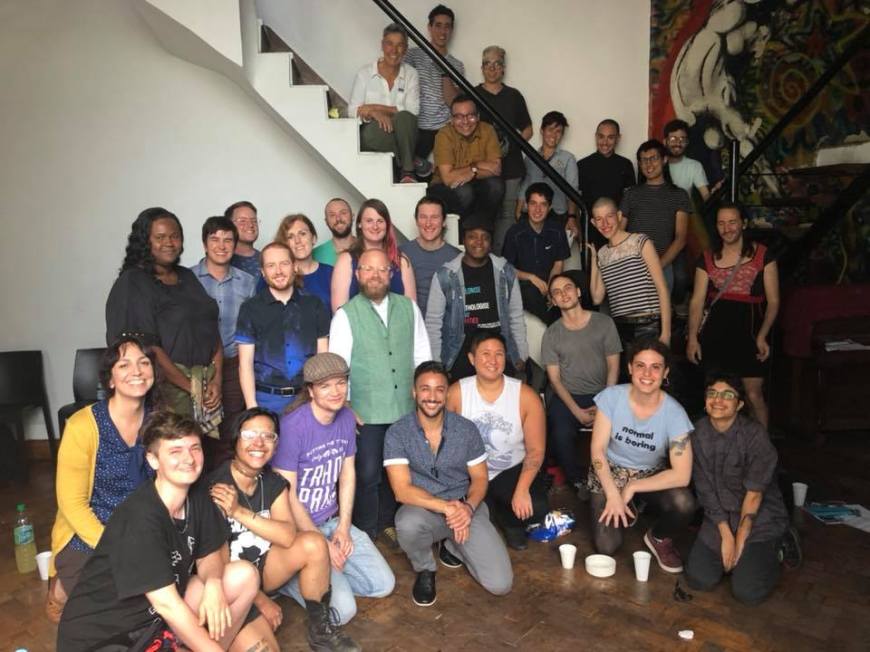
Most of the conference consisted of parallel sessions: approximately eight or nine speaker panels occurring simultaneously in different parts of the conference venue. So it is impossible for anyone to take part in the majority of conference events. Nevertheless, I attended as many sessions as possible, and livetweeted from most of these. Links to Twitter summaries of the sessions I attended can be found at the end of this post.

In this post, I comment primarily on my observations of the conference as a sociologist and trans professional.


Opportunities and inclusion

As I anticipated, WPATH 2018 was full of contradictions.

On the one hand, it was exciting to join and learn from so many academics, healthcare practitioners and human rights experts working in the field of trans health. As I report in the Twitter summaries below, the conference provided a great opportunity to participate in debates over new ideas and standards of care, and hear about cutting-edge research findings and advances in clinical practice. It was an especial privilege to learn first-hand about the implementation and impact of Argentina’s pioneering Gender Identity Law, a topic I expand upon later in this post, but hope to write about in more detail in the near future.

I was also glad to have the opportunity to present a paper on research ethics and a poster with initial findings from the Trans Pregnancy project to an international audience.

It was excellent to see that the conference organisers acknowledged and responded to some of the feedback from trans delegates in previous years. Gender-neutral toilet blocks were present on every floor of the conference venue, and pronoun stickers were provided to accompany name badges. The provision of a “trans hospitality suite” enabled trans attendees to relax in a more comfortable environment, and also arrange our own ad-hoc meetings and events. This was inevitably re-branded by its users as an “intersex and trans” room in recognition of the importance of this space also to intersex delegates; I hope conference organisers will learn from this for future events.

This year’s Symposium also benefited from a clear code of conduct and language guide, previously introduced for the 2017 USPATH and EPATH conferences.


Microaggressions and objectification

On the other hand, the cis-centric atmosphere of the event felt like a slow, painful, constant grind. As with previous WPATH conferences, the event was punctuated by constant microaggressions (and, on occasion, outright “macro”aggression); these were damaging to intersex people, people of colour and delegates from the Global South as well as trans attendees. Examples include individuals advocating for intersex genital mutilation, off-colour jokes about trans suicide, the use of outdated language, and misgendering of research participants.

Some research seemed entirely voyeuristic: for example, one poster from the Netherlands purported to report on differing levels of jealousy towards sexual competitors among “mtof and ftom transgenders”. It was often unclear how consent was obtained (if at all) for the use of personal information about research participants and/or patients. This was particularly concerning when numerous posters and powerpoint slides included unnecessary photographs of intersex and/or trans genitalia (a “WPATH conference bingo” grid circulated among intersex and trans attendees of the event included a square for “unexpected genitals”).

As a trans attendee, I felt deeply objectified by the tone and content of this material. It felt dehumanising, and I felt like a thing, subject to the harsh gaze of an abstract, dehumanising curiosity. Yet I was disturbed not only by those engaging in such work, but also in the response of many of their peers. Numerous practitioners and researchers who seemed broadly sympathetic to trans rights and affirmative in their own work often said nothing to counter transphobia, cisgenderism and endosexism in the work of others. It is difficult for intersex and trans people to explain how painful this situation is when most of our colleagues and the senior figures in the field are not intersex or trans; we know that our projects and careers alike may suffer if we speak out too openly or too harshly. I encourage fellow members of WPATH to reflect on their potential complicity in this situation, and consider how we might collectively work to change it.


Tokenism and colonialism

The choice to locate the conference in Buenos Aires felt deeply tokenistic, with numerous attendees from the Global South arguing that this represented a colonial attitude. The vast majority of conference attendees were from the United States or Western Europe. The price of the conference was a significant barrier to many attendees, amounting to the equivalent of the average monthly income in Buenos Aires. The choice to host the event in an expensive Hilton hotel felt like it was taken primarily for the benefit of (the more wealthy) attendees from the West to the detriment of local intersex and trans people, some of whom reported that they risked being profiled by the police if they tried to enter the wealthy area of the city in which the hotel was located.

The sessions on clinical practice in Argentina and human rights in Latin American were some of the most interesting I sat in on, but also least well-attended. I later heard that on one occasion a high-profile lawyer invited to speak on the topic of Argentina’s Gender Identity Law addressed a near-empty room, due to clashes with sessions that focused on Western bioethics, research and medical practice. This sense of tokenism was compounded through the choice to hold the conference in English (the official language of WPATH), with funded translation into Spanish available in a maximum of two rooms at any one time. Some of the conference organisers later stated that they had been worried about the finances of the event, but this felt like a strange claim in the wake of a lavish gala dinner with dancers, DJs, and multiple buffets serving food from various regions of Argentina. As human rights expert and executive director of GATE Mauro Cabral declared in the closing plenary of the conference, “When WPATH decided to come to Argentina, with the most progressive gender identity law in the world, I was excited. But we could only talk among ourselves. You came to this country because of the weather, steak and wine, but not to learn from us”.

While these issues are primarily structural ones that need to be formally addressed by WPATH, the onus is also upon individuals from Western and/or Anglophone countries to take action and reflect upon our relative power and privilege in attending these events. In addition to vocally supporting my colleagues from the Global South, one aspect of my own practice I feel I can address is my use of language in planning talks. For example, I could have undertaken a little extra work to ensure that my slides were bilingual, listing bullet points in Spanish as well as in English. I hope to draw on this lesson in preparing for future international events.


TPATH, human rights monitors, and lessons from Argentina

My experience of WPATH 2018 was improved enormously by the presence of other trans people working in the field of trans health, as well as the intersex activists and human rights experts who came to monitor WPATH’s historic antipathy towards intersex rights. Many of us are members of TPATH (the Transgender Professional Association for Transgender Health), a new and as-yet loosely affiliated group of trans people working in trans health that I helped to co-found during the 2016 WPATH Symposium in Amsterdam. Numerous others were part of a 50-strong delegation of intersex and trans human rights monitors from all parts of the world, who attended in order to conduct a collective human rights audit of the conference.

It was with these individuals that I found myself having the deepest conversations, these individuals with whom I heard the most fascinating research findings and the most rigorous analyses. We also shared a strong sense of solidarity in the face of the many problems apparent at WPATH 2018.

That said, the most important event I attended took place outside of the WPATH event: in Casa Jáuregui, a historic queer cultural centre many blocks away from the Hilton. Here, Frente de Trans Masculinidades (the Transmasculine Front) and other activists based in Buenos Aires hosted a meeting with TPATH members from the Bahamas, Aotearoa/New Zealand, Norway, South Africa, the UK and the USA. We shared information on our various areas of work, and the local activists talked at length about the history, implementation and practical impact of the Gender Recognition Law.

45312673_10156968672567287_3664316683624906752_n.jpg

Argentinian activists host TPATH members at Casa Jáuregui.

While it is important not to deny the significant challenges faced by trans people in Argentina, which include harassment by authorities, economic marginalisation and many forms of violence and discrimination, many of us were struck by how much has been achieved by activists in Argentina and (consequently) how advanced trans rights are in this country. The Gender Identity Law has been carefully written to enable flexibility; this has meant, for example, that it was interpreted to enable non-binary recognition by a judge as recently as last week. It also guarantees access to healthcare, which has meant that every possible medical intervention is available to trans people, either for free or through relatively inexpensive health insurance (in theory, that is: in practice, various legal battles have been necessary). This has been of benefit to cis women and queer people as well as trans people: for instance, through enabling easier access to hysterectomies or breast reductions.

During the meeting, the local activists described gender-affirming medical interventions that most of us had never even considered, such as beard hair implants for transmasculine individuals who cannot or would prefer not to use testosterone. Moreover, while long waiting lists exist for some procedures such as surgeries, those of us attending from European countries and (especially) Aotearoa/New Zealand were astonished by how much shorter they were than equivalent waiting times in our own countries, in part due to the absence of unnecessary gatekeeping procedures and treatment bottlenecks.

I was profoundly moved by the opportunity to attend this meeting, and regretted that so much of my time in Buenos Aires was spent in the sterile environment of the Hilton. However, I was also glad to have the opportunity to work with others to challenge the hierarchies and cisgenderist assumptions inherent in WPATH. We undertook many small interventions: asking questions about ethics, consent and power dynamics in the sessions we attended, raising concerns in private conversations, reporting blatant contraventions of the WPATH code of conduct. I was also pleased to hear many of my colleagues openly critiquing problematic issues identified during an update on the progress of the forthcoming Version 8 WPATH Standards of Care, and take part in attempts to hold our professional body to account during a member’s meeting on the final day.

Overall, I found WPATH 2018 to be a very tiring, draining and frequently unpleasant experience. However, I do not regret attending. I am grateful to have had the opportunity to learn so much from so many. I am also glad to have played a small role in supporting my intersex and trans colleagues and my colleagues from the Global South in attempting to help transform WPATH so it is more transparent, more accountable, and less colonial in attitude and in action.


Session summaries

The following links are to Twitter threads in which I summarise plenaries, talks and mini-symposia I attended at WPATH 2018.

Saturday 3rd November

Opening session and President’s Plenary

Keynote: Employment discrimination against trans people (Sam Winter)

Keynote: Trans legal history in Latin America (Tamara Adrian)


Sunday 4th November

Mini-Symposium: The Argentinian experience of public transgender health after the implantation of the Gender Identity Law

Oral presentations: Services in different parts of the world (Australia, Southern Africa, Scotland)

Mini-Symposium: Trans refugees: escape into invisibility

Mini-Symposium: Latin American perspectives on depathologization of trans and travesti identities

Plenary: Show hospitality to strangers: intersex issues in the time of gender identity laws (Mauro Cabral and respondents)
Note: this was listed as a plenary session in the programme, but actually took place alongside multiple parallel sessions. Consequently, this talk was under-attended by Western healthcare practitioners in much the same way as the Latin American sessions.


Monday 5th November

Oral presentations: Suicidal and non-suicidal behavior

Mini-Symposium: Ethical considerations in transgender health research

Oral presentations: Fertility

Oral presentations: Reproduction


Tuesday 6th November

Mini-Symposium: Child and adolescent medicine Mini-Symposium: Child and adolescent medicine

Plenary: SOC 8 update

Plenary: SOC 8 Q&A

Video: Transgender Moral Panic – A Brief Social History

In February 2018, I was invited to deliver a guest lecture at the University of Warwick as part of the “Hidden Histories” series.

In the last year there has been an enormous upsurge in media commentary that expresses concern about the role of trans people in public life. Gendered changing rooms, non-binary people, trans children and notions of self-definition have all come under intense scrutiny.

In the talk, I explored the background to the recent wave of media coverage. I argued that the transgender moral panic has been shaped by deep-seated cultural anxieties around sex and gender, taking in trans-exclusionary radical feminism, homophobic discourse, scientific racism, Brexit, and proposed changes to gender recognition laws.


Recommended further reading

Meg-John Barker (2017)
2017 Review: The Transgender Moral Panic

Combahee River Collective (1977)
The Combahee River Collective Statement

Emi Koyama (2000)
Whose Feminism Is It Anyway? The Unspoken Racism of the Trans Inclusion Debate

Emi Koyama (2001)
The Transfeminist Manifesto

C. Riley Snorton (2017)
Black on Both Sides: A Racial History of Trans Identity

Christan Williams and Gillian Frank (2016)
The Politics of Transphobia: Bathroom Bills and the Dialectic of Oppression


Corrections

I made two minor errors in unprepared asides during the talk, which I correct here for the sake of transparency.

  • Lily Madigan was elected to the position of Women’s Office in her constitutency Labour party at the age of 19, not 17.
  • David Davis was a co-founder of Radio Warwick (RaW), not David Davies.