Labour’s Section 28 is here – act now

In May 1988, the Conservative government introduced Section 28. This legal measure outlawed support for “homosexuality as a pretended family relationship” across Britain, especially in schools. While Section 28 was eventually repealed between 2000 and 2003, it has had a long legacy of harm. Most LGBTIQ+ people who lived through it have never forgiven the politicians responsible.

In February 2026, following a similar pattern of escalating moral panic and extremist rhetoric against trans people (including non- binary people), the Labour government looks set to introduce its own version of Section 28, in the form of proposed revisions to the guidance on “keeping children safe in education” in England. These proposals seek to erase trans children: through extreme restrictions on social transition, toilet and sports bans, and censorship of the word “trans” itself. Like Section 28, they will most likely also create a wider chilling effect, reducing support for lesbian, gay, bi, and gender-nonconforming young people as well.

There are some important differences between the situation in the 1980s and today. Section 28 provided a strong rallying point for action in part because it was a single, explicitly homophobic, and powerfully impactful legal clause. Labour’s transphobia has been a lot more piecemeal, and complicated by an endless series of messy court cases, including this week’s extremely unclear High Court ruling on proposed segregation measures in the workplace and public services. Meanwhile, many Labour politicians continue to claim that they oppose transphobia, even as they support the most actively transphobic government in British history.

It is for this reason that we need to be loud, clear, and explicit about the active danger posed by Labour government policy. And this danger is explicit in the new proposals for “keeping children safe in education”.
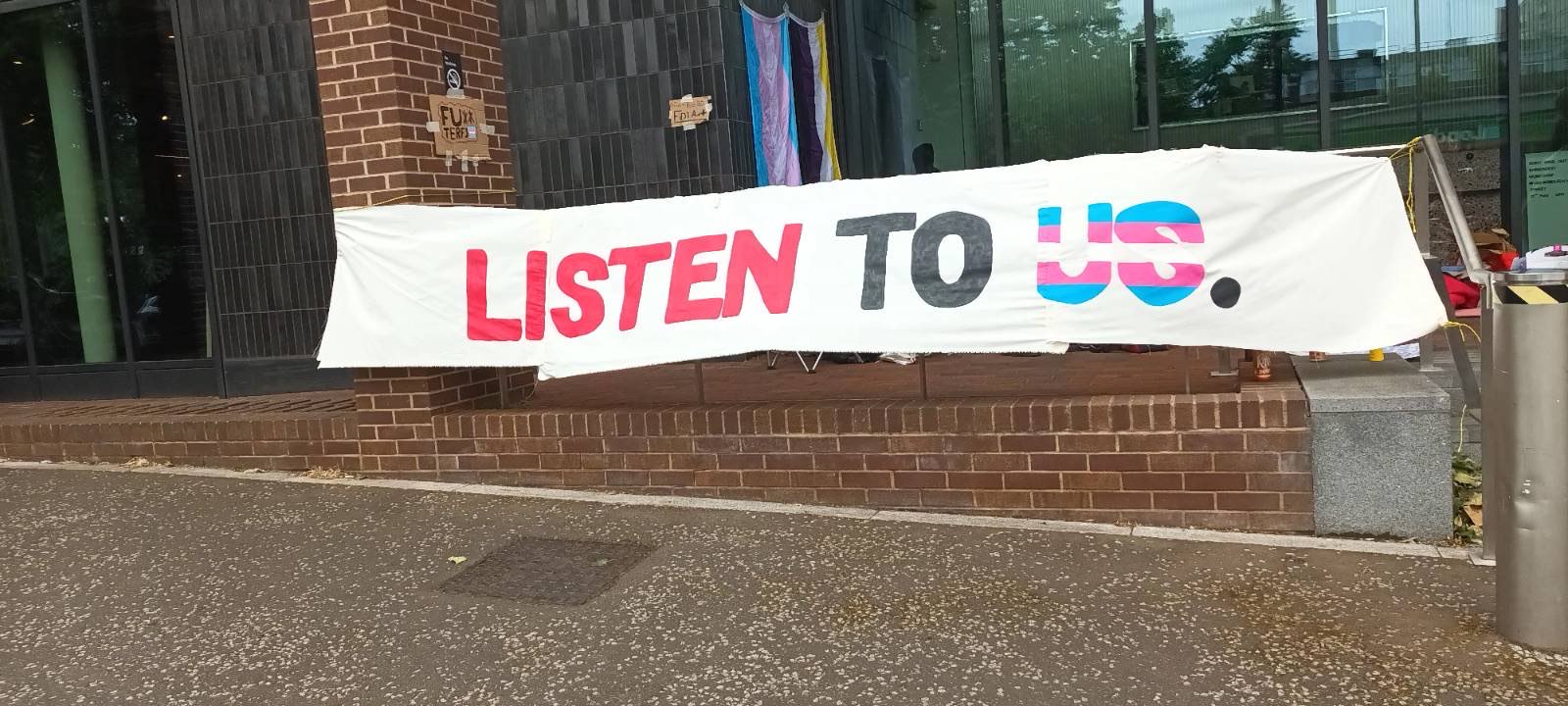
Protest outside EHRC HQ, 2025. Photo from Trans Kids Deserve Better.


What is the new schools guidance?

“Keeping children safe in education” is statutory guidance for schools in colleges in England. As “statutory” guidance, the document effectively operates as part of English law. It is regularly updated by UK governments, and the Labour government is now consulting on proposed revisions for 2026.

It is these proposed revisions that pose a threat to the safety of young trans people.

Importantly, this is not the same as the draft non-statutory guidance on “Gender Questioning Children” introduced by the Conservative government in late 2023. That guidance was not law, and was never formally adopted by the government – although in practice, many schools changed their policies and practice because of it.

However, Labour’s new proposed revisions to the guidance on “keeping children safe” are clearly influenced by that Conservative document, as well as the Cass Review, and the 2025 anti-trans Supreme Court judgement in For Women Scotland vs The Scottish Ministers.

In 2023 I outlined some key issues with the Conservative guidance. Here are those points, with notes on what has changed or been kept the same, as Labour seek to bring the Tory proposals into law.

  • Trans students are presented as an implicit danger to themselves and others. This is still effectively the case in the 2026 proposals, which position a young person coming out as a major safeguarding issue.
  • Schools are told to out trans students. This is still effectively the case in the 2026 proposals, which ban measures to protect trans students’ privacy (see toilets and changing rooms) and encourage schools to tell parents if their child is is “questioning their gender”.
  • Schools are encouraged to intentionally misgender students. This is still effectively the case in the 2026 proposals, which draw on the Cass Review to discourage support for social transition.
  • Schools are told to ban trans girls from girls’ toilets and changing rooms, and ban trans boys from boys’ toilets and changing rooms. This point is made even more strongly in the 2026 proposals, which draw on the 2025 Supreme Court decision to call for a complete trans toilet ban.
  • School uniforms should be worn according to “biological sex”. This is one of the few Tory proposals which has been dropped from the 2026 proposals. The new proposals instead state that schools and colleges “should consider adopting policies across school and college life that maintain flexibility and avoid rigid rules based on gender stereotypes”.
  • For sports, schools are told to “adopt clear rules which mandate separate-sex participation”. This is still the case in the 2026 proposals, which explicitly ban participation “in sports designated for the opposite sex”.
  • The guidance entirely ignores legal protections for young trans people. This is almost entirely the case for the 2026 proposals, which acknowledge possible Equality Act protections on the grounds of “gender reassignment” in one short footnote.
  • The guidance does not actually use the word “trans” once. This is still the case in the 2026 proposals. Young trans people are instead referred to as “gender questioning“. The document also uses the term “LGB” instead of “LGBT”. The language of trans or non-binary identity and experience is entirely erased.

Safeguarding and risk

“Keeping children safe in education” is a safeguarding document. The idea of the guidance is to manage risk, and help prevent harm to young people. Yet the Labour government’s proposed changes will have the opposite effect.

Discrimination and exclusion hurts people, especially young people. If implemented, the new guidelines will ensure that schools cannot possibly be an affirming or safe space for young trans people. This will be especially dangerous for the many young trans people who do not have a safe home environment, due to the transphobia of their parents, carers, or guardians. My own research has shown how an absence of affirmation can put young trans people at risk of sexual exploitation and statutory rape. These risks can be mitigated where people are able to socially transition in a safe, supportive environment.

This leads me on to the biggest issue with the proposed guidelines: their fearmongering and misinformation around social transition.

Social transition

Social transition describes a range of things a person might do to affirm their own gender. These things might include: a change of clothes or haircut, a change of name, and/or a change in pronouns. Social transition describes a series of choices that are linked to coming out as trans or otherwise gender diverse (e.g. non-binary, genderqueer, genderfluid). Social transition can also be a stage of experimentation or questioning, where young people figure out what is right for themselves. The changes we make may be temporary, or permanent: but regardless, these are deeply personal decisions.

In the Labour government’s proposed changes to the “Keeping children safe in education”, social transition is represented as a problem. The document recommends that “Schools and colleges should take a very careful approach”, and that “Primary schools should exercise particular caution, and we would expect support for full social transition to be agreed very rarely”. It further states that “a [school’s] decision relating to social transition may not be the same as a child’s wishes”.

This guidance is justified through reference to the final report of the Cass Review, a document which pathologises social transition by insisting that it should only be undertaken with medical guidance. This recommendation is as dangerous as it is offensive. Social transition is a personal decision linked to coming out. Doctors should have no role in deciding how someone dresses, or what name or pronoun they use.

The Cass Review has been widely discredited and condemned globally by researchers, medical practitioners, and community groups with relevant experience and expertise. This is in part because its most controversial recommendations are informed by pseudoscience and misrepresentation of evidence. For example, the Cass Review found no actual evidence of harm caused by social transition. Instead, it positions transition as a problem in and of itself. Its recommendations have been adopted as part of an eliminationist drive to erase trans existence entirely.

Speaking to the Metro this week, Dr Cal Horton, an expert in trans childhood, explained:

“Trans children need to be supported and respected in order to be safe at school, in order to access their right to education, in order to enjoy their childhood. Instead, we are seeing a complete ban on access to appropriate toilets, PE, accommodation on school trips, a complete erosion of their rights. It will lead to children avoiding the bathroom, avoiding exercise, missing out on school trips, dropping out of school, losing any hope of education, equality, friendship, happiness.”

I agree with Dr Horton. Furthermore, I believe these are the intended outcomes of the new Labour government proposals. As with Section 28, young people are presented with a choice between state-mandated abuse, or staying in the closet. The overall aim is to stop trans children from existing altogether.

As with Section 28, these hateful guidelines will never fully succeed in their aims. If implemented, they will certainly cause enormous harm. Yet trans kids are powerful and know their own minds, and many will continue to come out.

It is incumbent on us to fight with them for liberation.

Act by 22 April

We have two months to fight back against the Labour government’s new Section 28, as a consultation on the proposed guidelines is open until Wednesday 22 April.

One of the most obvious things you can do is respond to the consultation. This will likely be a long and discouraging process, so if you choose to respond, I encourage you to give yourself as much time as possible to work on it. There will also likely be consultation guidance produced by organisations such as Trans Actual and Gendered Intelligence. I will update this post as soon as that is available.

You can find the UK Government’s consultation page here. Note that they are consulting on a series of wider changes to the “Keeping children safe in education” guidance, not just the section on “gender questioning children”. Scroll to the bottom of the page for consultation document, full draft guidance, and a summary document.

At the same time, you may quite reasonably distrust government consultation processes at this point. I know I do. The consultation on the EHRC’s trans segregation plans last summer received approximately 50,000 responses, which were fed into AI instead of being read by human beings. If media reports from the likes of The Times are to be believed, the EHRC then simply produced the same hostile guidelines they were planning to all along.

Fortunately, there are a lot of other things you can do to oppose Labour’s new Section 28, including:

  • Writing to your MP
  • Organising against the proposals within your union
  • Organising against the proposals with other parents or students
  • Asking your local school’s headteacher or board of governors to speak out against it
  • Banning the Labour Party from your local Pride (if they’re not already banned!)
  • Supporting trans youth groups
  • Supporting youth-led campaign groups, especially Trans Kids Deserve Better
  • Planning or supporting protests against the Government, Department for Education, and Labour Party

I’ve written about these ideas and more in two previous blogs posts. Both are also available as downloadable zines, so feel free to share these freely, either as PDFs or through printing them out and sharing them around.

I am hoping to update the first one at some point to more explicitly address the latest proposals. However, I am not realistically sure when I will have the time or capacity. You are therefore welcome to create your own updated version too if you want, as long as you don’t sell it for profit, or misrepresent any of my original words or messages.

If you seek to understand criticisms of the Cass Review, or collate evidence for sharing others, I am maintaining an ever-growing roundup of academic research, commentary from medical experts, and statements from community groups here:

…and if we fail?

The original Section 28 was met with a storm of protest. LGBTQ people rallied across the UK. Ian McKellen came out as gay on live radio to speak out against it. Lesbian activists disrupted the BBC news, and abseiled into the House of Lords. The campaign group Stonewall was founded to oppose the new law.

None of this succeeded in stopping Section 28. But it did provide the initial momentum for a long, gruelling, yet eventually entirely successful campaign for its repeal. In the process, an entirely new wave of campaigning groups and activists emerged – including Queer Youth Network, where I cut my own teeth as a young campaigner.

The Conservative Party, meanwhile, never fully shook off the legacy of Section 28. They are still distrusted by many queer and trans voters for the harm they caused to entire generations.

If the Labour Party similarly proceeds with its plans for trans segregation and erasure in schools and beyond, we must never forget. Their legacy will be one of bigotry and hatred – and it is up to us to ensure their policies fail.
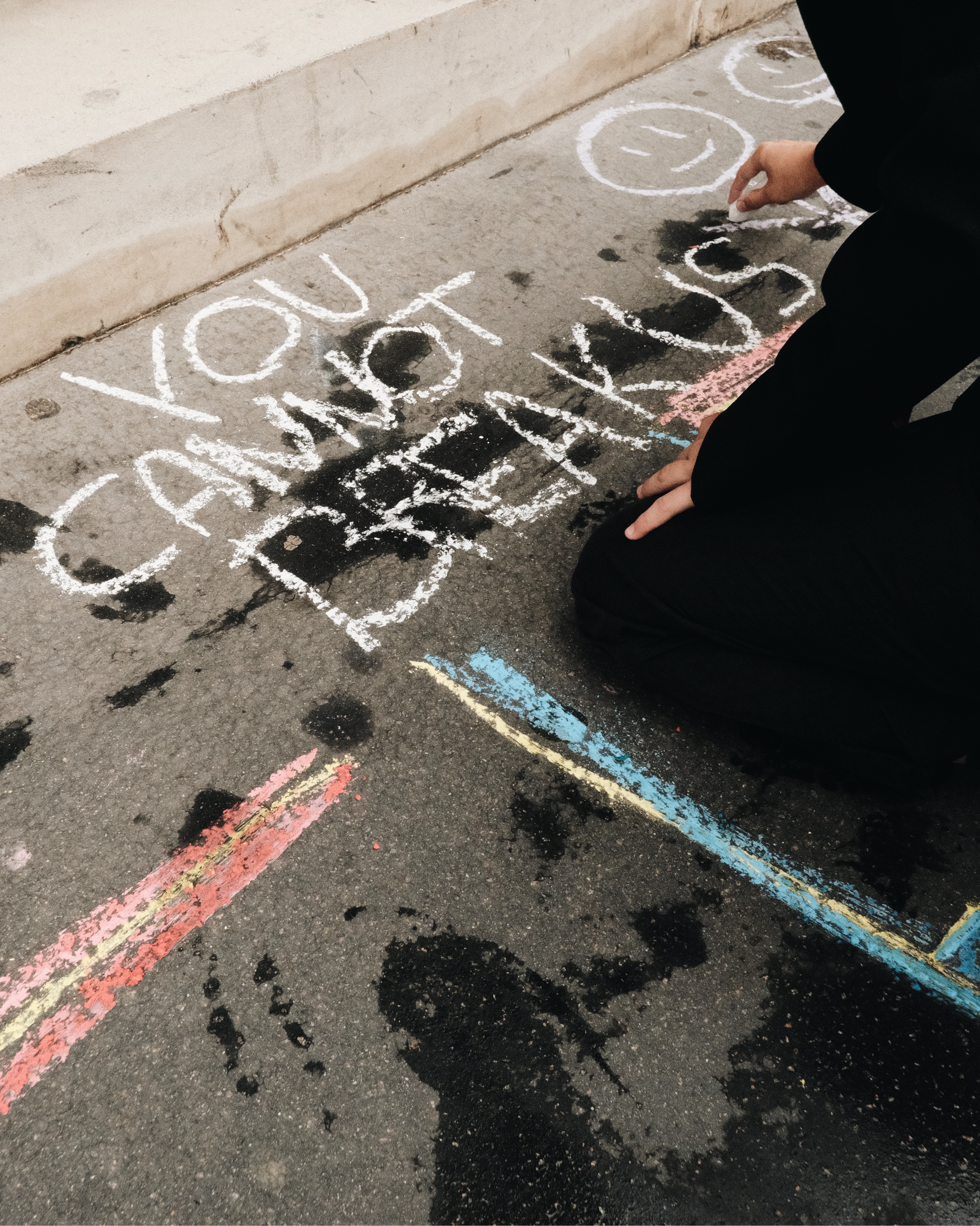
Protest outside the Department for Education, 2025. Photo from Trans Kids Deserve Better.


How it feels to be a trans feminist academic in 2018

Trans feminist symbol, designed by Helen GThis piece is based on an email I wrote, in response to a message about “smear campaigns against gender critical academics” on a feminist academic mailing list.
I have updated and posted it here in the final day of the Gender Recognition Act consultation in order to give my cis readers some idea of how the past few months – and especially the last few weeks – have felt.

~

I would like to say something about how it feels to be a trans feminist academic right now, with the emergence of a growing number of “gender critical” voices in academia.

In the wake of Brexit and Trump, and with the renewed growth of far-right movements across the world, it seems that everyone feels empowered to speak out about their own personal prejudice. Trans issues are no exception.

When I first came out and transitioned as a teenager, almost two decades ago, one of the scariest things for me was using public toilets. Let that sink in for a moment. I was scared simply to use the toilet – for fear that people might shout at me, drag me out, maybe even beat me up. While that fear has dissipated for me, I have not been to a public swimming pool since my mid-teens, and have not even been swimming in the sea since my early 20s. This is because I am scared. I am scared of violent men, but I am also scared of violent women. Cis violence against trans people is a reality. I have an enormous amount of admiration and respect for trans people who are able to overcome this fear.

It was hard to come out in the early 2000s. There was an enormous amount of casual transphobia in the media. Guardian columnists wrote pieces such as “Gender Benders Beware”, TV programmes such as Little Britain and the League of Gentlemen were immensely popular, and 90s films such as Silence of the Lambs and Ace Ventura remained popular with my friends. Trans women were variously represented as a pathetic joke, as burly men in self-denial, deceptive liars or outright sexual predators.

Legislation such as the Gender Recognition Act 2004 and Equality Act 2010 was yet to see the right of day. It was therefore legal for employers and service providers to know all about my gender history; it was also legal to refuse to hire me because I was trans, fire me from a job because I was trans, deny me services and kick me out of shops, pubs, post offices, leisure centres (etc etc) because I was trans.

It was not easy to come out in this environment. There were exceptionally few openly trans people involved in public life – and none of them looked, sounded or acted much like me. I certainly hadn’t knowingly met any other trans people. I delayed coming out for years because I wasn’t sure if I was “really trans” (a phenomenon common among participants in my research). I thought that I might ruin my life. It was only the knowledge that my life would likely be ruined regardless, and the sheer awfulness of the alternative – becoming a man – that persuaded me to take the enormous step of coming out.

Consequently, I was very isolated during the first few years of my transition. I find it very hard to express how intensely lonely that experience was. Fortunately, my friends (mostly cis girls my own age) were immensely supportive, but it was difficult not to have any people with similar experiences to talk with. People with a very deep, complex relationship with our gendered movement through the social world, and/or our sexed bodies, such that we knew the assignation we received at birth was not right for us. People who felt a deep, deep relief upon transitioning socially and/or changing our bodies as appropriate.

It wasn’t until my 20s that I began to slowly, gradually meet trans people my own age – and what a relief that was! We could relax completely around one another, talk about our issues and experiences, reflect on our differences as well as our similarities. It was at this time that I encountered the term “trans bladder” – used to refer to the pain and urinary infections that could follow from not being able to use toilets outside of the home. Let that sink in.

I also began to realise the wider extent of the damage caused to other trans people by both external and internalised transphobia.

Many of my trans friends have attempted suicide, sometimes on multiple occasions. The first trans person I knew to take their own life was a member of a trans youth Internet message board I frequented when I was 16. Others would follow, including a housemate, whose body I discovered shortly before I was due to head into work to teach a class. When I see “gender critical” people disputing well-established trans suicide statistics, it feels like gaslighting. I know what happens in our communities when people are not affirmed and don’t have access to adequate support.

Other trans friends have experienced severe sexual violence, often in their youth, often in very public spaces such as school playgrounds. Trans people are at particular risk of various forms of sexual assault, violence, coercion and control – for example, 28% of trans respondents to a large Stonewall survey had experienced domestic abuse within the past year alone. When I see “gender critical” people talking about the supposed violent threat that trans women pose, I think about how when trans friends of mine are raped, our first conversation about accessing support is usually about whether or not it is safe for them to go to the local rape crisis centre. This is not something we can necessarily take for granted.

When academics and journalists “come out” as “gender critical”, scaremongering about changes to the law we have been fighting for for decades, representing trans women and girls as sexual predators, debating our access to legal rights and public spaces and women’s services, I wonder if they know who we are, what our stories are, what our experiences are like. Is it simply that they don’t know any trans people, that they are ignorant? Or is there a deeper cause for their hatred? Do they realise they sound less like feminists, and more like the fundamentalist religious right? (for an example of how fundamentalist Christians and “gender critical” feminists basically employ the same language and discursive anti-trans tropes, I recommend a look at the responses from organisations to the Scottish government’s recent consultation on gender recognition).

As for the notion that anti-trans campaigners are “gender critical”, and my use of inverted commas for this term – I spent an enormous amount of time thinking about gender, sex and sexism even as a teenager. I read about the social construction of gender, and it made sense to me as a concept, but it took me a long time and a lot of theorising to figure out how to make sense of that with relation to my own body and experiences. I began to figure out that sex was a social construct too, reflecting the construction of gender, many years before I would encounter the work of Emi Koyama and Judith Butler. In my 20s, I was heavily involved in the NUS Women’s Campaign, and I am now (among other things) a gender theorist. In recent years I have been interested as a scholar and campaigner in the drawbacks and possible benefits of gender equality schemes such as Athena SWAN, and the fight to tackle staff-on-student sexual misconduct.

People who object to pro-trans legislation and oppose our access to public space do not have a monopoly on being “gender critical”, any more than those who oppose abortion rights have a monopoly on being “pro life”.

The growing number of academics who hold “gender critical” positions wield an enormous amount of power over their trans students, and have the potential to cause an enormous amount of harm. There are more and more of these trans students every year – of course there are. The exponential growth in the visible trans population is an outcome of the assertiveness of trans activists, our increasing visibility in public life, and a more positive legislative environment. It was predicted on multiple occasions many years ago – by Lynn Conway in 2001, by GIRES in 2009 and 2011. This is the outcome of an invisible population gradually becoming visible – just as the number of young people prepared to be out as lesbian, gay and bisexual also continues to rise. This growth will, eventually, flatten out – but it will be a fair while before this happens, especially if the current backlash continues.

I hope that cis people reading this post reflect on what it feels like for me to be involved in feminist and women’s groups at this time, especially as “gender critical” conversations become more common. It feels terrifying. I am petrified about where the discourse is heading within feminism as well as within the wider social world, and I am very scared about what might happen next, what violence might be perpetuated or excused in the supposed name of women’s rights.

I am hardly alone in this: I see trans friends freaking out en-masse every time I sign into social media. We know our history. Some of us survived Section 28. A precious few survived the AIDS crisis and surrounding moral panic. Many are also black, or disabled, or gay, or bi, or Jews or Muslims, or migrants. We know what happens when minority communities are scapegoated, and we know that the rise in transphobia is not an isolated phenomenon. We know that the most vulnerable among us are the easiest targets for hatred.

I worry every time I see a post goes up or message is written on a feminist Facebook group or blog or academic mailing list, every time somebody organises a feminist seminar or conference. I fear that someone will start raising “reasonable” concerns about my existence or civil rights, or lying about the supposed threat that I and others like me pose. For all that I move through the world as a woman, for all that I am a woman and have lived my entire life as a woman, for all that I am subject to sexism by clueless male colleagues and internalise the need to constantly apologise for myself at work, for all that I am harassed in public by men and fear male violence every time I leave work after dark, I start wondering what place I have in these groups. I start to wonder how many cis women think that somehow I am more privileged than them even though I am subject to both sexism and transphobia. I wonder how many feminists hate me.

When “gender critical” blog posts are written or emails are sent, I feel like I have a choice. Either I respond – and it may well take the form of an essay like this – an enormous outflow of nervous energy, fear and anger, energy that I will not get back repeating stories I am quite frankly bored of telling. Or I may attempt to remain cool and rational, encouraging calm and thoughtful debate even as I attempt to stem the rising panic inside. Or I try to ignore the message, even as it plays on my mind for the rest of the day, rest of the week, rest of the month, knowing that the environment has become a little less safe for other trans people – and especially other trans women – and especially other trans women less privileged than myself.

Or I just leave these feminist groups and mailing lists and academic collectives, which is of course what “gender critical” women would like me to do.

But not today. Today I stay. Today I fight. And I do not do this alone. For I know also that the majority of women support our cause.

As ever, I do this with my sisters.

Solidarity.

GRA consultation: A guide for feminist and LGBTQ+ academics and allies

The UK’s Government Equality Office is consulting on possible changes to the Gender Recognition Act 2004 (GRA). Anyone can respond. The consultation link is here: https://www.gov.uk/government/consultations/reform-of-the-gender-recognition-act-2004.

The consultation ends at 11pm on 19 October 2018.

There has been a large backlash from people hostile to trans rights. It is important that academics who support trans rights respond to the consultation, ideally with reference to relevant evidence from scholarly research. This guide provides advice on doing so.

(Note: post updated 15/10/18 to include additional links and my full consultation response)


Background

At present, the GRA enables adults to obtain a Gender Recognition Certificate (GRC) and change the gender on their birth certificate from female to male, or vice-versa.

  • This has consequences for the registration of sex/gender upon marriage or civil partnership and affects some insurance and pensions.
  • It is of symbolic importance for many trans people.
  • Non-binary genders and trans people under the age of 18 are not recognised.

The GRA is not relevant to legal changes of name or sex/gender marker in any other arena.

  • Trans people are already able to change their name and sex/gender marker with organisations such as banks, schools, universities, social services, the DVLA and NHS. No medical evidence is required for this process.
  • Trans people are already able to change the sex/gender marker on their passport with a letter from a doctor.

Trans people have criticised the GRA for being unnecessarily bureaucratic and intrusive.

  • Applicants submit evidence – including medical records, letters from mental health specialists, and proof that they have lived in their ‘acquired’ gender for at least two years – to the Gender Recognition Panel.
  • The process costs £140 (plus additional costs) and there is no right to appeal.
  • An official list of people who have changed their sex/gender in this way is kept on a ‘gender recognition register’.

Note: I use the term ‘sex/gender’ as current UK law does not distinguish between ‘sex’ and ‘gender’: the two are used interchangeably.


Backlash

Since the GRA consultation was announced, numerous single-issue anti-trans groups have emerged to oppose amendments to the GRA and argue for a wider push back against the social recognition of trans people’s genders and access to sexed/gendered spaces.

Anti-trans groups have spread misinformation about the GRA.

  • e.g. the purpose and function of the GRA has been conflated with the Equality Act 2010, which governs trans people’s access to sexed/gendered public spaces.

These groups have a powerful voice in the mainstream media.

These groups have access to significant funding that trans groups do not.

  • Tens of thousands of pounds have been spent on billboards and newspaper adverts opposing trans rights.
  • Anti-abortion American fundamentalist groups such as ‘Hands Across the Aisle’ and far-right publications such as Breitbart and The Federalist have extensively promoted the work of ‘feminist’ anti-trans groups and shared crowdfunding pages.

These groups claim to represent feminism.

  • They wrongly argue that gender recognition poses a threat to women’s rights.
  • Trans women are often represented as potential or actual sexual predators.
  • Trans men and non-binary people often are represented as tragic or deluded.
  • By contrast, numerous groups who work with vulnerable women (e.g. Scottish Women’s Aid) have supported trans affirming reforms to gender recognition.

These groups are encouraging their supporters to respond to the GRA consultation.

  • This happened in response to a similar consultation by the Scottish government. While in that instance most respondents supported extending trans rights, thousands of anti-trans responses were also submitted.


Responding to the consultation as academics

As academics, it is important that we support good governance grounded in empirical evidence and the principles of equality and equity for all. As feminists and/or LGBTQ+ people, it is important that we recognise that current attacks on trans rights echo and are linked to similar attacks on women’s and LGBTQ+ rights.

In responding to the consultation:

Concisely reference scholarly evidence where possible.

  • Assert your own expertise where relevant.
  • In the linked PDF below, I have used in-text citations for brevity. However, Government bodies tend to prefer links or full-reference footnotes, so please bear this in mind.

Ensure your response to each question makes sense as a stand-alone comment.

  • Don’t build an argument across the entirety of your consultation response or cross-reference your previous answers.
  • Consultation responses will be analysed on a question-by-question basis.

Responses from organisations are given more weight by the government.

  • If it is possible to submit a response on behalf of your department, school, centre, professional organisation or academic special interest group, please do so in addition to your personal response.

If you have limited time and energy just responding to the tick-box questions will make a difference.

Please share this information with your colleagues to ensure a large, evidence-based trans-positive response to the consultation.


Resources

Here are two documents I have produced to help you and your colleagues in responding to the consultation.

GRA consultation – suggested starting points for responding to consultation questions
This document includes information on each consultation question, including relevant evidence and citations that you might want to use in your submission.

GRA consultation – a guide for feminist and LGBT+ academics
This document includes the full content of this blog post plus the suggested starting points for responding to consultation questions.

For guides to the consultation from non-academic organisations, see:
Amnesty International
LGBT Foundation
Mermaids
Stonewall
National Union of Students
GIRES and TELI (focuses on recognition for trans youth)

You can see my complete personal response to the consultation here: GRA response.

Trans controversy at Warwick Medical School

A mature student* enrolled in Warwick Medical School (WMS) has just lost a formal appeal after being denied the opportunity to resit an exam.

The events that led to this outcome indicate that WMS provides poorly for trans students undergoing a physical transition, and suggest that other students with access needs are likely to face similar problems. The student in question argued that these oversights amount to indirect discrimination: a claim rejected by a committee of senior academics from the wider University.

This message this sends is that discrimination against trans people and others is acceptable at the University of Warwick.

An inappropriate request

The first sign of trouble came in September 2011 (at the start of the WMS course) when the student (who I shall henceforth refer to as “B”) was asked to attend an Occupational Health doctor at the University Hospital of Coventry and Warwickshire.

This is not a standard procedure for all students on the course, and instead related to information B had provided to WMS upon enrolment. She was informed by a secretary in WMS that: “You are not being asked to attend on the grounds of being transgender […] I can only assume that you have ticked one of the health issues boxes and the Occupational Health team are required to assess your fitness to cope with the course.

B sought an explanation, writing: “I’m concerned that I am actually being asked to attended simply because I am TG. Under the strictest definition, transexualism is still classified as a ‘severe mental illness’ and consequently it was necessary for me to tick the corresponding box (9? – mental health).” B had commented on the form that was was trans, believing this action to be private disclosure.

Upon further enquiry, Occupational Health confirmed B’s suspicion, explaining that she was asked to attend the meeting because she had ticked the “mental health” box. The meeting was compulsory, with B being told that: “Failure to attend will result in us not being able to clear you health wise for the course“.

Conflicting messages

Ahead of the meeting, B attempted to clarify the situation in an email to an Occupational Health Nurse based in the hospital: “Just so that I’m completely clear, am I being asked to attend due to declaring that I have dysphoria of gender identity?

The nurse’s response was:  “No – it is connected with the health question you replyed yes to on the form.  It has nothing to do with your gender.  We work in accordance with the equality act 2010.

B describes the eventual meeting as follows:

When the OH appointment occurred the doctor walked in, checked the notes, and then said, “Oh, you’re trans”.

At which point I said, “Oh, you’re breaching the Equality Act then,” and proceeded to lecture them on how they were breaking my rights. At which point they asserted the party like about OH being a positive thing. And I pointed out, “then in that case I could have the right to decline your invitation”.

And the appointment ended. Nothing else was discussed.

There was no good reason for Occupational Health to know that B was trans. Through the arrangement of this meeting, she was unnecessarily outed to considerable number of people, and it was implied that her trans status might upon her ability to eventually graduate as a “Warwick doctor”.

However, worse was to follow.


A limited window of opportunity

Medical degrees are typically very intense. Students on B’s course are expected to take no more than three week’s sick leave per year during their four year course and subsequent two years as a foundation doctor. The maximum holiday period available is four weeks. The only exception to this is the summer holiday period between students’ first and second years.

As of autumn 2011, B was undergoing a physical transition, funded by the NHS and overseen by Charing Cross gender identity clinic. She intended to take a brief break in order to undergo genital surgery during her time as a medical student. However, the long recovery time (patients are typically recommended to take off at least eight weeks post-op; B was recommended to take off twelve weeks because of the physical nature of her course) and short breaks permitted during the six years of medical training meant that it would be difficult for her to find time to do so.

B was informed by the Senior Tutor at WMS that the only time she could realistically take off for surgery was her first summer holiday period. As a consequence of this, she was likely to forgo any chance to resit exams failed during her first year.

Private surgery

B then approached Charing Cross about the possibility of scheduling genital surgery for the summer of 2012. At this point, she would have completed the year of “real life experience” required by the current World Professional Association of Transgender Health Standards of Care. However, her request was rejected by Charing Cross on the grounds that she would have been attending the gender clinic for less than two years at the time of surgery.

B then faced a difficult dilemma: to wait six years for surgery, or pay for a private operation in order to complete her physical transition within the timeframe effectively demanded by WMS. She eventually took the decision to spend her savings on private treatment in order to minimise disruption to her study.

The possibility of failure

Whilst considering her options, B approached a couple of tutors for advice. She was particularly concerned about the possibility of failing her exam and then missing the resit during her time in hospital. This was a valid concern: not because B is a poor student, but because resits are not exactly uncommon within medical schools. As one academic within WMS commented in email correspondence to B:

As I am sure that you are becoming aware, medical exams can be a bit of a lottery and do not necessary relate to the candidate’s ability.

B was, however, informed that she was unlikely to fail any of her modules, and decided to go ahead with the surgery.

The exam

As it turned out, B failed her exam – along with 35% of her cohort.

An investigation by WMS formally dismissed any possibility of responsibility for this on the part of course conveners and school policy. However, B’s failure is arguably down in part to the complexities of the system as much as her own work. The manner in which the exam was marked meant that B got a higher percentage of marks than some students who passed, but failed the exam after doing poorly on a couple of very particular sections.

The exam results were announced the day that B regained consciousness in hospital following her operation. She spent the next few days in email contact with WMS from her hospital bed in an attempt to safeguard her second year of university.

The response

B requested that she be allowed (like the rest of her cohort) the opportunity to resit her exam. Unfortunately, the resit was to take place whilst she was still in hospital. WMS refused to provide any means for B to take her exam remotely, and insisted that it would not be possible for her to re-take her exam individually.

It later emerged that WMS were not prepared for any student to resit an exam individually under exceptional circumstances. Their argument is that it takes 60 working hours over the course of six months to prepare an individual exam, and that it is therefore too much work to prepare more than one paper.

B was reminded that she had been made aware that she would have to re-take the year in the event of failing any exam. WMS was not prepared to make any accommodation for her exceptional circumstances.

This would seem to imply that any student at WMS who is forced to miss an exam because of transition, disability or emergency surgery would be placed in a similar position to B.

The appeal

After pursuing the case within WMS for several weeks, B eventually decided to make a formal appeal within the wider University. The appeal entailed the preparation of a case, to be scrutinised by a committee of senior academics (including several faculty heads) before a recommendation was made to the Vice-Chancellor.

B argued that the approach of WMS amounted to indirect discrimination. The Equality Act and Disability Discrimination Act (which is applicable to individuals recovering from major surgery) both insist that suitable provisions are made for individuals with a legitimate need. The inability of WMS to provide a resit for students who have a legitimate medical reason for missing the standard resit effectively makes it difficult for anyone requiring surgery to undertake particular courses.

She therefore requested the opportunity to resit her exam, or (failing that) financial support for her re-take of the first year.

After a lengthy process of assessment (including an hour-and-a-half meeting with B in which she was able to direct present her case and answer questions) the committee rejected B’s appeal.

Some particularly telling extracts from the appeal documents follow (emphasis mine).

From the minutes of the committee’s meeting with B:

(i)  It was noted that [B] believed she required surgery as a matter of medical need;

(ii)  [B] was aware that she intended to undergo surgery at the time she applied for, and subsequently enrolled on, her degree and would also have been aware of the structure of the academic year (through the School’s Code of Practice 2011) and the fact that this would limit her opportunities to undergo elective surgery

From a letter outlining the panel’s decision:

(ii) [B’s] decision to undergo private, rather than NHS, surgery was a result of her own rational choice and was not forced by the Medical School;

(iii) The Committee accepted that the structure of the academic year for the MB ChB, in which resit exams are scheduled during the long vacation, did not allow sufficient time for students requiring long-term elective medical treatment, including transgender students requiringtransition surgery;

(iv) The Committee considered that the imposition of a structured academic year applicable to students generally is proportionate to the legitimate aim of providing education and therefore does not constitute indirect discrimination against students requiring gender re-assignment under s.19 Equality Act 2010;

(v) It was noted that the University has a duty to make reasonable adjustments under s.92(6) Equality Act 2010 where a rule or practice impacts adversely on a student with a protected characteristic;

(vi) As such, the Committee deemed temporary withdrawal for an academic year a reasonable adjustment, as it is always available for students requiring long-term treatment, including students undergoing gender re-assignment;

(vii) In relation to the question whether the Medical School should prepare a special resit paper to be taken at a time convenient to [B], it was noted that it is not uncommon in other Faculties for special arrangements to be made to enable students with disabilities to take scheduled resit examinations;

(viii) Nevertheless, it was noted that in this instance, the process of setting, marking and moderating a special exam would take the equivalent of 60 staff hours and if it were required that special resit papers for individual students with particular characteristics (i.e. transgender students) should be set, to be taken outside the calendared exam periods, it would be necessary as a matter of fairness to offer this service to other students with disabilities, protected characteristics or general illness who were unable to take scheduled resits

[…]

In relation to the supplementary ground of complaint:

(i) That there would be no reason for any member of Warwick Medical School staff to anticipate this level of failure;

(ii) That advice given to [B] by the Senior Tutor made clear that early scheduling of treatment would incur a risk and that [B] should consider her degree of confidence in passing the exams, before scheduling her elective treatment;

(iii) The Committee was therefore satisfied that the advice given by the Senior Tutor was appropriate.

Particularly unimpressive is the assumption that students such as B can afford (in financial as well as emotional terms) an entire year out from study, and the implication that a decision in her favour would set an awful precedent in which the University would have to appropriately support disabled students.

Concluding thoughts

I find the handling of this whole affair by WMS and the wider University of Warwick to be quite disturbing.

Of course medical courses should be difficult, and of course exams should be stringent. But everyone should have an equal chance to pass (and fail!) them.

Of course University departments have limited time, resources and money, particularly at this time of financial crisis. But they’ve had to spend a whole lot of time and money on this appeal, and they’re going to have to spend more on dealing with the fallout from this case.

I’ve tried to keep this post relatively succinct. It’s inevitably ended up being pretty long, but there’s so much background to this, and so much I haven’t been able to cover. The general impression I get is that WMS (and the University of Warwick) were keen to bury this case underneath a mountain of bureaucracy. The fact that it even reached the appeal stage is a minor miracle.

My concern now is not just for B, but for future students at WMS. I’ve seen a lot of evidence that suggests they don’t take discrimination seriously enough. Let’s hope that in the wake of this we might see policy change to ensure otherwise.

If you wish to contact WMS about this affair, please do. But please do not send any hate mail or threats!

* The student in question wishes to remain anonymous at the time of writing.

Edit: for a more personal take on this story, see No More Lost. There is also now a discussion up at Trans Medic.

All change at Press For Change

The long-serving trans campaigning group Press For Change has released a request for new board members and volunteers alongside the announcement of a two-day “organisational development conference” in Manchester at the end of the month.

I’ve been amongst those who have criticised the organisation at one time or another, but it’s undeniable that Press For Change has been a powerful advocate for political change. It played a key role in pushing for the Gender Recognition Act 2004 and trans inclusion in the Equality Act 2010. It has produced huge amounts of guidance and advice for public bodies, private companies and countless individuals (most notably in the groundbreaking Engendered Penalties). At the forefront of much of this has been Professor Stephen Whittle, who is about to step down from his role in managing the organisation.

I’m therefore cross-posting the below message, and urge you to do so also.

Urgently Needed – Board Members and Volunteers

Please re post this request as far and wide as possible

The Future of Press for Change (PFC) has been in the balance for some time, with a lot of uncertainty due to various issues with individual’s health and others been able to commit to the development of the organisation for various reasons.

Press for change are having an organisational development conference in Manchester on the 25th and 26th May to look at how the organisation can be re structured and developed for the benefit of the transgender community.

This is an opportunity for activists to become involved in a well-established organisation with 20 years standing, by helping to develop and run the organisation and get involved with national & local organisations promoting Trans equality.

PFC had intended to look for more board members and volunteers at a conference that will be held at a major health equality & empowerment conference that is in the process of been planned for Feb next year to mark its 21st birthday, once the organisation had been brought up to date and had got some more structure to it, however due to recent circumstances there is a need to get more people involved at an earlier stage if Press for Change is going to continue at all.

Press for Change are looking for individuals to undertake the following:

Management Board
Website development officer
People to attend National and Local meetings and promote trans equality and feedback information/ inelegance to the network on what is going on.
Deliver Trans awareness training
Supporting survivors of Hate Crime and Domestic violence and abuse.
Press and social media officer
Telephone support
Legal case workers

This list is not limited, all ideas welcome and appreciated

If you are interested in getting involved in developing Press for Change and re shaping this organisation to enable it to become fit for purpose and an effective organisation which can advance trans equality, then please e-mail a short statement of how you think you could fit in and what experience and qualifications you have to office@pfc.org.uk and we will get back to you.

Press for change will be able to fund a limited number of individuals to attend the development conference on the 25th and 26th of May.

If you are not invited to the conference it is only due to the lack of funds available to the organisation and should the organisation continue it will be looking for more people to be involved as it moves forward as soon as it is practical as we value any input individuals can give the organisation.

Please re post this request as far and wide as possible

Gender recognition under threat in UK universities

I read a very disturbing internal email this afternoon. I’m not going to quote the majority of it in order to preserve anonymity, but the central content is of concern to any current or future trans student in Higher Education.

Earlier this year, HESA [Higher Education Statistics Agency] confirmed a series of changes that they would be making to the HESA Student Record for the 2012/13 academic year, which would have an impact on some of the questions that students are asked during the application and enrolment process. A number of these changes relate to equality issues and the 2010 Equality Act and I thought it would be prudent for us to consult […]

The key changes of relevance are as follows:

(1) There is an existing field Student.GENDER which will from 2012/13 be replaced with Student.SEX. The new Student.SEX field will reflect ‘legal’ biological sex at birth and we have been advised that there will be only two valid entries for this field, either Male or Female.

(2) To complement the new Student.SEX field there will also be an additional field, Student.GENDERID, which is intended to reflect the student’s gender identity based on their own self-assessment. A response to this question, should we choose to ask it, would be optional for students. The ‘suggested question’ from the Equality Challenge Unit for eliciting this information is “Is your gender identity the same as the gender you were originally assigned at birth?” and it would be possible for students to respond with ‘Yes’, ‘No’, or ‘Information Refused’.

At my university, the current student.GENDER field allows students to identify as “female”, “male”, “other” or “prefer not to say” following intervention from trans activists and past Students’ Union welfare officers. This system, and any similarly progressive approach from other institutions, will be overturned by the new HESA guidelines.

My concerns are as follows:

1) What is “legal” sex? Is it:
(a) my birth sex? (in which case I’m male)
(b) what’s on my passport? (in which case I’m female)
(c) whether or not I have a gender recognition certificate? (in
which case I’m male)

[edit: a skim of the HESA guidelines shows that (a) is not the case, with the university apparently using the phrase “sex at birth” in error]

2) If (a) or (c), then the University is going to revert my “sex” on its forms. This will disclose I am trans to anyone using their records.


3) If (b), then anyone wishing to update their gender will have to out themselves by walking into the university administrative building and presenting their passport.
I had to do this in 2005 and it caused all kinds of weird issues with the Students’ Union and my records. We changed the system in two stages (the last one is referred to in the letter) in order to prevent this from happening to anyone else.

4) The new system erases intersex people.

5) The new system erases people with a non-binary identity.

6) This whole approach has an extremely flawed methodology that will only invalidate the desired data!

I suspect my university doesn’t have much of a choice about how this is carried about, and neither will others. We urgently need to lobby HESA to reverse their policy on this.

I’ll aim to write a more coherent analysis of the situation (inc. the complex role of the Gender Recognition Act) when I’m feeling more coherent.

EDIT: HESA notes changes to the student.GENDER field here. Information on the new (binary) gender identity code can be found here.

Transgender action plan: an initial analysis

Advancing transgender equality: a plan for action” was today published on the Home Office website. The document is the latest step in a historic programme of trans engagement undertaken by the current government. So, how does it shape up?

THE GOOD

Regular readers of this blog will be quite aware of how much I distrust and dislike the Conservative-led government. Their work on trans equality (in a purely liberal sense) has, however, been quite impressive on the whole.

Under the leadership of Equalities Minister Lynne Featherstone – who has long been a trans ally in Parliament – the Home Office has pursued a programme of engagement and genuine consultation that quite outstrips anything achieved by the previous Labour government (who generally passed trans equality legislation only when ordered to by the European courts).

The action plan promises a robust response to needs expressed by the trans community on a whole variety of fronts. Most of the government’s promises involve the production guidance for various individuals, organisations and/or sectors: this may not sound like much, but the value of this documentation should not be underestimated. Some of the biggest challenges we face arise simply from the fact that doctors, civil servants and others simply don’t know what they’re doing when confronted with trans issues, so it’s good to see this addressed. Of course, we’ll have to see how these promises actually pan out.

So, what do we have?

The Headlines

  • The big news is arguably the
    introduction of trans hate crime legislation
    . The government plans to amend existing laws in order to provide for:

“[…] sentences to be aggravated for any offencemotivated by hostility towards the victim onthe grounds of being transgender, and for a30 year starting point for murders motivated by hostility towards the victim on the groundsof being transgender.”

  • The government has also promised to “review” how gender identity is represented in passport application forms, and in passports. It’s not inconceivable that this may lead to the introduction of gender-neutral passports, particularly as the IPS admitted in September that they are “considering” this option. The explicit recognition of “non-gendered” individuals in the action plan itself is also an interesting move on this front.

The nitty-gritty

Various government departments are assigned responsibility for a whole host of actions, including:

  • the issuing of statuatory guidance to increase head teachers’ power to tackle bullying (inc. transphobic bullying)
  • further emphasis upon “prejudice-based bullying” (inc. transphobic bullying) in Ofsted inspections*
  • working to build trans equality into existing practices within primary, secondary and further education (e.g. in PSHE lessons, teacher skills programmes, FE equalities training)
  • updating “advice for employers on recruiting and employing transgender employees”
  • revising guidance for Job Centre staff
  • additional “pre-employment support” for marginalised groups (inc. trans people)
  • clear guidance on trans pension rights on the DWP website, and better handling of pension claims
  • guidance on holding public sector bodies to account through the Equality Duty (an aspect of the Equality Act 2010)
  • “clear and concise” guidance  on transition treatment pathways for GPs and PCTs
  • information on trans health (including sexual health) on the NHS Choices website
  • ensuring that health consultations are trans-inclusive
  • updating privacy guidance within government departments (inc. provide better guidance on the use of privacy markers to protect privacy for employers and benefit claimants)
  • a guide to equality legislation and policy for trans people
  • community outreach on the democratic system and relevant government programmes
  • working with housing providers to produce best practice guidance on trans accomodation (inc. advice on tackling transphobic anti-social behaviour)
  • “Work[ing] with the transgender community” during the marriage equality consultation
  • continuing to play an active role in condemning transphobic violence and discrimination through the Council of Europe and the United Nations
  • providing better guidance on gender identity and trans individuals within the asylum system

Moreover, there a number of actions the government has already taken:

  • police forces have been required to collect data on transphobic hate incidences since April 2011
  • trans people are included (just about) in the Charter against homophobia and transphobia in sport
  • a module on gender identity has been launched as part ofthe training course for asylum decision-makers
  • transphobic bullying was included in an anti-bullying guidance for headteachers
  • UK diplomats worked to promote a historic United Nations Human Rights Council resolution condemning homophobic and transphobic violence and discrimination

THE BAD

My general impression of the document – and planned actions within – is broadly positive. However, there were a few items of concern within the action plan:

As part of the Government’s wider work to
develop a new NHS Commissioning System,
ensure greater consistency in commissioning
gender identity services, increased patient choice
and more cost effective treatment plans for
gender dysphoria.

The term “more cost effective treatment plans” certainly rings alarm bells. How many ways can transition become less expensive to the NHS whilst retaining an appropriate level of care? Moreover, “increased patient choice” definitely sounds like it’s part of the government’s dodgy privatization agenda. On the other hand, this point may simply entail a removal of bureaucratic barriers, and the “greater consistency” should, hopefully, be a positive development overall. Time will tell.

Deliver a framework for evaluating the Equality
Act, including the implementation of the
exceptions on gender reassignment.

Will this work to prevent companies from exploiting loopholes in order to discriminate against trans people, or will it help organisations such as Rape Crisis deny access to vital services?

Run a workshop for the transgender community
to increase their understanding of the public
sector Equality Duty and how they can hold
public bodies to account

A single workshop for the “transgender community”? I hope we’re all invited!

Finally, there’s a lot of talk about “considering” and things that might be “possible”. I do wonder how many of these points will be translated into firm action.

THE UGLY

Fortunately, there’s not too much of this, but there’s the odd action point that stinks. There have clearly been Tory spin-doctors at work on this document, because at times it’s clearly attempting to push the government’s agenda in a number of areas rather than, y’know, trans equality. Whether or not you agree with this agenda is up to you (personally, I’m against for all sorts of reasons) but surely this kind of action plan shouldn’t really be about pushing the government’s pet projects?

Some choice quotes (emphasis mine):

“Transgender people, from transsexual to nongendered,
want to be able to participate in and make their contribution to society and the economy.

Wait, I thought this was about equality and fairness, rather than corporate drone culture?

Equality of opportunity in employment is
fundamental to building a strong economy and
a fair society. We know that workplaces that are
more inclusive are also more productive.

Glad to see the government has its priorities sorted.

Take active measures to ensure that the views of
transgender users shape the Government’s Care
and Support White Paper and create a care
market that is more responsive to diverse needs.

Because “care” should be bought and sold, and markets are necessarily efficient.

Promote, via government information portals,
relevant funding streams to the transgender
community to ensure they are aware of funding
available to participate in the localism agenda.

That totally makes up for all the national funding that’s been cut, right?

Ensure that National Citizen Service (NCS) for
16 year olds is an inclusive and safe environment
for all participants, including transgender people,
by encouraging NCS providers to build equality
issues into their information and training for staff.

Another pet project! To be fair, at least they’re putting some effort into ensuring its actually accessible and all.

AND FINALLY…

An absolute howler courtesy of the “headline findings” from the community surveys that fed into the action plan:

Nearly two-thirds of respondents (47%) thought that intervention, such as guidance or training, would be best focussed in secondary school

And if that’s not confirmation that the government needs to invest properly in education, I don’t know what is.

Government considers scrapping the Equality Act

I really, really wish that title was hyperbole. But it ain’t. It’s here, in plain and simple language, as part of the government’s consultation on “red tape“.

Equality regulations are designed to help ensure fairness in the workplace and in wider society. They include regulations and laws on discrimination and harassment.

You can find the Equality Act 2010 here

Tell us what you think should happen to this Act and why, being specific where possible:

  • Should they be scrapped altogether?
  • Can they be merged with existing regulations?
  • Can we simplify them – or reduce the bureaucracy associated with them?
  • Have you got any ideas to make these regulations better?
  • Do you think they should be left as they are?

It’s worth bearing in mind that the Tories weren’t particularly keen on the Equality Act during its passage, and now in power they’re doing their best to water down provisions such as the Public Sector Duties (which require public bodies such as schools and councils to ensure that they’re actively working towards equality bearing minority needs and issues in mind when making decisions). Many businesses and managers will be keen to see the Equality Act gone (or at least weakened), and are likely to say as much in this consultation.

Now, I hardly think the Equality Act is perfect. However, we’re definitely better with it than without: it has replaced numerous items of previous legislation and therefore contains a vast number of important protections on the grounds of disability, race, religion, sexual orientation, gender, “gender reassignment” (that’s us!…sort of), sexual orientation, age and pregnancy.

On a trans-specific front, the Equality Act makes it illegal to discriminate against (most) trans people in education, the workplace and in goods and services (that’s stuff you buy and do, like going to a shop, staying in a hotel, or asking the police for help).

These gains, for trans people and everyone else, have been hard won. They could do with improvement (and why not suggest that “gender reassignment” is extended to “gender identity”, for instance?) but that hardly seems to be what this consultation is about.

Still, we can do our bit. Join with those who have left shocked comments on the page, take part in the consultation and tell the government how you feel about, y’know, having rights. Pass the link on to others, and help make sure that our voices are overwhelming. We need to tell the government that people come before profit!

NUS Women’s Campaign condemns transphobia in the Equality Act

Student representatives at the annual NUS Women’s Campaign Conference voted overwhelmingly in favour of a motion that condemns transphobia in the Equality Act and within the women’s movement yesterday.

The motion in question – entitled “Transmisogyny in the Equality Act” – addressed the horrific exemption which ensures that:

“A counsellor working with victims of rape might have to be a woman and not a transsexual person, even if she has a gender recognition certificate, in order to avoid causing them further distress.”

The trans community has blogged about this exemption at length, exploring how it could result in trans people being denied access to numerous public services, and how it massively undermines the Gender Recognition Act. We’ve also discovered that the clause in question was pushed by certain individuals representing Rape Crisis Centres.

It’s really positive that a feminist organisation is keen to unite behind trans rights. It should, of course, be a given that this is the case since we fight the same fight against patriarchy and gender essentialism, but the attitude of those women’s groups who pushed the offensive clause in the Equality Act shows that we cannot take trans-positive feminism for granted. I was therefore really pleased that NUS Women’s Campaign policy now includes a commitment to lobby the government on changing this unfair law alongside the aforementioned condemnation.

For those who might be interested, the new policy is as follows:

1. To condemn the offensive clause within the Equality Act 2010 in the strongest possible terms.
2. To lobby the government for an amendment to the Equality Act 2010 that ensures that trans women have fair and equal access to women’s shelters and rape crisis centres.
3. To support campaigns which seek to persuade transphobic women’s shelters and rape crisis centres to revise their approach.
4. To oppose any campaigns that seek to shut down transphobic shelters and rape crisis centres.

Full details of the motion can be found here.

I take this commitment entirely seriously because the NUS Women’s Campaign has demonstrated many times that it is fully behind trans rights during the last two or three years. This is a feminist campaign that refuses to share a platform with Julie Bindel (and was prepared to face legal action from her after doing so), supported a trans block at Reclaim The Night London, and ensured that trans individuals were included in groundbreaking research on women students’ experiences of harassment and violence. It’s a women’s organisation that broadly “gets” non-binary gender identities, and has a permanent trans representative on its elected committee (two people are holding this position as a jobshare this year).

I also noticed at this year’s conference that a number of cis women were keen to mention trans issues in relevant speeches. Meanwhile, prominent trans activist Roz Kaveney was invited to participate in a panel on intersectionality.

This post has turned into a bit of a positive gush but I honestly only have good things to say about how this liberation campaign has dealt with trans issues, and that’s a rarity that deserves celebration. I can only hope that the campaign sustains this momentum in future years, and wish its members the absolute best for this future.

The Lib Dems: A Cautionary Tale

“This is supposed to be the discrimination bill to end all discrimination bills, and yet it will contain quite blatant prejudice. Only protecting people who are considering or have undergone gender reassignment surgery will leave huge swathes of the transgender population vulnerable to what, in effect, will be legalised discrimination. I will do my best to make sure the final legislation offers real protection for people who define their gender differently.”

– Lynne Featherstone (Lib Dem) criticises the Equality Bill in 2008

I feel that I’ve learned a lot from the Liberal Democrats.

In many ways, I’ve always been a natural Liberal Democrat voter. Labour were running the country during my teenage years, and I grew increasingly disgusted with them during their time in power. The UK became increasingly authoritarian as the government made clear that civil rights were not a priority. We became involved in a number of utterly pointless, wasteful wars. Granted, the situation for LGBT people improved immeasurably, but this was down more to shifting social attitudes and a number of important victories in the European courts than anything else.

I understood the way that Labour regarded people like me. I was a socialist but accepted social democracy as a necessary reality, I was a trans person with an increasing number of equal rights. I imagine that, to them, I was a natural Labour voter. I wasn’t, and I’m still not. I won’t forget the ID card proposals, the introduction of tuition fees,  the wars and the arrogance. I won’t forget the way in which Labour representatives claimed time and time again that they’d done all these things for trans rights when pretty much every piece of trans-positive legislation they passed happened because the European courts told them to do it.

In opposition, we had the Conservative party (booo! hiss, etc.) and the Liberal Democrats. Oh, and the Greens, but they never stood the chance of getting anywhere, and I certainly wasn’t interested in the far-fight fringe parties.

The Liberal Democrats appealed to me. I lived in a constituency with a Lib Dem MP who’d done a lot of good, hard work for the area. The Liberal Democrats believed in greater social freedoms and less legal restrictions. The Liberal Democrats opposed war, and spending on weapons. The Liberal Democrats (supposedly) believed in social justice, and stood up for the poor. On that front they were a little too…y’know, liberal, but they seemed to have their hearts in the right place, and it had to be better than the situation under the hypocritical Labour party, right?

The Liberal Democrats not only spoke about LGBT rights, but seemed to know what they were talking about. Labour talked about civil partnership, and the Lib Dems talked about equal marriage. They actually got the issues, and they understood that bi people exist, and they understood that trans people exist, and – shockingly – they even understood that the trans spectrum encompasses more than just recreational cross-dressers and “primary” transsexuals.

I was a natural Liberal Democrat voter. I voted for them in two general elections and one local election. I voted Green once in a European election, but I was feeling terribly radical that day.

I now, of course, realise that my trust was utterly misplaced. The Lib Dem betrayal has been almost absolute.

I mean, they – like Labour before them – are still talking the talk. The Government Equality Office is pushing some kind of trans action plan that probably will actually make a difference in some areas, and hence genuinely help people (you can contribute to it here, if you manage to get your head around the bizarre contribution process). But, on the whole, the Lib Dems are obeying their senior coalition partners in a way that’s going to cause a lot of people a whole lot of harm.

The tuition fees sell-out was arguably the most high-profile instance of Lib Dem duplicity, but you just need to look at, well, everything that’s wrong with the current government attitude to see where the party is letting down the minority groups that they claim to speak for.

The cuts are hitting the poor, the young, the elderly and the disabled hardest. A disproportionate amount of trans people tend to be poor and disabled (funny how massive amounts of discrimination can do that, huh?)  Support services are failing left, right and centre as funding dries up. Trans charities such as Gender Matters, which struggled to find funding at the best of times, are going under. The restructuring of the NHS is already hurting trans people in areas that are withdrawing funding for treatment: I suspect this will only get worse if the proposed new system is implemented.

There’s no point in having all these wonderful new proposed laws in place to help trans people if there are no real support structures in place any more because the government has destroyed them all. The Liberal Democrats are totally complicit in this disaster, and it’s only going to get worse.

This is why I have absolutely no sympathy for the Lib Dems’ plight in the wake of yesterday’s dramatic Barnsley by-election result. The party’s candidate came sixth in the polls, behind UKIP, the BNP and an independent as well as the Labour and Conservative candidates. Quite frankly, it serves them right. I genuinely hope that this the beginning of a process in which the party will destroy itself, or at least totally undergo a thorough re-invention process. I’m not sure what will have to happen before I can trust them again though.

I used to think that the old adage, “never trust a politician”, was an unhelpful cliché. I now feel that to make any kind of meaningful change, we need to take power into our own hands. We can’t rely on some well-spoken, well-meaning, well-groomed young thing with a brightly coloured rosette to do the work for us.