Call for abstracts: World Community Development Conference

In summer 2026 the World Community Development Conference will be coming to Scotland! I am part of a group of lecturers from the Community Development programmes at the University of Glasgow who are helping to organise this event.

Running from 29 June to 2 July 2026, the conference will be a space for connection, critical reflection, creative exchange, and global solidarity. It will be rooted in the values of justice, participation, community empowerment and human rights and underpinned by Community Development’s emphasis on collective initiatives for collective outcomes.

Conference Themes and Guiding Questions

We invite submissions aligned with one or more of the following core themes. To support your thinking, we offer the following open questions:

1. Challenge

This theme centres on critiquing and confronting systems of injustice and advocating for policy and funding to support rights-based Community Development.

  • What are the most urgent challenges facing communities and how is Community Development responding?
  • How are issues of power, inequality, technology, marginalisation or oppression being confronted and addressed?
2. Change

This theme is about co-creating new approaches through collaboration and future-focused dialogue, while strengthening the resilience of practitioners and communities in complex environments.

  • What new ideas, or practices are driving meaningful change in your work?
  • How is resilience being built in communities facing political oppression, social or economic inequality, or the ill effects of climate change?
  • How are human rights and Community Development being used as tools for accountability?
3. Collective Action

This theme explores community organising through inclusive, participatory, and justice-driven practices and connecting across borders to build solidarity.

  • How are people coming together to organise, mobilise, and demand justice?
  • What examples of effective collective action can you share, and what impact is it having?
  • How can we ensure that Community Development is oriented towards collective justice rather than exclusion?

Presentation Formats

We welcome a wide range of formats, including:

  • Conference Paper: Research or practice-based presentations (20 minutes)
  • Facilitated or creative workshop: Participatory, performative or creative workshops by individuals or groups (1 hour)
  • Lightning talk: A concise presentation highlighting a key issue or insight (5 minutes)
  • Poster presentation: Digital or multimedia posters showcasing projects or research
  • Creative and participatory formats: Including book launches, exhibitions, and cultural events

Submission Requirements

Please submit a 300-word abstract or a 3-minute video of your proposed contribution, including:

  • The topic and framing of your contribution
  • The format of your presentation
  • The relevance to one or more of the conference themes
  • Author/s name(s), organisation/institution, contact information (e.g. email address, mobile/telephone number).

Submissions should be submitted via this page.

Logo for the Glasgow World Community Development Conference 2026.

It’s a long hard revolution

Lesbian conspiracies in Lausanne

On the evening of Tuesday 15th April 2025, I was widely perceived to be a British lesbian, both legally and socially. By 11am the following day, that was no longer the case, following a ruling by the UK’s Supreme Court.

I was not actually in the UK for this momentous occasion. I was instead in the Swiss city of Lausanne, for a workshop on standards of evidence in sex and gender policy. I was there to consider the very questions the UK’s highest court, in their supreme ignorance, had effectively dismissed. Their ruling determined that the term “sex” in the Equality Act referred to “biological sex”, which in turn should be understood as “the sex of a person at birth”. But what do we actually need to know about when we make policy around sex and gender, and what is the role of evidence in this?

The Tuesday evening found me hanging out in a second-rate Thai restaurant with Professor Sarah Lamble, an esteemed criminologist and fellow dyke. Lamble and I spent some time talking about how conspiracy theories around “disappearing lesbians” highlighted the strange ironies inherent in British anti-trans discourse. The anti-trans movement has been extremely successful in raising “reasonable concerns” around supposed problems that are completely ungrounded in reality, to the point where that reality itself begins to warp.

Mainstream political discourse in the UK increasingly reflects anti-trans claims that lesbians are somehow threatened by trans people, or are even being transed en-masse in gender clinics and youth groups. The true biological attraction between two adult human females is disrupted. Young people are tempted away from lesbianism with promises of luxurious facial hair and male privilege; meanwhile, horrifically manly and/or confusingly attractive trans dykes are introduced to the dating pool.

If these claims were true, we might expect to see some kind of reduction in the number of homosexual females. Instead, the evidence we have indicates quite the opposite. Surveys such as the Annual Population Study show a rising number of lesbians over recent years, part of a wider increase of 1.2 million in the recorded lesbian, gay, and bisexual (LGB) population of the UK. This is driven especially by young people coming out, with over 10% of people aged 16-24 identifying as LGB as of 2023.

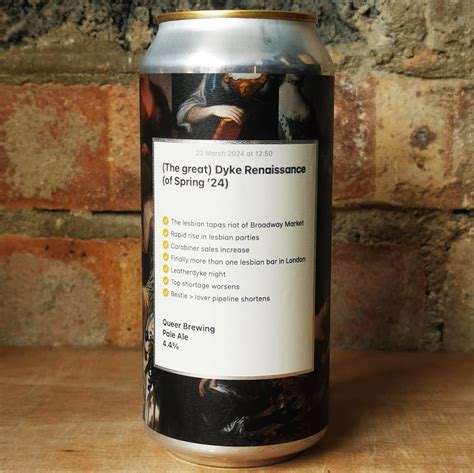
But what about the lived reality of queer womanhood? Well, there’s great news here too: we are living in a truly historic time for sapphic culture in the UK. Proudly out lesbian and bisexual women can be found across the pop charts, on TV, and across social media. Queer bookshops are on the rise. Pop-up butch bars and new queer cafes can be found in major cities and small towns.  And, excitingly, even the much-maligned lesbian bar is making a comeback, with three permanent venues and numerous occasional nights now running in London alone. It’s all got so out of hand that in 2024 the Queer Brewing company sold a juicy pale ale named Dyke Renaissance, which conveniently listed an educational series of cultural milestones on the can.

If trans people are trying to disappear lesbians, we’re doing a really bad job of it.

Photo of a beer can. Text on the can reads as follows. The great Dyke Renaissance of Spring 24. The lesbian tapas riot of Broadway Market. Rapid increase in lesbian parties. Carabiner sales increase. Finally more than one lesbian bar in London. Leatherdyke night. Top shortage worsens. Bestie to lover pipeline shortens. Queer Brewing, pale ale, 4.4%.


Meanwhile, queer cis women tend to be pretty supportive of trans people. In fact they’re one of the single most supportive demographics in the UK – which is presumably why the Equality and Human Rights Commission is, right now, attempting to ban trans dykes such as myself from associating with any more than 25 biological lesbians at any one time.

On evidence

As lesbian conspiracy theories show, the very concept of evidence has had a bit of a hard time over the past decade.

In the UK, this was perhaps best encapsulated in 2016 by the Conservative politician Michael Gove. While campaigning for Brexit, he declared that the British people “have had enough of experts”. Gove’s claim is echoed in a growing anti-intellectualism across the globe. From the mass purge of universities in Türkiye, to the post-truth bizarro world of Donald Trump, to Israel’s scholasticide in Gaza, this trend manifests in blunt and brutal ways. Anti-expert authoritarianism doesn’t care about your facts or your feelings.

However, attacks on evidence can also be more subtle. Gove’s comments are widely quoted, but it’s less well-known that he singled out a particular kind of expert for criticism: “people from organisations with acronyms saying that they know what is best and getting it consistently wrong”. While this was gloriously vague in a way that allowed the listener to project all kinds of things onto Gove’s words, in context it was nevertheless evocative of the kind of group that tends to advocate for social justice. LGBTQQIAAP groups, perhaps.

From academic thinktanks, to charities, to campaigning organisations, the implicit problem was any kind of challenge to conservative common sense. The UK’s political mainstream has since doubled-down on this approach. In the run up to the 2024 general election, Tory home secretary Suella Braverman criticised “experts and elites”, while the secretary of state for science, innovation and technology, Michelle Donelan, promised to “kick woke ideology out of science”.

One of Donelan’s targets was the “denial of biology” in research by feminists, social scientists… and biologists. The problem here is that supposedly common sense notions of sex and gender, which assume clean and tidy biological divisions between male and female, collide violently with the beautiful messy reality of the material world. At this point in history, it is well-established that sexual diversity exists throughout nature, that men are not biologically superior to women, that social advantage is not conferred or denied by chromosomes, and that queer, trans, and intersex people exist in the world. The evidence for this is gloriously multifaceted. We find it in laboratories, in systematic reviews, in surveys and questionnaires, in the way that men shout abuse at us in the streets, in how our sexed bodies shift and change under hormonal influence, in the way we feel when we finally have a language that describes our experiences.

Michelle Donelan decided to tackle the thorny problems of feminist science, intersex bodies, and trans existence by commissioning a research project by Alice Sullivan, a supposed sociologist who doesn’t care one jot for any of the evidence outlined above. Published in March 2025, the Sullivan Review insisted that data collection relating to sex and gender should rely on a very narrow definition of biological sex: one that ignores trans and intersex women’s real lives, bodies, and experiences of misogyny, while promoting a sexist model of essentialised womanhood. Her findings were echoed in those of the Supreme Court judges a month later, whose pronouncements on biological sex were made without any reference to relevant social, scientific, or philosophical research on how this might actually be understood or defined in practice. 

To position this as a wholly new trend would, of course, would be inaccurate. Western jurisdictions have long used and abused pseudoscience to oppress minoritised groups, especially in colonial contexts. This can be seen for example in the British state’s shameful embrace of “race science” and eugenics in the 19th and 20th centuries. What we are now witnessing is an example of the imperial boomerang, in which the logics of colonialism are turned inwards, resulting in increasingly fascist domestic politics.


But did you have a nice time in Switzerland, Ruth?

On that fateful week in April, I joined a group of feminist, trans, and lesbian researchers and activists for the workshop at the University of Lausanne. In the face of increasingly ill-informed policymaking across multiple contexts, it provided us a space to think together about the lessons we might learn collectively from our very different work on healthcare, sports, and prisons.

One overarching theme was the importance of evidence in understanding human experience, in terms of rigorous data collection, careful analysis – and accounting for the lived reality of actual people’s actual lives. A powerful account of the latter point was provided by Dinah Bons, a veteran campaigner for HIV prevention. She pointed out that if a sex worker repeatedly attends a community clinic for her STI tests, this provides evidence that the clinic feels safe enough for her to return regularly, which is far from a given. Such matters are often highly evident to service users and providers on the ground, without any need for a survey or interview.

Another key theme at the workshop was the extent to which various principles of evidence are increasingly abused by politicians, journalists, and institutions.

The concept of evidence has not been rejected wholescale by sexist, transphobic, and lesbophobic policymakers. Rather, “evidence” is increasingly a buzzword to justify particular approaches or points of view, rather than something grounded in a commitment to scholarly standards or an acknowledgement of lived experience. At the workshop, we explored how flawed notions of evidence have been used to support misleading statements or outright lies about human bodies or human experiences. We heard about the use and abuse of evidence in justifying invasive sex-testing for woman athletes, misrepresenting research on young people’s ability to engage in informed decision-making, and defending conversion practices. Notably, while most of these abuses arose from a specifically transphobic politics, they have far wider consequences: especially for women, intersex, and queer people, but also for scientific processes, community consultations, and informed advocacy more broadly.

You can see an example of this in the Cass Review. Through successfully performing the aesthetics of acceptable expertise and science to the satisfaction of the British public, the Review has become what one workshop participant described as a black box. By this they meant that it has become an abstracted justification for policy and practice, handily replacing any ongoing discussion of evidence regarding young trans people’s health and wellbeing. You don’t need to know what the Cass Review actually says or how rigorous it actually is, only that it exists. Well-documented criticisms of the review from healthcare practitioners, academic experts, trans community groups, and (most importantly) young trans people themselves are been rendered irrelevant. The Cass Review is the evidence, and no other systematic review, original research, or personal testimony can henceforth count against it. Not, at least, until 2031 at the earliest: the official end-date of a single £10 million study, based on the Cass recommendations and featuring precisely zero trans researchers.

The British establishment is now attempting to repeat this trick with the Sullivan Review – never mind that projects such as MESSAGE have conducted more extensive and nuanced work on the same topic with a far wider group of experts – and, of course, with the Supreme Court judgement.

Beyond doom

As with Cass, as with Sullivan, it is difficult to capture the sheer enormity of harm caused by the Supreme Court’s pronouncement on biological sex. The consequences are still playing out, and will no doubt continue to do so for many awful months and years.

At the time of writing, the Equality and Human Rights Commission have proposed a programme of mass segregation, designed to discriminate against trans people in the workplace, in public services, and in social groups. The guidance they have written is just that: guidance, not law. Nevertheless, major organisations such as the Football Association, the British Transport Police, and Barclays Bank, all of whom shamelessly paraded rainbows through their social media profiles last Pride season, are falling over themselves to comply. We are witnessing the attempted complete exclusion of trans people from public life, in the latest culmination of a transparent attempt to eliminate us altogether.

In such moments, it can be easy to despair. This is in part because it is easy to forget the strength, resources, power held within trans communities and by our allies. That includes the knowledge and evidence we have access to.

Don’t get me wrong. The people who want to eliminate us are better-funded, better-connected, and now have the Labour government on-side as well as the UK’s traditional right-wing parties. We are not going to win trans liberation overnight.

But then, again, we never were.

Everything I said about lesbian culture earlier is true of trans people too. There are more of us publicly creating art and culture, more of us creating events and running nightclubs and playing in bands and writing essays (hi). There are more community groups providing mutual aid and support when charities and state bodies fail us. And, importantly, we are not alone.

Trans women and non-binary people are a part of the dyke renaissance. We are at the butch bars, and bemoaning the top shortage. We are dancing to Le Tigre and to Chappelle Roan. We are reading Gideon the Ninth and watching We Are Lady Parts and having all the feelings. My partner of the last decade was probably the most surprised of all to learn from the Supreme Court that I am not, in fact, a lesbian, as every bit of evidence from our shared personal lives points to quite the contrary.

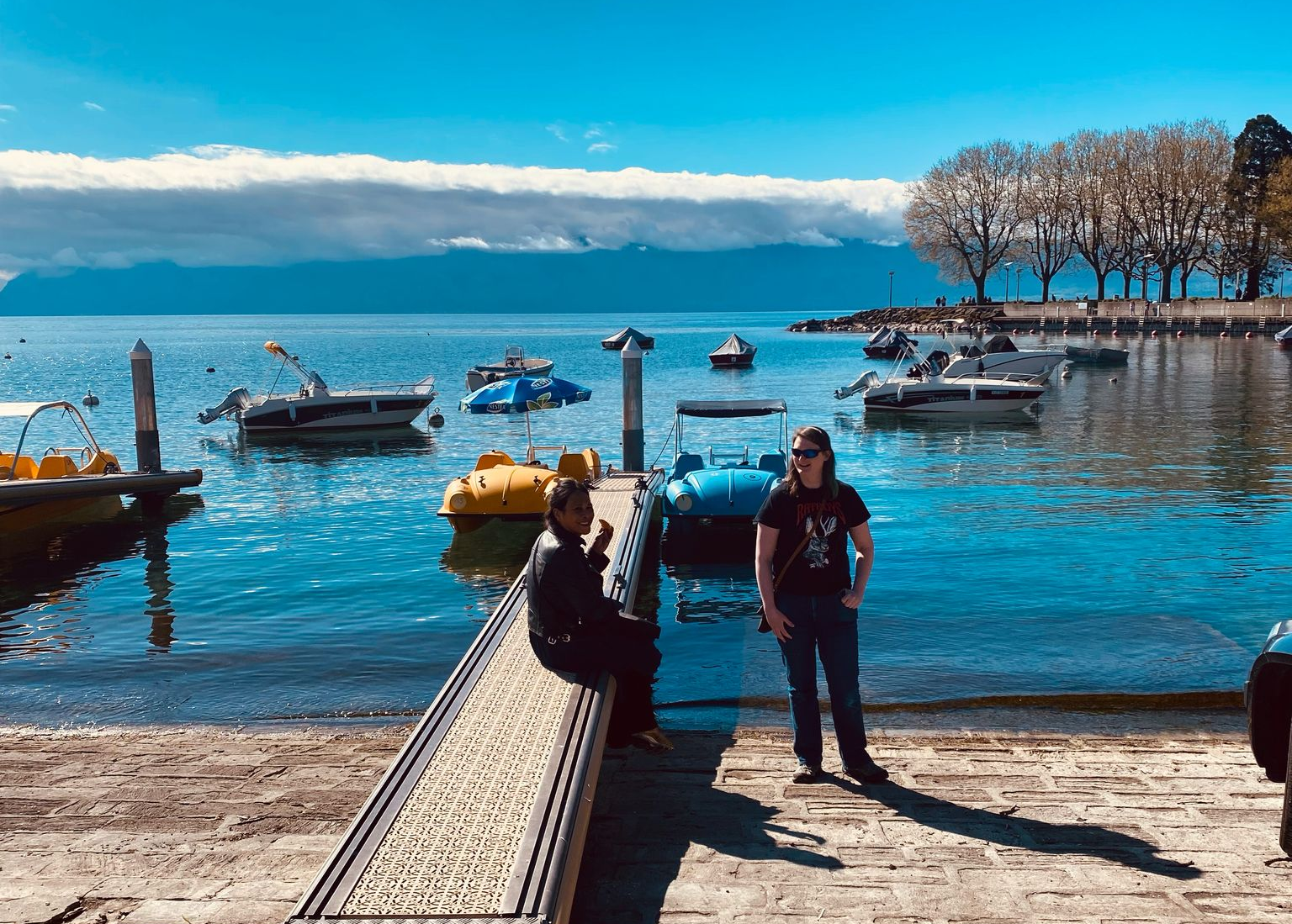
I will concede that some trans people are not in fact lesbians, or even queer. Nevertheless, there are so many other places to find us in community with others. Trans people are in trade unions. Trans people are in workplaces. Trans people are in schools and colleges and universities. Trans people are in the streets. Trans people are on the bus. Trans people are in families. Trans people are making families. Trans people are playing football (suck it, Football Association). Trans people are eating pizza. Trans people are restoring the countryside. Trans people are hanging out beside Lake Geneva in the glorious sunshine, enjoying a much-needed break.


There are more of us than ever, and it is too damn late to put us back in a box.

Resistance is fertile

I was honoured to present the keynote presentation at the Swiss workshop. I spoke about the findings of the Trans Pregnancy Project, a study that produced enormous amounts of evidence on the experiences, needs, and perspectives of men and non-binary people who conceive, carry, and give birth.

No matter how much our findings are slammed by the media and billionaire children’s authors and washed-up comedy writers, our peer-reviewed work has demonstrated the lived reality of male and non-binary pregnancy over and over again. Most importantly, it has helped people. We are part of a far wider movement of parent groups, midwives, and researchers who are collectively building knowledge. I am constantly hearing from people who describe how much this knowledge has resulted in better care for them and their child. This kind of story drives everything I do.

Towards the end of my talk, I discussed the anti-trans moral panic, and the Supreme Court judgement. I then showed the below table of findings from the National Maternity Survey. This annual survey involves those who have recently given birth every year in many (but not all!) English hospitals, over the course of a few weeks. Since 2021, they have started asking whether the person giving birth has a different gender to the sex they were assigned at birth – i.e. are they trans?

Table showing data in response to the question, is your gender different from the sex you were assigned at birth. It shows a statistically significant increase in the proportion of people answering "yes", which rises from 0.56% in 2021, to 0.65% in 2022, to 0.77% in 2023, to 1.58% in 2024.


Two things leap out from this table for me. Firstly, the 2021 data shows a very similar proportion of people indicating they are trans when compared to the 2021 censuses in Scotland, England, and Wales. This suggests that, contrary to assumptions around trans infertility or undesirability, trans men and non-binary people may well be just as likely to give birth as cis women are to become birth mothers.

Secondly, the number of trans people giving birth has risen dramatically over four years. Even as the anti-trans moral panic has deepened. Even as attacks on even recognising the existence of trans people in perinatal services have increased. As Del La Grace Volcano once it put it: “resistance is fertile!”

In the face of growing oppression, trans people are simply refusing to disappear. In fact, we are doing the opposite.

This, then, is the power that the anti-trans movement, the Labour party, and the Supreme Court cannot possibly take away from us. The more trans people are out and visible to one another, the more trans people come out and become visible to one another. Sure, we will unfortunately need to think more carefully about where and when we are out, and where and when we are visible, if this is something we even have any power over in our specific lives. I am sure that more trans people will be going stealth in future years, if they can. But regardless – there are more of us in community, more of us organising protests, and more of us than ever in the lives of our friends, families, colleagues, and allies, showing that it possible to have a good life while being trans.

In this context, it is important to know that people from many parts of the world gathered in Lausanne this April to pool our knowledge and skills and experiences. It is important to know that we have each returned to our home countries to share what we gained. It is important for people to know that similar meetings are happening across the world, in community centres and on university campuses, in board rooms and in bedrooms, involving trans people, and feminists, and yes, lesbians. We are constantly building a movement for positive change, and you do not have to be an academic or veteran activist to be a part of it. Trans power is for everyone.

There is much to say what needs doing in the current moment. We need allies to continue fighting alongside trans people for our collective liberation. We need to be demonstrating in the streets, funding mutual aid and legal action, actively resisting complicity in Labour’s eliminationist agenda, and encouraging every public body under the sun to do the same.

Evidence will be helpful for this. Evidence from academic research, sure, but also – as Dinah Bons pointed out – testimony from the everyday reality of trans people’s lives. And oh boy, do we have that evidence.

More of us than ever are producing evidence of trans existence, and trans persistence.

And this is how we win.

Supreme Court auto-reply

Last week I attended a workshop in Switzerland on standards of evidence in sex and gender research (more on that soon!) During my trip, I had my standard out-of-office auto-reply set up for my email account, informing people of my absence so they wouldn’t expect any immediate engagement from me.

I would typically switch off that auto-reply on my return to work as normal. However, in the wake of last week’s Supreme Court judgement, there is simply no more “work as normal” for me or any other trans person living in the UK.

As such, I have written a new auto-reply, which will be sent to everyone internal to my workplace who emails me. It is impossible for me to forget what is happening to trans people and especially trans people in the UK, so I will ensure it is impossible for my colleagues to forget this also. Equally, my intention is to transform bad feelings into understanding, and practical action. We have always been powerful when we work together and build movements.

I am sharing the text of the auto-reply here in case it is of use to anyone wishing to do similar.


You may be aware that the UK’s Supreme Court has initiated a mass rollback of trans people’s civil rights. In light of this, I am uncertain if it will continue to be safe for women and people like me to continue working at the University of Glasgow.

You can read more about the judgment and its implications here:

UK Supreme Court Rules That Trans Women Aren’t Women under the Equality Act 2010
https://www.wearequeeraf.com/uk-supreme-court-rules-that-trans-women-arent-women-under-the-equality-act-2010/

Illegally Female
https://www.autostraddle.com/uk-supreme-court-ruling-anti-trans-women

While the judgment itself does not require organisations to act in a prejudiced manner, numerous politicians and policymakers have indicated that they intend to make discrimination mandatory. My friends have reported increased street harassment, as the ruling is seen to position trans women as legitimate targets for misogyny and violence. Trans people of all genders are already even more likely to experience public harassment, sexual assault and rape than cis women (see e.g. https://bulletin.appliedtransstudies.org/article/3/1-2/3/), and this is likely to get worse.

The Chair of the Equality and Human Rights Commission (EHRC), Baroness Falkner, has promised to revise guidance to encourage employers to discriminate against trans people in the workplace. For example, she told Radio 4: “if a service provider says we’re offering a women’s toilet, that trans people should not be using that single-sex facility.”

If you are concerned about the safety, wellbeing, and continued access to employment and education for women and trans people such as myself, you can take one or more of the following actions:

  • Write to members of the Senior Management Team at the University of Glasgow, especially the Equality Champions, and ask what they will do to protect trans staff and students, including through ensuring continued access to women’s and men’s facilities as relevant. Find their contact details there <link removed for blog post>.

  • Write to your Head of School and ask what pressure they will be putting on the Senior Management Team to do the same.

  • Write to your MP and MSPs. Explain exactly why you are concerned, and demand action to protect trans people’s civil rights. For example, you could ask for new primary legislation to protect trans people, ask why the UK is no longer complying with the European Convention on Human Rights, or demand the dismissal of biased commissioners from the EHRC. You do not have to write a perfect letter and it is okay to be emotional and express sorrow or anger, so long as you are not aggressive or mean. Advice on writing letters is linked here: https://bsky.app/profile/whatthetrans.com/post/3lnf4sadrjs2p. You can find contact details for your representatives here: https://www.theyworkforyou.com/.

  • Support trans people materially, through providing time, resources, and/or money to community initiatives. Examples include: Glasgow Trans Collective (fundraising for emergency support to people facing an immediate danger of threat to life, https://linktr.ee/glasgowtranscollective); Trans Harm Reduction (supporting harm reduction for people self-medicating in the absence of NHS treatment, https://transharmreduction.org); and Five for Five (donating money every month to a range of trans women’s causes, https://www.fiveforfive.co.uk).

  • Check in on your trans friends and colleagues. Make sure they are okay, and do what you can to be there for them. But do your own research on what you can do to help: don’t put this burden on us. Some good places for information include the websites and social media channels for TransActual, What The Trans, QueerAF, Trans Safety Network, and Trans Writes.

This auto-response is inspired by bell hooks’ comments in her book Teaching to Transgress:

When education is the practice of freedom, students are not the only ones who are asked to share, to confess […] empowerment cannot happen if we refuse to be vulnerable while encouraging students to take risks. [Lecturers] who expect students to share confessional narratives but are themselves unwilling to share are exercising power in a way that could be coercive. In my classrooms, I do not expect students to take any risks I would not take, to share in any way that I would not share. […] It is often productive if [lecturers] take the first risk, linking confessional narratives to academic discussions so as to show how experience can illuminate and enhance our understanding[.]

I will not necessarily respond to any replies you send to this automated message, as I am trying to stay focused on teaching, admin, and research. But regardless, thank you.

Photo of a lake and mountains.

Puberty blocker consultation: my response

In early September I recieved an email from the Department for Health and Social Care, inviting me to participate in a closed consultation on the Labour government’s proposed extension of the Tory ban on puberty blockers. The deadline was 1st October 2024.

September was already extremely busy. I started the month at the International Trans Studies Conference in Chicago, and ended it at the WPATH Symposium in Lisbon. In the meantime I was faced with various writing deadlines, administrative tasks, and the start of a new teaching semester. The small number of other academic experts and voluntary organisations who were also invited to respond no doubt faced very similar challenges with the short notice and unforgiving deadline.

Nevertheless, I scrambled to respond. Like Cal Horton, I regard government consultations on trans healthcare to be inherently abusive at this stage; as I wrote to the Nuffield Council on Bioethics in 2018, “we respond not with hope or optimism, but in fear. This is the power you wield over us”. Given the turgid vibes found in recent political discourse, I also held little hope of a long-term ban being prevented. However, it seemed worth using what little prestige I have as an academic to at least try to encourage the government to listen to actual evidence.

Trans Writes are now reporting that an extension of the ban until 2027 is on the cards for Britain, following a unanimous vote on the same by the Northern Ireland Assembly. With this in mind, I am now publicly sharing the evidence I provided in the closed consultation, plus slides from an oral presentation to the Commission on Human Medicines, who advised the Government.

I don’t think for a moment that sharing these materials will change anything in the short term. However, I feel it is important to put them in the public realm now for the sake of transparency.

Going forward, I hope the work that many of us have done in building and sharing an ethical base for the ethical provision of trans healthcare will make a difference. In the meantime, there is an important lesson here about relying on existing, unequal systems of power and control. As Nat Raha and Mijke van der Drift argue in their new book Trans Femme Futures, making demands of institutions leaves the power in their hands. It is more important than ever for trans people to build power and knowledge within our own communities, in collaboration with others.

We have survived worse in the past by sharing information, ideas, and life-changing medication between us, and we will do so again.

Regarding the Charity Commission and Cass Review

I was relieved to see today that the Charity Commission’s investigation into Mermaids has finally concluded. The Commission’s published decision found that Mermaids was mismanaged in several respects, but did not find evidence of misconduct, especially in terms of safeguarding young people or providing medical advice.

This is great news in that Mermaids can now continue to operate as a charity and seek funding from relevant agencies to do so. The organisation clearly faced an enormous squeeze during this time, that significantly affected service provision.

However, I am concerned by the language used around the Cass Review in the Commission’s report and accompanying press release. I feel much of this language is deeply misleading and demonstrates considerable ignorance regarding the Review. At the same time, I feel there are some good, practical recommendations in there for charities which face potential harassment from media reporting and on social media.

Logo for the Charity Commission for England and Wales


Binders

The most concerning statement can be found in the Charity Commission’s press release, concerning Mermaids’ former provision of binders to young people as a harm reduction measure:

The Commission has issued statutory advice to the charity requiring that, should it ever resume this service, its future policy and controls should reflect the recent Cass Review, or any future NHS guidelines on parental involvement.

The Cass Review does not, of course, actually make any formal recommendations for non-medical service providers – moreover, its commentary on social transition is not well-evidenced.

However, the Charity Commission decision quotes the final report of the Cass Review, which states that “parents should be actively involved in decision making unless there are strong grounds to believe that this may put the child or young person at risk“. This would appear to align with Mermaids’ actual policy, which was to work with parents, families, or carers unless a young person was not directly supported. The issue, of course, is that the Charity Commission (and, indeed, the Cass Review team) do not fully interrogate or understand the considerable risks posed to young trans people by unsupportive parents.

I am increasingly of the impression that policymakers are taking all kinds of decisions without having read the Cass Report in any detail, let alone with a critical eye. This would appear to be another example of this.


Having “regard” to the Cass Review

Similarly, in a sub-section of the decision report titled “Implementing the findings of the Cass Review”, the Charity Commission recommends that trustees working with “children and young people who are questioning their gender identity or experiencing gender dysphoria” need to “ensure that they have regard to the findings, conclusions and recommendations of the Cass Review and ensure that they have reviewed their charity’s literature, website and guidance in light of them“.

This statement is, I believe, being wilfully misinterpreted on social media and in media commentary. For example, the Standard’s report on the decision leads with the headline “Charities should follow Cass Review recommendations, say watchdog”. However, that is not what the decision actually says.

In the UK, “have regard” means that organisations should take account of guidance and carefully consider it. An example of this can be found in the Charity Commission’s rules for charities on public benefit:

As a charity trustee, ‘having regard’ to the commission’s public benefit guidance means being able to show that:

  • you are aware of the guidance
  • you have taken it into account when making a decision to which the guidance is relevant
  • if you have decided to depart from the guidance, you have a good reason for doing so

In the current political climate, this strikes me as an eminently sensible approach to the Cass Review. I would expect all service providers and researchers to be aware of the Review’s final report, to take it into account, and (for the purpose of defending against bad faith actors) be able to provide good evidence for acting otherwise.

Going by a statement from Mermaids Chair Kathryn Downs for Third Sector, this appears to the charity’s planned approach to having regard:

The Cass Review final report is the highest-profile review of youth healthcare in the world and has influenced NHS England’s policies. However, it is not legislation or guidance.

She then goes on to emphasise that Mermaids’ advocacy and policy work will continue to be “driven by and give a platform to the voices of young trans people“.


We deserve better from the Charity Commission

Overall, I feel this is good news for Mermaids, and for trans organisations more generally. However, the language used by the Charity Commission, especially in their press release, really muddies the water by providing considerable grounds for bad faith interpretation.

It’s also deeply frustrating to see the Cass Review continually upheld as a paragon of policy advice. Trans people know that the Review was conducted by non-experts and involved individuals hugely hostile to our very existence. As a researcher, when I open the final report I see a methodological and ethical nightmare. The Cass Review is an example of runaway bad science, treated as an article of faith by mainstream decision-makers, many of whom haven’t actually read it.

I don’t think it’s unreasonable to speculate that the Charity Commission’s final decision reflects the influence of transphobic actors. Two years is an extraordinarily long time for an investigation to take place, and surely does not serve the interests of the young people Mermaids work with. Earlier this year the Commission’s Twitter account “accidentally” shared a transphobic post claiming (without evidence) that the charity had caused “so much harm”, calling into question the independence of the investigation.

I’ve been critical of Mermaids myself in the past, especially given I did not feel appropriately supported by them when I came out as a teenager. I am sure I will continue to be critical in the future. However, I hope this criticism can always be both constructive and grounded in reality, recognising our shared interest and care in building a better future for young people.

I’ll end this post, then, by amplifying Mermaids’ demand for better:

…the time taken to publish this report has been frustrating, significantly affecting Mermaids’ fundraising and ability to deliver on our charitable objectives. We call on the Charity Commission to ensure that organisations serving groups facing rising hostility are supported and protected, whilst being held to account where this is necessary.

Out now in Scientific American: “The U.K.’s Cass Review Badly Fails Trans Children”

I have co-authored an article with Cal Horton for the science magazine Scientific American. We take a concise look at what the Cass Review is, what it found, why the methods used were troubling, and how it is being used to harm young people.

You can read the article here. I hope it will be helpful as a basic explainer for why trans community groups, academic experts, and clinical specialists are so concerned about the Cass Review.

Screenshot of Scientific American website.

Writing for Scientific American was a really interesting experience. It was of course radically different to publishing in a peer-reviewed journal: we put the piece together in a matter of weeks, and it was not scrutinised by academic experts from our specific field of study. At the same time, there was an extremely rigorous editorial, fact-checking, and copyediting process that also made it very different to publishing in most magazines or newspapers.

I was deeply impressed with the sheer amount of time and care the Sci Am editors put into this piece. On one hand, their contributions ensured the piece is written in accessible language, with an international (and especially US-based) readership in mind. On the other hand, we had extensive discussions to ensure that all points made in the article could be rigorously evidenced, including some very detailed exchanges about the specifics of UK law, and what exactly the Cass Review document does and does not have to say about exponential growth over different periods of time. We had to be able to strongly back up any even slightly contentious point.

It was a challenging experience, but one I felt very held by as an author committed to consciencious research practice. Publishing this piece in Sci Am definitely ensured that it was as good as it could possibly be.

Trans Kids Deserve Better – protest at NHS HQ

Young trans people have been leading an incredible protest at Wellington House, the London headquarters of NHS England. They have been holding space on a ledge of the front facade since London Pride on Saturday 29 June.

The protesters will be coming down today (Tuesday 2 July) and have called for supporters in London to join them at a rally from 4pm.

Photo of a group of people sitting on a ledge of a building, with towering pillars and glass windows behind them. They are holding a large banner which reads "We are not pawns for your politics". They have decorated with the windows of the building with trans flags, placards, and the words "trans kids deserve better".


The action powerfully highlights the repeated failure of UK politicians, the mainstream media, and NHS bodies to truly listen to young trans people about their experiences and needs. This is perhaps most powerfully seen in the Cass Review, which has systematically excluded expertise and evidence from trans people in formulating its recommendations, and in trans healthcare bans implemented for under-18s in England in Scotland. Meanwhile, the Labour party are promising to uphold these bans and implement a range of deeply transphobic policies should they win the election on 4 July.

These concerns are powerfully highlights by the protesters themselves. In Diva, a 17 year old activist explains:

“Decisions are being taken that affect our lives without any trans people in the room, let alone trans young people. Too often trans kids are portrayed as a monolith of confused, depressed teenagers. We are denied choice and robbed of our autonomy. But we should be trusted to make the same decisions about our healthcare that all people are. 

In every other way I am trusted when I tell people what I want to do with my life. But not now. There is so much real anger out there and we hope our actions will encourage others to fight for a voice, and the healthcare and dignity that we are currently denied.”

Another protester explained to Pink News:

“We are staging this protest to remind politicians and voters that we’re real kids, not just political talking points. We may not have a vote, but it is our lives that are at stake. Gender-affirming healthcare is a matter of life and death for us and we hope our actions will bring awareness to this fact and encourage others to fight for the healthcare and dignity we are so shamefully denied.”

As a former youth activist working in this field for almost two years now, I am hugely heartened and inspired by this powerful protest. In the face of institutionalised violence and silencing, young trans people are seizing the narrative. It is up to us adults to listen, learn, and fight alongside them.

My speech on the Cass Review and Scotland’s trans healthcare ban (with footnotes!)

This post shares a video and transcript of my speech at the emergency demonstration in George Square, Glasgow, on 18 April 2024, against the decision from NHS Greater Glasgow and Clyde to ban endocrine treatments for trans people aged under 18. The speech was unplanned and made without notes, so I have made some small corrections in the transcript, plus minor amendments for clarity. I have also added references for some key points. Thank you to @transprotestglasgow for the video.

Readers seeking more detailed evidence and academic critiques may find my previous blog post helpful: What’s wrong with the Cass Review?

TRANSCRIPT

Hi, I’m Ruth Pearce.

I’m a Lecturer in Community Development at the University of Glasgow, and I’m a researcher on trans healthcare.

And I was a trans child.

I want to talk about that for a moment. Because I came out to myself circa 2001, when I was 15, when not many people did that. And it was hard for us. And there was trans community, and there was information, but it was very difficult because we felt very, very alone. I was mostly only able to connect with other trans people my age through the internet, through blogs, and they were mostly Americans. The Brits were there; a lot of us connected later as we grew older. But we were so isolated.

A really important thing to remember, in a moment like this where we are seeing a return to the kind of medical policies that were in place when I was a kid: there are so many more of us, and we are so much more powerful than we have ever been.1 Never forget that strength we have together.

One of the things Hilary Cass says in her report is that the meaning of the word “trans” has changed since 2020.2 She says, and there is no evidence for this, that “trans” in 2020 meant something quite rigid and specific, and only now in 2024 it’s become an umbrella term for lots of identities. Tell that to me coming out as a trans teenager in 2001!

So here’s the thing. We’ve always been here, and we are more powerful now, but we are seeing this backlash. That’s been a long time coming and transphobia changes its face over time. One of the things I wanted to do to deal with my loneliness and the experiences I had was that I wanted to become an activist. And when I started doing activism, when I got into meetings with people in government, and with the Equality and Human Rights Commission, they said “there’s no evidence” for the discrimination we faced. So I was like, “fine: let’s see what evidence I can find”.

So I did a PhD in trans healthcare.3 And I found what you often find when you do research; you often find things you don’t expect. So I did find some things I expected to find. About waiting lists and how hard they are. About how hard appointments can be when you’re meeting with sexist and transphobic clinicians who are asking you, as a young person, how you masturbate and who you’re attracted to. But what I didn’t expect was the sheer level of pain from the waiting. And I talk about that in my work. And the anticipation, where we are anticipating all the time. When is it going to happen? When are we going to get to live our lives? And that happens on every level of our lives.

I was also shocked by the level, and detail, and complexity of the ignorance of healthcare practitioners. It ranges: it’s not just that they all hate us, right? It’s that some people are trying to control us, some people want to help but don’t understand how, and some people don’t want to know. There’s different kinds of ignorance.4

So I published my work, and other people have followed. Other people were there before me of course, because “trans” was not new, and trans research wasn’t new either. There is now a lot of published research on what it is like to go through a gender clinic, and what it is like for a young person to go through a gender clinic. There’s people like Cal Horton5 and Natacha Kennedy6 who are writing on this, and Harvey Humphrey7 who works here in Glasgow. There’s a lot of people doing work on this.

We are saying, time and time again, “we need services that meet our needs”. For some people, that is access to puberty blockers, and that is access to hormones. For other people, that is access to counselling, and therapy, and community support. What we call “trans-affirmative” or “gender-affirmative” care is flexibility, meeting a person where they are at, and based on what they want to do with their lives.8 You don’t have to change your body – but you can.

It’s our body, it’s our right: we can do what we want with our own bodies.

This is what is disgusting about the decision by NHS Greater Glasgow and Clyde. They have not addressed the years and years of mistreatment and abuse in their child and adolescent clinic at Sandyford. It is not a great place that we are trying to save. It is a clinic that has repeatedly refused to treat young people, and made people hold on for care. It has helped a handful of people. Dozens of people – only dozens – have accessed treatment in the last few years.9 Now they are proposing to stop doing the very little they are doing to support young trans people.

People who get a referral to a child and adolescent gender clinic are not necessarily seeking access to counselling and therapy, because you can get that elsewhere.10 They are not seeking access to community, because you will find no community at Sandyford. They are most likely seeking access to endocrine treatments: puberty blockers and hormone therapy. And that’s what they are going to stop doing.

Sandyford say they are still accepting new referrals. But what is the point of a gender clinic that does not offer people medical treatment?

NHS Greater Glasgow and Clyde have based their decision on the final report of the Cass Review. Let’s talk a bit about the Cass Review.

I’m an academic researcher. If the Cass Review was submitted by an undergraduate student, the first thing I would say is: “That’s nearly 400 pages long! No-one’s going to have time to mark that”.11 And you’ll notice that all the people in the media, all the Labour politicians, all the Tory politicians, all the people saying we should immediately implement the findings of the report: none of them read nearly 400 pages in one day. Neither did the journalists at the BBC, the Telegraph, the Times, the Daily Mail, the Observer, the Independent. We expect better! And now the Scottish media: it’s all over the Scotsman, the National, the Herald. None of them have bothered to read the report, or think about it critically.

So here’s a bit of information about the Cass Review. The Cass Review was undertaken by a group of people who, from the very start, excluded trans people from oversight of the project. That was in their terms of reference.12 They didn’t want people who had experienced services having a formal part in the report. They excluded healthcare experts. If you were someone who had worked in a gender clinic you were excluded from being part of that.13 You know, I have lots of disagreements with many people who work in gender clinics, but you would have thought they might get a say.

You can see that ignorance, that intentional ignorance, playing out in the final report of the Cass Review. You can see, if you read the Cass report, that they looked at over 100 studies, most of which show that puberty blockers and hormone therapy can help young trans people. And they just ignored them.14 Intentionally. They say that the majority were not “high quality evidence”.15

What else is not high-quality evidence in healthcare? Paracetamol for back pain.16 There is no high quality evidence for that, in the terms of the Cass Review. Anti-psychotics.17 ADHD medication.18 All these medications that are in regular use. You know what else? Puberty blockers for young people with precocious puberty – if they’re cis.19 That is direct discrimination. 20

The thing is, that’s the Cass Review being serious. Let’s think about when it gets weird.

There’s a graph in there, where they show referrals to a gender clinic (the Gender Identity and Development Service in England) rising year on year, with “an exponential rise in 2014”. But they cut the graph off at 2017. But if you look at 2017-2020 the referral rate flattens off. It’s deliberate removal of evidence.21

We know why this is happening. Experts – medical experts, and experts by experience have been cut out of the Cass Review process. If you are trans, that’s you. You are an expert by experience. You know what it’s like. We have been cut out the process!

And the NHS have done that here in Scotland. There was no consultation on the ban that’s come in.

Who did they consult? We know there are people who are proponents of conversion therapy who were on the Cass Review team.22 That is what they are proposing.

They are proposing conversion therapy. Not just for trans kids, because they want to deal with all gender-questioning and non-conforming kids. This is going to be conversion therapy for queer kids. Little boys who want to wear a dress, they might not be trans, but they deserve to have the space to explore. That is not going to be what happens in clinics where people are referred which are being informed by conversion therapists.23

So consequently you have other weird stuff in the Cass Review. They’re dismissing all the evidence about why puberty blockers and hormones can benefit people within particular contexts, but they’re relying on other evidence for their recommendations. Let me give you one citation. “Thoughts on Things and Stuff, 2023”. That is a citation from the Cass Review: Thoughts on Things and Stuff.24

What is “Thoughts on Things and Stuff”? It’s a right-wing Youtube channel run by anti-trans bigots,25 featuring contributors such as “Gays Against Groomers”.26 This is the level of evidence that is informing NHS Greater Glasgow and Clyde.

And I’ll tell you what else is in the Cass report. They say that little girls are likely biologically inclined to play with dolls. It’s right in there, in the Cass report.27 And little boys are probably biologically inclined to play with trucks. Why is this? It’s not just an anti-trans agenda. It’s an anti-feminist agenda. Its an anti-woman agenda.

Why is this happening? It’s happening because trans people are an easy target.

If you want to stop young people accessing contraception as teenagers, you remove trans people’s right to consent to care as young people. If you want to prevent young people – teenage girls – from having abortions, and you’re failing time and time again in the courts, you instead target puberty blockers, because that way you can set a precedent for preventing people from being able to make decisions as young people. You are undermining the idea that young people might have the capacity to consent to care and make an informed decision about their own bodies.28

So I will end on this. I’m a woman, I’m a trans person, and I think it’s really important we think about allies. I had the parent of a trans child contact me and say, “thank you for being an ally”. I want to think her for being an ally. The thing about allies is, we talk a lot about an “ally” being someone who supports somebody else. But no: allies are people who stand by each other and work together.

That’s why we need a trans feminist movement. A trans feminist movements gives people autonomy over their own bodies, space to make their own decisions, and enables people to stand together when we are all at risk.

So I’ll leave you with a chant I want to hear more of at protests:

“Trans rights, women’s rights: one struggle, one fight”.

FOOTNOTES

  1. My statement here is intended to highlight that more people are out as trans than ever before. Contrary to narratives of “social contagion”, there have always been people with gender diverse or sex nonconforming experiences. What has changed is that there is greater access to information and community, which makes it easier for people to come out. ↩︎
  2. “During the lifetime of the Review, the term trans has moved from being a quite narrow definition to being applied as an umbrella term to a broader spectrum of gender diversity. This clearly has implications for conceptualisations of detransition” (Cass et al., 2024, p.187). This claim is demonstrably false, as “trans” (and before that, “transgender”) has been used as an umbrella term for decades. This is shown in my own previous work as well as writing dating back to at least the 1980s by individuals such as Leslie Feinberg. ↩︎
  3. https://wrap.warwick.ac.uk/88285/ ↩︎
  4. For an excellent, more recent and more detailed analysis on this topic in the context of trans youth healthcare, see Magdalena Mikulak’s (2021) article “For whom is ignorance bliss? Ignorance, its functions and transformative potential in trans health“. ↩︎
  5. https://growinguptransgender.com/evidence/ ↩︎
  6. https://www.gold.ac.uk/educational-studies/staff/kennedy-natasha/ ↩︎
  7. https://www.gla.ac.uk/schools/socialpolitical/staff/harveyhumphrey/ ↩︎
  8. “Our stance, as gender-affirming practitioners, is that children should be helped to live as they are most comfortable. For a gender-nonconforming child, determining what is most comfortable is often a fluid process, and can modify over time. Therefore, in a gender affirmative model, gender identity and expression are enabled to unfold over time, as a child matures, acknowledging and allowing for fluidity and change” (Hidalgo et al., 2013). ↩︎
  9. “Since 2018, around 1.77% of young people who are referred to the gender care services at Sandyford have gone on to be prescribed puberty blockers”: https://www.thenational.scot/news/24262271.many-young-people-scotland-given-puberty-blockers/. ↩︎
  10. Although in practice, trans people are often also turned away from mental health services due to “trans broken arm syndrome“. ↩︎
  11. In my original speech, I inaccurately stated that the report was “500 pages long”. However, my point about requiring time to carefully consider its contents remains. ↩︎
  12. “The original published Terms of Reference (ToR) for the Cass Review’s assurance group explicitly excluded trans expertise, stating that it “deliberately does not contain subject matter experts or people with lived experience of gender services” [Report 1, version 1]. The current (updated) assurance group ToR is worded less clearly, yet still conveys exclusion of those with expertise or lived experience, as such individuals would naturally be expected to have an interest in the outcome of the review” (Horton, 2024: p.7) ↩︎
  13. One former gender clinician was involved in the research process: Tilly Langton, formely of England’s Gender Identity Development Service (GIDS). Langton’s recent activities include promoting conversion therapy materials in training for NHS psychiatrists and lobbying Kemi Badenoch about the UK government’s conversion therapy ban, alongside proponents of conversion practices. ↩︎
  14. Hilary Cass has contested this claim in reporting for the BBC. Her argument is that of the 103 studies analysed for the review, 60% were included in the synthesis of evidence. However, my argument here is specifically that the findings of these papers were broadly ignored in the writing of the report’s recommendations, while less robust material was instead prioritised. As Simon Whitten argues, “The majority of moderate certainty studies were included in the results section but then arbitrarily ignored in the conclusion entirely”. ↩︎
  15. I have removed a statement I made about randomised control trials from the transcript here as my point was unclear and therefore potentially misleading (as can happen when you do an unplanned speech on a complex topic!) Unlike the Cass Review team, I am keen to correct my errors. See the links in the above footnotes above for more detailed information on inclusion/exclusion criteria for the Cass Review. ↩︎
  16. See e.g. https://www.nps.org.au/news/is-paracetamol-effective-for-low-back-pain. ↩︎
  17. The landscape of evidence anti-psychotics is a complex one. There is “high-quality” evidence that anti-psychotic drugs work better than placebos in addressing various conditions, but the evidence for use of multiple drugs, reducing or increasing doses at particular junctures in treatment, or taking one drug rather than another in treating specific conditions is often of a similar (or lower) quality than the evidence for benefits of endocrine interventions assessed by the Cass Review (see e.g. https://www.sciencedirect.com/science/article/pii/S0890856716319992). ↩︎
  18. Specifically in the long-term, see e.g.: https://www.nationalelfservice.net/mental-health/adhd/adhd-medications-effective-safe/. ↩︎
  19. https://onlinelibrary.wiley.com/doi/10.1111/cen.14410 ↩︎
  20. At this point, somebody stuck their hand up in the audience. I responded: “Someone stuck their hand up and might give me a footnote on that! I totally approve of that. I might invite you up later because I like evidence and I’m obsessed with it. [person indicates they were just waving to their friend, crowd laughs] Oh that’s grand! There we go, we haven’t even had a footnote.” Well, here is the footnote. ↩︎
  21. p.24 of the Cass Review final report. The rationale for this within the report is that the figure is adapted from a 2018 paper published in Archives of Sexual Behaviour. However, as Trans Actual observe: “The number of referrals to GIDS is known until 2020/21 […] the last 3 years for which data is available, shows that the number of referrals has recently plateaued. Such data is inconvenient for a narrative that relies on an inexplicable explosion in need[.]” ↩︎
  22. https://transsafety.network/posts/gender-exploratory-nhs-training/ ↩︎
  23. A historical example of treatment that “tries to make the child comfortable with the sex he or she was born with” within a gender clinic context can be found here: https://www.npr.org/2008/05/07/90247842/two-families-grapple-with-sons-gender-preferences. ↩︎
  24. p.70, used to evidence the activities of GIDS’ research team at a WPATH conference. They could have instead cited the conference website. ↩︎
  25. A good summary of the channel can be found in this piece by What The Trans: “When citing a recording from the WPATH 2016 conference, Cass uses a YouTube channel called Thoughts on Things and Stuff. This appears to be the associated channel of a now-defunct blog largely focussed on criticising the Mormon Church. Why this was relevant to Cass is unclear, although titles of recent uploads at the time of the WPATH video include “Dr. Stephen Levine: 13 Untruths Behind Gender Affirmative Therapies for Kids” (Levine is an advisor to Genspect) and “Gays Against Groomers: stop the indoctrination and medicalization of children. 2023 Florida testimony.”, which perhaps provides a clue to how Hilary Cass ended up citing a channel with only 22.4K subscribers. It thus seems that, in addition to being advised by and networked with a variety of prominent anti-trans figures and organisations, Hilary Cass appears to be getting her professional news from homophobic and transphobic YouTube channels.”  ↩︎
  26. Anti-gay campaigners have long attempted to position LGBTIQ+ people as a danger to children. In recent years this tactic has seen a resurgence, through positioning trans and queer campaigners as “groomers”. GLAAD have described Gays Against Groomers as a group who intentionally use “ambiguous messaging about characterizing LGBTQ+ people as pedophiles falsely and maliciously with the absolutely clear intent of driving fear.” ↩︎
  27. pp.100-101 ↩︎
  28. https://transsafety.network/posts/bell-v-tavistock/ ↩︎

13 days to defend trans and queer kids

On 12 March 2024, the UK Department of Education consultation on draft guidance on “gender questioning children” for schools and colleges will close. Until that date, we have our best possible chance to fight for the safety and wellbeing of young people.

Last month I wrote a long blog post and zine about this draft guidance: New Year’s Resolution: Smash the New Section 28. I argued that the guidance resembles the notorious anti-gay law Section 28, in that it aims to both directly oppress LGBTIQ+ young people, and create an atmosphere of fear and uncertainty around supporting them. This is to be done by reinforcing a strict sex binary. The guidance directly targets young trans people, but also threatens to enforce sexist and homophobic standards on all students, e.g. through stating that school uniforms should be allocated on the basis of “biological sex”.

I also argued that there are important reasons for hope, and many routes to resistance. One possible option is to take part in the consultation itself, but there are other approaches too, including noncompliance and resistance in schools, contacting politicians and unions to raise the alarm, supporting trans youth groups, and creative forms of protest.

Since I wrote Smash the New Section 28, the situation for young trans people has continued to deteriorate. In the UK, the Government has very quietly introduced a second consultation on proposals to segregate trans college students who are on trips or who would otherwise be sharing accommodation with other students. In the US, the murder of trans student Nex Benedict in a school bathroom shows just how dangerous the UK proposals would be in practice. I have updated my original post to reflect both of these events. Moreover, it’s emerged that the Royal College of GPs are hosting a conference for conversion therapy advocates in London, and the British public are more openly prejudiced towards trans people than they were just five years ago.

However, it’s also been really heartening to see how many people have read the blog post and shared the zine over the last month. I have particularly appreciated the support from the amazing independent Leeds book shop The Bookish Type, who have been giving away loads of free copies of the zine. I have heard from parents and bureaucrats who say they are using what I have written to argue for independent guidance that actually supports trans and gender non-conforming young people in schools and college.

Importantly, my writing is just one piece among many. Important critiques and consultation guides have been published by people and groups including The Diversity Trust, Just Like Us, Nancy Kelley, Gendered Intelligence, LGBT Foundation, Mermaids, Stonewall, and the Trans Learning Partnership. If you’re aware of any good writing or resources, please share in the comments and I will add it to this post.

You and the people you know have the resources to take action against the new Section 28. If the guidance is implemented, this will not be our only opportunity to fight back, but it is the best opportunity. Think about what you can do before 12 March: whether it’s writing to school governors or an MP, agitating in your workplace or union, or sharing information with others.

As ever, we can never win freedom alone, but have so much power when we act with others.

Photograph of a women holding a zine titled Smash The New Section 28. The woman is white and has shoulder-length brown hair, and is wearing glasses and a grey t-shirt. She stands in front of a large book shelf.

New Year’s Resolution: Smash the new Section 28

This post is about the Department for Education’s December 2023 draft guidance on “Gender Questioning Children”. Advice on how you can take action can be found at the end. You can download a printable zine here.

The post was updated on 23 February 2024 to add information on the Further Education Residential Standards Consultation and the murder of trans student Nex Benedict in a school toilet.


Like many other young people, my first experience of sexual assault was in school.

I stood in the lunch queue at my school’s canteen, a boy my age behind me. Unexpectedly, he began to tenderly caress my back and my bum. Feeling extremely uncomfortable and vulnerable, I turned to confront him. He leered, laughed, then accusingly asked, “you gay?”

Sketch of an imposing school building

Like many queer students during the 1990s and 2000s, I was bullied viciously throughout my time in school. I was teased incessantly, beaten up, and on one occasion knocked unconscious in front of my entire year group. Later, since I started living as a girl, I’ve been groped by men many times in clubs and pubs. Yet that specific moment of abuse sticks with me especially.

So much can be said about it. I was a heavily closeted trans girl attending an all-boy’s comprehensive, and yet to admit I was also bisexual. I wonder of course about the sexuality of my harasser, who may have found bullying the only “safe” way to experiment with his own desires. But most important is the context of the wider school environment. Homophobia and ignorance about sexuality and gender was the norm; one that was not simply enacted between children, but also deeply rooted in policy and law.

Nothing was ever done about this sexual assault – in part because I didn’t for a moment consider telling anyone.

I attended school at the time of Section 28, a notorious anti-gay law enacted across Britain by Margaret Thatcher’s Conservative government. Section 28 was named for a clause in the Local Government Act 1988, in which local authorities (responsible for the management of state schools) were prohibited from “promoting homosexuality by teaching or by publishing material”, or promoting the “acceptability of homosexuality as a pretended family relationship”. It was introduced following a major moral panic in the media over homosexuality in the wake of the HIV/AIDS epidemic, plus the publication of a handful of short books and leaflets with advice on teaching young people about the existence of gay and lesbian families or historical figures. 

Section 28 would remain in force for over a decade. It was eventually repealed by the first Scottish Parliament in 2000, and in England and Wales by Tony Blair’s second Labour government in 2003, although its effects would linger for years to come. In addition to directly barring local authorities from introducing affirmative teaching material about lesbian, gay, and bi lives, Section 28 had the wider impact of stifling any real discussion around sexuality or gender difference. Teachers were afraid to talk about the issue, and books were banned from schools and libraries. Meanwhile, “gay” was the ultimate insult in the playground, a go-to word for any person, action, or object that was undesirable or bad.

Section 28 did not have anything specific to say about acknowledging that lesbian, gay, or bi people exist, or about homophobic bullying in school, let alone about trans or intersex matters. It didn’t need to. The vague prohibitions of the law, along with a more general culture of ignorance, silence, and fear promoted by politicians and journalists, meant that many people were uncertain where the boundaries of legality lay. Instead, there was a widespread feeling that you simply couldn’t talk about it.

The impact on entire generations of young lesbian, gay, bi, trans, intersex, and queer (LGBTIQ+) people was horrific. Many of my peers talk about the traumatic impact of growing up during this time, of struggling to come to terms with their desires and experiences, of failing to receive protection from adult authority figures or being abused directly by them. You can read more about this in accounts such as in Kestral Gaian’s book Twenty-Eight.

The worst thing for me about growing up under Section 28 was the utter lack of information. When it came to my sexuality and trans experience, I didn’t even know what I didn’t know. I had no easy way into understanding my own feelings and changing body, let alone the quiet but immense impact of a law I’d never heard of. I wrote a diary across several years chronicling my self-hatred and feelings of being ill, broken, wrong, a freak. I was extremely unusual in coming out as a girl during my teen years, in part because I had the luck to stumble across supportive US-based internet communities when I was 15, circa 2002. I wonder what information and support my harasser in the lunch queue ever had available to him. 

The first adult I came out to outside of the internet was our Religious Education teacher, Mrs Richards. In retrospect, she was clearly a rebel, with a deep sense of Christian conviction about social justice which meant she was prepared to risk her job to do the right thing. At the time, I was vaguely aware she had been in trouble with the headteacher for telling a sex education class that, statistically speaking, at least some of us were gay and we needed to be okay with that. I told her that I wanted to be a girl, and asked where I could find help.

Mrs Richards did the best she could for me at the time – she sent me somewhere safer. She said she couldn’t speak with me, but recommended a free counselling service in town. This provided the first supportive, affirmative space in which I could explore my gender in person, laying the groundwork for my eventual transition. At the same time, I regret that even the most rebellious teacher in my school didn’t feel she could even safely listen to or reassure me in an extremely vulnerable moment.

sketch of several condoms, a bunch of bananas, and a condom on a banana

After Section 28

Following the repeal of Section 28, many teachers remained unsure about what the law said and whether they were allowed to discuss LGBTIQ+ issues in the classroom. Nevertheless, there has been a gradual shift towards the explicit acknowledgement and inclusion of queer lives in curricula and pastoral support structures. In 2005, Schools Out launched the first LGBT History Month resources for schools. In my mid-20s, now a proudly out trans activist, I attended an event in Coventry about moving on from the legacy of Section 28. It was supported by the city council and attended by many teachers. A few years later, attempts to reintroduce Section 28-style policies at some academy schools were explicitly condemned by the Department for Education. The world was changing.

Meanwhile, LGBTIQ+ adults and young people were more visible in society than ever before. We were increasingly present on TV, in movies, and in the charts. The emergence of social media meant we began to find one another and create our own content on Myspace… then Facebook, Youtube Tumblr, Twitter, Twitch, and Tiktok. It became more normal to have an LGBTIQ+ friend, colleague, sibling, child, uncle, or parent. This created a virtuous cycle: the more we were out and visible in society, the easier it was to come out. There are now more openly lesbian, gay, bi, and trans young people in the UK than ever before. I hear about this a lot from friends who teach in secondary schools. Queer kids are increasingly just a normal part of school life. For those who need more support – often young trans people – there are often clubs or groups facilitated by teachers: something that would have been almost impossible under Section 28. 


The new moral panic

Social progress is never linear nor guaranteed. We must therefore always be prepared to defend the gains we have made.

Since 2017, the UK has been gripped by a wide-ranging moral panic over trans people’s existence, as part of a wider backlash to social progress which has also affected groups including migrants, racalised minorities, and LGBTIQ+ people more widely. One element of this has specifically targeted educational, pastoral, and media support for young trans and gender non-conforming people. Prominent anti-trans campaigners have sought to raise fears over the growing number of out and proud young trans people, portraying trans experiences as a “social contagion” among children and adolescents, arguing that this should be addressed through the “elimination of transgenderism” or otherwise “reducing or keeping down the number of people who transition”.

The violence of this language is reflected in the violence that too many young trans people continue to face from other children and adolescents, as well as the adults who are supposed to help them. But anti-trans campaigners continue to position young trans people themselves as the problem. 2020, Liz Truss (then Women and Equalities Minister) stated that trans people aged under 18 should be “protected” from “decisions they could make“, raising fears of a new Section 28.

That new Section 28 is now here, in the form of draft non-statutory guidance on “Gender Questioning Children” for schools in England, produced by the Department for Education at the behest of the UK’s Conservative government. This document, which is currently under consultation, threatens to significantly undermine the ability of young people to safely be themselves. And just like Section 28, while the draft guidance specifically targets one group, it threatens to cause harm far more widely.


What does the Department of Education guidance say about “Gender Questioning Children”?

I will not be providing a detailed breakdown of everything the guidance states – for this, I recommend alternative analyses such as Robin Moira White’s excellent commentary for TransLucent. However, key elements include the following:

  • Trans students are presented as an implicit danger to themselves and others. Schools are told to “safeguard” against young people coming out or transitioning, and the impact of this on other students.
  • Schools are told to out trans students both to their parents and to the “school community”. The guidance prioritises informing others over young people’s own right to safety, confidentiality, or self-determination.
  • Schools are encouraged to intentionally misgender students. Secondary schools are advised to consult parents and “only agree to a change of pronouns if they are confident that the benefit to the individual child outweighs the impact on the school community”. Primary schools are told that “children should not have different pronouns to their sex-based pronouns used about them”.
  • Schools are told to ban trans girls from girls’ toilets and changing rooms, and ban trans boys from boys’ toilets and changing rooms. The guidance advises that toilets access should be based on “biological sex”, with the possibility of an “alternative changing or washing facility” for individual students given special dispensation.
  • School uniforms should be worn according to “biological sex”: that is, trans girls are expected to wear boys’ uniforms, trans boys are expected to wear girls’ uniforms, and non-binary people are expected not to exist.
  • For sports, schools are told to “adopt clear rules which mandate separate-sex participation” where “physical differences between the sexes threatens the safety of children”.
  • The guidance entirely ignores legal protections for young trans people,most notably through excluding any discussion of “gender reassignment”, the category under which people who socially and/or medically transition are protected in the Equality Act 2010.
  • The guidance does not actually use the word “trans” once (let alone non-binary). The very language we use to describe our own lives is excluded from the document. Instead it refers to children being “gender questioning”, “gender distressed or confused”, experiencing “gender incongruence”, or “gender dysphoria”, or undergoing “social transition”, implying that this occurs as the result of a contested “ideology” or “belief.

In short, the proposed guidance aims to position young trans, questioning, and otherwise gender non-conforming people as a problem. If implemented, it would make it extremely difficult – if not impossible – for young people to be themselves in school, to trust teachers, or to seek support if they are subject to transphobic bullying from peers. As Gendered Intelligence observe, “What strikes us most about this guidance is the tone of cruelty and contempt towards children and educators throughout.”

sketch of placards, reading Fight Section 28, Glasgow Lesbian Avengers: we object!, and Don't Fuel Hate Scrap 28

How dangerous is the Department for Education guidance?

In this post, I invoke the legacy of Section 28 very deliberately. The new proposed guidance on “Gender Questioning Children” is of course a very different document, produced in a different time, with a different response from civil society. However, I feel that understanding the guidance’s similarities to Section 28 is useful for analysing why it is so harmful, and understanding its differences can help us to map routes to resistance.

Like Section 28, the draft guidance is most dangerous in its vagueness. It does map out numerous ways to directly abuse young trans people, for example, through intentional misgendering and seeking to block social transition. However, it is the more general refusal to engage with the humanity and agency of young trans people – for example, through failing to even use the word “trans” once – which is most chilling.

While young trans people are of course the main target of the guidance on “gender questioning children”, the impact promises to be wider. As my own story shows, while Section 28 only explicitly targeted “homosexuality”, teachers or bullies didn’t tend to draw any distinction between gay, bi, queer, or trans experiences. Indeed, the atmosphere of ignorance and uncertainty made it difficult to event come to term with those differences. Many of us who went to school at that time struggled to come out because we had very little context for understanding ourselves. At my school, like many, boys were punished for painting their nails or growing hair past their neck. Similarly, the new guidance threatens to make life more difficult for any gender-nonconforming young person, regardless of whether they identify as trans. The point is to shore up and reinforce traditional understandings of sex and gender, in line with hardline conservative ideologies. Teachers, administrators, governors, and academy sponsors who actively wish to reinforce gender roles and make queer people’s lives more difficult will gain a powerful tool to legitimise sexist and homophobic policies, as well as transphobia.

However, homophobic bullying and ignorance also prospered under Section 28 because teachers were unsure about the limitations of the law and afraid to overstep. The new guidance’s insistence on entrenched biological essentialism could make even sympathetic teachers feel afraid to acknowledge queer and trans lives in their teaching, or otherwise put them under pressure from headteachers and governors. The whole point is to make LGBTIQ+ and especially trans students an impossibility: to enable incomprehension, to make them feel unwelcome, to “reduce” them in number, to make them disappear.

Where young queer and gender non-conforming people refuse to comply with this imperative to disappear – through coming out, through transition, through stubborn persistence – the guidance aims to make their lives immensely more difficult. They are to be outed to their peers, to their parents, to their peers’ parents. They are to be banned from wearing clothes associated with the “other sex”, barred from toilets and changing rooms, discouraged from using their own name and pronouns.

If enacted, this intentional targeting of trans and gender non-conforming lives and wellbeing will send an important message: it’s open season on the queers. As with Section 28, the guidance risks empowering bullies through fostering an atmosphere of institutionalised disrespect. The guidance states that “bullying of any child must not be tolerated”, but that statement feels pretty meaningless when the same document encourages schools to identify some children as different to their peers, and refuse their self-expression.

Normalising transphobia is extremely dangerous. We can see this, for example, in the murder of Brianna Ghey, a 16 year old trans girl who was stabbed to death in 2023 by two of her peers from school. Like many transphobic killings, her murder was extremely brutal. Prior to her death, the murderers shared numerous graphically violent messages about Brianna, using transmisogynist slurs and referring to her as “it”. This language and dehumanisation directly reflects discourses in society promoted online and in the press by gender-critical activists, journalists, and politicians from every major party. Brianna’s killers may have held the knife, but others with more power have repeatedly called for the “elimination of transgenderism”, and continue to do so. 

Edit: 23/02/24

Two recent events have further highlighted just how dangerous the Department for Education “Guidance for Schools and Colleges: Gender Questioning Children” really is.

Firstly, the Department for Education has quietly introduced a second consultation. This consultation is on a proposed change to the actual law for Further Education colleges providing residential accommodation for students aged under 18. The law currently states that sleeping accommodation should “provide appropriate privacy for all students”. The Government is proposing to replace this with a clause requiring that “gender questioning students” either be segregated and made to sleep in a room on their own, or otherwise forced to share a space with students assigned the same sex at birth, as “different legal sexes should not be sharing sleeping accommodation”. This intervention shows how the main guidance is just one part of a wider attempt to undermine young trans people’s dignity and safety.

Secondly, just days ago Nex Benedict, a trans student in the US state of Oklahoma, was murdered by cis girls in the school toilets. Nex and another trans student were violently assaulted just months after their home state introduced a law requiring all students to only use toilets that match the sex listed on their birth certificate. This horrific killing reflects what researchers have been telling us for years: trans and gender non-conforming people of all genders are most at risk of violence in gendered spaces, and enforcing strict rules only exacerbates these risks.


The good news

It is difficult to feel positive in the current moment. After years of anti-trans campaigning and threats, the Conservative party is acting to intentionally make life harder for young trans people, in a move that has far wider implications for student safety as well as queer and feminist initiatives in schools. The Department for Education’s proposed school guidance is not simply being championed by the Conservative government – its publication has been “welcomed” by the Labour party, and supported by liberal media outlets such as the Observer as well as the Tory press.

However, the legacy of Section 28 is once again useful for understanding what is happening here. The Conservatives are once again showing us who they really are – this is not new. The Labour leadership were just as useless in responding to the original Section 28, and the UK Labour government was in power for six years (most of my time in secondary school!) before they bothered to repeal the law in England and Wales. The liberal media was somewhat more opposed to Section 28 in the 1980s than they appear to be now, but ultimately it was neither journalists or politicians who created the pressure for repeal. It was LGBTIQ+ campaigners and our allies: especially young people from groups such as Queer Youth Network who worked ceaselessly to change the conversation and create a better environment in schools and beyond.

Moreover, there are two major differences between 1988 and 2024 which are important to highlight.

Firstly, the legal situation is radically different. Section 28 was written into law, and applied across Britain. By contrast, the new guidance is “non-statutory”, and applies only to England. This means that schools are not legally obliged to follow it, especially in elsewhere in the UK. The government’s proposals can therefore be ignored. In fact, ignoring the guidance might even be the wisest option even for transphobes, given that the government’s own lawyers have warned that those who follow it risk breaking the law, as the recommendations appear to directly contradict both the Equality Act and elements of safeguarding legislation. Moreover, the guidance is yet to be published in its final form, as it is under consultation until 12th March – meaning that you can tell the government exactly what you think about it. Edit: 23/02/24 – however, since this post was written the government is now also seeking to change the law through the FE Residential Standards Consultation.

Secondly, there appears to be way more support for trans and gender nonconforming young people now than there was for young gay people in the 1980s, perhaps especially among teachers. The world has changed. For example, I learned about the government lawyers’ warnings from Schools Week. The very day the draft guidance was published, their main headline was Trans guidance: DfE lawyers said schools face ‘high risk’ of being sued. Individual teachers are speaking out across social media to voice their disgust and opposition to the proposals, and teaching unions have also expressed their concerns. Furthermore, headteachers such as Kevin Sexton from Chesterfield High School in Liverpool are going public with their opposition, noting that inclusive policies that centre actual safeguarding for young trans people have been working perfectly well for years. The school has no intention of scrapping its gender-neutral uniforms, mixed-gender sports, or all-gender toilets it provides to young people who need them.

As such, we are in a strong position to fight back against the new Section 28.

sketch of a table with an old-fashioned telephone, piece of paper, and pen on it

How you can take action

The original Section 28 was defeated because countless ordinary people took action. That can be the case again. Of course, some people are better placed than others to fight this particular threat to young people (for example, if you work in education in England). However, there will be things you can do regardless of who you are, how old you are, and where you live.

If possible, act with others, rather than alone. We are always more powerful together.

IDEA 1: Resist the new Section 28 in schools

If you are currently a student, a teacher, a parent or carer, a school administrator, a governor, or even working for an educational company or charity (e.g. in teacher recruitment) you are particularly well-placed to fight back against the new Section 28.

We can see inspiring examples of this in current protests by students and teachers in the US state of Florida, where the government has introduced a slew of anti-LGBTIQ+ laws, including a trans sports ban and a Section-28 style “don’t say gay” law. Kayla Kumari Upadhyaya wrote in Autostraddle about the power of student-staff solidarity in one Florida school:

I know a high school walk out sounds like a small thing, but this is huge. It shows a two-fold approach to resistance happening in the state: First, the administrators and staff members who flouted the ban in the first place showed it’s totally an option to just…not enforce transphobic regulations. If more Florida school staff were willing to do this, it would make the ban difficult and maybe even impossible to reinforce. Second, the students showed their solidarity and support not just for this one trans athlete but all trans athletes, holding signs and chanting affirmations of support for trans lives everywhere and questioning the ban. It’s further evidence that the Florida legislation does not adequately represent the Florida people.

Here are some ideas for English and Welsh schools:

  • Non-compliance. As Upadhyaya observes, transphobic laws and guidance rely on people enforcing them. Headteachers, administrators, governors, and academy sponsors are of course in the best position to reject the new guidance should it be formally introduced following the government consultation. We can see this in the example of Chesterfield High School in Liverpool. But students and teachers can also take action, as can parents (regardless of whether or not your own child is trans). Anti-trans campaigners will be putting pressure on schools to enforce the new guidance, so every person who puts pressure on them to not do so will be important.
  • Implementing alternative guidance. Robin Moira White notes that examples of good practice already exist for supporting trans students in schools and colleges. These include the Scottish government’s guidance on Supporting Transgender Pupils in Schools and Brighton & Hove City Council’s Trans Inclusion Schools Toolkit, both published in 2021.  

Actions include:

  • Refuse to implement the UK government’s guidance on “Gender Questioning Children” if you are in a place to do so, and instead follow the advice of e.g. the Brighton & Hove guidance.
  • Write to the headteacher, Board of Governors, and/or academy sponsor, or ask for a meeting. Tell them that the school should ignore the UK government’s guidance and implement a better alternative. Highlight the danger posed to young people by the UK government’s proposed guidance, and the potential legal challenges the school may encounter if it follows that guidance.
  • Hold a meeting of your own with other students, parents, teachers, and/or administrators. Discuss how you might work together for non-compliance and/or introducing or defending a better alternative.

IDEA 2: Pile on the political pressure

You don’t need to work or study in a school to make a difference. Countless other organisations are in a position to make a difference, and you can put pressure on them to do so. People living throughout the UK are potentially in a good position to do this.

Actions include:

  • Write to your MP or councillor, or phone them up, or ask to meet them in person. Demand they put pressure on their party to actively oppose the UK government’s proposed guidance on “Gender Questioning Children”. This is particularly important for Labour representatives, as their party is likely to win the UK’s next general election.
  • Write to your union and ask them to take a strong stance on opposing the proposed guidance, for example through public statements and/or taking part in the consultation.
  • Write to local and national newspapers. Change the conversation by explaining why you think the government’s proposals pose a danger to the safe of young people.
  • Ban the Conservative and Labour parties from Pride. In this post-Section 28 age, politicians love to use events such as Pride to boost their public image. If you’re not already involved in your local Pride, consider getting involved, or hold a counter-protest within the parade to ensure that transphobic politicians feel unwelcome.
  • Stop giving money to transphobic media. Publishers such as the Guardian Media Group are always shilling for cash, claiming their journalism offers an important beacon of truth in a complex world. That’s not true if they’re constantly pushing hate. If a publication is publishing transphobia, don’t buy paper copies, don’t donate, don’t give them quotes or press releases, and at the very least install an ad block on your browser if you must keep reading.

IDEA 3: Take part in the consultation

I am less certain about this proposal than the others, but it is an obvious one to include. The UK government is holding a formal consultation on their proposed guidance for “Gender Questioning Children” in schools. Anyone can participate, and tell them what you think.

You can take part in the consultation here.

The upside of this is that it is an opportunity for us to speak back directly to the UK government and Department of Education. The downside is that there is a good chance we will be ignored. The past decade has seen more consultations on trans civil rights and healthcare than ever before – and overall, things have got a lot, lot worse. For example, a majority of respondents to the consultation on the Gender Recognition Act from both the UK and Scottish government supported reforms; those reforms are now thoroughly dead, at least for the time being. Trans communities have poured an enormous amount of time and energy into responding to malicious consultations when we could have been doing far more constructive things with our time.

However, in her post for TransLucent, Robin Moira White makes an important point. With the consultation closing on 12th March, the civil service may have little time to assess responses before a new general election is held. She therefore proposes that respondents request that the existing draft be “torn up and thrown away”, and new draft guidance be introduced, based on the Scottish and Brighton examples. If enough people and organisations argue for this, then it might put sufficient pressure on a new Labour government to do a better job.

A related approach was proposed by Edinburgh Action for Trans Health in response to an NHS consultation in 2017. They recommended “hostile participation in the form of direct submissions of demands that don’t react to the questions posed or restrict themselves to the scope imposed by the government”.

Actions therefore include:

  • Take part in the consultation yourself, demanding the government scrap the proposed guidance and introduce something better.
  • Encourage any relevant organisation you are part of to participate in the consultation (e.g. children’s and/or LGBTIQ+ charity, school, educational body, Pride organisation, university department) and ask for the same thing.

I won’t be producing any advice myself this time – instead, I hope this post will help people in thinking about wider routes to resistance. Edit 23/02/24 – However, the following guides have been produced by various organisations:

If you’re responding to consultations, don’t forget to also respond to the Department for Education’s deeply transphobic proposals regarding Further Education Residential Standards. This consultation closes 5 April 2024 so you have longer to respond.

IDEA 4: Support trans youth groups

Regardless of how things play out with the proposed guidance, young trans people are still having a hard time in schools.

There are a small handful of national bodies which support young trans people through advocacy and peer support: e.g. Gendered Intelligence, Colours Youth Network, and Mermaids operate across England. Perhaps more importantly, a lot of small, local youth groups exist specifically for queer and/or trans young people across the country. This was an unthinkable possibility when Mrs Richardson referred me to a local counselling service, so we really need to value and uplift these groups.

Actions include:

  • Find out what youth groups exist locally where you are, and how you can best support them. Some groups will benefit from publicity in the local area; others will want to keep a low profile given the current atmosphere of transphobic backlash. Many will benefit from volunteers – not just to work directly with young people, but also to do jobs such as fundraising, running social media, or designing websites. 
  • Donate money. Pretty much every trans-oriented organisation will benefit from donations, especially those working with young people. If you can afford it, consider setting up a standing donation.
  • Fundraise. If you can’t afford to donate, or want to do something more, you can do other things to raise money for trans youth organisations. Examples include: putting together a small gig, an art gallery, or a bake sale, or doing a sponsored activity.

IDEA 5: Plan a creative protest

Back in 1988, after the Conservative party introduced Section 28 and most Labour politicians refused oppose it, it would have been easy to despair. Instead, some extremely audacious actions took place in opposition to the law. Just after the House of Lords voted for the new law, members of the Lesbian Avengers abseiled into the debating chamber to protest it.

A few months later, another group of lesbian activists invaded a BBC studio during the Six O’Clock News, shouting “stop Section 28!”

While neither of these protests succeeded in blocking Section 28, they highlighted queer opposition to the new law, and inspired entire generations of new activists to fight back.

Actions include:

  • Get creative. Find or create a group of like-minded individuals and think about how you can protest against transphobia. Consider how your action might best attract attention to the cause or put pressure on a group or organisation to change their position on the government’s proposed guidance. Think also about how you will keep yourselves and others safe.

There are no doubt a whole host of actions and interventions I haven’t thought of. We are never powerless, even in the face of entrenched fear and hatred.

So now it’s your turn: how will you resolve to smash the new Section 28?