Some thoughts on the Levy Review

On 18 December, NHS England quietly published the report of Dr David Levy’s review of adult gender clinics. The report’s official title is the massively dry Operational and delivery review of NHS adult gender dysphoria clinics in England, but it’s commonly referred to the “Levy Review” within community spaces.

Prior to its publication, there were some concerns about the Levy Review being a sort of Cass Review for adults, leading to further massive restrictions in trans people’s access to healthcare. I witnessed active catastrophising in some quarters, with social media posts calling medication stockpiling. I don’t think this kind of rollback was ever on the cards with Levy, but I do understand why people were concerned. Trans people’s trust in the NHS and political processes is – justifiably – at rock bottom.

There were also a minority who hoped that the Levy Review might result in significant improvements to how trans people are treated by the NHS in England. I don’t think that was ever realistic either.

In reality, Levy does acknowledge some of the problems with English gender clinics, focusing especially on capacity issues, inefficiencies, and long waiting times. It offers a series of recommendations relating largely to the practical operation and delivery of gender services (the hint is in the title!) QueerAF asked me what I thought about it for their coverage of the Levy Review, and I told them this:
“Faced with the sinking Titanic of trans healthcare in England, the Levy Review suggests we rearrange the deckchairs,” Dr Ruth Pearce, a transgender health expert and Senior Lecturer in Community Development at the University of Glasgow, tells QueerAF. Levy's report offers a limited, technocratic response to the ongoing crisis, recommending a range of bureaucratic measures to improve the efficiency of the current system.


These measures may still result in a few improvements. NHS England hope Levy’s recommendations will contribute to “clinical effectiveness, safety, and experience”. I am not entirely convinced. But perhaps the waiting lists can be a bit shorter and fairer, especially with the opening of new clinics and introduction of a national waiting list.

Why is the Levy Review like this?

Levy did not truly seek to understand, let alone confront, the real scope of the problem in trans healthcare services, sticking instead to the very narrow scope of the brief provided by NHS England. Deeper issues he ignored include open discrimination from healthcare practitioners, as well as gatekeeping, pathologisation, and dehumanisation baked into the design of the gender clinics. These all harm patients, while also wasting clinical time and resources.

When I started my PhD on trans healthcare in 2010, such issues were not widely understood outside of certain trans community settings. That is no longer the case.

There have been multiple reviews and consultations undertaken by NHS England over the past 15 years, including in 2012, 2014-2015, and 2017-2019. There was also a review undertaken by the House of Commons Women and Equalities Committee in 2015.

Then there’s the research I undertook for that PhD, later published in my book Understanding Trans Health. Here, I argued that long waiting lists for gender clinics are not simply a result of underfunding or bureaucratic inefficiencies, but also an inevitable outcome of the gatekeeping system. By positioning trans healthcare as a specialist matter, and forcing patients to prove over and over again in psychiatric evaluations that they are “really” trans, you create unnecessary roadblocks and bottlenecks for care.

There have been a lot of other studies undertaken since. The most notable might be the massive, rigorous, and extremely detailed final report of the Integrating Care for Trans Adults (ICTA) project, published in 2024. This was funded by the UK government through the National Institute for Health Research, and has been roundly ignored by NHS England.

There are also a growing number of popular analyses: blog posts, news stories, podcasts, and video essays. One prominent example is I Emailed My Doctor 133 Times: The Crisis In the British Healthcare System, by Philosophy Tube, which has been seen by over 2.5 million people to date.


All this research and commentary highlights those same problems ignored by Levy: discrimination, gatekeeping, pathologisation, and dehumanisation.

My feeling is that neither NHS England nor Levy were interested in these issues. In fact, they are not really interested in understanding trans people at all.

It is therefore no surprise that Levy not only ignores widely-documented problems, but also repeats factually inaccurate claims, such as that the growth in patient demand for gender clinics is “not well understood”. Quite aside from what we have learned from all of the research and commentary noted above, this growth was forecast back in the 2000s by the education and advocacy organisation GIRES, in a study funded by none other than the Home Office.


The really bad stuff (and how to protect your data)

For all the limits of the Levy Review, I feel most of the recommendations are somewhat positive and may help people a bit. On balance, it’s mostly okay.

However, there are a few real points for concern.

Firstly, Levy argues that a first assessment for medical interventions should always be undertake by a psychiatrist or clinical psychologist. As all the research on trans healthcare services has shown time and time again, this is both unnecessary and unhelpful. It compounds the pathologisation of trans people, wrongly positions trans healthcare as a “specialist” matter, and creates expensive bottlenecks for treatment.

Secondly, Levy insists that gender clinic patients should be referred by GPs, and should not be able to self-refer. This is intended to help with the problem of patients ending up on a waiting list with no information for clinical staff on who they are, what they are looking for, and what their healthcare needs might be. However, the recommendation ignores the widespread issue of transphobic GPs refusing to provide referrals, as well as the fact that not everyone will have a GP (see, for example, the fact that trans people disproportionately experience homelessness, or that we are more likely to avoid healthcare providers due to justified fears of abuse). The problem Levy is trying to address could have been tackled in a more sensitive way, for example through NHS England providing a short referral form that prospective patients can fill in when seeking an appointment at a gender clinic.

Finally, there is the issue of future research. Citing Alice Sullivan’s transphobic report on sex and gender, Levy calls for more data collection on patient outcomes. Here Levy fails to acknowledge the urgent need to build trust before trans patients can be confident the NHS will not misuse our data. Moreover, as Trans Safety Network have noted, NHS England have committed to addressing this through expanding the role of the National Research Oversight Board for Children and Young People’s Gender Services. Trans Safety Network report that the board includes members associated with anti-trans medical groups, including the Society for Evidence-Based Medicine (SEGM), who are listed as a hate group by the Southern Poverty Law Center, and CAN-SG. It’s little surprise therefore that the National Research Oversight Board has recommended that clinicians working with young trans people attend SEGM and CAN-SG conferences, ensuring the further spread of transphobic disinformation, pseudoscience, and hate.

Trans Safety Network therefore recommend that trans patients in England opt out of their healthcare data being used for research. They provide the following advice on opting out:

This can be done via the following links, the first to stop GP records being shared and the second to stop secondary care records being shared.

We also suggest you email your GIC the following to ensure your opt-out is clear and ask to have a note of this added to your care record. I do not give my permission for any aspect of my patient data to be submitted to, or collected for, the purpose of any research or non local audit without my express permission in writing being obtained in advance.

Emails should include your name, DOB and NHS Number to assist your GIC admin in finding your record. If you have been referred but not been seen by a GIC, you can still contact the GIC you were referred to.


Could it be better?

The failings of the Levy Review are not inevitable. There are numerous international models of better practice. For a strong example, see the Professional Association for Transgender Health Aotearoa’s 2025 Guidelines for Gender Affirming Care in Aotearoa New Zealand. This recommends treatment under an “informed consent” model. Here is some of their guidance on this for adult patients:

Being transgender is not a mental illness, and it does not impair capacity to consent to treatment. If a doctor or nurse practitioner has sufficient knowledge, skill and professional scope to initiate GAHT [gender-affirming hormone therapy] in an adult patient:

– There is no requirement for all people to be assessed by a mental health professional prior to starting GAHT

– For many transgender adults, GAHT can be initiated in primary care, without the involvement of secondary or tertiary care.

But we need not even look overseas for better. The Welsh Gender Service has seen a growing shift towards the provision of hormone therapy for trans people in primary care settings, supported through close collaboration with community organisations and GP practices. This has proven to provide a better experience for trans patients and has improved the efficiency of the service from an NHS perspective. The ICTA reportdescribes what this looks like in practice.

Case Study 4 in Chapter 4 reports on the establishment and initial development of regional primary care clinics, spread across Wales, which take responsibility for prescribing and monitoring HRT for trans adults following assessment at the specialist gender clinic. This is the most significant initiative we studied to address lack of integration between an assessing gender service and arrangements for prescribing and monitoring HRT. The key features are as follows. Their effectiveness and efficiency would appear to be of wider relevance to other gender services and NHS primary care commissioners.

The regional clinics were largely staffed by GPs, located within established GP practices and funded by the local NHS. They took responsibility for prescribing hormones, monitoring blood tests and titrating doses immediately following assessment, aiming to pass service users on to their usual practice after around 12 months, on the basis that their doses and prescriptions would by then be stable. This arrangement avoids the costly and damaging difficulties in communication between GICs and primary care practices over blood tests and dosage changes, experienced by many people attending other GICs. It also frees up gender specialists to devote more time to assessments, rather than review appointments for people already on hormones. Local clinicians, however, worked in an integrated way with their specialist colleagues, attending joint training on trans health care, and holding regular joint clinical consultations.

Further advantages emerging from this arrangement include the regional clinics rapidly becoming established as having GPs confident in prescribing under shared care with a GIC, whether based on a full GIC assessment or on the basis of a ‘harm reduction’ bridging prescription. These more knowledgeable GPs can then advise and educate colleagues in their own and neighbouring practices. Above all, both service users and GPs involved in these regional clinics were enthusiastic about how they brought HRT for trans people into the mainstream of primary care. Doctors in the regional clinics helped service users deal with a range of health issues, and hormone therapy came to be experienced as part of primary care, rather than something specialised, difficult, or in any way stigmatised.

The Welsh model is still far from perfect. However, it proves that there is no need for NHS England to keep asking the same tired questions and presenting the same tired answers. Yes, we deserve better than the Levy Review: but more importantly, positive change is both realistic and possible.

New book chapter: By Us and For Us: Bringing Ethics into Transgender Health Research

I’ve co-authored a short chapter for a new book that’s due out in February. The book, titled A History of Transgender Medicine in the United States: From Margins to Mainstream, traces the development of trans medicine across three centuries, with writing from more than 40 contributors.

The book is currently on offer from the publisher, SUNY Press. If you order by 6th December you can buy the book for 50% off with the code HOLIDAY24. That means the paperback edition will come to $22.47 for those in the USA, or £24.12 with postage for buyers in the UK.

I should clarify also that, as usual with academic books, I won’t personally be seeing a penny from its sale. So if you’d like to read this publication, please do get it at a bargain price if you can!

Book cover for A History of Transgender Medicine in the United States: From Margins to Mainstream, by Carolyn Wolf-Gould, Dallas Denny, Jamison Green, and Kyan Lynch. The cover features an anatomical drawing of a heart in the trans flag colours of white, pink, and blue, against a white background.


Our chapter is titled “By Us and For Us: Bringing Ethics into Transgender Health Research“, and I wrote it collaboratively with Noah Adams, Jaimie Veale, Asa Radix, Amrita Sarkar, and Danielle Castro.

In this chapter we explore the context and subsequent impact of an earlier work, our co-authored journal article (with additional author Kai Cheng Thom) Guidance and Ethical Considerations for Undertaking Transgender Health Research and Institutional Review Boards Adjudicating this Research. That article is now one of the most highly-cited works I’ve contributed to. Since its publication in 2017, it’s been used to inform the design and implementation of hundreds of studies, becoming more influential than I ever could have imagined.

I’m really grateful especially to Noah Adams for leading on the process of both our 2017 article and new book chapter. I first met Noah, along with Jaimie and Asa , at the 2016 WPATH Symposium in Amsterdam, which saw the presentation of numerous extremely unethical studies on trans and intersex people. I learned a great deal very fast at that symposium, and through the subsequent writing process with Amrita, Danielle, and Kai.

Most importantly, I learned that it is possible to change research and practice for the better through interventions that centre community perspectives, mutual learning, and our collective responsibilities to one another. This is an important thing to bear in mind in our current age of disinformation and the abuse of scientific discourse: while abusive practices have a long history in trans medicine and medical research, another world is possible.

New article: “Child rights in trans healthcare”

Image of the cover for the International Journal of Transgender Health

I’m pleased to announce that Child rights in trans healthcare – a call to action has just been published as an advance article in the International Journal of Transgender Health. I helped to co-author it alongside an international team of expert researchers and clinicians, including Cal Horton, Jaimie Veale, TC Oakes-Monger, Ken Pang, Annie Pullen Sansfaçon, and Sophie Quinney.

This article is an editorial, reflecting on the current landscape of policy and practice regarding children’s rights within trans healthcare:

In this editorial we first call attention to the importance of child-rights informed policy and practice in trans healthcare. We outline critical pillars of rights-respecting healthcare for trans, gender-diverse, and gender non-conforming children. We highlight the importance of embedding rights within service delivery, discussing the need for child participation in healthcare design, evaluation and accountability. In the second section of this editorial we articulate and call attention to a sector-wide ethical duty of care to children, building a sector where child rights violations are no longer tolerated. We highlight the responsibilities of all trans healthcare stakeholders and professionals, including those in adult trans healthcare, in ensuring a sector-wide shift to ethical and rights-respecting practice.

The article can be read for free here.

Understanding Trans Health on Philosophy Tube

My book Understanding Trans Health is cited prominently in the new Philosophy Tube video on complaint, systematic inflexibility, and England’s NHS trans health crisis.

It’s a great video, which manages to capture the sheer horror of NHS failings while still delivering silly jokes, ridiculous costumes, and a strong analysis. In addition to drawing on my work, Philosophy Tube’s Abigail Thorne consulted me on the script for this episode, and I appreciated the opportunity to use my research in this way.

I am personally more optimistic than Abigail about the opportunities offered by the four NHS England ‘pilot’ clinics. These are beginning to slash waiting times, and several are now effectively run by trans people, for trans people. However, I do think it’s important to still critique the very logic that underpins many trans healthcare systems, especially the highly questionable ways in which the medical diagnosis of ‘gender dysphoria’ is constructed, and used to try and control us.

You can buy Understanding Trans Health directly from Policy Press here. It’s also available from all major booksellers, plus many independent queer book stores (e.g. Leeds’ brilliant The Bookish Type). I have also written to my publisher for permission to put a chapter of the book online for free – watch this space! In the meantime, free links to much of my other academic writing can be found here.

Cass Review GRA study an appalling breach of research ethics

Logo of the Cass Review

I was dismayed to read that the UK Government are amending the Gender Recognition Act. Specifically, they are removing the offence under section 22(1) of the Gender Recognition Act 2004 for the disclosure of protected information, to enable this disclosure where it is “necessary for the purposes of facilitating, assisting or undertaking relevant research”.

This amendment enables NHS England to obtain trans people’s confidential information about their medical treatment for the purpose of research into child and adolescent gender services by the Cass Review. Specifically, it enables the acquisition of information (a) that could contain personal identifying details, (b) without that person’s consent, and (c) for individuals who obtained specific legal protections with the reasonable belief that these would remain in place. There has been no community consultation ahead of this move.

As a social researcher and expert in ethical methodologies, I believe that any research undertaken under these circumstances would represent an enormous breach of the basic principles of research ethics. Moreover, it will could significantly undermine the already extremely low existing low level of trust between trans community members, researchers, and medical practitioners.

Finally, the amendment also represents a significant weakening of the Gender Recognition Act’s legal protections for trans people (although for a full and measured analysis, see this post by What The Trans).

I have therefore written to the NHS England’s Gender Identity Programme Board to express my concerns about this development. I also hope that any university or NHS ethical panel overseeing the approval of such research will prevent it from taking place.

You can read some of my published work on ethical research with trans populations here.

You can write to the Cass Review to express your concerns here.

Posted updated 2 July to include new details.

Upcoming talks: April-May 2022

I am speaking at a series of exciting events over the next few weeks! All are free to attend, you will just need to register in advance if you’d like to come.

Tuesday 26th April – Manchester
Trans Healthcare: Past, Present and What Might Have Been

In-person roundtable discussion, with Ellis J Johnson, Stephen Whittle, Krishna Istha, and Laura Salisbury.

6pm-8pm BST, International Anthony Burgess Foundation
3 Cambridge Street, Manchester, M1 5BY

Wednesday 27th April – Online
Queer and Trans Mobilisations – Possibilities and Challenges

I am incredibly honoured to be giving a keynote talk for this two-day event hosted by the Department of Sociology, University of Hyderabad, and the Centre for Writing and Pedagogy, Krea University. I will be speaking about “Building Queer and Trans Communities in the UK” towards the end of the first day, and am enormously excited to be learning from colleagues in India during the event.

10am-6pm IST, 27-28 April
Register online to attend

Thursday 5 May – Online
UK Workshop in Trans Philosophy

I will be delivering a keynote on the first day of this groundbreaking event hosted by the University of Glasgow. My talk is provisionally titled “Let’s (not!) fight a TERF war: Trans feminism in a time of moral panic”.

9:30am-4:30pm BST, 5-6 May
Register online to attend

Wednesday 11 May – Online
Reproductive Justice Research Network seminar (link to come)

I will be joining colleagues from the Trans Pregnancy project to discuss findings from our international study of trans and non-binary people’s experience of conception, pregnancy, and childbirth. Our talk is provisionally titled “Reproductive Justice for Trans People”.

Full details TBA – watch this space!

Free talk: Making Trans Pregnancy Possible

This Friday (25th September) I will be presenting findings from the Trans Pregnancy Project at the LGBT Foundation’s Future of Trans Healthcare conference. Topics under discussion will include men, transmasculine and non-binary peoples’ experiences of conception, the impact of testosterone, and the language of reproductive health services.

The conference runs for two days through Thursday and Friday, and is free of charge. It’s possible to drop in and out or attend the whole thing. My session is scheduled for 1pm on the second day.

Read more and register to attend here.

New job with the Trans Learning Partnership

I am very excited to announce that I will soon begin work on a new project. From the beginning of April I will be working full-time with Spectra as Research Coordinator for the Trans Learning Partnership.

The Trans Learning Partnership is a groundbreaking collaboration between trans and non-binary community representatives, academics, and four organisations who work to directly provide community services: Spectra, Gendered Intelligence, Mermaids, and the LGBT Foundation. The aim of the Partnership is to drive the development of a robust service and advocacy-oriented evidence base, enabling trans services and their service users to have needs-based, impactful services.

This also means that I will be leaving the Trans Pregnancy Project at the University of Leeds, but rest assured that I plan to continue supporting my colleagues from that project in writing up and publishing our findings. We have a number of academic articles currently in the pipeline, along with a themed special issue of the International Journal of Transgender Health.

I will of course continue to update this website periodically with information and reflections on all of my ongoing research.

The Trans Learning Partnership feels like such an important opportunity to design and undertake research intended to directly improve people’s lives. I can’t wait to get started!


Rainbow resources from Aotearoa: accessibility, takatāpui, and healthcare

This is the second in a short series of posts on my recent trip to Aotearoa. See also:
Part 1: Trans health and rainbow futures.


During my April/May visit to Aotearoa (New Zealand) I picked up a lot of amazing resources. In this blog post, I share some brief reflections on three great documents which contain an enormous amount of interesting and useful material produced by and for Rainbow communities (takatāpui, lesbian, gay, bi, trans, intersex and queer people), on topics that include disability, Māori experiences of gender and sexuality, and affirmative care.

These documents will be of interest to people who want to know more about rainbow activism, communities and healthcare in Aotearoa, but also clearly have a wider relevance and importance. In writing about them, my intention is to highlight the expert contribution of the authors. As a UK-based scholar and activist, I learned a great deal and it is my hope that readers will too.


All of Us

59b7fa1e4a1c5a438395612258da“Imagine how engaged our communities would be if we were curious about our strengths and values, rather than our limitations.”

This beautifully illustrated guide addresses topics such as structural stigma, intersectionality, accountability, minority stress and (de)colonialism from the perspective of a queer disabled politics. It promotes a mode of solidarity and understanding that recognises and works with difference.

All of Us was created by Stace Robertson, a queer trans man of Pākehā (European or non-Māori) descent who lives with Cerebral Palsy.

Robertson explains that the project came about after he noticed that people are often not fully included even in minority communities if they experience multiple forms of marginalisation.

He therefore decided to create a resource that shared the perspective of people with these experiences, drawing on that advise of mentors, and advisory group and 14 people from a range of backgrounds who offered to share their stories in the document.

This resource will be of interest to people who want to learn more about experiences of multiple marginalisation. It will be useful to those who are new to this topic, as well as those who want to understand more about factors such as ableism or migrant status impact LGBTIQ experience and vice-versa.

There is also an excellent easy-read version of the guide available in the second half of the document.


Takatāpui: Part of the Whānau

Screen+Shot+2017-02-26+at+4.12.09+PM“Takatāpui is a traditional term meaning ‘intimate companion of the same sex.’ It has been reclaimed to embrace all Māori who identify with diverse genders and sexualities such as whakawāhine, whakawāhine, lesbian, gay, bisexual, trans, intersex and queer.”

The document was created to provide information and support for takatāpui and their whanau (family), but it will also be of interest to people wanting to learn more about mātauranga Māori (Māori knowledge or wisdom) with regards to sexual and gender diversity. It was written by Dr Elizabeth Kerekere, a renowned takatāpui activist, scholar, and founder/chair of the Tīwhanawhana Trust.

Through colonialism, Aotearoa inherited the sexism and homophobia of the British legal system. Takatāpui narrative were erased through pathologisation, colonial records, and the imposition of the nuclear family model. In light of this, Kerekere highlights the importance of pre-colonial histories, and of contemporary resilience and the importance of pride, family and community support.

In the UK, we have begun to talk more in recent years about how binary gender norms were imposed on many societies by British invaders through colonialism. These conversations can only become deeper and more nuanced through respectful engagement with knowledge produced by Indigenous peoples on this topic, rather than relying on the flawed work of colonial anthropologists. As a white trans woman who experiences both gender marginalisation and unearned privileges afforded by the legacy of colonialism, I am grateful for the opportunity to learn directly from takatāpui perspectives.


Guidelines for Gender Affirming Healthcare for Gender Diverse and Transgender Children, Young People and Adults in Aotearoa New Zealand

Guidelines for Gender Affirming Health low res.pdf“These guidelines are based on the principle of Te Mana Whakahaere; trans people’s autonomy of their own bodies, represented by healthcare provision based on informed consent.”

These guidelines were produced by a coalition of healthcare practitioners, academics and community members, with the support of the Northern Region Clinical and Consumer Advisory Group. They are intended to supplement the World Professional Association for Transgender Health Standards of Care, providing guidance relevant to District Health Boards in providing gender affirming healthcare throughout Aotearoa.

An important feature of the guidelines is the use of Māori health expert Professor Mason Durie’s health framework. The document highlights two key principles for health promotion development: Te Mana Whakahaere (autonomy) and Ngā Manukura (community leadership). There is therefore is an emphasis on trans and gender diverse people having collective control over their own destiny and decisions around healthcare.

Furthermore, Te Whare Tapa Whā, as described by Durie, conceptualises health and wellbeing as the four cornerstones of the wharenui (meeting house). As noted in the guidelines, this model recognises the equal importance of Taha Wairua (spiritual health), Taha Whānau (family health), Taha Hinengaro (mental health) and Taha Tinana (physical health). These four cornerstones provide the structure for the document.

Consequently, the guidelines highlight topics such as Māori and Pasifika genders, minority stress, social transition, health in the family and in schools, and mental health, positioning these as equally important a consideration as physical transition (for those who desire/require medical interventions). This strikes me as a really important move, de-centring hormones and surgery to instead provide a more holistic view on trans health needs.

Like many similar documents, the guidelines are not perfect. I met a number of clinical practitioners in Aotearoa who considered this document to be a good starting point for conversations around improving care, but with some limitations outside of the relatively well-resourced Northern region in which they were primarily written. I have my own concerns around the citation of somewhat inaccurate information produced by cis clinical researchers (for example, Table 5, based on the Endocrine Society Guidelines, underestimates how long it might take for certain bodily changes to take place). I also feel that the definition of “informed consent” used in the document could perhaps benefit from tightening to specify what does and does not constitute appropriate oversight in determining whether or not patients are “adequately prepared” for medical interventions.

Regardless, I am deeply grateful for the work from so many people that goes into producing guidelines such as this, and I hope they can contribute usefully to the ongoing depathologisation of trans health.

Trans health and rainbow futures: learning from Aotearoa New Zealand

This will be the first in a short series of posts on my recent trip to Aotearoa. See also: Part 2: Rainbow resources from Aotearoa.

20190510_171124

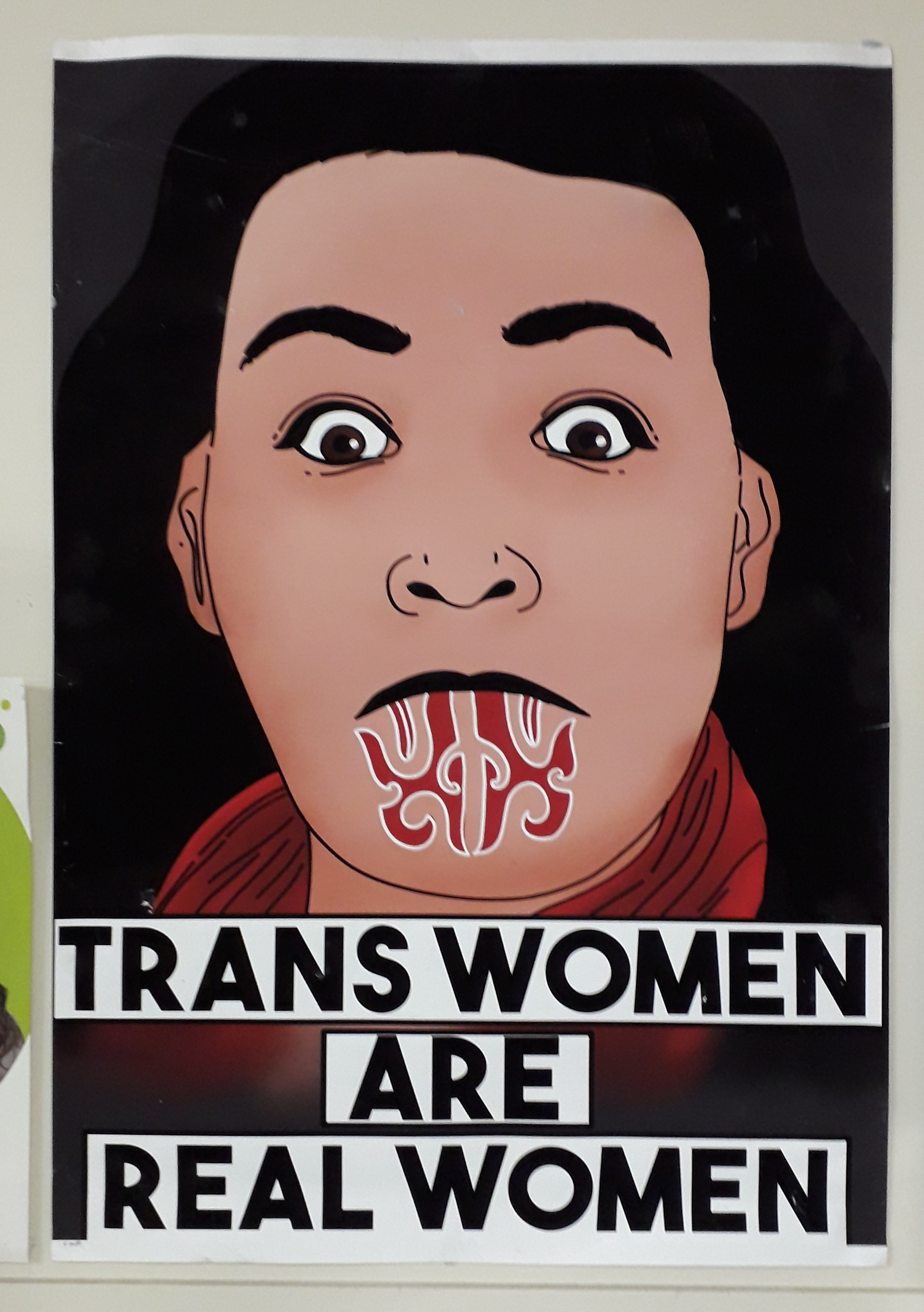
Poster in the RainbowYOUTH centre

I recently returned from a month-long journey to Aotearoa New Zealand. This trip was funded by a Rockefeller Foundation Fellowship with the School of Sociology and Social Policy at the University of Leeds.

My aim was to learn more about trans health services and community advocacy, while also sharing findings from my own research in a European context. I feel deeply privileged to have had the opportunity to meet many amazing people, who are doing a great deal of incredible work.

In this post, I share a number of resources and reflections from the trip. However, this is just the tip of the iceberg – I have no doubt that will no doubt that the experiences from the Fellowship will inform my research and thinking for many years to come.

Before I begin, I should quickly acknowledge that many readers of this blog will be unfamiliar with the word “Aotearoa”. This is a term from te reo Māori (the Māori language): it’s the current name for the islands known as “New Zealand” in English. Both are official names for the country that governs this land. For simplicity (and out of respect Māori history and culture, which long predates the arrival of Pākehā, or white European settlers) I use mostly use Aotearoa alone for the remainder of this post.


Whanganui-a-Tara / Wellington: the Gender Centre and Aunty Dana’s Op Shop

20190426_141647After a brief visit to Auckland (where I recovered from the long flight) I began my trip in earnest with a visit to the capital city of Aotearoa New Zealand, on the south-west tip of the North Island. I was told that you can’t beat Wellington on a good day – certainly, the bay of Whanganui-a-Tara is one of the mostly stunningly beautiful places I’ve ever had the fortune to visit.

My first priority was a visit to the Gender Centre. This amazing new community resource, which was founded only last year and is currently based the front room of the 128 Radical Social Centre. It is run by members of Gender Minorities Aotearoa, a group who campaign and provide information for transgender, takatāpui, and intersex people. Takatāpui is a term in te reo which “embraces all Māori with diverse gender identities and sexualities“.

Photos of 128 Radical Social Centre and the Gender Centre, taken with permission.

The Gender Centre includes a small office space, where people working for Gender Minorities Aotearoa can work on current campaigns and meet with visitors. Anyone can drop by to ask for advice or support, or pick up information. For example, the organisation has recently started running a free binder scheme. Materials on display included forms for name and gender changes, advice on accessing healthcare services, and information on the BDMRR bill.

BDMRR stands for Births, Deaths, Marriages, and Relationships Registration. Groups such as Gender Minorities Aotearoa are campaigning for non-binary recognition, and to make it possible for people to legally change the gender marker on their birth certificate without going through an expensive process involving medical oversight. Unfortunately, proposed changes have been delayed by the actions of anti-trans hate groups. UK readers will recognise the similarities with the campaign of misinformation waged against proposed changes to the Gender Recognition Act. This is not a coincidence. Anti-trans groups in Aotearoa are directly influenced by the language, aesthetics and (in some cases) the direct interventions of UK anti-trans campaigners, in what can be understood as a form of neo-colonialism.

While I was at the 128 Radical Social Centre I also visited Aunty Dana’s Op Shop. This is a second-hand clothing and accessories store run by trans and non-binary volunteers and open to people of all genders, with proceeds donated to Gender Minorities Aotearoa. It’s such a great way to raise money for campaigning, while providing an important resource and social space. It can also serve as a less scary space than the Gender Centre for people who are just coming out and looking for support. I had a great time browsing the shelves and chatting with the volunteer who was working there that afternoon.

Photos of Aunty Dana’s Op Shop. Taken with permission.

You can watch a fantastic video about the Op Shop here:

While I was in Whanganui-a-Tara I also took the opportunity to visit a trans and non-binary artists showcase at the NZ Games Festival and meet with some brilliant academics and students working on LGBTIQ research at Victoria University of Wellington. I will be sure to share their work as it is published!


Ōtautahi / Christchurch: queer art and affirmative care

I next travelled to Ōtautahi / Christchurch, taking a train down the east coast of the South Island. During this trip I began to understand the extent of the damage caused by 2010 and 2011 Canterbury earthquakes. There was evidence of huge landslides and roads were still being rebuilt. Several metres of new coastline were visible for many miles, clearly identifiable through rocks bleached white by dead organisms that once lived under the waves. The city itself is still being rebuilt. Huge building projects and areas of empty land can be found throughout the central business district, a reminder of the unforgiving power of the Earth.

Photos: day and night – urban art and public protest.

It was apparent that the people of Ōtautahi were still recovering from tragedy even before the horror of the recent neo-Nazi mosque shootings. Nevertheless, the city struck me as a great centre of culture. I am grateful to have had the opportunity to meet some amazing queer and feminist artists and heard about both radical public interventions and commissioned works. If you want to learn more about this, the websites of Jennifer Shields and Audrey Baldwin are great places to start.

During this visit, I learned about a fantastic initiative to build and publicise new public health pathways for gender-affirming care in the Canterbury region. Until recently, services such as specialist counselling, hormone therapy and surgical referrals were only available on an ad-hoc basis, and information was not easy to find. Relevant information on what services are available and how they can be accessed is now easily available, thanks to the work of the Ko Awatea gender-affirming care co-design group.

These services are still not perfect – several interventions are not publicly funded, and they still involve a certain level of medical gatekeeping. However, they represent an important step forward. Notably, I was informed that these achievements can be credited to the willingness of particularly motivated medical providers, who were prepared to put energy into working directly with trans community representatives to work for reform.


Tāmaki Makaurau / Auckland: RainbowYOUTH

20190511_140445

The next stage in my journey was a visit Kirikiriroa / Hamilton, back on the north island. I was here for the Aotearoa New Zealand Trans Health Symposium. This will be the subject of a future blog post, so I am going to finish this piece with a look at an organisation based in Aotearoa’s largest city.

In finish my journey with a return to Tāmaki Makaurau / Auckland, meeting a number of community workers, activists and academics living and working in the city. I was especially honoured to visit the RainbowYOUTH offices and drop-in centre: a spacious explosion of colour located in an otherwise unobtrusive side street on the edge of the queer distract around K Road.

RainbowYOUTH are an organisation run by and for queer and gender diverse youth, with a remarkably long and successful history. They are currently celebrating their 30th anniversary, having been founded in 1989. The organisation’s members and executive board are all aged 27 or under. Executive advisors aged over 27 are invited to attend and speak at board meetings, but do not have voting rights. I was really impressed by this commitment to centring youth perspectives in support work and activism, something which has been missing from the UK since the dissolation of Queer Youth Network.

I was also interested in how common the language of “rainbow” community was in Aotearoa, as an addition and alternative to acronyms such as LGBTIQ. I like the way this word avoids the “alphabet soup” and potential exclusions tone of the acronym. I can also see how – like the term “gender minorities” – it can work to be inclusive both of intersex people and of takatāpui in a way that is more expansive than just attempting to rework the Western/anglophone framework of “LGBT”.

Photos of the RainbowYOUTH centre. Taken with permission.

The RainbowYOUTH centre was a wonderful building. For a long time, the organisation ran out of a very small office on Karangahape Road, but in recent years an increase in income and activity enabled a move to the new space. This features several offices, a therapy room, a large social space with a TV and gaming consoles, a library, a community wardrobe, free hygiene packs for people in difficult circumstances, and once again a whole range of resources and information. I can see how the very existence of this space is helping to create new possibilities for a generation of young people who I hope will achieve things that currently remain unthinkable.

I left Aotearoa incredibly inspired by the work and imagination of everyone I met, and am hugely grateful to everyone who helped with advice and organisation, made time to speak with me, and shared ideas and information. Ngā mihi nui!

59691782_1996458760649278_9127576502169239552_n