Even if the worst-case scenario occurs and the interim guidance becomes law, Pearce emphasizes that laws “only make sense if people uphold them.” People and organizations must be willing to fight for trans rights, and make the laws essentially impossible to enforce.
As Pearce puts it, “We need intentional, aggressive, extremely homosexual non-compliance.”
Earlier this month I spoke with journalist Emma Bainbridge about lesbian community responses to the UK’s transphobic Supreme Court judgement. That piece is out now in the Canadian magazine Xtra. You can read it here:
On the evening of Tuesday 15th April 2025, I was widely perceived to be a British lesbian, both legally and socially. By 11am the following day, that was no longer the case, following a ruling by the UK’s Supreme Court.
I was not actually in the UK for this momentous occasion. I was instead in the Swiss city of Lausanne, for a workshop on standards of evidence in sex and gender policy. I was there to consider the very questions the UK’s highest court, in their supreme ignorance, had effectively dismissed. Their ruling determined that the term “sex” in the Equality Act referred to “biological sex”, which in turn should be understood as “the sex of a person at birth”. But what do we actually need to know about when we make policy around sex and gender, and what is the role of evidence in this?
The Tuesday evening found me hanging out in a second-rate Thai restaurant with Professor Sarah Lamble, an esteemed criminologist and fellow dyke. Lamble and I spent some time talking about how conspiracy theories around “disappearing lesbians” highlighted the strange ironies inherent in British anti-trans discourse. The anti-trans movement has been extremely successful in raising “reasonable concerns” around supposed problems that are completely ungrounded in reality, to the point where that reality itself begins to warp.
Mainstream political discourse in the UK increasingly reflects anti-trans claims that lesbians are somehow threatened by trans people, or are even being transed en-masse in gender clinics and youth groups. The true biological attraction between two adult human females is disrupted. Young people are tempted away from lesbianism with promises of luxurious facial hair and male privilege; meanwhile, horrifically manly and/or confusingly attractive trans dykes are introduced to the dating pool.
If these claims were true, we might expect to see some kind of reduction in the number of homosexual females. Instead, the evidence we have indicates quite the opposite. Surveys such as the Annual Population Study show a rising number of lesbians over recent years, part of a wider increase of 1.2 million in the recorded lesbian, gay, and bisexual (LGB) population of the UK. This is driven especially by young people coming out, with over 10% of people aged 16-24 identifying as LGB as of 2023.
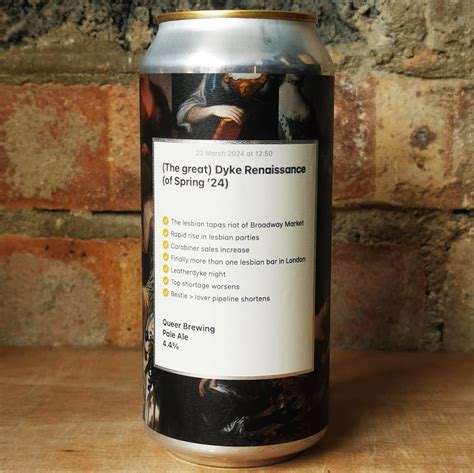
But what about the lived reality of queer womanhood? Well, there’s great news here too: we are living in a truly historic time for sapphic culture in the UK. Proudly out lesbian and bisexual women can be found across the pop charts, on TV, and across social media. Queer bookshops are on the rise. Pop-up butch bars and new queer cafes can be found in major cities and small towns. And, excitingly, even the much-maligned lesbian bar is making a comeback, with three permanent venues and numerous occasional nights now running in London alone. It’s all got so out of hand that in 2024 the Queer Brewing company sold a juicy pale ale named Dyke Renaissance, which conveniently listed an educational series of cultural milestones on the can.
If trans people are trying to disappear lesbians, we’re doing a really bad job of it.
Meanwhile, queer cis women tend to be pretty supportive of trans people. In fact they’re one of the single most supportive demographics in the UK – which is presumably why the Equality and Human Rights Commission is, right now, attempting to ban trans dykes such as myself from associating with any more than 25 biological lesbians at any one time.
On evidence
As lesbian conspiracy theories show, the very concept of evidence has had a bit of a hard time over the past decade.
In the UK, this was perhaps best encapsulated in 2016 by the Conservative politician Michael Gove. While campaigning for Brexit, he declared that the British people “have had enough of experts”. Gove’s claim is echoed in a growing anti-intellectualism across the globe. From the mass purge of universities in Türkiye, to the post-truth bizarro world of Donald Trump, to Israel’s scholasticide in Gaza, this trend manifests in blunt and brutal ways. Anti-expert authoritarianism doesn’t care about your facts or your feelings.
However, attacks on evidence can also be more subtle. Gove’s comments are widely quoted, but it’s less well-known that he singled out a particular kind of expert for criticism: “people from organisations with acronyms saying that they know what is best and getting it consistently wrong”. While this was gloriously vague in a way that allowed the listener to project all kinds of things onto Gove’s words, in context it was nevertheless evocative of the kind of group that tends to advocate for social justice. LGBTQQIAAP groups, perhaps.
From academic thinktanks, to charities, to campaigning organisations, the implicit problem was any kind of challenge to conservative common sense. The UK’s political mainstream has since doubled-down on this approach. In the run up to the 2024 general election, Tory home secretary Suella Braverman criticised “experts and elites”, while the secretary of state for science, innovation and technology, Michelle Donelan, promised to “kick woke ideology out of science”.
One of Donelan’s targets was the “denial of biology” in research by feminists, social scientists… and biologists. The problem here is that supposedly common sense notions of sex and gender, which assume clean and tidy biological divisions between male and female, collide violently with the beautiful messy reality of the material world. At this point in history, it is well-established that sexual diversity exists throughout nature, that men are not biologically superior to women, that social advantage is not conferred or denied by chromosomes, and that queer, trans, and intersex people exist in the world. The evidence for this is gloriously multifaceted. We find it in laboratories, in systematic reviews, in surveys and questionnaires, in the way that men shout abuse at us in the streets, in how our sexed bodies shift and change under hormonal influence, in the way we feel when we finally have a language that describes our experiences.
Michelle Donelan decided to tackle the thorny problems of feminist science, intersex bodies, and trans existence by commissioning a research project by Alice Sullivan, a supposed sociologist who doesn’t care one jot for any of the evidence outlined above. Published in March 2025, the Sullivan Review insisted that data collection relating to sex and gender should rely on a very narrow definition of biological sex: one that ignores trans and intersex women’s real lives, bodies, and experiences of misogyny, while promoting a sexist model of essentialised womanhood. Her findings were echoed in those of the Supreme Court judges a month later, whose pronouncements on biological sex were made without any reference to relevant social, scientific, or philosophical research on how this might actually be understood or defined in practice.
To position this as a wholly new trend would, of course, would be inaccurate. Western jurisdictions have long used and abused pseudoscience to oppress minoritised groups, especially in colonial contexts. This can be seen for example in the British state’s shameful embrace of “race science” and eugenics in the 19th and 20th centuries. What we are now witnessing is an example of the imperial boomerang, in which the logics of colonialism are turned inwards, resulting in increasingly fascist domestic politics.
But did you have a nice time in Switzerland, Ruth?
On that fateful week in April, I joined a group of feminist, trans, and lesbian researchers and activists for the workshop at the University of Lausanne. In the face of increasingly ill-informed policymaking across multiple contexts, it provided us a space to think together about the lessons we might learn collectively from our very different work on healthcare, sports, and prisons.
One overarching theme was the importance of evidence in understanding human experience, in terms of rigorous data collection, careful analysis – and accounting for the lived reality of actual people’s actual lives. A powerful account of the latter point was provided by Dinah Bons, a veteran campaigner for HIV prevention. She pointed out that if a sex worker repeatedly attends a community clinic for her STI tests, this provides evidence that the clinic feels safe enough for her to return regularly, which is far from a given. Such matters are often highly evident to service users and providers on the ground, without any need for a survey or interview.
Another key theme at the workshop was the extent to which various principles of evidence are increasingly abused by politicians, journalists, and institutions.
The concept of evidence has not been rejected wholescale by sexist, transphobic, and lesbophobic policymakers. Rather, “evidence” is increasingly a buzzword to justify particular approaches or points of view, rather than something grounded in a commitment to scholarly standards or an acknowledgement of lived experience. At the workshop, we explored how flawed notions of evidence have been used to support misleading statements or outright lies about human bodies or human experiences. We heard about the use and abuse of evidence in justifying invasive sex-testing for woman athletes, misrepresenting research on young people’s ability to engage in informed decision-making, and defending conversion practices. Notably, while most of these abuses arose from a specifically transphobic politics, they have far wider consequences: especially for women, intersex, and queer people, but also for scientific processes, community consultations, and informed advocacy more broadly.
You can see an example of this in the Cass Review. Through successfully performing the aesthetics of acceptable expertise and science to the satisfaction of the British public, the Review has become what one workshop participant described as a black box. By this they meant that it has become an abstracted justification for policy and practice, handily replacing any ongoing discussion of evidence regarding young trans people’s health and wellbeing. You don’t need to know what the Cass Review actually says or how rigorous it actually is, only that it exists. Well-documented criticisms of the review from healthcare practitioners, academic experts, trans community groups, and (most importantly) young trans people themselves are been rendered irrelevant. The Cass Review is the evidence, and no other systematic review, original research, or personal testimony can henceforth count against it. Not, at least, until 2031 at the earliest: the official end-date of a single £10 million study, based on the Cass recommendations and featuring precisely zero trans researchers.
The British establishment is now attempting to repeat this trick with the Sullivan Review – never mind that projects such as MESSAGE have conducted more extensive and nuanced work on the same topic with a far wider group of experts – and, of course, with the Supreme Court judgement.
Beyond doom
As with Cass, as with Sullivan, it is difficult to capture the sheer enormity of harm caused by the Supreme Court’s pronouncement on biological sex. The consequences are still playing out, and will no doubt continue to do so for many awful months and years.
At the time of writing, the Equality and Human Rights Commission have proposed a programme of mass segregation, designed to discriminate against trans people in the workplace, in public services, and in social groups. The guidance they have written is just that: guidance, not law. Nevertheless, major organisations such as the Football Association, the British Transport Police, and Barclays Bank, all of whom shamelessly paraded rainbows through their social media profiles last Pride season, are falling over themselves to comply. We are witnessing the attempted complete exclusion of trans people from public life, in the latest culmination of a transparent attempt to eliminate us altogether.
In such moments, it can be easy to despair. This is in part because it is easy to forget the strength, resources, power held within trans communities and by our allies. That includes the knowledge and evidence we have access to.
Don’t get me wrong. The people who want to eliminate us are better-funded, better-connected, and now have the Labour government on-side as well as the UK’s traditional right-wing parties. We are not going to win trans liberation overnight.
But then, again, we never were.
Everything I said about lesbian culture earlier is true of trans people too. There are more of us publicly creating art and culture, more of us creating events and running nightclubs and playing in bands and writing essays (hi). There are more community groups providing mutual aid and support when charities and state bodies fail us. And, importantly, we are not alone.
Trans women and non-binary people are a part of the dyke renaissance. We are at the butch bars, and bemoaning the top shortage. We are dancing to Le Tigre and to Chappelle Roan. We are reading Gideon the Ninth and watching We Are Lady Parts and having all the feelings. My partner of the last decade was probably the most surprised of all to learn from the Supreme Court that I am not, in fact, a lesbian, as every bit of evidence from our shared personal lives points to quite the contrary.
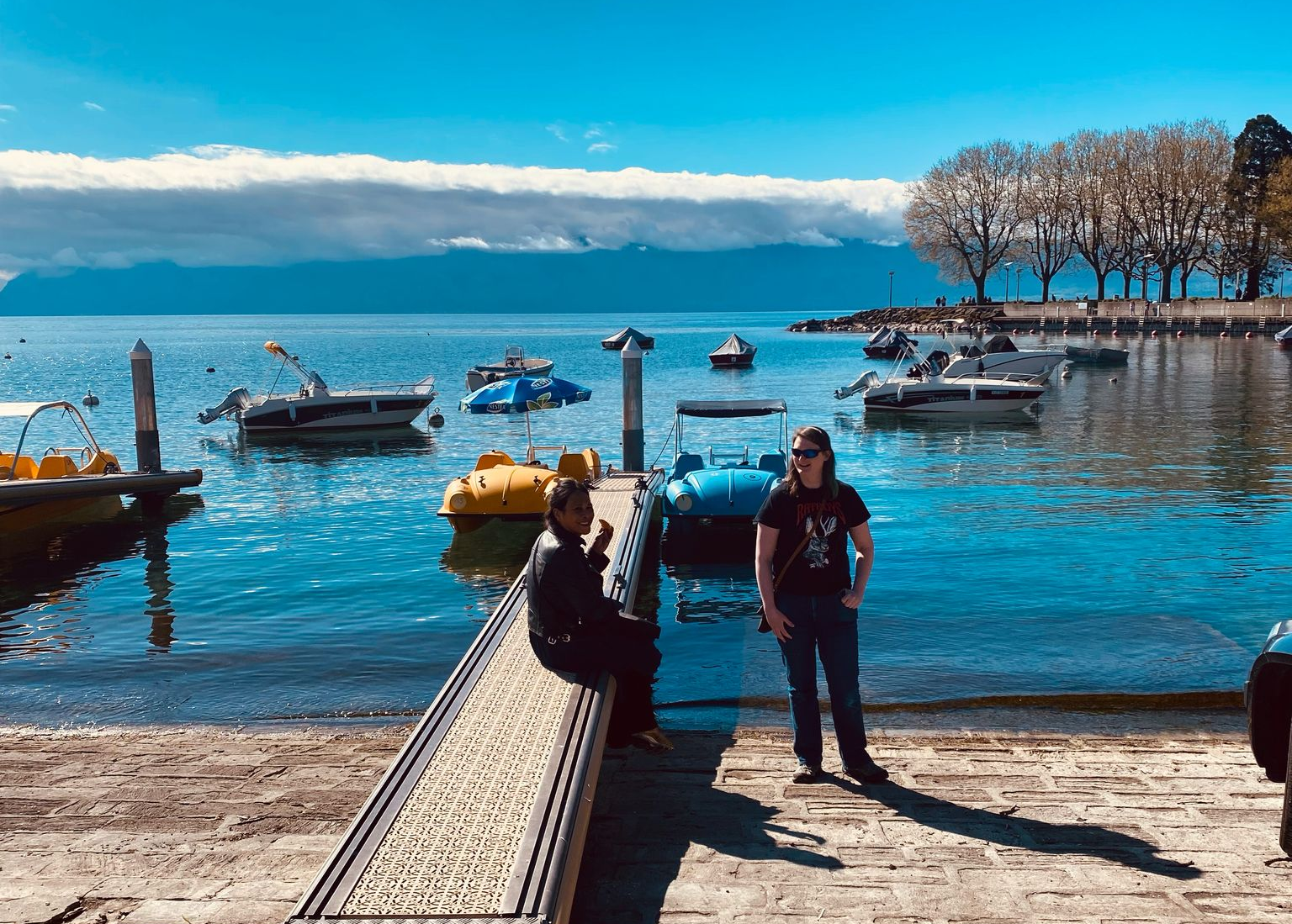
I will concede that some trans people are not in fact lesbians, or even queer. Nevertheless, there are somany other places to find us in community with others. Trans people are in trade unions. Trans people are in workplaces. Trans people are in schools and colleges and universities. Trans people are in the streets. Trans people are on the bus. Trans people are in families. Trans people are making families. Trans people are playing football (suck it, Football Association). Trans people are eating pizza. Trans people are restoring the countryside. Trans people are hanging out beside Lake Geneva in the glorious sunshine, enjoying a much-needed break.
There are more of us than ever, and it is too damn late to put us back in a box.
Resistance is fertile
I was honoured to present the keynote presentation at the Swiss workshop. I spoke about the findings of the Trans Pregnancy Project, a study that produced enormous amounts of evidence on the experiences, needs, and perspectives of men and non-binary people who conceive, carry, and give birth.
No matter how much our findings are slammed by the media and billionaire children’s authors and washed-up comedy writers, our peer-reviewed work has demonstrated the lived reality of male and non-binary pregnancy over and over again. Most importantly, it has helped people. We are part of a far wider movement of parent groups, midwives, and researchers who are collectively building knowledge. I am constantly hearing from people who describe how much this knowledge has resulted in better care for them and their child. This kind of story drives everything I do.
Towards the end of my talk, I discussed the anti-trans moral panic, and the Supreme Court judgement. I then showed the below table of findings from the National Maternity Survey. This annual survey involves those who have recently given birth every year in many (but not all!) English hospitals, over the course of a few weeks. Since 2021, they have started asking whether the person giving birth has a different gender to the sex they were assigned at birth – i.e. are they trans?
Two things leap out from this table for me. Firstly, the 2021 data shows a very similar proportion of people indicating they are trans when compared to the 2021 censuses in Scotland, England, and Wales. This suggests that, contrary to assumptions around trans infertility or undesirability, trans men and non-binary people may well be just as likely to give birth as cis women are to become birth mothers.
Secondly, the number of trans people giving birth has risen dramatically over four years. Even as the anti-trans moral panic has deepened. Even as attacks on even recognising the existence of trans people in perinatal services have increased. As Del La Grace Volcano once it put it: “resistance is fertile!”
In the face of growing oppression, trans people are simply refusing to disappear. In fact, we are doing the opposite.
This, then, is the power that the anti-trans movement, the Labour party, and the Supreme Court cannot possibly take away from us. The more trans people are out and visible to one another, the more trans people come out and become visible to one another. Sure, we will unfortunately need to think more carefully about where and when we are out, and where and when we are visible, if this is something we even have any power over in our specific lives. I am sure that more trans people will be going stealth in future years, if they can. But regardless – there are more of us in community, more of us organising protests, and more of us than ever in the lives of our friends, families, colleagues, and allies, showing that it possible to have a good life while being trans.
In this context, it is important to know that people from many parts of the world gathered in Lausanne this April to pool our knowledge and skills and experiences. It is important to know that we have each returned to our home countries to share what we gained. It is important for people to know that similar meetings are happening across the world, in community centres and on university campuses, in board rooms and in bedrooms, involving trans people, and feminists, and yes, lesbians. We are constantly building a movement for positive change, and you do not have to be an academic or veteran activist to be a part of it. Trans power is for everyone.
There is much to say what needs doing in the current moment. We need allies to continue fighting alongside trans people for our collective liberation. We need to be demonstrating in the streets, funding mutual aid and legal action, actively resisting complicity in Labour’s eliminationist agenda, and encouraging every public body under the sun to do the same.
Evidence will be helpful for this. Evidence from academic research, sure, but also – as Dinah Bons pointed out – testimony from the everyday reality of trans people’s lives. And oh boy, do we have that evidence.
More of us than ever are producing evidence of trans existence, and trans persistence.
Last week I attended a workshop in Switzerland on standards of evidence in sex and gender research (more on that soon!) During my trip, I had my standard out-of-office auto-reply set up for my email account, informing people of my absence so they wouldn’t expect any immediate engagement from me.
I would typically switch off that auto-reply on my return to work as normal. However, in the wake of last week’s Supreme Court judgement, there is simply no more “work as normal” for me or any other trans person living in the UK.
As such, I have written a new auto-reply, which will be sent to everyone internal to my workplace who emails me. It is impossible for me to forget what is happening to trans people and especially trans people in the UK, so I will ensure it is impossible for my colleagues to forget this also. Equally, my intention is to transform bad feelings into understanding, and practical action. We have always been powerful when we work together and build movements.
I am sharing the text of the auto-reply here in case it is of use to anyone wishing to do similar.
You may be aware that the UK’s Supreme Court has initiated a mass rollback of trans people’s civil rights. In light of this, I am uncertain if it will continue to be safe for women and people like me to continue working at the University of Glasgow.
You can read more about the judgment and its implications here:
While the judgment itself does not require organisations to act in a prejudiced manner, numerous politicians and policymakers have indicated that they intend to make discrimination mandatory. My friends have reported increased street harassment, as the ruling is seen to position trans women as legitimate targets for misogyny and violence. Trans people of all genders are already even more likely to experience public harassment, sexual assault and rape than cis women (see e.g. https://bulletin.appliedtransstudies.org/article/3/1-2/3/), and this is likely to get worse.
The Chair of the Equality and Human Rights Commission (EHRC), Baroness Falkner, has promised to revise guidance to encourage employers to discriminate against trans people in the workplace. For example, she told Radio 4: “if a service provider says we’re offering a women’s toilet, that trans people should not be using that single-sex facility.”
If you are concerned about the safety, wellbeing, and continued access to employment and education for women and trans people such as myself, you can take one or more of the following actions:
Write to members of the Senior Management Team at the University of Glasgow, especially the Equality Champions, and ask what they will do to protect trans staff and students, including through ensuring continued access to women’s and men’s facilities as relevant. Find their contact details there <link removed for blog post>.
Write to your Head of School and ask what pressure they will be putting on the Senior Management Team to do the same.
Write to your MP and MSPs. Explain exactly why you are concerned, and demand action to protect trans people’s civil rights. For example, you could ask for new primary legislation to protect trans people, ask why the UK is no longer complying with the European Convention on Human Rights, or demand the dismissal of biased commissioners from the EHRC. You do not have to write a perfect letter and it is okay to be emotional and express sorrow or anger, so long as you are not aggressive or mean. Advice on writing letters is linked here: https://bsky.app/profile/whatthetrans.com/post/3lnf4sadrjs2p. You can find contact details for your representatives here: https://www.theyworkforyou.com/.
Support trans people materially, through providing time, resources, and/or money to community initiatives. Examples include: Glasgow Trans Collective (fundraising for emergency support to people facing an immediate danger of threat to life, https://linktr.ee/glasgowtranscollective); Trans Harm Reduction (supporting harm reduction for people self-medicating in the absence of NHS treatment, https://transharmreduction.org); and Five for Five (donating money every month to a range of trans women’s causes, https://www.fiveforfive.co.uk).
Check in on your trans friends and colleagues. Make sure they are okay, and do what you can to be there for them. But do your own research on what you can do to help: don’t put this burden on us. Some good places for information include the websites and social media channels for TransActual, What The Trans, QueerAF, Trans Safety Network, and Trans Writes.
This auto-response is inspired by bell hooks’ comments in her book Teaching to Transgress:
“When education is the practice of freedom, students are not the only ones who are asked to share, to confess […] empowerment cannot happen if we refuse to be vulnerable while encouraging students to take risks. [Lecturers] who expect students to share confessional narratives but are themselves unwilling to share are exercising power in a way that could be coercive. In my classrooms, I do not expect students to take any risks I would not take, to share in any way that I would not share. […] It is often productive if [lecturers] take the first risk, linking confessional narratives to academic discussions so as to show how experience can illuminate and enhance our understanding[.]”
I will not necessarily respond to any replies you send to this automated message, as I am trying to stay focused on teaching, admin, and research. But regardless, thank you.
In early September I recieved an email from the Department for Health and Social Care, inviting me to participate in a closed consultation on the Labour government’s proposed extension of the Tory ban on puberty blockers. The deadline was 1st October 2024.
September was already extremely busy. I started the month at the International Trans Studies Conferencein Chicago, and ended it at the WPATH Symposium in Lisbon. In the meantime I was faced with various writing deadlines, administrative tasks, and the start of a new teaching semester. The small number of other academic experts and voluntary organisations who were also invited to respond no doubt faced very similar challenges with the short notice and unforgiving deadline.
Nevertheless, I scrambled to respond. Like Cal Horton, I regard government consultations on trans healthcare to be inherently abusive at this stage; as I wrote to the Nuffield Council on Bioethics in 2018, “we respond not with hope or optimism, but in fear. This is the power you wield over us”. Given the turgid vibes found in recent political discourse, I also held little hope of a long-term ban being prevented. However, it seemed worth using what little prestige I have as an academic to at least try to encourage the government to listen to actual evidence.
Trans Writes are now reporting that an extension of the ban until 2027 is on the cards for Britain, following a unanimous vote on the same by the Northern Ireland Assembly. With this in mind, I am now publicly sharing the evidence I provided in the closed consultation, plus slides from an oral presentation to the Commission on Human Medicines, who advised the Government.
I don’t think for a moment that sharing these materials will change anything in the short term. However, I feel it is important to put them in the public realm now for the sake of transparency.
Going forward, I hope the work that many of us have done in building and sharing an ethical base for the ethical provision of trans healthcare will make a difference. In the meantime, there is an important lesson here about relying on existing, unequal systems of power and control. As Nat Raha and Mijke van der Drift argue in their new book Trans Femme Futures, making demands of institutions leaves the power in their hands. It is more important than ever for trans people to build power and knowledge within our own communities, in collaboration with others.
We have survived worse in the past by sharing information, ideas, and life-changing medication between us, and we will do so again.
I have a new article out in the journal Social Psychiatry and Psychiatric Epidemiology, co-authored with colleagues at University College London. It reports on the findings of a study led by Talen Wright, looking at the mental health impacts of microaggressions on trans people.
You can download and read the full study for free here:
What did we find out about microaggressions, mental health, and trans people?
Wright designed a survey of 787 trans adults in the UK, asking questions both about participants’ mental health and their experiences of microaggressions. When analysing the findings, we found that experiencing more microaggressions was associated with worse mental health, including increased severity of depressive and anxiety symptoms, and increased odds of lifetime self-harm, suicidal thoughts, and suicide attempts.
We also found evidence indicating an association between specific microaggressions and specific mental health outcomes:
Participants who reported more misuse of their pronouns by others were more likely to report increased thoughts of self-harm and suicide.
Participants who reported more experiences of their gender being denied by others were more likely to attempt suicide.
Participants who reported more experiences of people around them acting uncomfortably around them because of being trans were more likely to report increased symptoms of depression.
Participants who reported more experiences of people around them denying the existence of transphobia were more likely to report increased symptoms of anxiety.
Why is this study important?
With apologies to my co-authors, I consider this a form of “cat detector” research. I base this term on an image shared a few years ago by the Facebook page High Impact PhD Memes, purporting to show someone successfully wielding a cat detector:
The meme is funny because, well, it’s obviously a cat. The research is stating the obvious.
And so this research might quite reasonably seem to many trans people. We know that microaggressions are harmful: that when people deny who we are, it hurts. When researchers or journalists or politicians talk about high rates of poor mental health among trans communities, we know that it is because people are harming us, that entire systems are set up in ways that harm us.
At the same time, we live in a political and policy context where trans people’s voices are rarely heard, and disinformation runs rampant. A lot of cis people are getting inaccurate information about our lives and needs, including healthcare commissioners, doctors, nurses, therapists, educators, and civil servants, as well as our families, friends, and colleagues. Trans people are often portrayed as overly sensitive to other people’s transphobic behaviour, or living in denial of reality.
Given this context, I feel it is beneficial to demonstrate empirically – with statistical analyses! – that small actions add up, and “microaggressions” cause real harm.
I hope this research will be useful for countering non-evidenced transphobic policy approaches. For example, the UK government’s current guidance on “Gender Questioning Children” in schools directly encourages educators to undertake actions that are associated with harmful outcomes in our study. As more research is conducted and published in this area, we will have more information available to clearly demonstrate the risks of transphobic policy, and empower advocates fighting for change.
This morning I logged into instagram and watched, transfixed in amazement and worry, as a young person scaled the walls of the Department for Education.
The aspiring spiderman is part of the activist group Trans Kids Deserve Better. At the time of writing they are staging a multi-day protest at the Department for Education building in London, for the right to a safe and inclusive education.
Watching the video, I fear for Squirrel, the anonymous activist who is genuinely risking their life to stop government employees from taking the group’s banner. It’s very apparent that Squirrel is a skilled climber who knows what they are doing – equally, one wrong move could result in a deadly drop to the concrete pavement. This is not safe.
But of course, the entire reason this protest is happening is because young trans people are not safe.
Trans Kids Deserve Better launched their campaign for youth autonomy, safety, respect, and inclusion in July, from a dramatically high ledge of an NHS England building. In an interviewwith Jess O’Thompson for Trans Writes, the emergency doctor and children’s TV presenter Dr Ronx Ikharia argued that “our young people deserve better than suffering, and shouldn’t be scaling walls”. But they added that for this to happen, trans kids must be “believed, supported, affirmed, and loved”.
And this is the crux of the issue. Under the Conservative and Labour governments, we have seen a policy environment in which teachers, doctors, therapists and parents are actively discouraged or prevented from believing, supporting, affirming, or loving young trans people. Instead, families face prison sentencesfor supporting young people’s continued access to medication, NHS England is expanding the provision of state-funded conversion clinics, and a growing number of schools are refusing to allow even the discussion of trans experiences.
Trans kids are not safe because they have been entirely failed by the adult world. They have been failed by politicians, failed by civil servants, failed by the NHS, failed by the voluntary sector, failed by researchers, and in many cases also failed by their doctors, teachers, and parents or carers. This is why the activists from Trans Kids Deserve Better are literally scaling walls in their fight for an actual future.
Looking at the challenges facing young trans people, it can be easy to lose hope. But the actions of Trans Kids Deserve Better show that there is a better way. Doomerism helps nobody. The successes of successive liberation struggles have come about because people have continually dared to believe that a better world is possible, and fight for it. The young people currently sat outside the Department of Education are not bemoaning what they have lost: they are insistently demanding change.
Image from Trans Kids Deserve Better
What can we do? In their conversation with O’Thompson, activists from Trans Kids Deserve Better explained that while trans adults often want to “protect” trans youth, they would rather we “amplify” them: “we don’t need sympathy, we need support”. This is a call to action, with a focus on solidarity, rather than trying to speak for young people or bemoan their situation.
Many adult trans people and allies have complained about the lack of mainstream media coverage for the actions of Trans Kids Deserve Better. But we should not simply wait for the papers or news programmes to start caring. It’s up to us to talk about what’s happening. Today’s queer and trans communities only exist at scale because we made our own media, told our own stories, and forced the mainstream to catch up.
So I encourage everyone who reads this to share the story of what is happening. Share it on social media, share it with friends and family, share it in conversations at work and in bars and in cafes and in parks and at gigs and festivals. A few days ago I was at a pub in Bath, fresh from Pride, still holding a placard that read “Ban Wes Streeting” (copied shamelessly from someone else in Glasgow a couple of weeks prior). Someone asked what Wes Streeting had done, so I told her. She was appalled, but grateful to have learned what is happening, and better informed to act. Information spreads when we spread information.
If you, like me, would rather not see young people risking life and limb by climbing public buildings, it is time to fight with them, not “for” them. Together we can build a safer world.
I have co-authored an article with Cal Horton for the science magazine Scientific American. We take a concise look at what the Cass Review is, what it found, why the methods used were troubling, and how it is being used to harm young people.
You can read the article here. I hope it will be helpful as a basic explainer for why trans community groups, academic experts, and clinical specialists are so concerned about the Cass Review.
Writing for Scientific American was a really interesting experience. It was of course radically different to publishing in a peer-reviewed journal: we put the piece together in a matter of weeks, and it was not scrutinised by academic experts from our specific field of study. At the same time, there was an extremely rigorous editorial, fact-checking, and copyediting process that also made it very different to publishing in most magazines or newspapers.
I was deeply impressed with the sheer amount of time and care the Sci Am editors put into this piece. On one hand, their contributions ensured the piece is written in accessible language, with an international (and especially US-based) readership in mind. On the other hand, we had extensive discussions to ensure that all points made in the article could be rigorously evidenced, including some very detailed exchanges about the specifics of UK law, and what exactly the Cass Review document does and does not have to say about exponential growth over different periods of time. We had to be able to strongly back up any even slightly contentious point.
It was a challenging experience, but one I felt very held by as an author committed to consciencious research practice. Publishing this piece in Sci Am definitely ensured that it was as good as it could possibly be.
Young trans people have been leading an incredible protest at Wellington House, the London headquarters of NHS England. They have been holding space on a ledge of the front facade since London Pride on Saturday 29 June.
The protesters will be coming down today (Tuesday 2 July) and have called for supporters in London to join them at a rally from 4pm.
The action powerfully highlights the repeated failure of UK politicians, the mainstream media, and NHS bodies to truly listen to young trans people about their experiences and needs. This is perhaps most powerfully seen in the Cass Review, which has systematically excluded expertise and evidence from trans people in formulating its recommendations, and in trans healthcare bans implemented for under-18s in England in Scotland. Meanwhile, the Labour party are promising to uphold these bans and implement a range of deeplytransphobicpoliciesshould they win the election on 4 July.
These concerns are powerfully highlights by the protesters themselves. InDiva, a 17 year old activist explains:
“Decisions are being taken that affect our lives without any trans people in the room, let alone trans young people. Too often trans kids are portrayed as a monolith of confused, depressed teenagers. We are denied choice and robbed of our autonomy. But we should be trusted to make the same decisions about our healthcare that all people are.
In every other way I am trusted when I tell people what I want to do with my life. But not now. There is so much real anger out there and we hope our actions will encourage others to fight for a voice, and the healthcare and dignity that we are currently denied.”
“We are staging this protest to remind politicians and voters that we’re real kids, not just political talking points. We may not have a vote, but it is our lives that are at stake. Gender-affirming healthcare is a matter of life and death for us and we hope our actions will bring awareness to this fact and encourage others to fight for the healthcare and dignity we are so shamefully denied.”
As a former youth activist working in this field for almost two years now, I am hugely heartened and inspired by this powerful protest. In the face of institutionalised violence and silencing, young trans people are seizing the narrative. It is up to us adults to listen, learn, and fight alongside them.
I am featured in the most recent episode of Red Medicine, a podcast about the politics of health, medicine, and the body.
The interview features a deep dive into the Cass Review, including the contexts of trans healthcare and the anti-trans moral panic, as well as the underlying assumptions and methodological shortcomings of Review’s final report on healthcare for trans and gender-questioning young people. We explore how the Review is constructed as credible in spite of its flaws, plus how and why that is dangerous both for young trans people and for good science.
You can listen to the report through the Simplecast link above, or alternatively through Apple Podcasts or Spotify.
This post shares a video and transcript of my speech at the emergency demonstration in George Square, Glasgow, on 18 April 2024, against the decision from NHS Greater Glasgow and Clyde to ban endocrine treatments for trans people aged under 18. The speech was unplanned and made without notes, so I have made some small corrections in the transcript, plus minor amendments for clarity. I have also added references for some key points. Thank you to @transprotestglasgowfor the video.
Readers seeking more detailed evidence and academic critiques may find my previous blog post helpful: What’s wrong with the Cass Review?
I’m a Lecturer in Community Development at the University of Glasgow, and I’m a researcher on trans healthcare.
And I was a trans child.
I want to talk about that for a moment. Because I came out to myself circa 2001, when I was 15, when not many people did that. And it was hard for us. And there was trans community, and there was information, but it was very difficult because we felt very, very alone. I was mostly only able to connect with other trans people my age through the internet, through blogs, and they were mostly Americans. The Brits were there; a lot of us connected later as we grew older. But we were so isolated.
A really important thing to remember, in a moment like this where we are seeing a return to the kind of medical policies that were in place when I was a kid: there are so many more of us, and we are so much more powerful than we have ever been.1 Never forget that strength we have together.
One of the things Hilary Cass says in her report is that the meaning of the word “trans” has changed since 2020.2 She says, and there is no evidence for this, that “trans” in 2020 meant something quite rigid and specific, and only now in 2024 it’s become an umbrella term for lots of identities. Tell that to me coming out as a trans teenager in 2001!
So here’s the thing. We’ve always been here, and we are more powerful now, but we are seeing this backlash. That’s been a long time coming and transphobia changes its face over time. One of the things I wanted to do to deal with my loneliness and the experiences I had was that I wanted to become an activist. And when I started doing activism, when I got into meetings with people in government, and with the Equality and Human Rights Commission, they said “there’s no evidence” for the discrimination we faced. So I was like, “fine: let’s see what evidence I can find”.
So I did a PhD in trans healthcare.3 And I found what you often find when you do research; you often find things you don’t expect. So I did find some things I expected to find. About waiting lists and how hard they are. About how hard appointments can be when you’re meeting with sexist and transphobic clinicians who are asking you, as a young person, how you masturbate and who you’re attracted to. But what I didn’t expect was the sheer level of pain from the waiting. And I talk about that in my work. And the anticipation, where we are anticipating all the time. When is it going to happen? When are we going to get to live our lives? And that happens on every level of our lives.
I was also shocked by the level, and detail, and complexity of the ignorance of healthcare practitioners. It ranges: it’s not just that they all hate us, right? It’s that some people are trying to control us, some people want to help but don’t understand how, and some people don’t want to know. There’s different kinds of ignorance.4
So I published my work, and other people have followed. Other people were there before me of course, because “trans” was not new, and trans research wasn’t new either. There is now a lot of published research on what it is like to go through a gender clinic, and what it is like for a young person to go through a gender clinic. There’s people like Cal Horton5 and Natacha Kennedy6 who are writing on this, and Harvey Humphrey7 who works here in Glasgow. There’s a lot of people doing work on this.
We are saying, time and time again, “we need services that meet our needs”. For some people, that is access to puberty blockers, and that is access to hormones. For other people, that is access to counselling, and therapy, and community support. What we call “trans-affirmative” or “gender-affirmative” care is flexibility, meeting a person where they are at, and based on what they want to do with their lives.8 You don’t have to change your body – but you can.
It’s our body, it’s our right: we can do what we want with our own bodies.
This is what is disgusting about the decision by NHS Greater Glasgow and Clyde. They have not addressed the years and years of mistreatment and abuse in their child and adolescent clinic at Sandyford. It is not a great place that we are trying to save. It is a clinic that has repeatedly refused to treat young people, and made people hold on for care. It has helped a handful of people. Dozens of people – only dozens – have accessed treatment in the last few years.9 Now they are proposing to stop doing the very little they are doing to support young trans people.
People who get a referral to a child and adolescent gender clinic are not necessarily seeking access to counselling and therapy, because you can get that elsewhere.10 They are not seeking access to community, because you will find no community at Sandyford. They are most likely seeking access to endocrine treatments: puberty blockers and hormone therapy. And that’s what they are going to stop doing.
Sandyford say they are still accepting new referrals. But what is the point of a gender clinic that does not offer people medical treatment?
NHS Greater Glasgow and Clyde have based their decision on the final report of the Cass Review. Let’s talk a bit about the Cass Review.
I’m an academic researcher. If the Cass Review was submitted by an undergraduate student, the first thing I would say is: “That’s nearly 400 pages long! No-one’s going to have time to mark that”.11 And you’ll notice that all the people in the media, all the Labour politicians, all the Tory politicians, all the people saying we should immediately implement the findings of the report: none of them read nearly 400 pages in one day. Neither did the journalists at the BBC, the Telegraph, the Times, the Daily Mail, the Observer, the Independent. We expect better! And now the Scottish media: it’s all over the Scotsman, the National, the Herald. None of them have bothered to read the report, or think about it critically.
So here’s a bit of information about the Cass Review. The Cass Review was undertaken by a group of people who, from the very start, excluded trans people from oversight of the project. That was in their terms of reference.12 They didn’t want people who had experienced services having a formal part in the report. They excluded healthcare experts. If you were someone who had worked in a gender clinic you were excluded from being part of that.13 You know, I have lots of disagreements with many people who work in gender clinics, but you would have thought they might get a say.
You can see that ignorance, that intentional ignorance, playing out in the final report of the Cass Review. You can see, if you read the Cass report, that they looked at over 100 studies, most of which show that puberty blockers and hormone therapy can help young trans people. And they just ignored them.14 Intentionally. They say that the majority were not “high quality evidence”.15
What else is not high-quality evidence in healthcare? Paracetamol for back pain.16 There is no high quality evidence for that, in the terms of the Cass Review. Anti-psychotics.17 ADHD medication.18 All these medications that are in regular use. You know what else? Puberty blockers for young people with precocious puberty – if they’re cis.19 That is direct discrimination. 20
The thing is, that’s the Cass Review being serious. Let’s think about when it gets weird.
There’s a graph in there, where they show referrals to a gender clinic (the Gender Identity and Development Service in England) rising year on year, with “an exponential rise in 2014”. But they cut the graph off at 2017. But if you look at 2017-2020 the referral rate flattens off. It’s deliberate removal of evidence.21
We know why this is happening. Experts – medical experts, and experts by experience have been cut out of the Cass Review process. If you are trans, that’s you. You are an expert by experience. You know what it’s like. We have been cut out the process!
And the NHS have done that here in Scotland. There was no consultation on the ban that’s come in.
Who did they consult? We know there are people who are proponents of conversion therapy who were on the Cass Review team.22 That is what they are proposing.
They are proposing conversion therapy. Not just for trans kids, because they want to deal with all gender-questioning and non-conforming kids. This is going to be conversion therapy for queer kids. Little boys who want to wear a dress, they might not be trans, but they deserve to have the space to explore. That is not going to be what happens in clinics where people are referred which are being informed by conversion therapists.23
So consequently you have other weird stuff in the Cass Review. They’re dismissing all the evidence about why puberty blockers and hormones can benefit people within particular contexts, but they’re relying on other evidence for their recommendations. Let me give you one citation. “Thoughts on Things and Stuff, 2023”. That is a citation from the Cass Review: Thoughts on Things and Stuff.24
What is “Thoughts on Things and Stuff”? It’s a right-wing Youtube channel run by anti-trans bigots,25 featuring contributors such as “Gays Against Groomers”.26 This is the level of evidence that is informing NHS Greater Glasgow and Clyde.
And I’ll tell you what else is in the Cass report. They say that little girls are likely biologically inclined to play with dolls. It’s right in there, in the Cass report.27 And little boys are probably biologically inclined to play with trucks. Why is this? It’s not just an anti-trans agenda. It’s an anti-feminist agenda. Its an anti-woman agenda.
Why is this happening? It’s happening because trans people are an easy target.
If you want to stop young people accessing contraception as teenagers, you remove trans people’s right to consent to care as young people. If you want to prevent young people – teenage girls – from having abortions, and you’re failing time and time again in the courts, you instead target puberty blockers, because that way you can set a precedent for preventing people from being able to make decisions as young people. You are undermining the idea that young people might have the capacity to consent to care and make an informed decision about their own bodies.28
So I will end on this. I’m a woman, I’m a trans person, and I think it’s really important we think about allies. I had the parent of a trans child contact me and say, “thank you for being an ally”. I want to think her for being an ally. The thing about allies is, we talk a lot about an “ally” being someone who supports somebody else. But no: allies are people who stand by each other and work together.
That’s why we need a trans feminist movement. A trans feminist movements gives people autonomy over their own bodies, space to make their own decisions, and enables people to stand together when we are all at risk.
So I’ll leave you with a chant I want to hear more of at protests:
“Trans rights, women’s rights: one struggle, one fight”.
FOOTNOTES
My statement here is intended to highlight that more people are out as trans than ever before. Contrary to narratives of “social contagion”, there have always been people with gender diverse or sex nonconforming experiences. What has changed is that there is greater access to information and community, which makes it easier for people to come out. ↩︎
“During the lifetime of the Review, the term trans has moved from being a quite narrow definition to being applied as an umbrella term to a broader spectrum of gender diversity. This clearly has implications for conceptualisations of detransition” (Cass et al., 2024, p.187). This claim is demonstrably false, as “trans” (and before that, “transgender”) has been used as an umbrella term for decades. This is shown in my own previous work as well as writing dating back to at least the 1980s by individuals such as Leslie Feinberg. ↩︎
“Our stance, as gender-affirming practitioners, is that children should be helped to live as they are most comfortable. For a gender-nonconforming child, determining what is most comfortable is often a fluid process, and can modify over time. Therefore, in a gender affirmative model, gender identity and expression are enabled to unfold over time, as a child matures, acknowledging and allowing for fluidity and change” (Hidalgo et al., 2013). ↩︎
Although in practice, trans people are often also turned away from mental health services due to “trans broken arm syndrome“. ↩︎
In my original speech, I inaccurately stated that the report was “500 pages long”. However, my point about requiring time to carefully consider its contents remains. ↩︎
“The original published Terms of Reference (ToR) for the Cass Review’s assurance group explicitly excluded trans expertise, stating that it “deliberately does not contain subject matter experts or people with lived experience of gender services” [Report 1, version 1]. The current (updated) assurance group ToR is worded less clearly, yet still conveys exclusion of those with expertise or lived experience, as such individuals would naturally be expected to have an interest in the outcome of the review” (Horton, 2024: p.7) ↩︎
Hilary Cass has contested this claim in reporting for the BBC. Her argument is that of the 103 studies analysed for the review, 60% were included in the synthesis of evidence. However, my argument here is specifically that the findings of these papers were broadly ignored in the writing of the report’s recommendations, while less robust material was instead prioritised. As Simon Whitten argues, “The majority of moderate certainty studies were included in the results section but then arbitrarily ignored in the conclusion entirely”. ↩︎
I have removed a statement I made about randomised control trials from the transcript here as my point was unclear and therefore potentially misleading (as can happen when you do an unplanned speech on a complex topic!) Unlike the Cass Review team, I am keen to correct my errors. See the links in the above footnotes above for more detailed information on inclusion/exclusion criteria for the Cass Review. ↩︎
The landscape of evidence anti-psychotics is a complex one. There is “high-quality” evidence that anti-psychotic drugs work better than placebos in addressing various conditions, but the evidence for use of multiple drugs, reducing or increasing doses at particular junctures in treatment, or taking one drug rather than another in treating specific conditions is often of a similar (or lower) quality than the evidence for benefits of endocrine interventions assessed by the Cass Review (see e.g. https://www.sciencedirect.com/science/article/pii/S0890856716319992). ↩︎
At this point, somebody stuck their hand up in the audience. I responded: “Someone stuck their hand up and might give me a footnote on that! I totally approve of that. I might invite you up later because I like evidence and I’m obsessed with it. [person indicates they were just waving to their friend, crowd laughs] Oh that’s grand! There we go, we haven’t even had a footnote.” Well, here is the footnote. ↩︎
p.24 of the Cass Review final report. The rationale for this within the report is that the figure is adapted from a 2018 paper published in Archives of Sexual Behaviour. However, as Trans Actual observe: “The number of referrals to GIDS is known until 2020/21 […] the last 3 years for which data is available, shows that the number of referrals has recently plateaued. Such data is inconvenient for a narrative that relies on an inexplicable explosion in need[.]” ↩︎
p.70, used to evidence the activities of GIDS’ research team at a WPATH conference. They could have instead cited the conference website. ↩︎
A good summary of the channel can be found in this piece by What The Trans: “When citing a recording from the WPATH 2016 conference, Cass uses a YouTube channel called Thoughts on Things and Stuff. This appears to be the associated channel of a now-defunct blog largely focussed on criticising the Mormon Church. Why this was relevant to Cass is unclear, although titles of recent uploads at the time of the WPATH video include “Dr. Stephen Levine: 13 Untruths Behind Gender Affirmative Therapies for Kids” (Levine is an advisor to Genspect) and “Gays Against Groomers: stop the indoctrination and medicalization of children. 2023 Florida testimony.”, which perhaps provides a clue to how Hilary Cass ended up citing a channel with only 22.4K subscribers. It thus seems that, in addition to being advised by and networked with a variety of prominent anti-trans figures and organisations, Hilary Cass appears to be getting her professional news from homophobic and transphobic YouTube channels.” ↩︎
Anti-gay campaigners have long attempted to position LGBTIQ+ people as a danger to children. In recent years this tactic has seen a resurgence, through positioning trans and queer campaigners as “groomers”. GLAAD have described Gays Against Groomers as a group who intentionally use “ambiguous messaging about characterizing LGBTQ+ people as pedophiles falsely and maliciously with the absolutely clear intent of driving fear.” ↩︎



 Dr Ruth Pearce