New article: Embodied Experiences of Trans Pregnancy

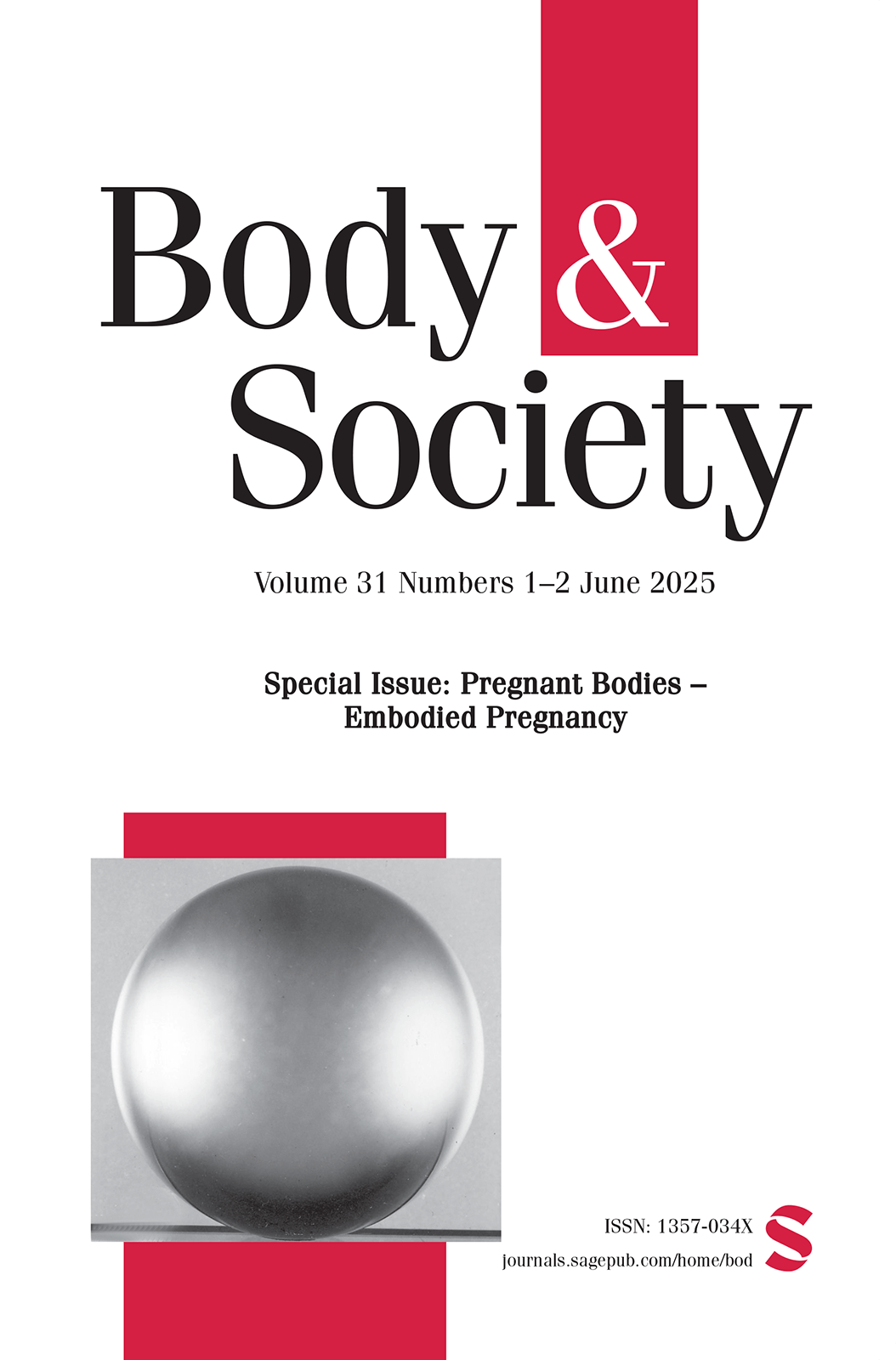
I recently had a new co-authored research article published in the journal Body & Society, titled Embodied Experiences of Trans Pregnancy. It is part of a special issue on Pregnant Bodies and Embodied Pregnancy.

For this piece of writing, we were particularly interested in how embodiment is gendered and vice-versa. In the article, we draw on interviews with trans men and non-binary people to explore the lived, bodily complexities of trans pregnancy. We consider the strategies trans men and non-binary people engage in to manage their gender presentation during pregnancy, and the degree to which pregnancy might disrupt their ability to control the presentation of gender.

The published article is currently behind a paywall, but you can download a free version here from the University of Glasgow’s Enlighten repository, or from the publications page of this website.

This is likely to be the last published article from the Trans Pregnancy Project, an international study which ran 2017-2021. Together we have written around 15(!) other articles and book chapters, and edited a special issue of the International Journal of Transgender Health. You can learn more on the Trans Pregnancy Project website.

Cover of the journal Body & Society.

It’s a long hard revolution

Lesbian conspiracies in Lausanne

On the evening of Tuesday 15th April 2025, I was widely perceived to be a British lesbian, both legally and socially. By 11am the following day, that was no longer the case, following a ruling by the UK’s Supreme Court.

I was not actually in the UK for this momentous occasion. I was instead in the Swiss city of Lausanne, for a workshop on standards of evidence in sex and gender policy. I was there to consider the very questions the UK’s highest court, in their supreme ignorance, had effectively dismissed. Their ruling determined that the term “sex” in the Equality Act referred to “biological sex”, which in turn should be understood as “the sex of a person at birth”. But what do we actually need to know about when we make policy around sex and gender, and what is the role of evidence in this?

The Tuesday evening found me hanging out in a second-rate Thai restaurant with Professor Sarah Lamble, an esteemed criminologist and fellow dyke. Lamble and I spent some time talking about how conspiracy theories around “disappearing lesbians” highlighted the strange ironies inherent in British anti-trans discourse. The anti-trans movement has been extremely successful in raising “reasonable concerns” around supposed problems that are completely ungrounded in reality, to the point where that reality itself begins to warp.

Mainstream political discourse in the UK increasingly reflects anti-trans claims that lesbians are somehow threatened by trans people, or are even being transed en-masse in gender clinics and youth groups. The true biological attraction between two adult human females is disrupted. Young people are tempted away from lesbianism with promises of luxurious facial hair and male privilege; meanwhile, horrifically manly and/or confusingly attractive trans dykes are introduced to the dating pool.

If these claims were true, we might expect to see some kind of reduction in the number of homosexual females. Instead, the evidence we have indicates quite the opposite. Surveys such as the Annual Population Study show a rising number of lesbians over recent years, part of a wider increase of 1.2 million in the recorded lesbian, gay, and bisexual (LGB) population of the UK. This is driven especially by young people coming out, with over 10% of people aged 16-24 identifying as LGB as of 2023.

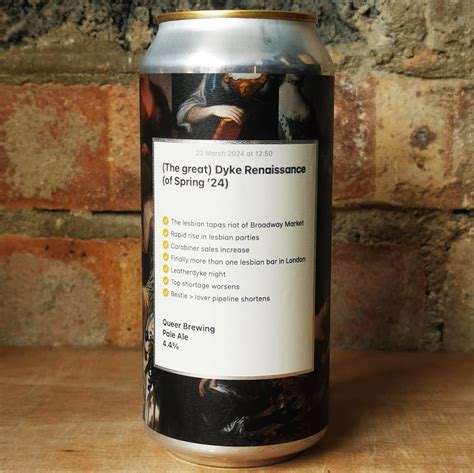
But what about the lived reality of queer womanhood? Well, there’s great news here too: we are living in a truly historic time for sapphic culture in the UK. Proudly out lesbian and bisexual women can be found across the pop charts, on TV, and across social media. Queer bookshops are on the rise. Pop-up butch bars and new queer cafes can be found in major cities and small towns.  And, excitingly, even the much-maligned lesbian bar is making a comeback, with three permanent venues and numerous occasional nights now running in London alone. It’s all got so out of hand that in 2024 the Queer Brewing company sold a juicy pale ale named Dyke Renaissance, which conveniently listed an educational series of cultural milestones on the can.

If trans people are trying to disappear lesbians, we’re doing a really bad job of it.

Photo of a beer can. Text on the can reads as follows. The great Dyke Renaissance of Spring 24. The lesbian tapas riot of Broadway Market. Rapid increase in lesbian parties. Carabiner sales increase. Finally more than one lesbian bar in London. Leatherdyke night. Top shortage worsens. Bestie to lover pipeline shortens. Queer Brewing, pale ale, 4.4%.


Meanwhile, queer cis women tend to be pretty supportive of trans people. In fact they’re one of the single most supportive demographics in the UK – which is presumably why the Equality and Human Rights Commission is, right now, attempting to ban trans dykes such as myself from associating with any more than 25 biological lesbians at any one time.

On evidence

As lesbian conspiracy theories show, the very concept of evidence has had a bit of a hard time over the past decade.

In the UK, this was perhaps best encapsulated in 2016 by the Conservative politician Michael Gove. While campaigning for Brexit, he declared that the British people “have had enough of experts”. Gove’s claim is echoed in a growing anti-intellectualism across the globe. From the mass purge of universities in Türkiye, to the post-truth bizarro world of Donald Trump, to Israel’s scholasticide in Gaza, this trend manifests in blunt and brutal ways. Anti-expert authoritarianism doesn’t care about your facts or your feelings.

However, attacks on evidence can also be more subtle. Gove’s comments are widely quoted, but it’s less well-known that he singled out a particular kind of expert for criticism: “people from organisations with acronyms saying that they know what is best and getting it consistently wrong”. While this was gloriously vague in a way that allowed the listener to project all kinds of things onto Gove’s words, in context it was nevertheless evocative of the kind of group that tends to advocate for social justice. LGBTQQIAAP groups, perhaps.

From academic thinktanks, to charities, to campaigning organisations, the implicit problem was any kind of challenge to conservative common sense. The UK’s political mainstream has since doubled-down on this approach. In the run up to the 2024 general election, Tory home secretary Suella Braverman criticised “experts and elites”, while the secretary of state for science, innovation and technology, Michelle Donelan, promised to “kick woke ideology out of science”.

One of Donelan’s targets was the “denial of biology” in research by feminists, social scientists… and biologists. The problem here is that supposedly common sense notions of sex and gender, which assume clean and tidy biological divisions between male and female, collide violently with the beautiful messy reality of the material world. At this point in history, it is well-established that sexual diversity exists throughout nature, that men are not biologically superior to women, that social advantage is not conferred or denied by chromosomes, and that queer, trans, and intersex people exist in the world. The evidence for this is gloriously multifaceted. We find it in laboratories, in systematic reviews, in surveys and questionnaires, in the way that men shout abuse at us in the streets, in how our sexed bodies shift and change under hormonal influence, in the way we feel when we finally have a language that describes our experiences.

Michelle Donelan decided to tackle the thorny problems of feminist science, intersex bodies, and trans existence by commissioning a research project by Alice Sullivan, a supposed sociologist who doesn’t care one jot for any of the evidence outlined above. Published in March 2025, the Sullivan Review insisted that data collection relating to sex and gender should rely on a very narrow definition of biological sex: one that ignores trans and intersex women’s real lives, bodies, and experiences of misogyny, while promoting a sexist model of essentialised womanhood. Her findings were echoed in those of the Supreme Court judges a month later, whose pronouncements on biological sex were made without any reference to relevant social, scientific, or philosophical research on how this might actually be understood or defined in practice. 

To position this as a wholly new trend would, of course, would be inaccurate. Western jurisdictions have long used and abused pseudoscience to oppress minoritised groups, especially in colonial contexts. This can be seen for example in the British state’s shameful embrace of “race science” and eugenics in the 19th and 20th centuries. What we are now witnessing is an example of the imperial boomerang, in which the logics of colonialism are turned inwards, resulting in increasingly fascist domestic politics.


But did you have a nice time in Switzerland, Ruth?

On that fateful week in April, I joined a group of feminist, trans, and lesbian researchers and activists for the workshop at the University of Lausanne. In the face of increasingly ill-informed policymaking across multiple contexts, it provided us a space to think together about the lessons we might learn collectively from our very different work on healthcare, sports, and prisons.

One overarching theme was the importance of evidence in understanding human experience, in terms of rigorous data collection, careful analysis – and accounting for the lived reality of actual people’s actual lives. A powerful account of the latter point was provided by Dinah Bons, a veteran campaigner for HIV prevention. She pointed out that if a sex worker repeatedly attends a community clinic for her STI tests, this provides evidence that the clinic feels safe enough for her to return regularly, which is far from a given. Such matters are often highly evident to service users and providers on the ground, without any need for a survey or interview.

Another key theme at the workshop was the extent to which various principles of evidence are increasingly abused by politicians, journalists, and institutions.

The concept of evidence has not been rejected wholescale by sexist, transphobic, and lesbophobic policymakers. Rather, “evidence” is increasingly a buzzword to justify particular approaches or points of view, rather than something grounded in a commitment to scholarly standards or an acknowledgement of lived experience. At the workshop, we explored how flawed notions of evidence have been used to support misleading statements or outright lies about human bodies or human experiences. We heard about the use and abuse of evidence in justifying invasive sex-testing for woman athletes, misrepresenting research on young people’s ability to engage in informed decision-making, and defending conversion practices. Notably, while most of these abuses arose from a specifically transphobic politics, they have far wider consequences: especially for women, intersex, and queer people, but also for scientific processes, community consultations, and informed advocacy more broadly.

You can see an example of this in the Cass Review. Through successfully performing the aesthetics of acceptable expertise and science to the satisfaction of the British public, the Review has become what one workshop participant described as a black box. By this they meant that it has become an abstracted justification for policy and practice, handily replacing any ongoing discussion of evidence regarding young trans people’s health and wellbeing. You don’t need to know what the Cass Review actually says or how rigorous it actually is, only that it exists. Well-documented criticisms of the review from healthcare practitioners, academic experts, trans community groups, and (most importantly) young trans people themselves are been rendered irrelevant. The Cass Review is the evidence, and no other systematic review, original research, or personal testimony can henceforth count against it. Not, at least, until 2031 at the earliest: the official end-date of a single £10 million study, based on the Cass recommendations and featuring precisely zero trans researchers.

The British establishment is now attempting to repeat this trick with the Sullivan Review – never mind that projects such as MESSAGE have conducted more extensive and nuanced work on the same topic with a far wider group of experts – and, of course, with the Supreme Court judgement.

Beyond doom

As with Cass, as with Sullivan, it is difficult to capture the sheer enormity of harm caused by the Supreme Court’s pronouncement on biological sex. The consequences are still playing out, and will no doubt continue to do so for many awful months and years.

At the time of writing, the Equality and Human Rights Commission have proposed a programme of mass segregation, designed to discriminate against trans people in the workplace, in public services, and in social groups. The guidance they have written is just that: guidance, not law. Nevertheless, major organisations such as the Football Association, the British Transport Police, and Barclays Bank, all of whom shamelessly paraded rainbows through their social media profiles last Pride season, are falling over themselves to comply. We are witnessing the attempted complete exclusion of trans people from public life, in the latest culmination of a transparent attempt to eliminate us altogether.

In such moments, it can be easy to despair. This is in part because it is easy to forget the strength, resources, power held within trans communities and by our allies. That includes the knowledge and evidence we have access to.

Don’t get me wrong. The people who want to eliminate us are better-funded, better-connected, and now have the Labour government on-side as well as the UK’s traditional right-wing parties. We are not going to win trans liberation overnight.

But then, again, we never were.

Everything I said about lesbian culture earlier is true of trans people too. There are more of us publicly creating art and culture, more of us creating events and running nightclubs and playing in bands and writing essays (hi). There are more community groups providing mutual aid and support when charities and state bodies fail us. And, importantly, we are not alone.

Trans women and non-binary people are a part of the dyke renaissance. We are at the butch bars, and bemoaning the top shortage. We are dancing to Le Tigre and to Chappelle Roan. We are reading Gideon the Ninth and watching We Are Lady Parts and having all the feelings. My partner of the last decade was probably the most surprised of all to learn from the Supreme Court that I am not, in fact, a lesbian, as every bit of evidence from our shared personal lives points to quite the contrary.

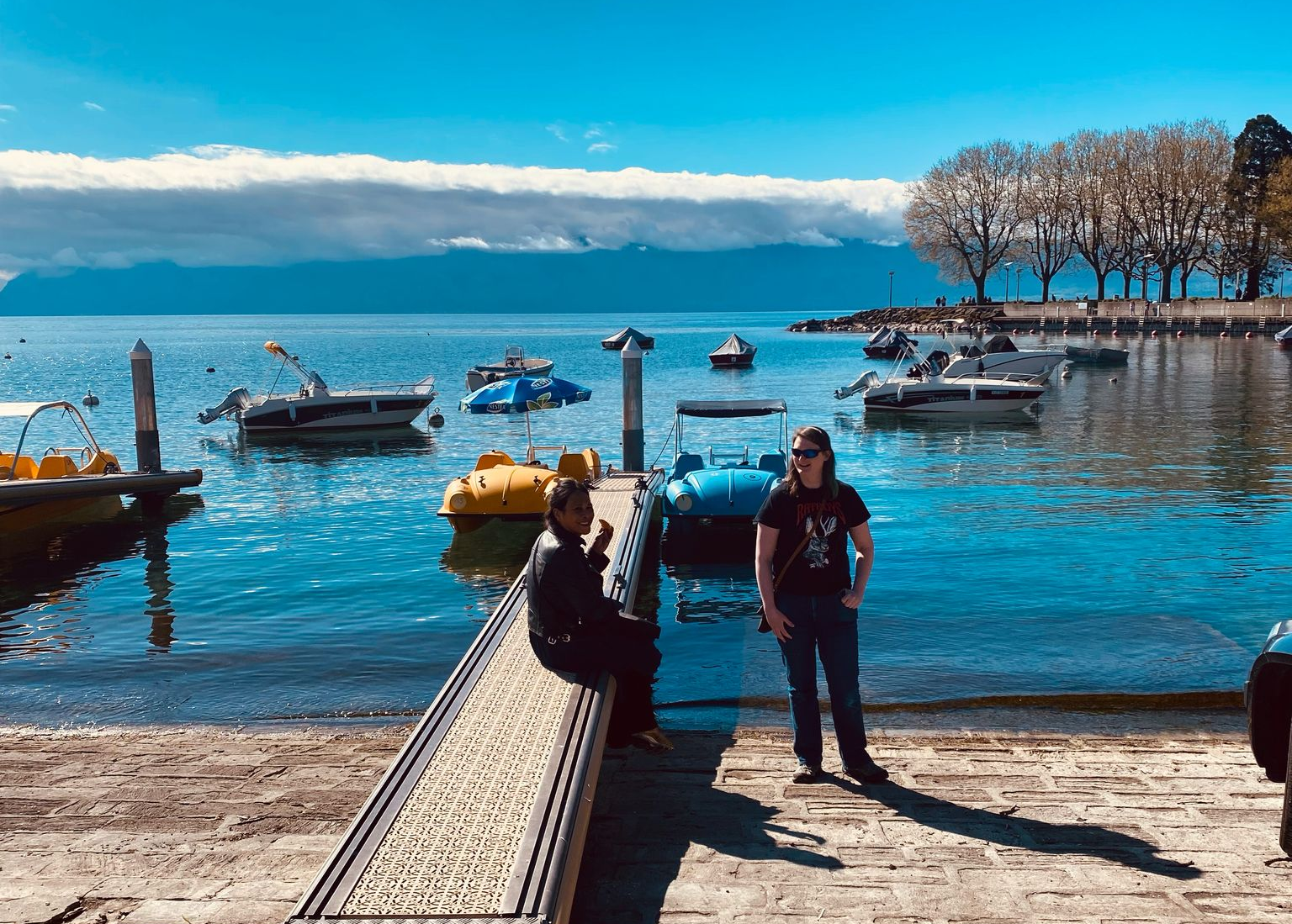
I will concede that some trans people are not in fact lesbians, or even queer. Nevertheless, there are so many other places to find us in community with others. Trans people are in trade unions. Trans people are in workplaces. Trans people are in schools and colleges and universities. Trans people are in the streets. Trans people are on the bus. Trans people are in families. Trans people are making families. Trans people are playing football (suck it, Football Association). Trans people are eating pizza. Trans people are restoring the countryside. Trans people are hanging out beside Lake Geneva in the glorious sunshine, enjoying a much-needed break.


There are more of us than ever, and it is too damn late to put us back in a box.

Resistance is fertile

I was honoured to present the keynote presentation at the Swiss workshop. I spoke about the findings of the Trans Pregnancy Project, a study that produced enormous amounts of evidence on the experiences, needs, and perspectives of men and non-binary people who conceive, carry, and give birth.

No matter how much our findings are slammed by the media and billionaire children’s authors and washed-up comedy writers, our peer-reviewed work has demonstrated the lived reality of male and non-binary pregnancy over and over again. Most importantly, it has helped people. We are part of a far wider movement of parent groups, midwives, and researchers who are collectively building knowledge. I am constantly hearing from people who describe how much this knowledge has resulted in better care for them and their child. This kind of story drives everything I do.

Towards the end of my talk, I discussed the anti-trans moral panic, and the Supreme Court judgement. I then showed the below table of findings from the National Maternity Survey. This annual survey involves those who have recently given birth every year in many (but not all!) English hospitals, over the course of a few weeks. Since 2021, they have started asking whether the person giving birth has a different gender to the sex they were assigned at birth – i.e. are they trans?

Table showing data in response to the question, is your gender different from the sex you were assigned at birth. It shows a statistically significant increase in the proportion of people answering "yes", which rises from 0.56% in 2021, to 0.65% in 2022, to 0.77% in 2023, to 1.58% in 2024.


Two things leap out from this table for me. Firstly, the 2021 data shows a very similar proportion of people indicating they are trans when compared to the 2021 censuses in Scotland, England, and Wales. This suggests that, contrary to assumptions around trans infertility or undesirability, trans men and non-binary people may well be just as likely to give birth as cis women are to become birth mothers.

Secondly, the number of trans people giving birth has risen dramatically over four years. Even as the anti-trans moral panic has deepened. Even as attacks on even recognising the existence of trans people in perinatal services have increased. As Del La Grace Volcano once it put it: “resistance is fertile!”

In the face of growing oppression, trans people are simply refusing to disappear. In fact, we are doing the opposite.

This, then, is the power that the anti-trans movement, the Labour party, and the Supreme Court cannot possibly take away from us. The more trans people are out and visible to one another, the more trans people come out and become visible to one another. Sure, we will unfortunately need to think more carefully about where and when we are out, and where and when we are visible, if this is something we even have any power over in our specific lives. I am sure that more trans people will be going stealth in future years, if they can. But regardless – there are more of us in community, more of us organising protests, and more of us than ever in the lives of our friends, families, colleagues, and allies, showing that it possible to have a good life while being trans.

In this context, it is important to know that people from many parts of the world gathered in Lausanne this April to pool our knowledge and skills and experiences. It is important to know that we have each returned to our home countries to share what we gained. It is important for people to know that similar meetings are happening across the world, in community centres and on university campuses, in board rooms and in bedrooms, involving trans people, and feminists, and yes, lesbians. We are constantly building a movement for positive change, and you do not have to be an academic or veteran activist to be a part of it. Trans power is for everyone.

There is much to say what needs doing in the current moment. We need allies to continue fighting alongside trans people for our collective liberation. We need to be demonstrating in the streets, funding mutual aid and legal action, actively resisting complicity in Labour’s eliminationist agenda, and encouraging every public body under the sun to do the same.

Evidence will be helpful for this. Evidence from academic research, sure, but also – as Dinah Bons pointed out – testimony from the everyday reality of trans people’s lives. And oh boy, do we have that evidence.

More of us than ever are producing evidence of trans existence, and trans persistence.

And this is how we win.

Supreme Court auto-reply

Last week I attended a workshop in Switzerland on standards of evidence in sex and gender research (more on that soon!) During my trip, I had my standard out-of-office auto-reply set up for my email account, informing people of my absence so they wouldn’t expect any immediate engagement from me.

I would typically switch off that auto-reply on my return to work as normal. However, in the wake of last week’s Supreme Court judgement, there is simply no more “work as normal” for me or any other trans person living in the UK.

As such, I have written a new auto-reply, which will be sent to everyone internal to my workplace who emails me. It is impossible for me to forget what is happening to trans people and especially trans people in the UK, so I will ensure it is impossible for my colleagues to forget this also. Equally, my intention is to transform bad feelings into understanding, and practical action. We have always been powerful when we work together and build movements.

I am sharing the text of the auto-reply here in case it is of use to anyone wishing to do similar.


You may be aware that the UK’s Supreme Court has initiated a mass rollback of trans people’s civil rights. In light of this, I am uncertain if it will continue to be safe for women and people like me to continue working at the University of Glasgow.

You can read more about the judgment and its implications here:

UK Supreme Court Rules That Trans Women Aren’t Women under the Equality Act 2010
https://www.wearequeeraf.com/uk-supreme-court-rules-that-trans-women-arent-women-under-the-equality-act-2010/

Illegally Female
https://www.autostraddle.com/uk-supreme-court-ruling-anti-trans-women

While the judgment itself does not require organisations to act in a prejudiced manner, numerous politicians and policymakers have indicated that they intend to make discrimination mandatory. My friends have reported increased street harassment, as the ruling is seen to position trans women as legitimate targets for misogyny and violence. Trans people of all genders are already even more likely to experience public harassment, sexual assault and rape than cis women (see e.g. https://bulletin.appliedtransstudies.org/article/3/1-2/3/), and this is likely to get worse.

The Chair of the Equality and Human Rights Commission (EHRC), Baroness Falkner, has promised to revise guidance to encourage employers to discriminate against trans people in the workplace. For example, she told Radio 4: “if a service provider says we’re offering a women’s toilet, that trans people should not be using that single-sex facility.”

If you are concerned about the safety, wellbeing, and continued access to employment and education for women and trans people such as myself, you can take one or more of the following actions:

  • Write to members of the Senior Management Team at the University of Glasgow, especially the Equality Champions, and ask what they will do to protect trans staff and students, including through ensuring continued access to women’s and men’s facilities as relevant. Find their contact details there <link removed for blog post>.

  • Write to your Head of School and ask what pressure they will be putting on the Senior Management Team to do the same.

  • Write to your MP and MSPs. Explain exactly why you are concerned, and demand action to protect trans people’s civil rights. For example, you could ask for new primary legislation to protect trans people, ask why the UK is no longer complying with the European Convention on Human Rights, or demand the dismissal of biased commissioners from the EHRC. You do not have to write a perfect letter and it is okay to be emotional and express sorrow or anger, so long as you are not aggressive or mean. Advice on writing letters is linked here: https://bsky.app/profile/whatthetrans.com/post/3lnf4sadrjs2p. You can find contact details for your representatives here: https://www.theyworkforyou.com/.

  • Support trans people materially, through providing time, resources, and/or money to community initiatives. Examples include: Glasgow Trans Collective (fundraising for emergency support to people facing an immediate danger of threat to life, https://linktr.ee/glasgowtranscollective); Trans Harm Reduction (supporting harm reduction for people self-medicating in the absence of NHS treatment, https://transharmreduction.org); and Five for Five (donating money every month to a range of trans women’s causes, https://www.fiveforfive.co.uk).

  • Check in on your trans friends and colleagues. Make sure they are okay, and do what you can to be there for them. But do your own research on what you can do to help: don’t put this burden on us. Some good places for information include the websites and social media channels for TransActual, What The Trans, QueerAF, Trans Safety Network, and Trans Writes.

This auto-response is inspired by bell hooks’ comments in her book Teaching to Transgress:

When education is the practice of freedom, students are not the only ones who are asked to share, to confess […] empowerment cannot happen if we refuse to be vulnerable while encouraging students to take risks. [Lecturers] who expect students to share confessional narratives but are themselves unwilling to share are exercising power in a way that could be coercive. In my classrooms, I do not expect students to take any risks I would not take, to share in any way that I would not share. […] It is often productive if [lecturers] take the first risk, linking confessional narratives to academic discussions so as to show how experience can illuminate and enhance our understanding[.]

I will not necessarily respond to any replies you send to this automated message, as I am trying to stay focused on teaching, admin, and research. But regardless, thank you.

Photo of a lake and mountains.

Puberty blocker consultation: my response

In early September I recieved an email from the Department for Health and Social Care, inviting me to participate in a closed consultation on the Labour government’s proposed extension of the Tory ban on puberty blockers. The deadline was 1st October 2024.

September was already extremely busy. I started the month at the International Trans Studies Conference in Chicago, and ended it at the WPATH Symposium in Lisbon. In the meantime I was faced with various writing deadlines, administrative tasks, and the start of a new teaching semester. The small number of other academic experts and voluntary organisations who were also invited to respond no doubt faced very similar challenges with the short notice and unforgiving deadline.

Nevertheless, I scrambled to respond. Like Cal Horton, I regard government consultations on trans healthcare to be inherently abusive at this stage; as I wrote to the Nuffield Council on Bioethics in 2018, “we respond not with hope or optimism, but in fear. This is the power you wield over us”. Given the turgid vibes found in recent political discourse, I also held little hope of a long-term ban being prevented. However, it seemed worth using what little prestige I have as an academic to at least try to encourage the government to listen to actual evidence.

Trans Writes are now reporting that an extension of the ban until 2027 is on the cards for Britain, following a unanimous vote on the same by the Northern Ireland Assembly. With this in mind, I am now publicly sharing the evidence I provided in the closed consultation, plus slides from an oral presentation to the Commission on Human Medicines, who advised the Government.

I don’t think for a moment that sharing these materials will change anything in the short term. However, I feel it is important to put them in the public realm now for the sake of transparency.

Going forward, I hope the work that many of us have done in building and sharing an ethical base for the ethical provision of trans healthcare will make a difference. In the meantime, there is an important lesson here about relying on existing, unequal systems of power and control. As Nat Raha and Mijke van der Drift argue in their new book Trans Femme Futures, making demands of institutions leaves the power in their hands. It is more important than ever for trans people to build power and knowledge within our own communities, in collaboration with others.

We have survived worse in the past by sharing information, ideas, and life-changing medication between us, and we will do so again.

New book chapter: By Us and For Us: Bringing Ethics into Transgender Health Research

I’ve co-authored a short chapter for a new book that’s due out in February. The book, titled A History of Transgender Medicine in the United States: From Margins to Mainstream, traces the development of trans medicine across three centuries, with writing from more than 40 contributors.

The book is currently on offer from the publisher, SUNY Press. If you order by 6th December you can buy the book for 50% off with the code HOLIDAY24. That means the paperback edition will come to $22.47 for those in the USA, or £24.12 with postage for buyers in the UK.

I should clarify also that, as usual with academic books, I won’t personally be seeing a penny from its sale. So if you’d like to read this publication, please do get it at a bargain price if you can!

Book cover for A History of Transgender Medicine in the United States: From Margins to Mainstream, by Carolyn Wolf-Gould, Dallas Denny, Jamison Green, and Kyan Lynch. The cover features an anatomical drawing of a heart in the trans flag colours of white, pink, and blue, against a white background.


Our chapter is titled “By Us and For Us: Bringing Ethics into Transgender Health Research“, and I wrote it collaboratively with Noah Adams, Jaimie Veale, Asa Radix, Amrita Sarkar, and Danielle Castro.

In this chapter we explore the context and subsequent impact of an earlier work, our co-authored journal article (with additional author Kai Cheng Thom) Guidance and Ethical Considerations for Undertaking Transgender Health Research and Institutional Review Boards Adjudicating this Research. That article is now one of the most highly-cited works I’ve contributed to. Since its publication in 2017, it’s been used to inform the design and implementation of hundreds of studies, becoming more influential than I ever could have imagined.

I’m really grateful especially to Noah Adams for leading on the process of both our 2017 article and new book chapter. I first met Noah, along with Jaimie and Asa , at the 2016 WPATH Symposium in Amsterdam, which saw the presentation of numerous extremely unethical studies on trans and intersex people. I learned a great deal very fast at that symposium, and through the subsequent writing process with Amrita, Danielle, and Kai.

Most importantly, I learned that it is possible to change research and practice for the better through interventions that centre community perspectives, mutual learning, and our collective responsibilities to one another. This is an important thing to bear in mind in our current age of disinformation and the abuse of scientific discourse: while abusive practices have a long history in trans medicine and medical research, another world is possible.

Regarding the Charity Commission and Cass Review

I was relieved to see today that the Charity Commission’s investigation into Mermaids has finally concluded. The Commission’s published decision found that Mermaids was mismanaged in several respects, but did not find evidence of misconduct, especially in terms of safeguarding young people or providing medical advice.

This is great news in that Mermaids can now continue to operate as a charity and seek funding from relevant agencies to do so. The organisation clearly faced an enormous squeeze during this time, that significantly affected service provision.

However, I am concerned by the language used around the Cass Review in the Commission’s report and accompanying press release. I feel much of this language is deeply misleading and demonstrates considerable ignorance regarding the Review. At the same time, I feel there are some good, practical recommendations in there for charities which face potential harassment from media reporting and on social media.

Logo for the Charity Commission for England and Wales


Binders

The most concerning statement can be found in the Charity Commission’s press release, concerning Mermaids’ former provision of binders to young people as a harm reduction measure:

The Commission has issued statutory advice to the charity requiring that, should it ever resume this service, its future policy and controls should reflect the recent Cass Review, or any future NHS guidelines on parental involvement.

The Cass Review does not, of course, actually make any formal recommendations for non-medical service providers – moreover, its commentary on social transition is not well-evidenced.

However, the Charity Commission decision quotes the final report of the Cass Review, which states that “parents should be actively involved in decision making unless there are strong grounds to believe that this may put the child or young person at risk“. This would appear to align with Mermaids’ actual policy, which was to work with parents, families, or carers unless a young person was not directly supported. The issue, of course, is that the Charity Commission (and, indeed, the Cass Review team) do not fully interrogate or understand the considerable risks posed to young trans people by unsupportive parents.

I am increasingly of the impression that policymakers are taking all kinds of decisions without having read the Cass Report in any detail, let alone with a critical eye. This would appear to be another example of this.


Having “regard” to the Cass Review

Similarly, in a sub-section of the decision report titled “Implementing the findings of the Cass Review”, the Charity Commission recommends that trustees working with “children and young people who are questioning their gender identity or experiencing gender dysphoria” need to “ensure that they have regard to the findings, conclusions and recommendations of the Cass Review and ensure that they have reviewed their charity’s literature, website and guidance in light of them“.

This statement is, I believe, being wilfully misinterpreted on social media and in media commentary. For example, the Standard’s report on the decision leads with the headline “Charities should follow Cass Review recommendations, say watchdog”. However, that is not what the decision actually says.

In the UK, “have regard” means that organisations should take account of guidance and carefully consider it. An example of this can be found in the Charity Commission’s rules for charities on public benefit:

As a charity trustee, ‘having regard’ to the commission’s public benefit guidance means being able to show that:

  • you are aware of the guidance
  • you have taken it into account when making a decision to which the guidance is relevant
  • if you have decided to depart from the guidance, you have a good reason for doing so

In the current political climate, this strikes me as an eminently sensible approach to the Cass Review. I would expect all service providers and researchers to be aware of the Review’s final report, to take it into account, and (for the purpose of defending against bad faith actors) be able to provide good evidence for acting otherwise.

Going by a statement from Mermaids Chair Kathryn Downs for Third Sector, this appears to the charity’s planned approach to having regard:

The Cass Review final report is the highest-profile review of youth healthcare in the world and has influenced NHS England’s policies. However, it is not legislation or guidance.

She then goes on to emphasise that Mermaids’ advocacy and policy work will continue to be “driven by and give a platform to the voices of young trans people“.


We deserve better from the Charity Commission

Overall, I feel this is good news for Mermaids, and for trans organisations more generally. However, the language used by the Charity Commission, especially in their press release, really muddies the water by providing considerable grounds for bad faith interpretation.

It’s also deeply frustrating to see the Cass Review continually upheld as a paragon of policy advice. Trans people know that the Review was conducted by non-experts and involved individuals hugely hostile to our very existence. As a researcher, when I open the final report I see a methodological and ethical nightmare. The Cass Review is an example of runaway bad science, treated as an article of faith by mainstream decision-makers, many of whom haven’t actually read it.

I don’t think it’s unreasonable to speculate that the Charity Commission’s final decision reflects the influence of transphobic actors. Two years is an extraordinarily long time for an investigation to take place, and surely does not serve the interests of the young people Mermaids work with. Earlier this year the Commission’s Twitter account “accidentally” shared a transphobic post claiming (without evidence) that the charity had caused “so much harm”, calling into question the independence of the investigation.

I’ve been critical of Mermaids myself in the past, especially given I did not feel appropriately supported by them when I came out as a teenager. I am sure I will continue to be critical in the future. However, I hope this criticism can always be both constructive and grounded in reality, recognising our shared interest and care in building a better future for young people.

I’ll end this post, then, by amplifying Mermaids’ demand for better:

…the time taken to publish this report has been frustrating, significantly affecting Mermaids’ fundraising and ability to deliver on our charitable objectives. We call on the Charity Commission to ensure that organisations serving groups facing rising hostility are supported and protected, whilst being held to account where this is necessary.

International Trans Studies Conference Day 4: safety, synthesisers, and the future of the field

This is the fifth in a series of blog posts about the 2nd International Trans Studies Conference in Evanston (4-7 September 2024).

Read Part 1 here.
Read Part 2 here.
Read Part 3 here.
Read Part 4 here.

It’s difficult to put into words what an enormous experience the 2nd International Trans Studies Conference was: the power of being in community with other trans scholars, the benefits of sharing ideas across disciplines and borders, the frustrations that arose with technical difficulties and the academy’s complicity in so many forms of violence. I intended to reflect on some of these matters further in a final blog post, but for now suffice to say that I was by turns exhausted, joyous, and hopeful throughout the fourth and final day of the event.


On being a target: How trans studies scholars and practitioners can survive hate and harassment

Saturday morning featured a session I had put together, focusing on strategies for survival in trans studies at a time of increased negative attention on our work. I approached several colleagues who have encountered substantial challenges from anti-trans campaigns, three of whom kindly agreed to join me to talk about what we might do about this.

Asa Radix of Callen-Lorde Community Health Center (USA) and Samantha Martin of Birmingham City University (UK) were sadly not able to join us in person, but recorded brilliant videos describing practical and theoretical responses to their experiences of being targeted by hate movements, both externally and within the institutions in which they worked. Florence Ashley of the University of Alberta (Canada) brought their irrepressible physical presence to the room, exploring in a short talk how proposed police monitoring of their law classes threatened to undermine the academic freedom of their students.

I wrote my own short presentation based on my experiences, explaining the abuse and harassment that continues to disrupt my research, and ways in which I have sought to counter this in practice. Drawing on my 2020 article “A Methodology for the Marginalised”, I argued that it should not be our individual responsibility to look after ourselves. Rather, we need practical support from the employers who benefit from our work. We also gain from building communities and networks of mutual support among marginalised academics, both within and beyond trans studies. A copy of my slides can be found here.

For me the most important part of the session was not what the speakers said, however: it was the opportunity for attendees to discuss their own experiences and strategies for navigating institutional barriers and opportunities for support. Whereas most of the conference consisted of several academic presentations followed by a short Q&A, we intentionally structured this session to enable as much conversation as possible, with questions fielded by anyone and everyone in the room rather than just looking to the speakers as experts. As a lecturer in community development, I found myself almost surprised by the rigidity of the traditional conference format, and was glad that attendees felt they benefited from our more open-ended approach, and the opportunity to discuss and sit with ideas.

Sadly, our online attendees did not have the same experience as those in the room. Like many other sessions at the conference, ours was plagued with technical difficulties due to problems with the digital conference software Ex Ordo. Given this possibility, and the fact that our session featured two video presentations, I turned up early in the morning to strategise with our amazing technical assistant, Srishti Chatterjee. Unfortunately, the session before ours ended up overrunning due to their own technical issues, meaning that we no time to properly set things up. Under pressure, we managed to get the videos working, but weren’t able to monitor the online chat while this was happening, not realising until afterwards that they were not visible for those outside the room. It would have undoubtedly been worse if Srish was not present, highlighting the importance of having trained people with initiative on hand to respond to problems as they arise.

You can read a third party account of our session on Amy Ko’s blog (thanks Amy!)


Trans Synths and Synthetic Sounds

After our intense discussion of hate and safety, I sought refuge in a more joyous session. And so to synths, and synthetic sounds: to trans pop and hyperpop, music that brings me immense joy.

This session began with a talk titled Switched-On Reality: The Synthesizer and Trans Subjectivity, by Westley Montgomery of Stanford University (USA). Montgomery highlighted the enormous contributions to music made by two pioneering synthesiser artists: Wendy Carlos and Sylvester.

Carlos is famous for her arrangements of Bach for the Moog synthesiser, as well as her film scores for A Clockwork Orange, The Shining, and Tron.  Sylvester was a member of the drag theatre group The Cockettes, before becoming known as the “Queen of Disco” with hits such as “You Make Me Feel (Mighty Real)”. Both are therefore remembered for their major contributions to 20th Century popular music, but as Montgomery observed, can also be seen as “bad trans objects”.

Carlos transitioned in the 1960s and disclosed her trans history in the late 1970s, following her rise to prominence. In this way she became an extremely high profile trans musician. However, she also distanced herself actively from trans liberation movements, enabled by her relative privilege as a highly educated, white, middle-class woman. Montgomery wryly observed that people have asked ‘“where was Wendy Carlos [who lived in New York at the time] during Stonewall?’”, noting that, “the answer is most likely at home, playing Bach”. Sylvester, a Black middle-class person with an ambivalent public relationship to gender, famously proclaimed “If I want to be a woman, I can be a woman. If I want to be a man, I can be one”. However, Sylvester actively rejected transsexual identification, was uninvolved in the civil rights movement, and would later also reject disco music as it waned in popularity.

Both Wendy Carlos and Sylvester can therefore be understood as assimilationist figures who do not live up to liberatory ideals. But Montgomery argued that they must be understood within the context of the material conditions in which they lived. Moreover, their musical contributions are historically significant regardless, especially in terms of synthesiser use. Montgomery posited that the mainstream emergence of the synthesiser and of women and queer musicians happened in tandem, enabling a resignification of womanhood. Montgomery ended the talk by Hannah Baer, who argues moreover that the synthesiser is inherently not cisgender: “a synthesiser’s shape is not in any way where the sound comes from, and there’s something so free and trans in that. You have no idea what sound is going to come out of this thing. And maybe I don’t either!”

The next few talks shifted the focus to 21st Century synthetic sounds in the context of hyperpop. In Gender Knobs: Transgender Expression through Vocal Filtering Technology in Drag, Hyperpop Music and Beyond, Jordan Bargett of Southern Illinois University at Carbondale (USA) looked at the gendering of voice through pitch filtering. Her story began with the vocoder, originally invented to extend bandwidth in telefony, and later adapted for encryption in World War 2 before being adapted for popular music by artists including Wendy Carlos and Laurie Anderson. Anderson in particular used pitch filtering for gender drag in O Superman”, using it to perform a masculine “voice of authority”. In the 2000s and 2010s pitch-shifting gained popularity with nightcore, setting the scene for trans-specific experimentation within hyperpop.

With hyperpop, Bargett explained that filtered vocals could be used for more nuanced gender expression as well as drag. They introduced the examples of trans women artists SOPHIE and Laura Les, who both used pitch filtering to create more “feminine” singing voices. In this context, authentic trans voices might be understood as both “synthesised and authentic”. At the same time, Bargett cautions that pitch alone does not, of course, gender a voice, and that hyperpop artists tend to be well aware of this. She presented the example of SOPHIE’s music video “It’s Okay to Cry”, in which the artist’s voice and body are “undressed”: an expression of trans vulnerability. The talk concluded with a screening of Bargett’s own short film “Transistor”, which explored how “technology can be an extension of the trans self and body”.

We heard more about SOPHIE from Gabriel Fianderio of the University of Wisconsin-Madison (USA), in Interpretation and articulation: Transphobia and Dysphoria Through SOPHIE’s “L.O.VE.”. Fianderio began by noting that “BIPP”, the opening track on SOPHIE’s debut EP PRODUCT, promises to make us “feel better”. But “L.O.V.E”, the closing track on the EP, is difficult to listen to due to the hostile noise of the dentist’s drill that recurs throughout the song. How to make sense of this disjuncture?

Fianderio posits that SOPHIE’s music provides a context in which we can move from “interpretation” (one truth) to “articulation” (space for multiplicity). Interpretation is often a problem with trans people. Citing Salamon, Fianderio  noted that “trans panic” defences for the murder of trans women often depend on the interpretation of gender expression as “an aggressive act, akin to a sexual advance or sexual assault”. Similarly, dysphoria can entail a range of complex feelings and sensations relating to ourselves and others. Forms of interpretation centring pain, disgust, and distress ignores the complexity of ambivalence, and the possibility for accompanying euphoria.

Fianderio’s argument was that “L.O.V.E.” problematises interpretation through its use of the drill sound. They drew on internet commentary to show how the sound is often described by listeners as a physical experience (e.g. “This unblocks my nose”). Complex textures underlie this painful sound of the drill, and complex articulations are subsequently appreciated by listeners who spend time with the song and come to enjoy it. In this context, “L.O.V.E.”’s rejection of singular interpretation enables listeners to read conflicting emotions into the same form, and hence articulate complex feelings around euphoria and dysphoria. This can take place with and through the drill sound itself, and/or the song structure itself, with its synthesised vocals and moments of relief and beauty.

The final talk in the session, by Lee Tyson of Ithaca College (USA), was titled Trans Hyperpop and the Synthetic Authenticity of the Digital Voice. Tyson asked how and why trans hyperpop artists are positioned as “authentic”. Their talk began again with SOPHIE, noting that she was widely celebrated for her “authenticity” following her accidental death in 2021, which appeared to potentially contract with the experimental approach and ironic sincerity she employed in much of her music. Tyson describes this as a form of “synthetic authenticity” that can be found among many trans hyperpop musicians.

Tyson returned to the topic of vocal manipulation, quoting Laura Les’ comments on her earlier work, in which she explained she altered her vocals because “it’s the only way I can record, I can’t listen to my regular voice, usually” [my note: interestingly, the most recent material from Les’ band 100 gecs features much less processing on her vocals]. By contrast, Dorian Electra artificially inflates the character of their voice: “My music is simultaneously artificial and authentic. It’s just as authentic to use the same sappy love song language that’s been used in a million ways. A person singing a love song is still putting on a character”.

Tyson contextualised these comments by noting that voice manipulation can be understood as part of a wider technological field, as with (for example) hormone therapy, surgeries, and voice training. Within this field, hyperpop can be understood as a form of simultaneous deconstruction/reconstruction [note: I have also written on this as a feature of trans music!] This is not always liberatory: Tyson outlined the examples of the commercialisation of hyperpop, and the white appropriation of tropes of Black soul music by artists such as SOPHIE. At the same time, by finding something “more real” in artificial sounds, hyperpop offers a productive challenge to contemporary trans advocacy strategies and neoliberal imperatives of self-actualisation which rely on norms of intelligibility.


Overall, this was one of my favourite sessions of the conference. Like much of the music under discussion, it was self-knowingly silly and playful – yet stuffed full of surprising depth and interesting ideas. I only wish that the presenters had spent less time critiquing the whiteness of hyperpop, and more time considering the work of groundbreaking artists of colour such as underscores. Meanwhile, I don’t think music in and of itself can change the world, but it can help change the way we think, and that’s powerful and important.


Caucuses

After lunch, I spent most of the afternoon in a range of caucus sessions. These actually ran throughout the conference, and offered more open discussion spaces for people to have conversations on the basis of shared personal/demographic experiences or disciplinary interests. For example, there was an Asian scholars’ caucus, and a caucus for people studying trans healthcare.

Unfortunately, the schedule for the event was so jam-packed that each of the caucuses took place alongside multiple parallel presentation sessions. As such, I didn’t get around to attending any of the ones relevant or open to me until the final afternoon, when I managed to go to three in succession.

The first of these was the Palestinian caucus. This was an informal but very well-attended event arranged by attendees who wanted to organise collectively against the ongoing genocide in Gaza. This felt particularly urgent at the conference given the absence of Palestinian speakers, the presence of corporations who invest financially in the Israeli regime, and the suspension of Northwestern University professor Steven Thrasher following his support for a student encampment.

The second was the trans women and transfeminine scholars’ caucus. I recommended this take place and volunteered to chair it after a callout for volunteers from the conference organisers. Like many trans professional and trans studies spaces, the conference was dominated by men and transmasculine people. One joke often repeated at the conference was that “trans studies is mostly trans men who talk about trans women to cis women”: it felt very different to consider the repercussions of this within a woman and transfeminine only space. I found it very meaningful and refreshing to connect with colleagues in this context, and there is at least one very cool idea which might come out of our conversations, so watch this space.

Finally, I attended a caucus on publicly engaged scholarship. This turned out to be a small number of us swapping career advice, which is perhaps not what I originally intended, but felt very productive nonetheless!


Closing plenary

The conference closed with a plenary titled Whither Trans Studies? Towards a Future for the Field.

First, organiser TJ Billard took to the stage to make some closing comments. They thanked their fellow organisers, plus the conference’s steering group and sponsors, reflecting on how important it is that various university departments (especially at Northwestern) and research institutions support trans studies. They then reflected on the conference’s ambitious approaches to accessibility and inclusion, which faced some significant hitches in practice.

Billard thanked conference attendees for being patient and forgiving when things went wrong, and encouraged future organisers to “learn from the things that we tried to do, learn that the things that we failed to do, shortcomings both technical and intellectual”. They noted, echoing the complaints of the Palestinian caucus, that this included the absence of Palestinian scholars at a time of ongoing scholaricide, and apologised for the organisers’ failings in this regard.

We then heard reports from a small number of the caucuses. The graduate student caucus asked, “where is trans studies going? There was lots of discussion, and no consensus”. The Asian scholars’ caucus noted how the needs of Asian scholars are not necessarily met in “standard” Anglophone trans studies classes or syllabi, and reflected on the importance of building a network and not being alone.

The most extensive report came from the disabled scholars’ caucus, and these reflected many of the major strengths and failings of the conference I and others have written about recently. For many disabled scholars, we heard, this was a first opportunity to know of one another’s existence. Nevertheless, “the absences at this conference [were] as significant as the presences”: a comment that reflected Kai Pyle’s statements on the absence of Indigenous scholars in the opening plenary. Disabled people were absent due to numerous barriers to participation: this included the extreme circumstances facing those experiencing disablement through genocidal actions note just in Gaza, but also in Sudan and Congo.

In this context, the disabled trans scholars who were present were broadly “grateful and somewhat okay with the access we have experienced this week”. However, we were left with a number of thoughts which will be vital for future organisers: “Access is about justice, and justice is about accountability […] Access is not simply a matter of getting into a building. It is about interrogating why a building is inaccessible in the first place”.

Then the conference closed with a barnstorming final speech from the legendary Susan Stryker. She began by thanking all the people who had approached her throughout the event to thank her for her significant body of work: “I appreciate that something that I did landed with you in some way”. She then turned to think through the purpose and importance of trans studies.

Stryker started by looking to the roots of her own oppression. She explained that this has informed her analysis of body politics that positions people within specific, given social roles. She argued that while this body politics is a lynchpin of the Eurocentric social order, it has not always been this way, and it does not have to by this way.

What does it mean to be trans in this oppressive social order? Stryker proclaimed that “transness is an affective experience, driven by suffering and drawn by desire […] it is a practice of freedom”. This presents the possibility of alliance across multiple liberation movements. As Black trans studies has shown, transness is not just about sex/gender, but also at least as much about race, and the ways that certain bodies are racialised through gendering and gendered through racialisation. It is also vital that trans people understand their commonality with feminism. Insofar as feminism defies biological determination, “feminism can be considered a trans practice of freedom”. What brings us together is our movement across the boundary of categories designed to restrict freedom: “it is wrong to believe that embodiment must be a trap”.

Consequently, trans studies is about the pursuit of freedom, and should be a liberatory practice. Stryker cautioned us that creating an institutionalised form of trans studies does not solve the actual problems we face. She wryly insisted that we learn from the student movements of the 1960s, which did not achieve revolution, but instead “achieved ethnic studies departments”. She encouraged us to consider how we might use what positions we have in the academy to create space for struggle: “If we are so damn radical, if we are so dangerous, why has the field not been oppressed more brutally?” Stryker explained that she wasn’t trying to deny the real oppression we face – but rather, to acknowledge that as we sat gathered in the state of Illinois, certain things were possible for us which are not necessarily possible elsewhere.

At this juncture, Stryker reminded us of Stephen Thrasher’s suspension for visiting a student camp that supported the Palestinian struggle against genocide. She invited us to consider what it is about a trans studies conference – sponsored by the very institution that suspended Thrasher – that makes us more acceptable than voicing support for people facing death in Gaza?

Stryker shared several concerns raised at the Palestinian caucus with the rest of the conference, asking: what might a post-disciplinary trans studies look like in light of an absence of meaningful, substantive engagement with the genocide in Gaza? Drawing on a statement put together by the caucus, she noted that the conference was not BDS compliant, that attendees were not made aware of Northwestern University’s complicity in genocide, that there was no explicit discussion of the scholarcide in Gaza in the official programming, and that there was no formal engagement with the large Palestinian diaspora community living near to the campus. She argued that a shared liberatory goal for trans studies should include solidarity with Palestine, and future organising should undertake a good faith effort to foreground Palestinian scholars and be BDS compliant. Stryker invited scholars to raise their hands if they were supportive of these statements of solidarity: a majority of the room immediately did so.

Finally, Stryker formally proposed the creation of a new International Trans Studies Association, as a context for trans studies scholars to organise for freedom. As the “largest, most diverse gathering of trans studies scholars to date”, she stated her belief that the conference had a mandate to make a decision on the creation of this new association. She proposed that this process begin by taking advantage of the international steering group assembled for the 2nd International Trans Studies Conference, with this group invited to create proposed bylaws for the new organisation, and all conference attendees invited to join as founding members and vote on the proposed bylaws. Stryker asked if the room was in favour of this process, and asked us to raise our hands if so: once again, there was an overwhelming expression of support.


And that was it!

I’m really grateful to everyone who has written to say how they have found this series of blog posts interesting or useful. I think it’s really important to share material from conferences with people who are unable to attend. I used to regularly livetweet, but this no longer feels like a productive form of engagement. Writing up my notes ended up taking a lot longer than anticipated, and the length of some of these posts has felt a bit unwieldy. It’s also a bit frustrating to be finishing off the series over a month after the conference ended! Still, it feels really important to have some kind of record.

I’m hoping to write a final post on the Trans Studies Conference, reflecting more broadly on my experiences and questions of accessibility and resourcing, possibly comparing and contrasting with the 2024 WPATH Symposium in Lisbon. Let’s see how I do!

International Trans Studies Conference Day 3: gaming, representation, and transnationalism

This is the fourth in a series of blog posts about the 2nd International Trans Studies Conference in Evanston (4-7 September 2024).

Read Part 1 here.
Read Part 2 here.
Read Part 3 here.

I started writing this posted back in bonnie Scotland! Back to work, back to endless emails, back to doing my absolute best that all the masters dissertations are marked in good time. I finished it on an aeroplane to Lisbon, for my second major international event of September: the 2024 World Professional Association for Transgender Health Scientific Symposium, and am posting it from a conference centre in Lisbon.

As such, and as you might have noticed, I have slowed down with my writeup from the International Trans Studies Conference. Still, I have plenty more notes and reflections, and hope to continue writing these up over the next week or two.

My conference account left off halfway through the morning of the third day. After the sheer emotional onslaught of the session on political economy (no, really) I decided to slow the heck down and not rush off to the next talk. I went to the front desk where I managed to catch two of the conference organisers, Avery Everhart and Erique Zhang. I’ve known Avery and Eri online for years and long admired their work from afar, but we’d never previously met in person. I have really, really missed making these deeper human connections at conferences. Much as the organisers were clearly exhausted from firefighting technical and access issues to keep the conference running, it was wonderful to meet them and take time for a chat.

I therefore missed the first two papers from the next session I attended. This was a bit of pity given how amazing the rest of the session was, but self-care is important, and I regret nothing!


B{ending} Trans Game Studies

I don’t really do any work in game studies, so chose this session mostly because it seemed fun, and interesting. An opportunity to expand my horizons. This was the right choice – I had an incredible time. 

I turned up partway through a presentation from Madison Schmalzer of Ringling College of Art and Design (USA), titled Circuit Bending, Trans Play, and the Death of Game(!) Schmalzer introduced circuit bending as a practice of “tinkering and seeing what happens”. Examples from her art, research, and teaching included rebuilding children’s keyboards, and messing with old Mario games to create something entirely new. Controls shifted, the sky changed colour, characters ran unexpectedly across the screen. Through the destruction and reconstruction of corporate entertainment products, students discovered entirely new modes of play.

Analysing this process, Schmalzer drew parallels between digital games and social constructs including gender and race. She argued that circuit bending raises important questions about digital products, such as: why does this game exist? whose interest does it serve? And finally: how might we “bend” other social systems in the same way that we might do with games?

Some possible responses to these questions were offered in the next paper: “We Can A̶l̶w̶a̶y̶s̶ Never Tell”: Giggling Faces, Gender Machines, And Un-Recognizing Play, by PS Berge of the University of Albert (Canada). Berge introduced the concept of “ludoarsony”, which variously refers to breaking, burning, or destroying a game (including technical or cultural rule sets), or to playing with fire, creating and playing through the act of destruction. Berge posited that ludoarsony, like play more generally, is a trans thing to do: “play and transness are of kin: both are transformational movements that weave in and out of rigid cultural and computational systems that they are ultimately ambivalent to”.

Berge’s paper drew on a number of case studies in which trans people play with the claim commonly made by transphobes that “we can always tell”: the notion that trans people are inherently clockable as such, that we are always reducible in behaviour and appearance to our sex assigned at birth. The first of these was Giggle for Girls, the now-defunct trans-exclusionary social networking app “for females” (recently central to the groundbreaking discrimination case Tickle vs Giggle…no, really).

Giggle’s verification system for female users relied on so-called gender-recognition technologies. Berge observed that on launch, Giggle was not simply criticised by trans people, but also played with. Examples included trans women testing the verification system (“I’m proud to announce that apparently I’m cis now. I’d like to thank Satan”), and revelling in negative reviews from cis women who were not recognised as such (e.g. “I can’t even access this app […] I was so looking forward to a female-only space, but now I just feel alienated. Thanks for that.”).

Further undermining the logic of “we can always tell”, Berge discussed the work of algorithmic artist Ada Ada Ada, showing us an example of a video in which the artist changes the response of facial recognition software in real time by pulling different expressions. Ada Ada Ada followed this up with “The Misgendering Machine”, an app available to anyone with a phone camera or webcam, which encourages people to play with how they are gendered by the machine.

Berge concluded by arguing that there is play in the unmaking, and to find play in the unplayable helps us find life in the unliveable: “we do not play in spite of the world being on fire – we play because the world is on fire”. Central to this is a project of mutual recognition: “we can never tell”, an acknowledgement of the ways in which we are all fundamentally unknowable, a promise not to rat each other out.

My horizons suitably expanded, I headed out to grab lunch.


Picturing Trans: Studies of Trans Visual Culture

In the afternoon I again wanted to attend a session that offered a different perspective to the material I normally encounter in my work on trans healthcare, both to expand my horizons and take something of a break from the slow creeping horror of my own area. So I want to a session on trans visual culture.

The first two talks offered radically different perspectives on trans people’s self-representation: one looked at self-portraits of trans bodies, and the other very intentionally looked at why we might avoid portraying our own bodies. The third talk then looked at how we might be represent and be represented by other trans people.

In Beyond Representation: Photographic Methods in Trans Myth-making, June Saunders of Washington State University (USA) offered a beautiful, poetic reflection on trans photography and representation that elides direct representations of our bodies. Saunders presented numerous images of landscapes, buildings, and everyday medical paraphernalia to accompany her talk. She encouraged us to be present in the moment without our devices, reflecting the themes of the presentation.

Sanders focused on how we might sit within and create photography that captures specific experiences and moments in time, without simply using this to produce commodifiable content. She examined the tension between the power of self-representation and exploration on the one hand, and the use of images in the service of surveillance and control on the other.

Ace Lehner of the University of Vermont (USA) looked instead at bodily self-portraiture in Transing Identity in Contemporary Photography: Zackary Drucker and Rhys Ernst’s Relationship. Noting that trans visual culture has played a crucial role in political representation and social change since the 1990s, Lehner looked at the “accidental” historic art project undertaken by Zackary Drucker and Rhys Ernst as they depicting their transition and relationship. Echoing Berge’s morning presentation on trans play, Lehner argued that trans visual culture can enable us to challenge dominant cultural logics that assume seeing is uncomplicated, and that we can easily read gender, sexuality, and race onto images.

Given the enormous number of contemporary visual transition diaries posted online by transmasculine people, it was interesting to hear Lehner argue for the importance of work by artists such as Drucker and Ernst in the 1990s, when transmasculine individuals were often ignored or erased in the media. Of course, as Lehner noted, transfeminine people have hardly benefited from historical media interest in bodies, which are sensationalised as objects of heightened sexualisation, and non-consensually aligned with dominant cultural ideologies.

The final presentation in this session was by AC Panella of Santa Rosa Junior College (USA), titled I Got 99 problems and Objects of Trans Memory Are Some of Them. Panella asked what we are teaching each other about what it means to be trans and “do” transness, especially given the limitations of existing trans archives. Said archives are typically derivative of lesbian and gay archives in their approach, and/or subsumed within wider LGBT collections, leading to misguided ideas about trans history. They can also contribute to US-dominated approaches to trans history, with celebrations of Pride (for instance) often marking Stonewall, rather than localised celebrations of trans uprising. These issues are compounded by the economic insecurities experienced by many trans people, with housing issues (for example) meaning individuals are less likely to hold on to items from their past. This spoke to a conversation I recently had with a fellow activist who lost much of her personal archive during a period of homelessness.

Panella outlined how these issues might be addressed through localised community projects, and the involvement of artists. The presentation included several examples of Latinx trans projects in Mexico and the west coast of the USA. They incorporated approaches including community storytelling through writing and arts workshops, intimate portraits of people in their homes, and memorial or celebratory pieces (e.g. fashion displays) based on the lives of community members that activists felt were important to remember. In this way, it is possible to create archival material which captures the complexity and nuance of local experiences, tying these both to cultural history and to contemporary struggles.

Transnationalizing Trans Studies: Building a Truly Global Field

The final session of the day was a plenary panel in the main conference hall. Titled “Transnationalizing Trans Studies”, it offered a refreshing alternative to the North American perspectives that dominated much of the conference, but also once again highlighted the limitations of the conference’s internationalism. We were meant to hear from a scholar-activist in Zambia – the only planned plenary speaker from Africa – but unfortunately she was unable to join us due to energy shortages. I truly hope future events can address this oversight: a matter addressed by the chair, Francisco Fernandez Romero (University of Buenos Aires, Argentina) in his introduction.

The panel therefore featured three speakers who responded to questions from Romero: Madi Day of Macquerie University (located in what they intentionally highlighted as the occupied territories named “Australia”), Alyosxa Tudor of the School of African and Oriental Studies, University of London (UK), and Michelle Ho of the National University of Singapore (Singapore).

The discussion opened with a question from Romero about what trans studies looks like across these contexts. Day began by explaining that, as an Indigenous scholar, they approach the field from an Indigenous studies perspective. They emphasised that Indigenous studies should not be understood as the study of Indigenous people, but rather as a critical examination of the colonised world. This approach understands settler colonialism as a global apparatus, with some Indigenous lands directly occupied (as with Australia), and others exporting their resources to the colonial centre (as Romero described earlier in the day with reference to Argentina). In this context, “colonialism is the condition of possibility”. Day therefore distinguished between white settler trans studies in Australia, and Indigenous trans studies. They spoke to the importance of drawing (appropriately and with due credit) on Indigenous approaches in trans studies, to better address the problem of material from the Global South being always used as data, and never as theory.

Tudor spoke to their context as an academic of Eastern European heritage living in the UK. They argued for a transnational approach to trans studies that goes beyond the “national” in understanding global-local connections, and embraces anti-nationalist principles, insisting that transnationalism is “not about all the small nations sitting down with the big ones for a nice chat!” This is important for interrogating discourses of Eastern European exclusion in trans studies: simply creating a series of national sub-fields is not an adequate solution. Relatedly, Tudor emphasised that a transnational trans studies cannot escape the current moment of genocide in Gaza, and must name the violence inflicted on the Palestinian people.

Ho discussed questions of multiple marginalisation. Citing the TSQ: Transgender Studies Quarterly special issue “Trans in Asia, Asia in Trans”, she observed that trans studies remains marginal in Asian studies, just as Asian experiences are marginal within in US-dominated trans studies. She also emphasised the difficulties of difficulty of translation in terms of both language and experience, with an enormous diversity of “trans” possibilities present across the Asian continent.

Romero followed these comments with questions that followed up on the topics of translation and transnationalism. Day argued that if trans studies is to be truly transnational, the goals and ambitions should be determined the global Southern majority. The problem in only calling on Indigenous knowledge when it’s directly relevant to Indigenous experiences is that you maintain a colonial viewpoint: if you are a white settler leading a research project, group, or institution and are not actively resisting settler colonialism, you are conducting a white settler project.

Day highlighted how shared experiences across Indigenous communities in different parts of the world have informed shared resistance and productive modes of thinking, and asked: “what would happen if we started thinking of transness as an identity rather than an identity?” But to be in a community, you need to act like a community. Community is non-extractive, and if you have more of something, you need to use it to help others.

Tudor returned to the question of nationalism. Contrasting with Day’s account of community, Tudor argued that nationalism rests on logics of opposition and competition, and resists complexity. In additional to critiquing white, Western nationalisms, they observed that decolonial, diasporic, and minoritised nationalisms also deserve scrutiny, as contemporary counter-hegemonies may become future hegemonies. That is to say: a people’s historic experiences of violence and oppression may not present future violence against others in the name of a new nation, as seen in the example of Israel. Tudor suggested that queer and trans studies might offer a vehicle to highlight the violence of nationalism, through challenging and deconstructing categories, from gender to nation. In this context is important that decolonialism is a mode of action, not a metaphor. Tudor noted they have used their platform as an academic speaker to highlight the growing death toll on Gaza, but this kind of speech act alone is insufficient: “it is clear none of my previous papers have saved a single life”

Ho focused especially on the topic of translation, exploring what might get lost through simply assuming that the language of one context might adequately explain another. She emphasised that to be adequately in conversation with a context, we need to learn their language and culture. This creates real problems for “international” publishing in the English language. Echoing Day’s comments earlier in the plenary, Ho noted the pressure to use Western theory to analyse Asian case studies, and described how a peer reviewer insisted that there were too many “non-English words” in her manuscript: the implication being, “can you do something to avoid alienating your largely US readership?”

Ho concluded by reflecting on the difficulties in attempting transnational approaches to trans studies in Singapore. What compromises are necessary in a very conservative society? She described the example of trying to get funding to bring in a trans studies scholar to speak at her institution, noting that the question is in part one of framing: “I could invite Jack Halberstam to come, and say ‘Jack Halberstam is an established scholar in cultural studies’”. However, given how Western-centric “transnational” scholarship is, this strategy is more effective with US academics than, for example, experts from India. Ho ended with two open questions for us to consider: if trans studies is effectively underground in a specific context, can it be considered trans studies? And how can Western scholars learn from people in these contexts?

The following Q&A session included some interesting reflections on the binary of Global North / Global South given the experiences of Indigenous people in settler-colonial nations. On this note, Day stated their appreciation for the Trans Studies Conference operating within established protocols for Indigenous engagement, for example through inviting Indigenous contributors to speak first: this could be seen both in Kai Pyle’s opening statementson the first day of the event, and in the structure of this very plenary.

International Trans Studies Conference, Day 3: getting emotional with political economy

This is the third in a series of blog posts about the 2nd International Trans Studies Conference in Evanston (4-7 September 2024).


Read Part 1 here.
Read Part 2 here.

There is something about seeing your experiences accurately represented in research. This can be very emotional if you are used to seeing people like you ignored, erased, or otherwise grossly mispresented. Much like media representation, research representation can be powerful in putting a mirror to our experiences and suddenly making them a lot more real.

I dislike the vast overuse of the term “valid” in trans discourse, but there is something very important about being actively validated, about being seen, when the entirely of society feels like it’s set up to deny or gaslight you. It’s a consciousness-raising moment, in which you become capable of truly acknowledging or naming what is happening to you. It is meaningful and authentic and it enables action. But it is also very painful.

As a trans health researcher, I think I’ve developed a pretty thick skin. I see a huge amount of bad trans health research, built on cis ignorance and a fundamental inability to engage with the reality of our lives. I also see growing amounts of painfully real research from researchers who are engaging with care. For better and for worse, I feel I’ve learned to carefully manage my emotions and let all of this wash over me, in order to engage consistently and “professionally”.

But on Thursday morning, a series of presentations made me cry.


Global Struggles, Local Solutions: Transgender Perspectives on Economics and Welfare

The morning began with doughnuts, piled high in the reception area of the conference, a very extravagant seeming American breakfast. From there I headed to the first session of the day, which explored trans political economy. This might seem like the dryest topic imaginable, but for me it gets right to the core of how systemic transphobia and cisgenderism operate, how we feel about that, and what we might do about it.

The study of political economy is concerned with how economic systems interface with social and political systems, and vice-versa. The first paper in this session, by Yukari Ishii of Sophia University (Japan), looked at homeless trans people’s access to welfare systems. In Reasons Underlying Gender-diverse Individuals’ Need for Public Social Welfare Support in Japan, Ishii reported on findings from the 2009-2020 consultation records of Moyai, a non-profit voluntary sector welfare provider, plus interviews with service users.

Ishii’s paper mapped in detail how trans people find themselves accessing welfare systems after being failed by heteronormative and cisnormative systems throughout their lives. She described trans people being rejected by their parents, dropping out from school due to the hostility of the heavily gendered environment, which limited their formal educational attainment. Participants in her research struggled to find work, or were otherwise fired for being trans. More tolerant work environments either required skills or an education background that trans people were less likely to have, or were deeply insecure, as in the case of sex work. Trans people who struggled to hold down a job also struggled to find places to live, with many sleeping at friend’s houses, in Internet cafes, or in the streets.

Ishii’s research showed up vulnerability is created through structurally embedded cisgenderism, impacting people from families to schools to workplaces and even to apparent sites of last resort; for example, she described how Internet cafes did not allow trans women to stay overnight if they were sex workers. She further noted that the consultation records at Moyai were limited where consultants didn’t have a lot of knowledge about queer people, or didn’t know what questions to ask about (for example) family violence. She concluded by recommending that welfare professionals gain knowledge of gender and queer issues, to ensure they are best placed to provide advice and support to service users, and keep better records for improving long-term understanding of the problems faced.

The next paper similarly traced the deep context of economic disadvantage, this time looking to history for a deeper context. In Trans-cending Barriers to QTPOC Labor in the South, Anthony Belotti of Virginia Commonwealth University (USA) focused on the US South’s historical legal landscape, linking this to the region’s racism, homophobia, and transphobia.

Belotti argued that “the history of the South has created an environment where QTPOC (queer and trans people of colour) do not have equal access to labour opportunities and class mobility”. Various legislation effectively criminalised queer, trans, and Black existence, including the Jim Crow laws, “decency” laws which banned wearing clothes not associated with sex assigned at birth, and anti-union “right to work” laws. Belotti argued that while there is relatively little archival material on QTPOC experiences in the South, these laws provide an important insight into people’s experiences, especially given the existence of legislation such as the decency laws implies a perceived need for them from authorities. The concrete impact of all this was that QTPOC had difficulties finding and keeping legal employment.

By the time Dan Irving presented, I will admit I was already feeling pretty vulnerable. In Ishii and Belotti’s excellent papers, I heard about contexts both very different to the UK, and remarkably similar. Beyond the broad importance of their findings, I recognised in their accounts the experiences of so many of my friends and colleagues – a meaningful and painful experience that underpins so much of my engagement with good work in trans studies.

Irving, of Carleton University (Canada) presented a paper titled Sensational Disruptions: Affective Economic Justice at Work. Building on his previous work on trans political economy, this presentation reported on findings from two large qualitative research projects on unemployment and underemployment among trans and non-binary people in Canada, conducted in 2012-16 and 2020-24.

Irving’s paper focused on exploring one anticipated finding from these projects in depth: the “I can’t put my finger on it” feeling. This theme involved participants encountering difficulties in the workplace or in attempting to land work, but finding it hard to articulate why they couldn’t get the job, or had hours reduced, or were laid off, even when appropriately skilled – or overqualified. There was something about getting through the door and finding the vibe was off. These experiences were especially likely to be detailed by trans people from racialised minorities, and/or trans women.

I immediately recognised what Irving was describing. How could I not? He had just described years of my experiences in the workplace as a trans woman. And of course, this isn’t really a new insight: the problems he named have been discussed in feminist literature for decades (especially Black feminist and womanist literature), and indeed within the consciousness-raising group I joined shortly after moving to Glasgow. These findings also related to the phenomenon reported by people from many marginalised groups, whereby we always have to be the very best to succeed in a basic manner in the workplace.

What was most useful about Irving’s paper, however, was his theorising of the phenomenon. In a manner that resonated with Nat Raha’s comments on the second day of the conference, Irving turned to affect theory (explanations that centre feeling and emotion) to explore what is happening to us in the workplace.

Irving described how trans people (especially racialised minorities, and women) often find ourselves constantly doing the additional work of ensuring that managers, co-workers, and customers feel comfortable with us. This causes a “sensate disruption” in our lives, shaped by the “corrosive impact of fear, repulsion, anger on the part of cisnormative employers, co-workers and customers and the violent impacts of rage, depression, exhaustion on trans jobseekers and workers”. Even worse, there are few outlets for these emotions: neoliberal discourses of personal responsibility mean that feelings are expected to be quarantined within the body of the (marginalised) worker, for example through us taking responsibility for our transitions and bodies and carefully managing our relations with others.

It was at this point that I started to cry.

I feel so, so tired and alienated in my work, all the time. I have some amazing colleagues and students, but I am still working in a system where I can feel myself being discriminated against while also finding it hard to always articulate the exact ways in which it happens. I am tired of being advised to refocus my energies in the workplace even as an eliminationist movement works against trans existence. I am tired of my research being erased or dismissed, I am tired of being asked to meetings where I am ignored, I am tired of being asked how the institution can best protect me, I am tired of being told that my failed grant applications are the “most impressive unfunded bid” that people have ever seen. I am tired of having little language for these experiences, and of pushing my feelings down every day.

I am tired of seeing as much, and far far worse, happen all the time to my trans colleagues and friends.

Responding to these findings, Irving asked: “how do we begin to grapple with the ‘affective byproducts’ of post-industrial demands for affective labour?” How do we reckon with the unsayable in our felt experiences? And quoting Deborah Gould, “what kind of political context do we need to build that actually listens to what many people are feeling and that cares about people’s disappointment, despair and furies?”

Drawing on the work of Hil Malatino, Irving proposed “infrapolitics” (low-profile, informal, undeclared forms of resistance) and community care as a basis from which to build solutions. Drawing from participant narratives, he argued that this can include political acts of resistance that are “not on the oppressor’s radar”: examples included zines and phone lines distributing information among workers and applicants, building community connections, and forms of entertainment and commentary such as comic strips. Like Ishii, Irving also highlighted the ways in which trans people effectively provide welfare services for one another, for example by providing beds or housing for homeless community members. What this all amounts to are forms of anti-capitalist resistance that amount to a collective recognition and addressing of the problem.

Sticker with trans flag and text that says: read and submit your favourite texts for free. Visit www.transreads.org.
Sticker spotted at the conference. An example of infrapolitical resistance.

The session concluded with another extremely powerful and nuanced presentation, from Pato Laterra of the Interdisciplinary Centre for the Study of Public Policies, and Francisco Fernandez Romero of the University of Buenos Aires (both Argentina), titled A Trans Political Economy from Elsewhere: Reflections from Argentina. Like the other presenters, Laterra and Romero sought to use the concept of political economy to understand how trans lives are embedded in existing political structures, and propose alternatives for survival. They emphasised that in Latin American contexts, there is a strong tradition of research on travesti and trans people’s living conditions, with travesti-trans politics prioritising mutual support and resource distribution. It is within this context that they looked at implementation and impact the travesti-trans labour quota within Argentina’s public sector.

The travesti-trans labour quota is a form of reparative politics, in which 1% of federal jobs are reserved for trans people. This policy represents a response to the deep, systematic discrimination faced by travesti and trans people in Argentina, which reflects that reported from Japan, the USA, and Canada through the rest of the session. It was implemented in response to radical political demands from campaigners, with the presenters sharing a photo of a flag featuring a slogan they translated as “quota and reparation, we want redistribution”.

To understand how effective the travesti-trans labour quota is in practice, Lattera and Romero insisted on a rethinking of trans political economy, going beyond just thinking of trans people as workers or consumers. They wished to emphasise:

  • everyday reproductive and care relationships, in terms of that which sustains life beyond income or the market;
  • social policies that enable or do not enable certain lives, especially for people with an insecure relationship to the market;
  • situated perspectives, for example through acknowledging how labour (and theory!) from the Global South is extracted by the North.

Lattera and Romero argued that the labour quota partially subverts trend towards assimilation regarding trans people’s inclusion in labour markets. This is because the quota aims to achieve economic redistribution, and positions access to work as a human right. Moreover, it supports the employment of the “least employable”, i.e. trans people who are more likely to be without educational qualifications, or have a police record. In this way, it offers a response to many of the issues outlined by the previous presenters, and an alternative to typical liberal capitalist logics that involve capturing the economic benefits of trans labour.

However, as one intervention within a wider network of unequal systems, the labour quota has significant limitations. Lattera and Romero noted that the “right to work” reifies labour normativity: that is, it upholds the idea that our value as human beings is dependent on being able to have paid jobs, and that paid work is more important than unpaid care work, community work, or domestic labour. Moreover, in practice, the trans people actually hired under the labour quota are most often the most privileged, being predominantly young, white, and highly educated; and once in role, they face a significant pressure to assimilate.

Lattera and Romero urged against any simplistic reading of the labour quota’s benefits or drawbacks, in a manner that forced me to reflect on my aforementioned feelings that “other trans people have it worse”. The “more privileged” trans people hired under the labour quota still face significant disadvantage in their lives. For many, this is their first job, and it is not well-paid. Moreover, those who do tend to land these roles within the public sector tend to regard it as a job they are gaining not (just) for themselves, but for their wider community. The introduction of the quota has also resulted in increased trans labour organising and trade unionism, including increased collaboration between trans and cis colleagues in service of their shared interests. This has been especially important given the mass firings of public sector workers by President Javier Milei since his election in 2023.

The presenters concluded by arguing that trans people’s concerns should be understood within transnational political-economic processes. For example the recent firing of trans workers is a part of wider processes of extraction, in which the Argentinian government is “giving away our wealth to the Global North”. At the same time, there are always lessons to be learned from different parts of the world, so long as we properly acknowledge where these ideas come from and show care in doing so. The Argentinian labour movement invites us to imagine other ways of trans participation in the economy, beyond capitalist productivity.


Game studies, visual culture, and transnationalising trans studies

I’ve had a lot to say about trans political economy, and I have had a very specific story to tell about how my own experiences intersect with what I learned. At the same time, this was just the first session I attended on the third day of the Trans Studies Conference. I’ve therefore decided to split my notes on this day across more than one post. I have yet to write about playing games with Giggle, trans photography and archives, or resisting settler colonialism – and that’s before we get onto Day 4. Watch this space!

Trans Kids Deserve Better – protest at NHS HQ

Young trans people have been leading an incredible protest at Wellington House, the London headquarters of NHS England. They have been holding space on a ledge of the front facade since London Pride on Saturday 29 June.

The protesters will be coming down today (Tuesday 2 July) and have called for supporters in London to join them at a rally from 4pm.

Photo of a group of people sitting on a ledge of a building, with towering pillars and glass windows behind them. They are holding a large banner which reads "We are not pawns for your politics". They have decorated with the windows of the building with trans flags, placards, and the words "trans kids deserve better".


The action powerfully highlights the repeated failure of UK politicians, the mainstream media, and NHS bodies to truly listen to young trans people about their experiences and needs. This is perhaps most powerfully seen in the Cass Review, which has systematically excluded expertise and evidence from trans people in formulating its recommendations, and in trans healthcare bans implemented for under-18s in England in Scotland. Meanwhile, the Labour party are promising to uphold these bans and implement a range of deeply transphobic policies should they win the election on 4 July.

These concerns are powerfully highlights by the protesters themselves. In Diva, a 17 year old activist explains:

“Decisions are being taken that affect our lives without any trans people in the room, let alone trans young people. Too often trans kids are portrayed as a monolith of confused, depressed teenagers. We are denied choice and robbed of our autonomy. But we should be trusted to make the same decisions about our healthcare that all people are. 

In every other way I am trusted when I tell people what I want to do with my life. But not now. There is so much real anger out there and we hope our actions will encourage others to fight for a voice, and the healthcare and dignity that we are currently denied.”

Another protester explained to Pink News:

“We are staging this protest to remind politicians and voters that we’re real kids, not just political talking points. We may not have a vote, but it is our lives that are at stake. Gender-affirming healthcare is a matter of life and death for us and we hope our actions will bring awareness to this fact and encourage others to fight for the healthcare and dignity we are so shamefully denied.”

As a former youth activist working in this field for almost two years now, I am hugely heartened and inspired by this powerful protest. In the face of institutionalised violence and silencing, young trans people are seizing the narrative. It is up to us adults to listen, learn, and fight alongside them.